
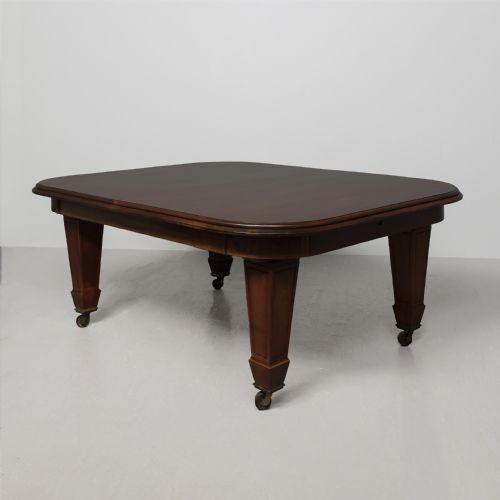
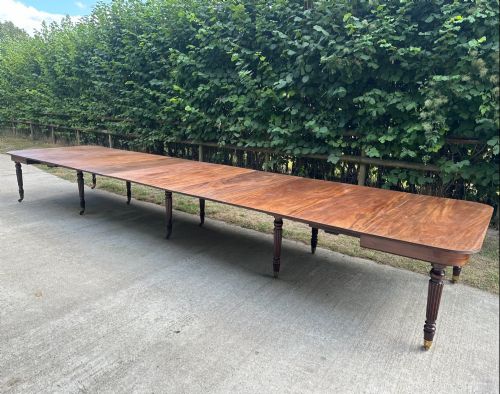
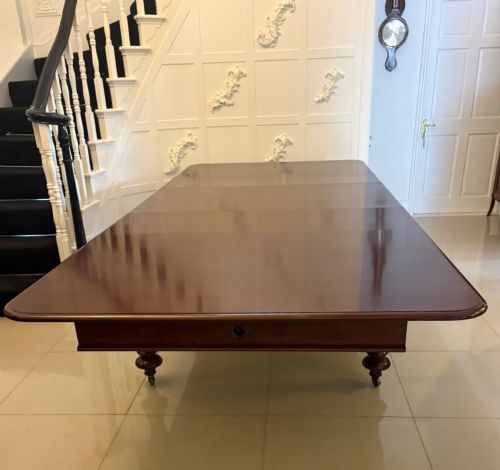
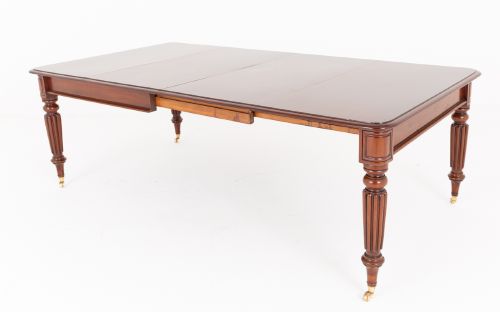




Telescopic Mahogany Dining Table
A telescopic mahogany dining table brings grand proportions and clever mechanical action to the dining room, offering substantial seating for large gatherings.
Telescopic Mahogany Dining Table
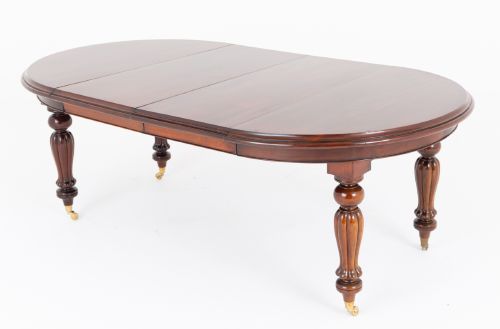
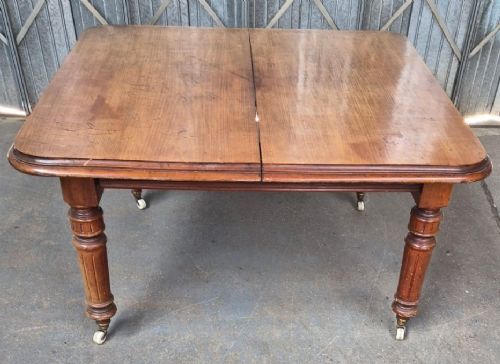
A telescopic mahogany dining table is a substantial piece of dining room furniture designed to expand significantly through internal mechanisms or removable leaves. You will most frequently encounter these tables dating from the Regency, William IV, and Victorian periods, often stretching to accommodate ten or more diners.
The materials visible across these pieces rely heavily on rich timbers paired with functional hardware like brass fittings and castors. Makers during the Georgian and Victorian eras engineered these forms to shift easily between everyday proportions and banquet length.
Construction and materials
Cabinetmakers constructed these tables using solid mahogany and figured mahogany veneers over sturdy subframes. The timber provides a deep grain pattern that takes a smooth polish.
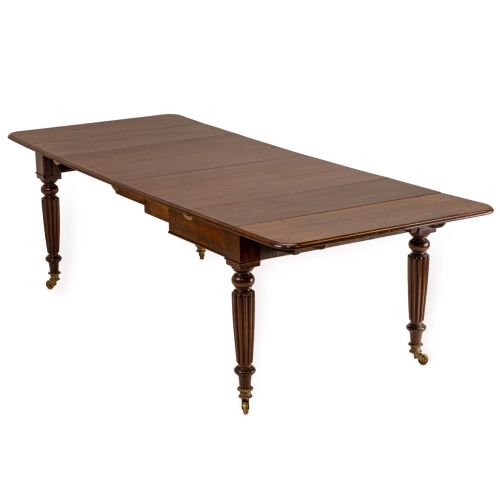
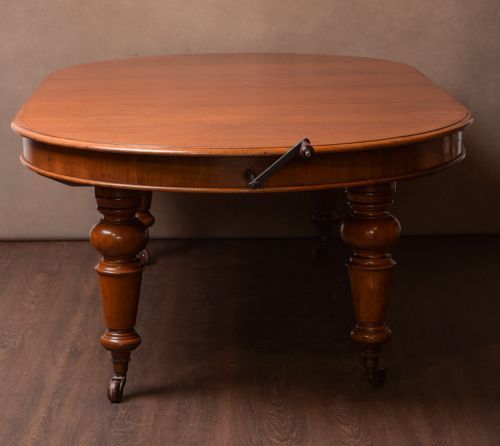
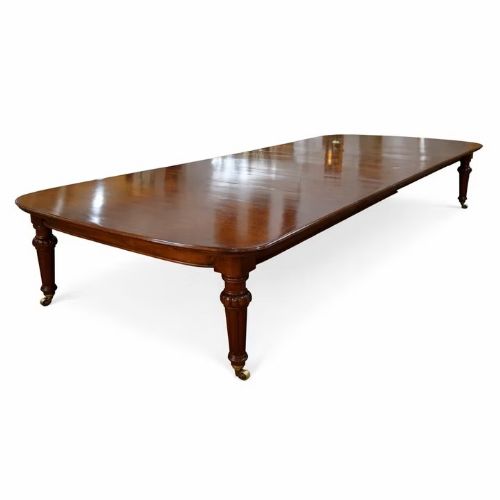
Internal mechanisms utilise metal, steel, and brass wind-out systems or drop-in leaves to support the extended weight safely. Brass castors are fitted to the table legs to ease movement across floors when adjusting the length.
Telescopic Mahogany Dining Table Retail Price Guide 2026
Typical asking prices for telescopic mahogany dining table among the pieces listed under this phrase on Sellingantiques today, from the lower quarter to the upper quarter. They describe what is for sale here now, not the wider market.
Materials documented across the inventory include solid mahogany, figured mahogany, brass, steel, metal, and ceramic elements.
Judging quality
Quality rests heavily on the sophistication of the extending mechanism, whether patent action, wind-out, or drop-in leaves, and how smoothly the frame operates at full stretch. Superior examples maintain rigidity and balance even when extended to twelve or nineteen feet.
The selection of timber grain, particularly figured or flame mahogany on the top surfaces, dictates the visual presence of the piece. Master workshops invested greater care in matching leaves and finishing edge details uniformly.
Gillows·F and J Smith
The Telescopic Mahogany Dining Table Glossary
- Telescopic
- An extending mechanism that allows the frame to pull apart smoothly to accept additional leaves. This engineering enables large tables to collapse to shorter lengths for daily use.
- Wind-out mechanism
- A mechanical system operated by a handle that turns a screw to expand or contract the table frame. It allows a single person to adjust the length with controlled precision.
- Imperial
- A term historically used to denote tables of substantial proportions capable of seating large parties. These pieces often measure twelve feet or longer.
- Figured mahogany
- Timber selected for its decorative, rippled, or flame-like grain patterns. Cabinetmakers reserved these cuts for primary display surfaces like table tops and leaves.
Telescopic Mahogany Dining Table: Frequently Asked Questions
How do I operate the wind-out mechanism?
Insert the winding handle into the socket beneath the table edge and turn it steadily to draw the frame apart or close it together. Once the gap is set to the correct width, drop the leaves into place and lock the catches.
Ensure the table is clear of heavy objects before turning the handle to prevent strain on the internal metal screws and wooden runners.
How many people can these tables seat?
Depending on the length of the specific table and the number of leaves inserted, these dining tables typically seat anywhere from eight up to sixteen or nineteen guests. Standard configurations often accommodate twelve people comfortably.
Check the length when fully extended to calculate the exact seating capacity based on standard chair widths.
How do I care for the mahogany top?
Dust the surface regularly with a soft, dry cloth and apply a quality beeswax periodically to nourish the timber and maintain its natural lustre. Avoid placing hot dishes or wet glasses directly onto the polished wood.
Keep the table away from direct sunlight and strong heat sources to prevent the mahogany veneer from drying out or fading over time.
How do I identify a Regency table from a Victorian one?
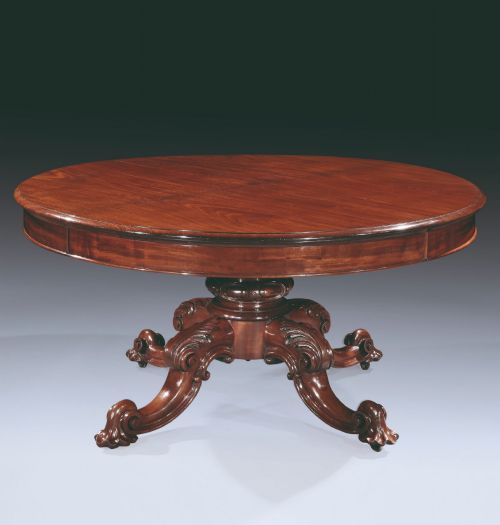
Regency tables, often associated with the early nineteenth century and makers like Gillows, tend to feature cleaner architectural lines, reeded legs, and brass toe-cap castors. Victorian and later nineteenth-century examples frequently present heavier proportions, carved pedestals, and darker figured mahogany.
Examine the secondary timbers underneath and the style of the extending mechanism to confirm the likely period of manufacture.