


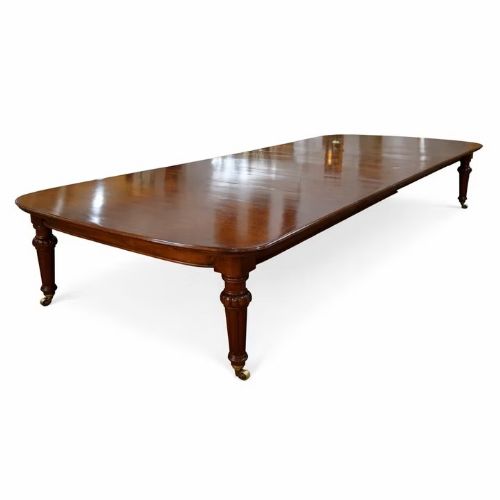
Telescopic Extending Table
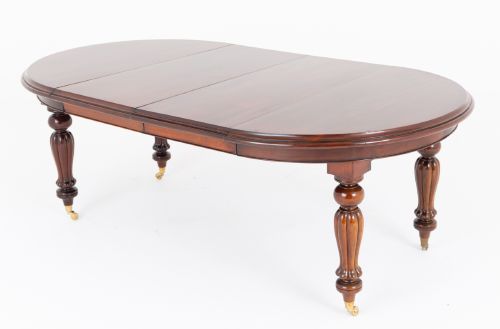
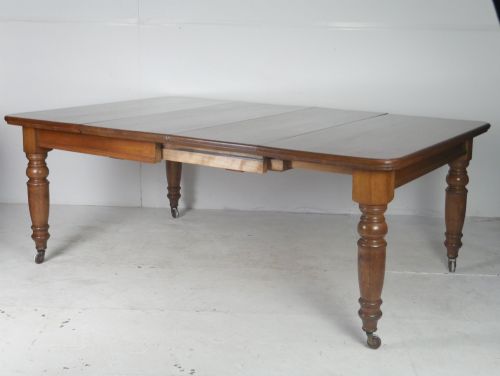
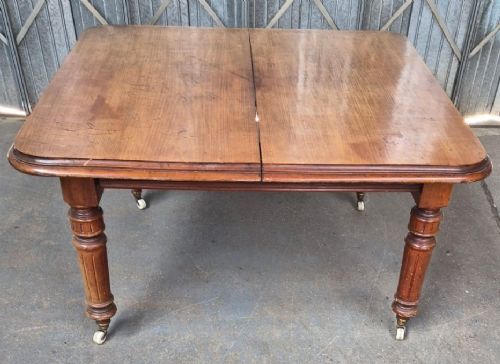
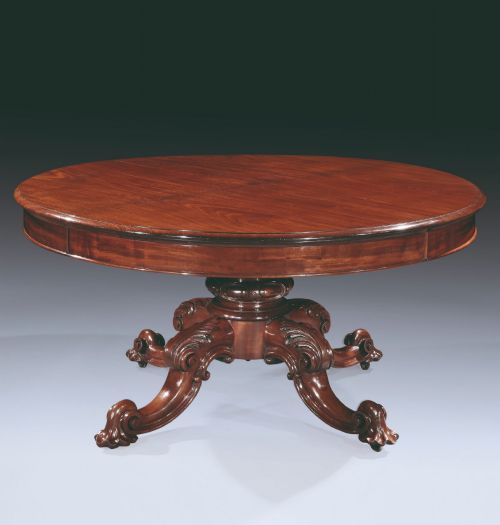
A telescopic extending table adapts to crowded rooms and large gatherings through concealed mechanisms hidden within mahogany or oak frames.
Telescopic Extending Table
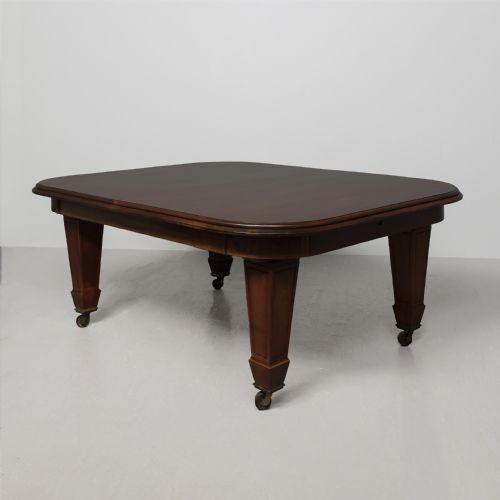
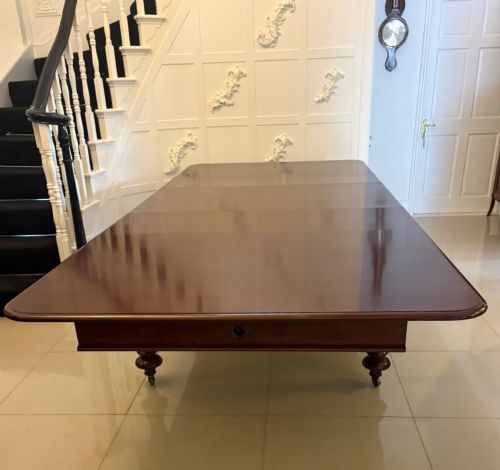
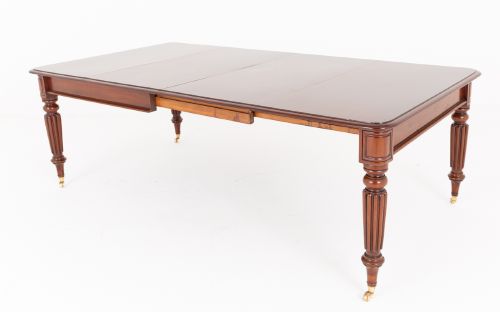
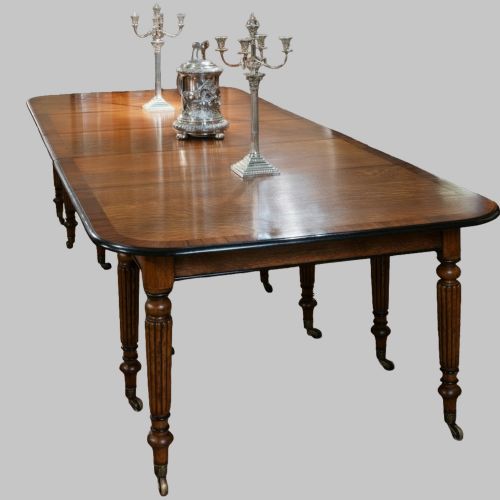
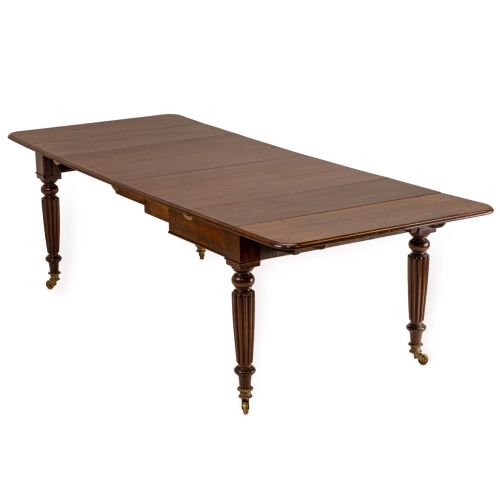
A telescopic extending table adapts to dinners of various sizes, appearing as a standard dining table until expanded with internal leaves or mechanical winding systems. These pieces emerge predominantly from the Georgian, Regency, William IV, and Victorian periods, reflecting centuries of domestic hospitality.
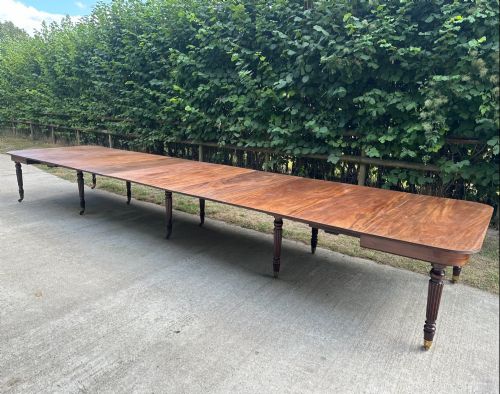
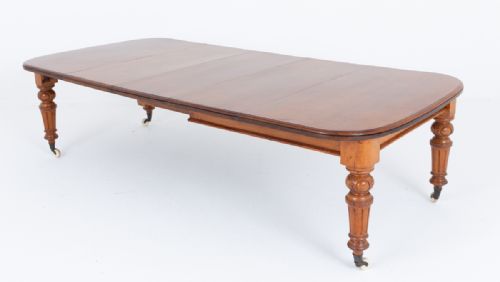
The most common form on this page is the mahogany dining table, frequently measuring several feet in length to seat twelve or more guests. Alongside dining tables, the category encompasses smaller functional items like telescopic candlesticks and floor lamps utilising brass and silver plate.
Originating from workshops across the nineteenth century, these tables range from modest kitchen pieces in oak to monumental imperial dining tables. Buyers select them for their combination of solid timber construction and practical engineering.
Materials and construction
Makers relied heavily on figured and flame mahogany, alongside oak, selecting dense timbers capable of supporting heavy loads and complex internal mechanisms. Brass components feature significantly in the telescopic and wind-out hardware, ensuring smooth movement when expanding the framework.
Joinery techniques combined traditional cabinet-making with metal engineering, housing winding mechanisms and sliding tracks beneath the table surface. Secondary metals such as steel and copper reinforced the internal tracks, while silver plate and ormolu adorned smaller telescopic items like candlesticks and floor lamps.
Materials documented across the inventory include figured mahogany, blonde oak, brass, ceramic, copper, steel, and silver plate.
Assessing quality and execution
Quality rests in the precision of the telescopic mechanism and the stability of the table when fully extended to accommodate numerous guests. Superior examples exhibit seamless integration of additional leaves that match the grain and colour of the main timber top.
The reputation of the maker influences distinction, with pieces attributed to prominent workshops commanding attention for their refined proportions and robust internal engineering. Material selection also dictates standard, where richly figured mahogany and substantial brass hardware separate high-end dining tables from simpler utility pieces.
Gillows·F and J Smith
The Telescopic Extending Table Glossary
- Wind-out mechanism
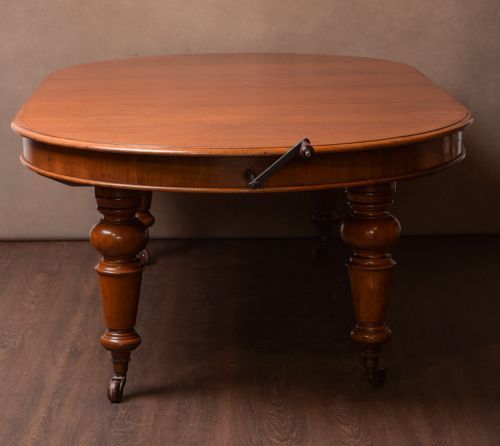
- A mechanical system operated by a handle that expands the frame of a table to insert additional leaves. This innovation transformed large dining furniture during the nineteenth century.
- Imperial table
- A designation for exceptionally large dining tables capable of seating substantial numbers of guests. These substantial pieces often incorporate multiple original leaves.
- Leaf
- A removable section of timber inserted into an extending table to increase its surface area. Matching grain patterns across these sections indicate superior cabinet-making.
- Silver plate
- A thin layer of silver applied to a base metal, frequently utilised on nineteenth-century telescopic candlesticks. This technique offered the lustre of solid silver with greater durability.
- Ormolu
- Gilded bronze applied to decorative objects and furnishings such as floor lamps. The technique creates a rich golden finish that enhances cast brass details.
Telescopic Extending Table: Frequently Asked Questions
How do wind-out tables work?
A concealed metal screw mechanism inside the frame is operated with a detachable handle. Turning the handle draws the table halves apart evenly.
This creates the precise gap required to drop in one or more matching timber leaves.
How many people can these seat?
Capacities vary from compact family sizes up to impressive twelve or fifteen seat configurations. Lengths often stretch across several feet to accommodate large parties.
Additional leaves determine the exact seating capacity for any given dinner.
How do I care for mahogany?
Keep timber surfaces away from direct heat sources and strong sunlight to prevent warping and fading. Regular dusting with a soft cloth maintains the natural lustre of the polish.
Apply quality beeswax periodically to nourish the grain without building up heavy residues.
Are leaves stored inside the table?
Most period dining tables require separate storage for their extra leaves when not in use. The internal mechanism simply provides the expanding gap rather than a storage compartment.
Ensure leaves are kept in similar environmental conditions to the main table to maintain wood stability.