

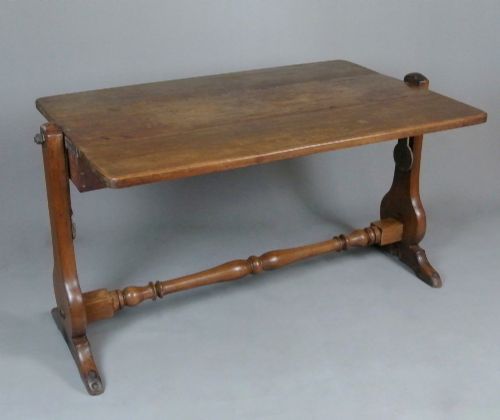



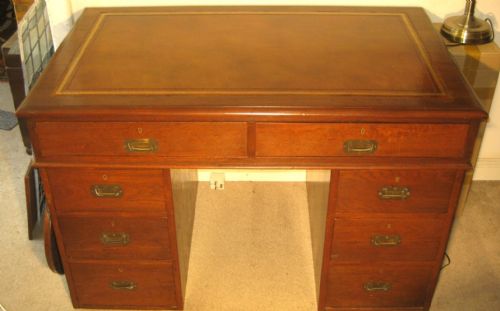


Teak Military Furniture
Teak military furniture brings sturdy, travel-ready craftsmanship into the home, offering clever storage designed for officers on the move.
Teak Military Furniture
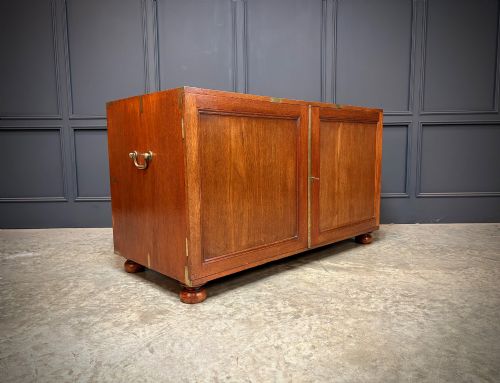
When you search for teak military furniture, you encounter robust pieces built for travel and colonial service during the eighteenth and nineteenth centuries. The selection ranges from chests of drawers and secretaire desks to tables, trunks, and side cabinets originating from Victorian, Regency, and Georgian periods.
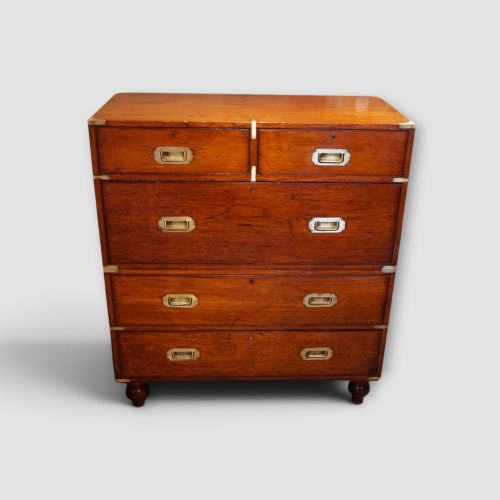
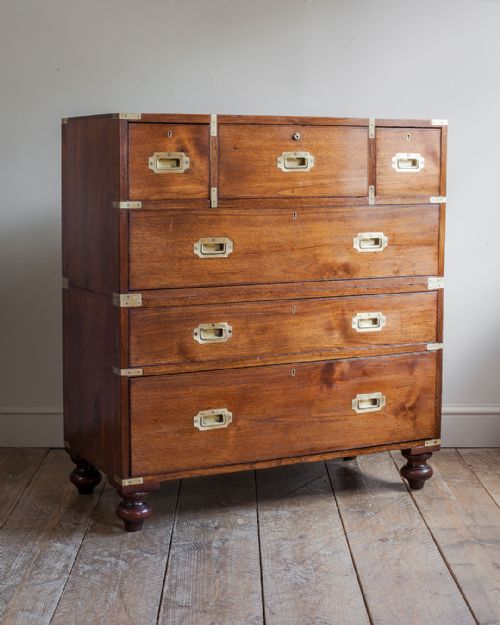
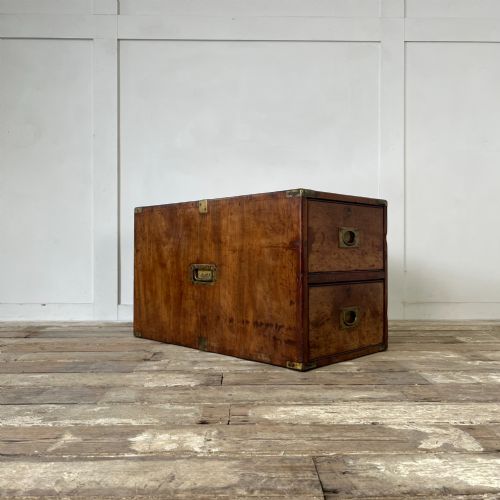
You are most likely to meet two-part campaign chests constructed from solid teak and bound with brass corners. These items separate into distinct sections for ease of transport on ships and across rugged terrain.
Beyond standard chests, the material reveals specialised forms such as folding campaign chairs, miniature chests, and fitted writing boxes. Anglo-Indian variants also appear, showcasing distinctive panelled backs and alternative timbers like padouk alongside traditional teak.
Materials and construction methods
Craftsmen relied heavily on dense teak and occasional padouk timber because these woods resisted warping in tropical climates. Mahogany and secondary timbers also appear within internal drawer structures and framing.
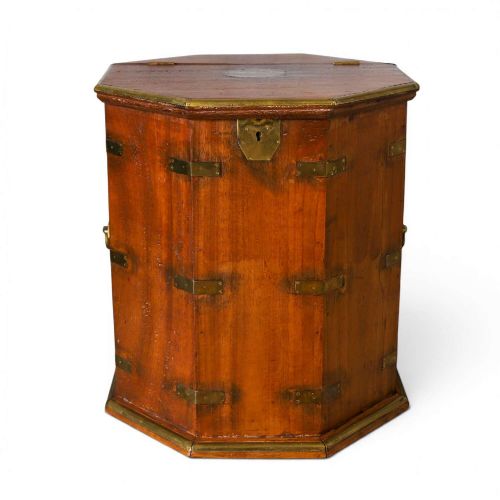
Makers reinforced vulnerable edges and corners using brass mounts, brackets, and binding to withstand rough handling during military transit. Iron carrying handles and flush-fitting brass pull rings kept the exterior surfaces smooth and snag-free.
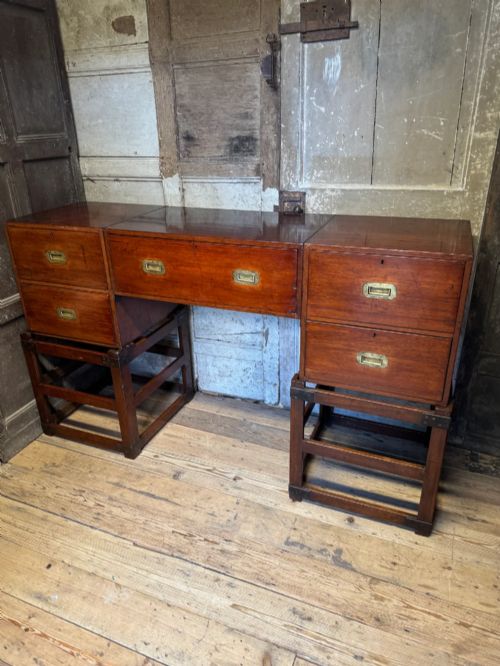
Secretaire drawers incorporated drop-fronts lined with leather, creating a portable writing surface. Cabinets and desks were built in two or three interlocking sections secured by internal brass drop-pins and locking mechanisms.
Teak Military Furniture Retail Price Guide 2026
Typical asking prices for teak military furniture among the pieces listed under this phrase on Sellingantiques today, from the lower quarter to the upper quarter. They describe what is for sale here now, not the wider market.
Some chests retain the engraved brass nameplates of the officers who carried them across oceans.
Quality differences across pieces
Quality rests upon the crispness of the brass fittings and the precision with which the modular sections lock together. Superior examples retain their original recessed hardware, working locks, and matching keys rather than later replacements.
The choice of timber and grain figure separates standard utility items from finer commission pieces. Well-figured teak panels, tight dovetail joints, and carefully concealed secondary woods denote superior workshop standards.
Army And Navy
The Teak Military Furniture Glossary
- Campaign chest
- A modular chest of drawers built in two or more stacking sections designed for easy dismantling and transport. These units feature recessed brass handles to prevent damage during movement.
- Secretaire chest
- A chest of drawers featuring a dedicated pull-out or drop-front drawer fitted with small compartments and a leather writing surface. This combines clothes storage with a functional desk.
- Brass bound
- The method of reinforcing cabinet corners and edges with brass straps and brackets. This technique protected the timber from heavy knocks while travelling.
- Anglo-Indian
- A descriptive term for furniture made in India during the British colonial period, often combining British cabinet forms with local decorative carving and timber selection.
- Two-part
- A construction style where a large cabinet or chest divides horizontally into separate stacking boxes for transit. Iron or brass fastenings secure the sections together.
Teak Military Furniture: Frequently Asked Questions
Why are these chests built in two parts?
Modular construction allowed officers to divide heavy wardrobes and drawer units into manageable loads for pack animals, carriages, and ship cargo holds. This made frequent relocation practical during campaigns.
Once the destination was reached, the sections stacked securely back together, often locked in place with internal pins or brackets.
How do I identify a genuine period piece?
Examine the construction methods, timber weight, and hardware integration. Genuine items show period dovetailing, dense teak or padouk construction, and hand-cut screws behind recessed brass fittings.
Look for honest wear patterns around the carrying handles and feet that reflect actual travel usage rather than simulated ageing.
Can I use a campaign desk in a modern study?
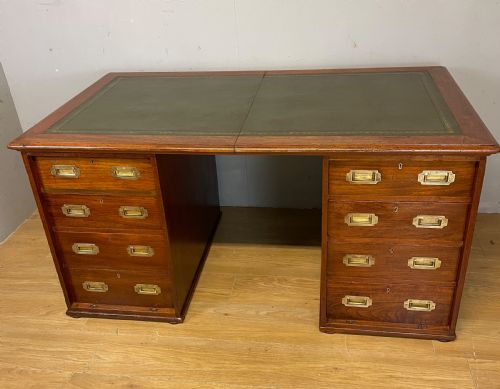
These desks provide practical workspaces and compact surface areas well-suited to contemporary rooms. Their internal pigeonholes and leather-inset tops offer functional daily storage.
Their modular nature also makes them easier to move between rooms or properties than standard antique desks.
What is the difference between teak and padouk?
Teak is a heavy, oily tropical hardwood known for moisture resistance and a warm golden-brown tone. Padouk tends to exhibit a deeper reddish-brown hue with distinct grain patterns.
Both timbers were chosen for colonial campaign pieces because they endured humidity and temperature shifts without splitting.