



Taxidermy Antler Mount
These taxidermy antler mount pieces bring the rugged character of the nineteenth and early twentieth-century highlands straight to your wall.
Taxidermy Antler Mount
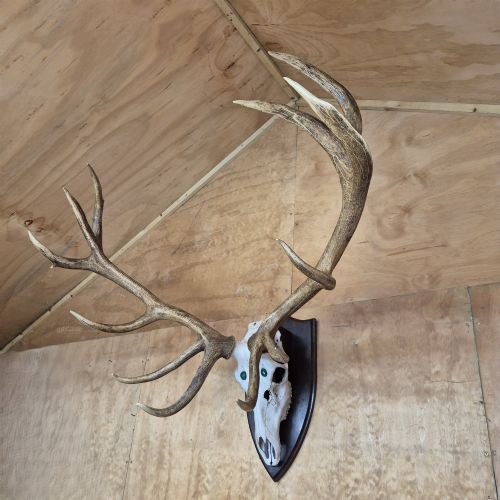
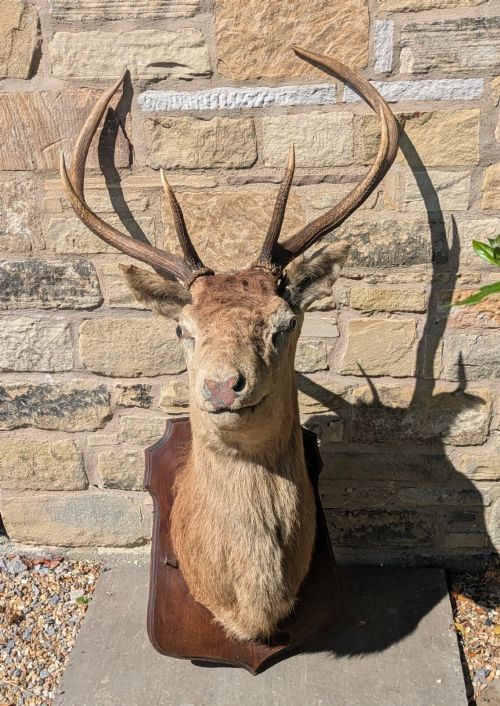
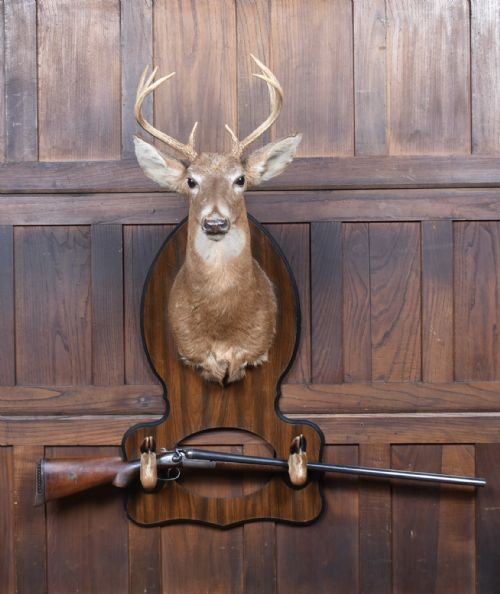
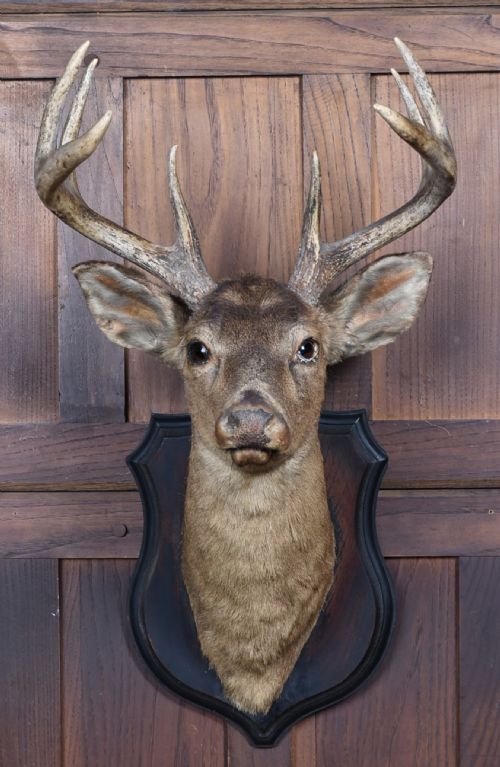
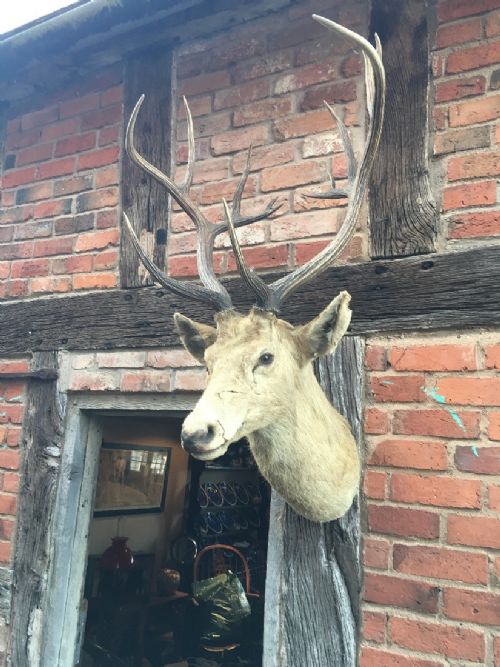
A taxidermy antler mount comprises natural antlers and heads, frequently presented upon carved wooden shields or plaques for wall hanging. The selection spans grand red deer stags and roebuck to rams and waterbuck.
Victorian pieces dominate the offerings, alongside items styled in highland traditional and folk art aesthetics. These wall sculptures range from simple point sets to full stags and carved wooden iterations.
Originating largely from nineteenth and early twentieth-century British and European hunting lodges, these items served to record sporting triumphs and decorate domestic interiors.
Materials and construction methods
Taxidermists utilised natural bone, horn, and hide combined with wooden mounting shields, frequently employing carved oak to anchor the skull and antlers securely. Glass eyes often brought realism to the preserved heads of stags and roebucks.
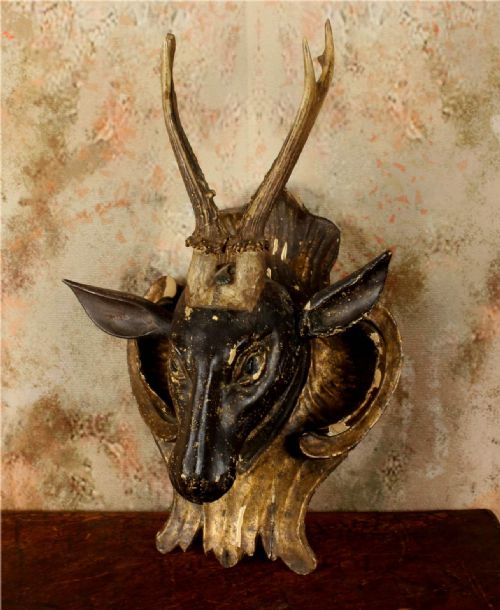
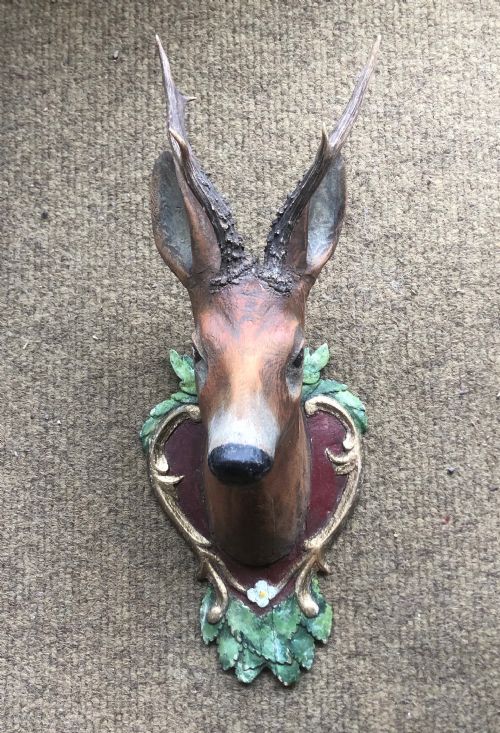
Folk art variants incorporate hand-carved wood and painted finishes to emulate natural specimens, demonstrating regional craftsmanship from the nineteenth century onward.
Some wooden deer heads are entirely carved by hand as folk art substitutes for actual taxidermy.
Factors determining quality
Antler point count and symmetry heavily influence the distinction of a specimen, with larger sets such as twelve-point royal stags commanding strong visual presence. The intricacy of the wooden shield, whether plainly shaped or deeply carved with foliage, adds further nuance.
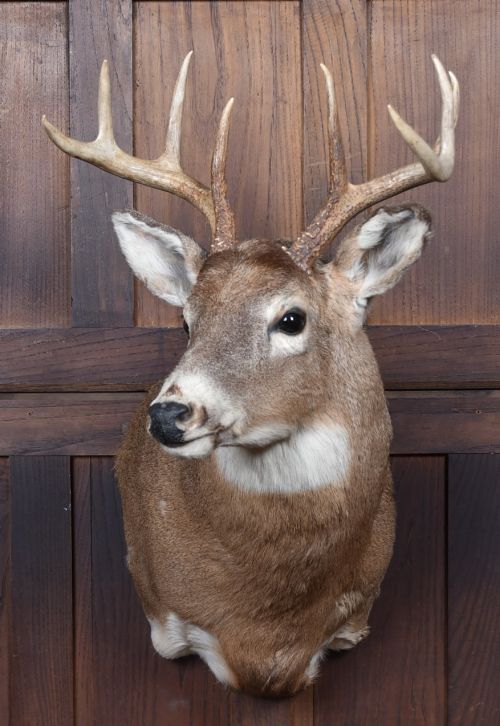
The preservation of the hide and hair, alongside the anatomical accuracy of the taxidermy work, separates standard mounts from finer historic pieces.
The Taxidermy Antler Mount Glossary
- Antler
- The branched, bony horn growth shed and regrown annually by members of the deer family. These form the primary sculptural element of the mount.
- Shield
- The shaped wooden plaque, often carved from oak, upon which the skull and antlers are fixed for wall display. It protects the wall and frames the trophy.
- Taxidermy
- The art of preserving and mounting animal anatomy for display. In these pieces, it involves preserving the head and neck skin over a form.
- Point
- An individual branch or tine on an antler. Counting these points helps describe the size and maturity of the stag.
Taxidermy Antler Mount: Frequently Asked Questions
How should I clean the antlers?
Dust the antlers and wooden shields regularly using a soft, dry brush or a feather duster to prevent grime accumulation. Avoid using water or liquid cleaning agents on the natural hide and bone.
For wooden shields, a dry cloth is usually sufficient to maintain the finish without damaging the historic surface.
Are these pieces from the Victorian era?
Many items originate from the Victorian period, whilst others date from the late nineteenth and early twentieth centuries. Specific eras are identified through construction methods and stylistic cues.
Highland traditional and folk art influences are common across these nineteenth-century and Edwardian pieces.
What animals are represented here?
The selection includes red deer, roebuck, whitetail deer, rams, and waterbuck. Each species offers distinct antler formations and skull structures.
Stags and roebucks dominate the collection, reflecting traditional European and Scottish hunting lodge decor.