
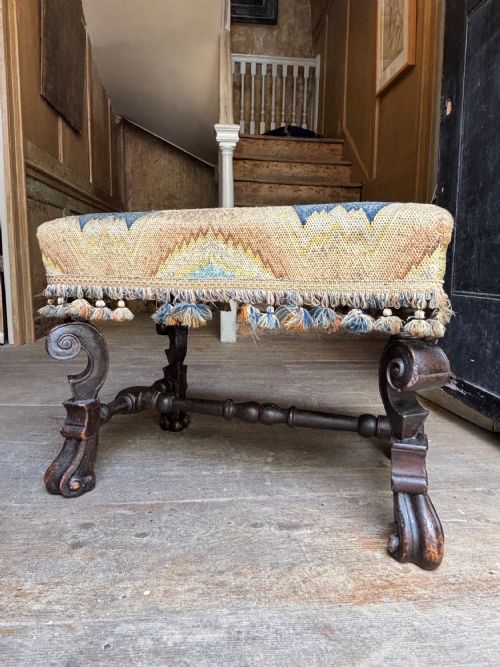
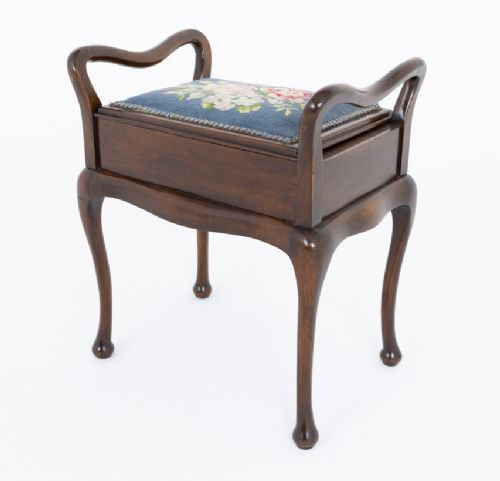


Tapestry Upholstered Bench
A tapestry upholstered bench brings warmth and historic textile art directly into a room, offering practical seating with genuine period character.
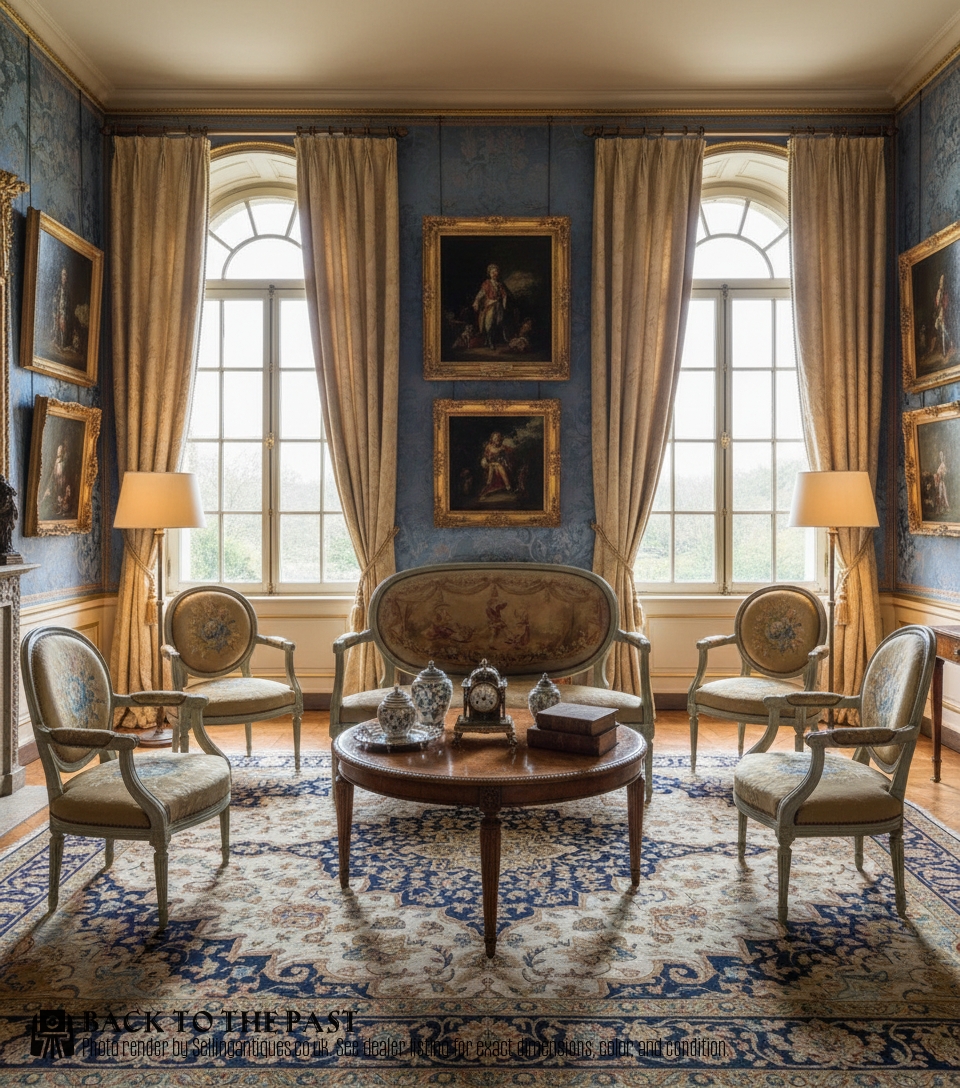
Tapestry Upholstered Bench
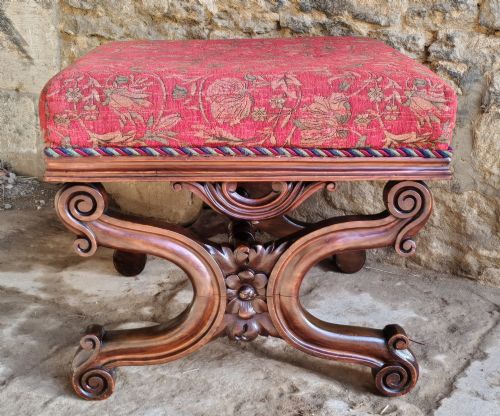
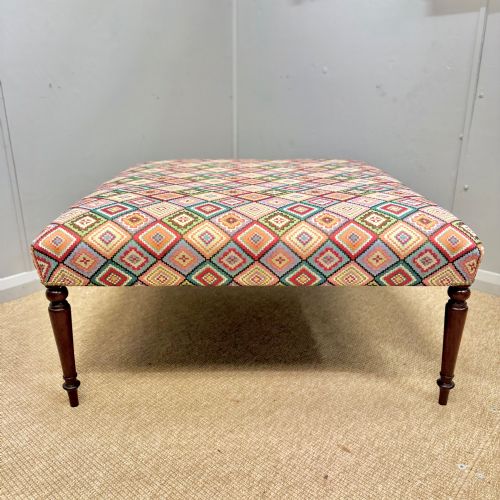
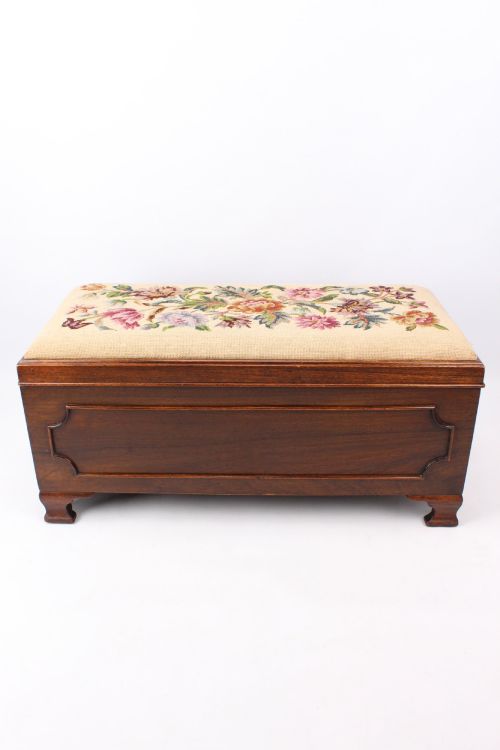
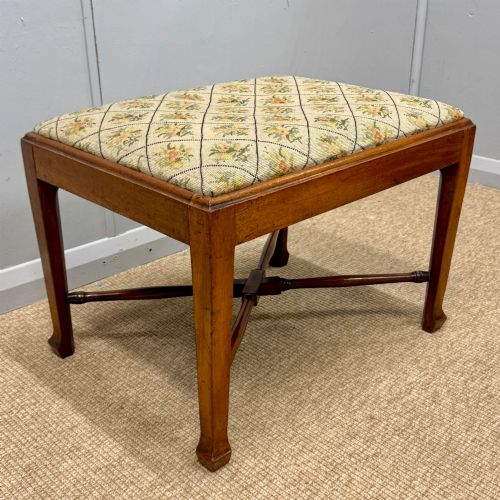
A tapestry upholstered bench combines structural woodwork with decorative woven textile seats, ranging from compact footstools to longer window seats and settees. When you search for a tapestry upholstered bench, you encounter forms that span small dressing table stools, piano stools, and large storage ottomans.
The pieces on this page draw from periods across the nineteenth and early twentieth centuries, alongside various revival aesthetics including Queen Anne, Louis styles, and Jacobean influences. Walnut and mahogany frames predominate, supporting needlework, kilim, and traditional tapestry fabric tops.
Originating largely from British and French workshops, these seats served practical domestic roles in country houses, drawing rooms, and boudoirs. Their surviving forms reflect diverse regional tastes, from restrained Edwardian mahogany frames to heavily carved Victorian walnut structures.
How they were made
Makers constructed the structural frames of these benches using dense hardwoods such as mahogany, walnut, and oak, often shaped with hand carvings, cross stretchers, or x-frame supports. Joinery techniques relied on traditional mortise and tenon joints to withstand daily weight and movement.
Seat surfaces utilise hand-stitched needlepoint, wool tapestries, and flat-woven kilim textiles stretched over traditional stuff-over upholstery foundations. Additional decorative detailing includes brass tacks, painted finishes, and occasional gilded highlights on the wooden frames.
Design influences span Queen Anne curves, French Louis revival frameworks, and sturdy Arts and Crafts construction.
What varies in quality
The distinction between standard production and finer pieces lies in the crispness of the timber carving and the density of the hardwood frame. Superior examples demonstrate fluid joinery, substantial timber weight, and balanced proportions that anchor the piece visually within a room.
Textile quality marks another clear dividing line, separating machine-woven commercial fabrics from dense, finely worked hand-stitched needlepoint and antique tapestry covers. The integration between the textile design and the wooden silhouette dictates the overall success of the piece.
Hallett And Sons
The Tapestry Upholstered Bench Glossary
- Needlework
- A form of textile art stitched by hand onto a canvas ground, frequently utilising wool or silk threads. This technique provides the durable, patterned surfaces seen on many historic stool tops.
- X-frame
- A structural furniture base formed by intersecting diagonal timbers that cross beneath the seat. This configuration creates stable support while referencing historic Renaissance and Gothic seating designs.
- Cross stretcher
- A horizontal wooden brace connecting the legs of a stool or bench for added stability. They often feature turned details or central finials characteristic of specific revival periods.
- Canapé
- A traditional French term for a long upholstered sofa or settee designed for multiple sitters. These pieces typically feature exposed wooden frames and coordinated textile upholstery.
- Kilim
- A flat-woven textile produced without a pile, traditionally originating from the Near East and Eastern Europe. When applied to British furniture, these durable flat weaves introduce geometric patterns to footstools.
Tapestry Upholstered Bench: Frequently Asked Questions
Where should I place a tapestry upholstered bench?
These benches suit numerous domestic settings, functioning effectively at the foot of a bed, beneath a window, or beside a fireside. Their modest footprint also allows them to serve as flexible pull-up seating in living rooms and hallways.
Because many examples incorporate hinged lids or internal compartments, they additionally provide practical concealed storage for blankets, books, or daily clutter.
How do I care for antique tapestry upholstery?
Historic wool and textile covers require gentle maintenance to preserve their structural integrity and vibrant colours. Regular light vacuuming through a mesh screen helps remove dust without pulling loose threads.
Direct sunlight should be avoided to prevent the natural dyes within the needlework or tapestry from fading over time.
How do I distinguish between Victorian and Edwardian frames?
Victorian frames generally favour heavier timbers, darker finishes, and deep, elaborate carvings such as scrolled foliage or animal motifs. Walnut and rosewood frequently appear in these mid to late nineteenth-century pieces.
Edwardian frames tend to exhibit lighter proportions, brighter mahogany tones, and more restrained decorative elements reflecting a turn-of-the-century preference for refined simplicity.
What is the difference between a footstool and an ottoman?
Footstools are typically compact, low-set pieces designed primarily to support the feet while sitting in an armchair or lounge seat. They usually feature open wooden legs and simpler upholstered tops.
Ottomans are generally larger, substantially proportioned pieces that often include internal box storage or daybed functionality, allowing them to function as independent low tables or extra seating.