


Tapestry Spark Screen
A tapestry spark screen brings period texture and functional hearth protection together in one decorative furnishing.
Tapestry Spark Screen
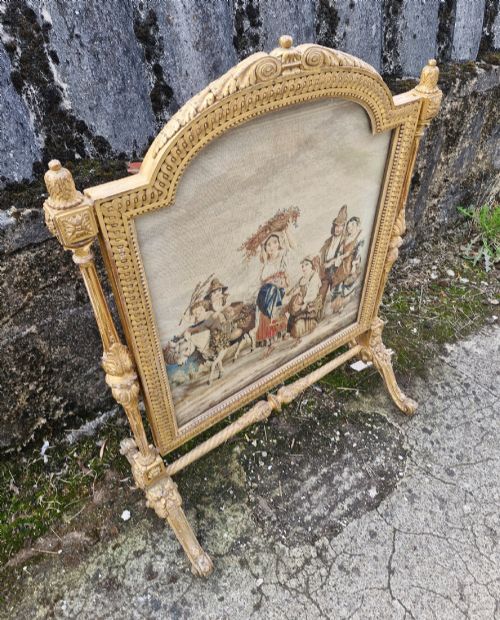
A tapestry spark screen combines a decorative textile panel with a sturdy wooden or brass frame designed to sit before an active fireplace. When buyers search for a tapestry spark screen, they encounter Victorian and Edwardian examples alongside earlier Georgian-influenced forms that protect rooms from stray embers.
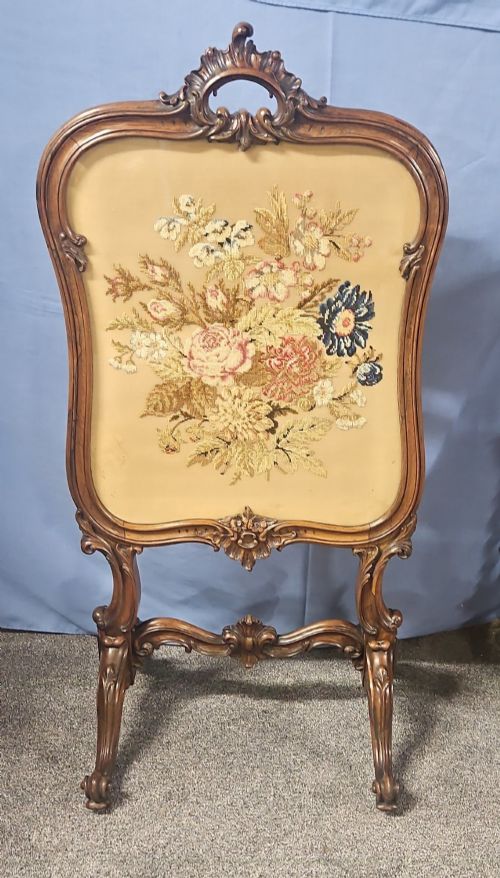
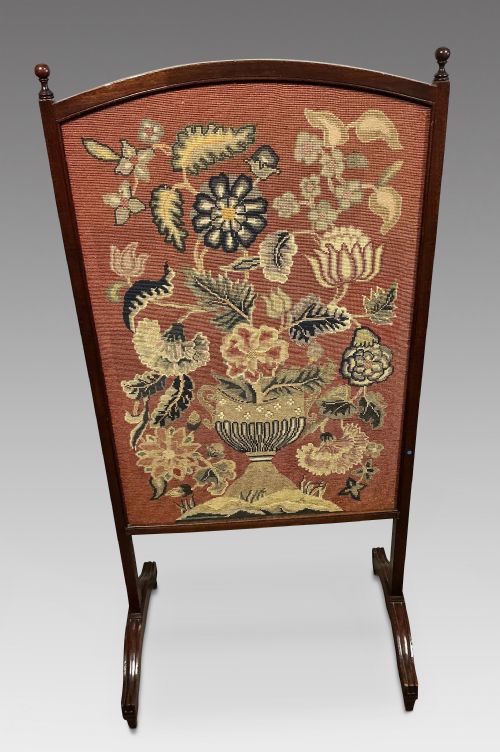
The most common versions on this page are Victorian pieces featuring needlepoint or embroidered wool panels mounted in walnut, mahogany, or oak frames. These objects range from standard static screens to more versatile metamorphic designs that convert into occasional tables.
Originating as practical hearth furnishings, these pieces span several stylistic revivals including Victorian Rococo Revival, Art Nouveau, and Black Forest carving traditions. The core function remains blocking hearth sparks while displaying intricate textile work framed by period woodworking.
How they were made
Makers constructed the structural frames of these screens using solid hardwoods such as walnut, mahogany, oak, and occasionally brass for freestanding or folding supports. Woodworkers employed traditional joinery alongside turning techniques, including bobbin turning and elaborate hand carving.
The central panels utilise hand-worked wool, textile, and needlepoint to depict heraldic coats of arms, pictorial scenes, or botanical motifs. These panels are secured within the wooden or metal framework, sometimes protected behind a glass sheet.
Stylistic details draw on specific historical periods, from the ornate curves of Victorian Rococo Revival to the flowing organic lines characteristic of Art Nouveau brasswork.
Listings feature pieces spanning the nineteenth century, Victorian era, and nineteen hundred, constructed in walnut, mahogany, oak, and brass.
What varies in quality
The distinction between standard examples and superior pieces rests largely on the execution of the woodwork and the density of the textile panel. Finer screens feature deeply carved frames in walnut or mahogany rather than simpler turned elements, alongside tight, meticulously stitched needlepoint.
Design complexity also defines the upper range, particularly where makers integrated mechanical ingenuity, such as metamorphic tables that transform from screens into occasional surfaces. The integration of specialty materials like brass mounts and fitted glass further separates standard hearth guards from exceptional examples.
The Tapestry Spark Screen Glossary
- Needlepoint
- A form of canvas work embroidery executed with wool yarn, commonly found forming the central pictorial panel of these screens. This technique allows for detailed depiction of coats of arms and botanical designs.
- Metamorphic
- Describing furniture designed to transform its function, such as a fire screen that converts into an occasional table. This dual purpose was particularly popular in early twentieth-century designs.
- Bobbin turned
- A method of woodturning that creates a series of rounded, spool-like shapes along the length of a furniture leg or frame pillar. This decorative turning style frequently appears on Victorian mahogany and walnut frames.
- Rococo Revival
- A nineteenth-century design movement characterised by asymmetrical C-scrolls, naturalistic floral carving, and exuberant ornamentation. It heavily influenced the decorative framing of Victorian hearth screens.
Tapestry Spark Screen: Frequently Asked Questions
What is a tapestry spark screen?
A tapestry spark screen is a traditional hearth furnishing featuring an embroidered or needlepoint textile panel mounted within a wooden or brass frame. Its primary purpose is to block flying embers from an open fire while serving as a decorative room divider.
These pieces typically date from the nineteenth and early twentieth centuries, reflecting changing domestic styles from heavy Victorian walnut to lighter Edwardian formats. Many incorporate detailed woolwork depicting coats of arms or floral motifs.
How do you use them today?
Collectors and interior designers use these screens primarily as decorative focal points in living rooms, placing them before decorative or working fireplaces. They add period textile warmth and texture to an interior scheme.
Some versatile examples, particularly metamorphic pieces, function doubly as occasional tables when adjusted. They work well in period properties and contemporary spaces alike to introduce historic craft.
How are different periods told apart?
Distinguishing periods relies on examining the frame timber, carving style, and the character of the textile panel. Victorian examples often feature dark walnut or mahogany with elaborate rococo scrolls or bobbin-turned supports.
Later pieces from around nineteen hundred or the Edwardian era frequently incorporate brass frameworks or display Art Nouveau influence with organic, flowing lines. Georgian-styled pieces tend to show more restrained classical proportions in the woodwork.
Were all screens made for fires?
While the primary function of these objects was hearth protection, many were also designed as decorative screens to shield occupants from the intense heat of an open coal fire. Over time, their role shifted toward purely ornamental room furnishings.
Some specialised variants were built with dual functionality, serving as both a heat shield and a fold-out tabletop when needed. This adaptability explains the survival of metamorphic designs in domestic interiors.