



Decorative Brass Screen
A decorative brass screen brings warmth and reflection to a room, shifting from intricate Art Nouveau curves to stately French revival frames.
Decorative Brass Screen
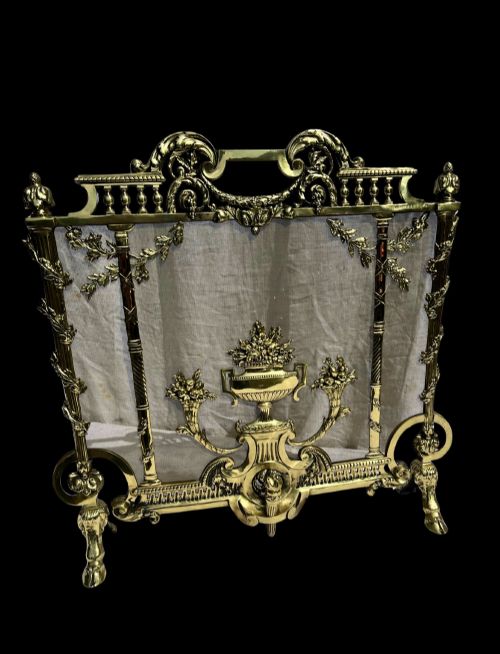
A decorative brass screen primarily functions as a fireplace accessory, designed to sit before an inactive hearth during warmer months. The selection spans periods from the mid-eighteenth century through the Edwardian era, with nineteenth-century examples appearing frequently.
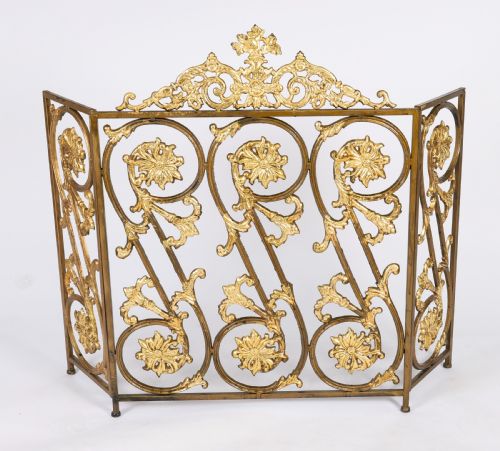
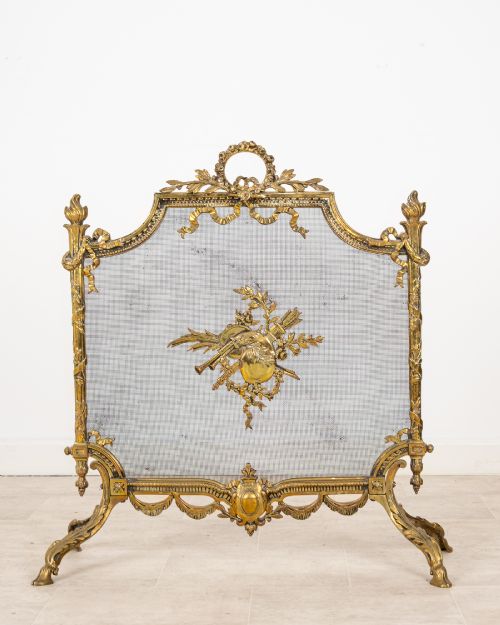
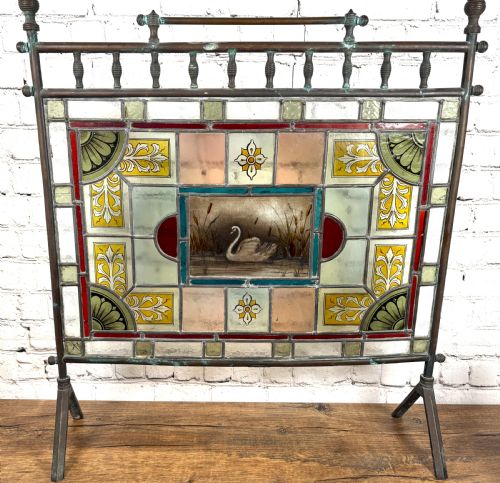
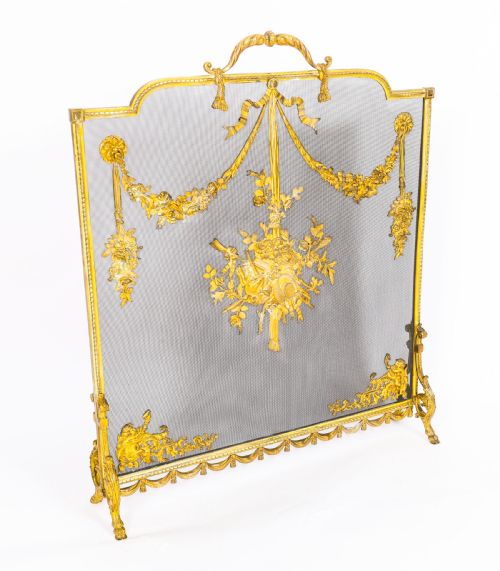
Most pieces take the form of fire screens or folding screens, incorporating practical elements like wire mesh or spark guards alongside ornamental frames. Stylistic influences range from Victorian and Rococo Revival to Art Nouveau and French Louis XVI.
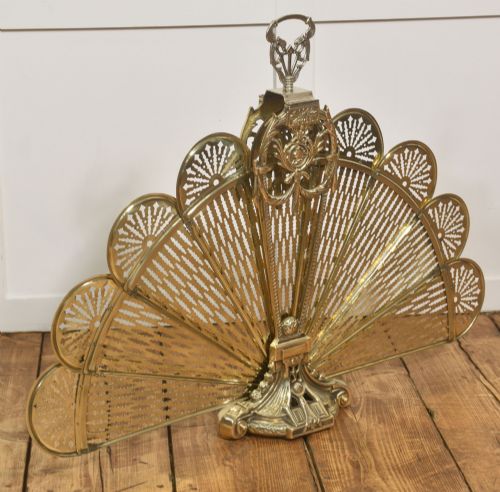
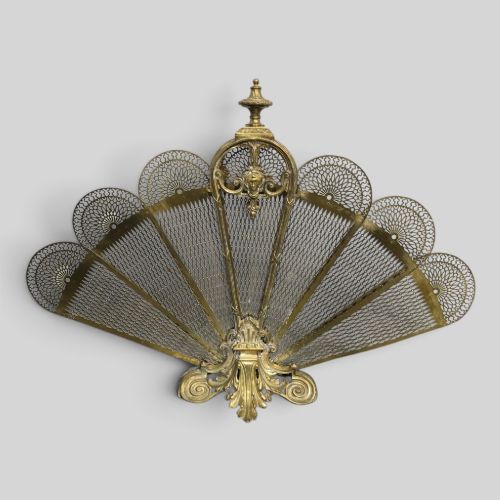
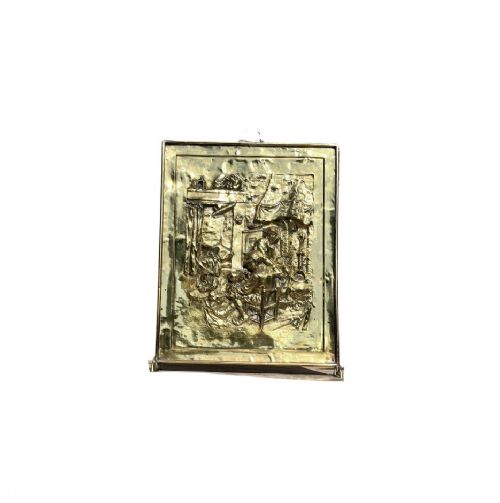
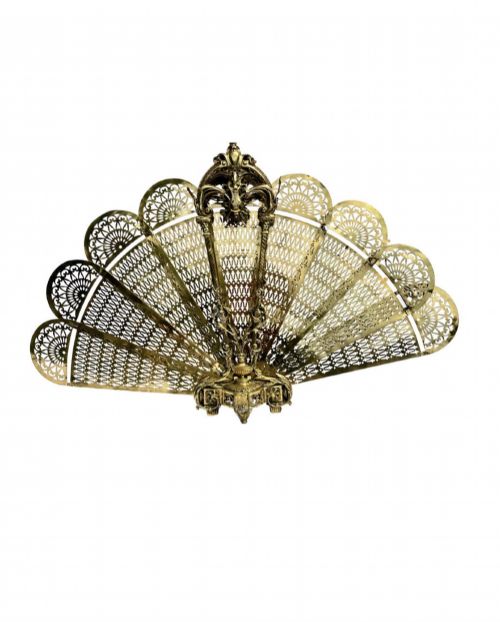
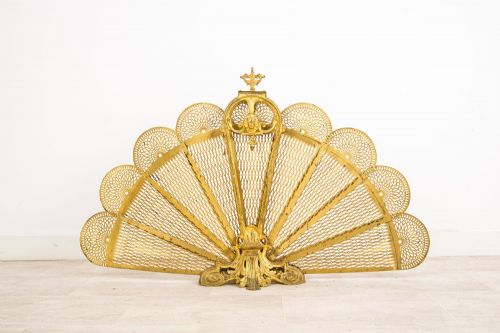
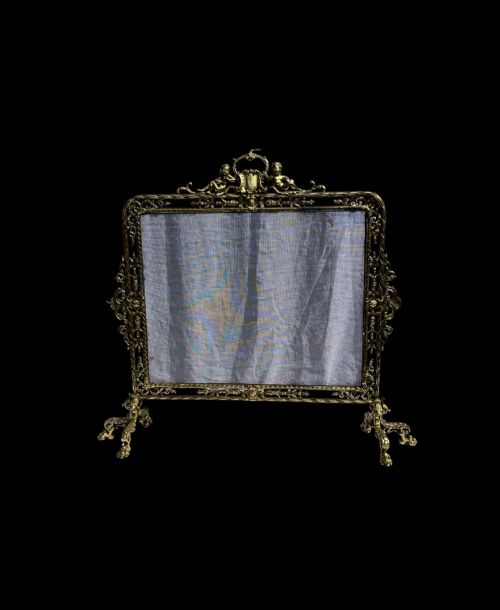
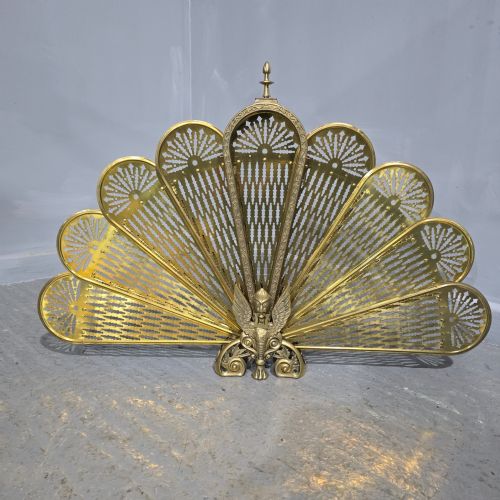
Makers utilised various configurations, from folding peacock fan screens to rigid panels inset with glass, mirrors, or fabric. These objects served both a utilitarian purpose in domestic spaces and a decorative role in formal rooms.
Assessing Quality
Quality reveals itself in the crispness of the casting and the depth of the chased detail across the brass or gilt bronze frame. Superior examples display refined proportions and deliberate execution in decorative motifs like floral and musical trophies.
The choice of secondary materials, such as bevelled mirror glass, heavy wire mesh, or fine textiles, distinguishes standard production from more ambitious workshop pieces. Structural integrity in folding mechanisms and fan hinges also marks the better class of item.
Listings feature periods spanning from seventeen-fifty through the Edwardian era, with nineteenth-century examples dominating the selection.
The Decorative Brass Screen Glossary
- Ormolu
- Gilt bronze applied to decorative hardware and furniture mounts. This technique involved coating metal with a finely ground gold-mercury amalgam and heating it.
- Fire Screen
- A movable panel placed before a fireplace. It protected occupants from radiant heat when a fire burned low or concealed the hearth during summer.
- Art Nouveau
- An international style prominent around nineteen hundred characterised by organic, flowing lines. It often incorporates plant stems, insect motifs, and stylised natural forms.
- Gilt Brass
- Brass treated with a thin layer of gold or gold-coloured finish. This process provided the visual warmth of solid gold without the associated weight and expense.
Decorative Brass Screen: Frequently Asked Questions
What is a decorative brass screen?
A decorative brass screen is a metal furnishing traditionally placed in front of a fireplace hearth. These items combine structural frames with mesh, glass, mirrors, or textile panels.
They served to block drafts, catch stray sparks, or simply adorn an unlit fireplace during warmer seasons.
How were fire screens used?
In period homes, occupants positioned these screens before the hearth to regulate heat or hide the ash and soot of an empty fireplace. Folding fan designs allowed users to adjust the width of the guard as needed.
Over time, their role shifted toward interior decoration, acting as room accents that reflected light from windows and lamps.
How do I date a brass screen?
Dating relies on stylistic clues, manufacturing techniques, and materials. Nineteenth-century pieces frequently display Rococo Revival or Louis XIV revival details, while those from around nineteen hundred often exhibit Art Nouveau curves.
Heavy cast brass and specific assembly methods help differentiate older examples from later reproductions.
Can I use an antique screen with an active fire?
Many period screens include wire mesh or spark guards intended for working hearths. However, delicate inserts like antique glass, mirrors, or fabric panels require careful placement.
It is sensible to check the construction of the specific panel before exposing it to high heat or direct flames.