


Tapestry Slipper Chair
Tapestry slipper chairs are low-slung seating upholstered in woven textiles, designed for comfort and ease of movement.
Tapestry Slipper Chair
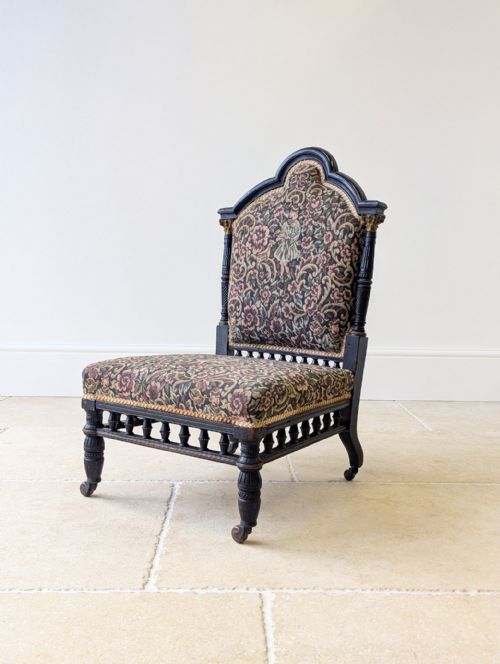
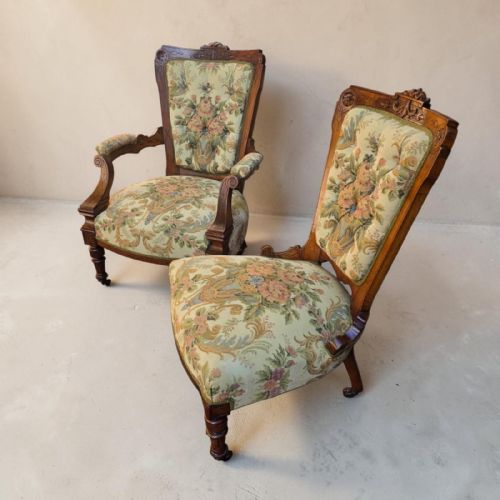
A tapestry slipper chair is a low, upholstered seat traditionally used in bedrooms or dressing rooms for putting on footwear. The pieces found here span the Victorian, Edwardian, and William IV periods, crossing over closely related low-profile forms such as nursing chairs and boudoir chairs.
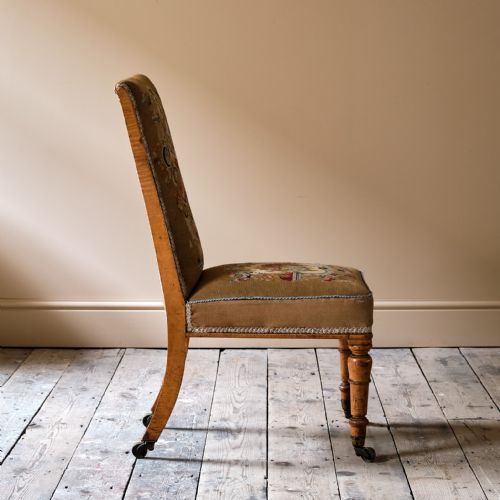
You will most frequently encounter Victorian walnut and mahogany examples upholstered in floral tapestry or needlework fabrics. These low chairs often feature open frames, carved woodwork, and occasionally brass castors or ceramic wheels.
The historical range includes Aesthetic Movement ebonised frames, French stylistic influences, and occasionally specific regional workshop attributions. Alongside dedicated slipper chairs, the selections incorporate occasional, side, and salon chairs sharing the same low stature and woven upholstery.
Materials and Construction
Frames are constructed from solid hardwoods including walnut, mahogany, rosewood, oak, and birds eye maple. These timbers are shaped through period joinery methods, featuring carved details on show woods and sturdy internal bracing.
Upholstery relies on heavy woven tapestry, needlework, carpet remnants, or velvet, often fixed over button-backed or scroll-backed springing. Subsidiary materials such as brass fittings and ceramic castors complete the lower structures.
Some chairs incorporate literal scraps of old carpets alongside fine tapestries, proving Victorians loved an upcycled floor covering.
Factors of Quality
The distinction between standard examples and finer pieces lies in the articulation of the wooden frame and the complexity of the carved details. Walnut and rosewood frames with deep relief carving or ebonised finishes indicate superior workshop production.
The integrity and fineness of the tapestry or needlework upholstery heavily influence the overall standard. Hand-woven textiles with intricate floral motifs command greater appreciation than plain fabric replacements.
R Whytock·Gillows
The Tapestry Slipper Chair Glossary
- Slipper chair
- A low-seated chair traditionally used in a bedroom or dressing room for changing footwear. Their low profile made them practical for domestic dressing rituals.
- Tapestry
- A form of heavy textile art woven on a vertical loom, frequently utilised for period upholstery. These woven panels display dense floral or figurative patterns.
- Nursing chair
- A low-backed Victorian seat designed to allow a mother to feed or tend to an infant in comfort. They share the low proportions typical of slipper chairs.
- Aesthetic Movement
- A late nineteenth-century design style emphasising visual beauty over narrative content. Pieces from this movement often feature ebonised wood and stylised decoration.
- Prie-Dieu chair
- A devotional prayer chair featuring a high, narrow back and a low seat, often covered in needlework or tapestry. They date primarily from the Victorian era.
Tapestry Slipper Chair: Frequently Asked Questions
What is a tapestry slipper chair?
A tapestry slipper chair is a low-framed seat covered in heavy woven fabric. These chairs sat close to the floor for domestic convenience in dressing rooms.
They appear across nineteenth and early twentieth-century British furniture styles, frequently featuring walnut or mahogany frames.
Where were these chairs used?
These low seats belonged primarily in bedrooms, boudoirs, and dressing rooms. Their lack of arms and low stature made them suitable for private quarters.
Over time, many found their way into parlours and salons alongside standard occasional seating.
How do I date a slipper chair?
Dating relies upon timber choices, frame carving styles, and structural proportions. Victorian examples often show walnut or mahogany frames with floral needlework, whilst Edwardian pieces are lighter.
Reference points include William IV influences, Aesthetic Movement ebonising, and specific turn-of-the-century upholstery techniques.
Can I use them as everyday seating?
These historic seats suit regular use provided the internal webbing and frames remain stable. Their low height offers a distinct seating posture compared to standard dining chairs.
Placing them in low-traffic living spaces helps preserve delicate period tapestry and needlework upholstery.