


Tapestry Seat Dining Chairs
Tapestry seat dining chairs bring heavy timber and stitched woolwork together around the table, offering durable seating rooted in centuries of craftsmanship.
Tapestry Seat Dining Chairs
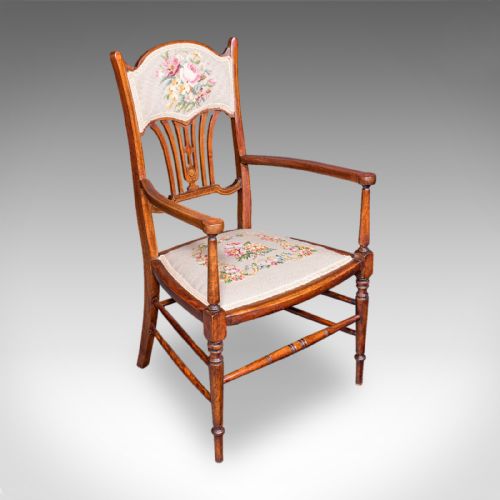
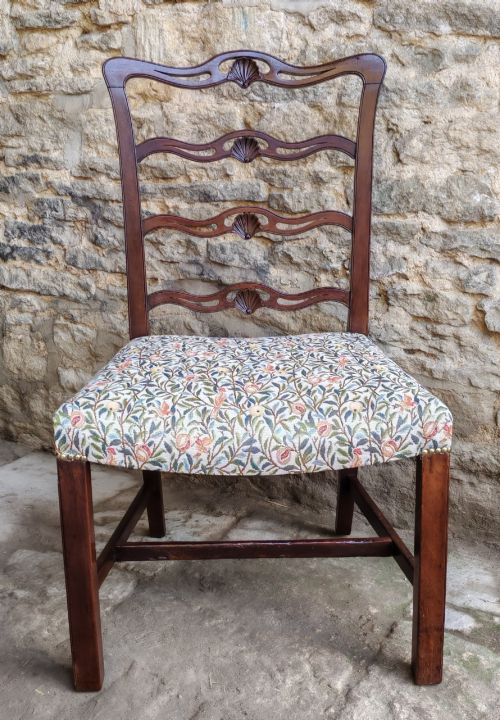
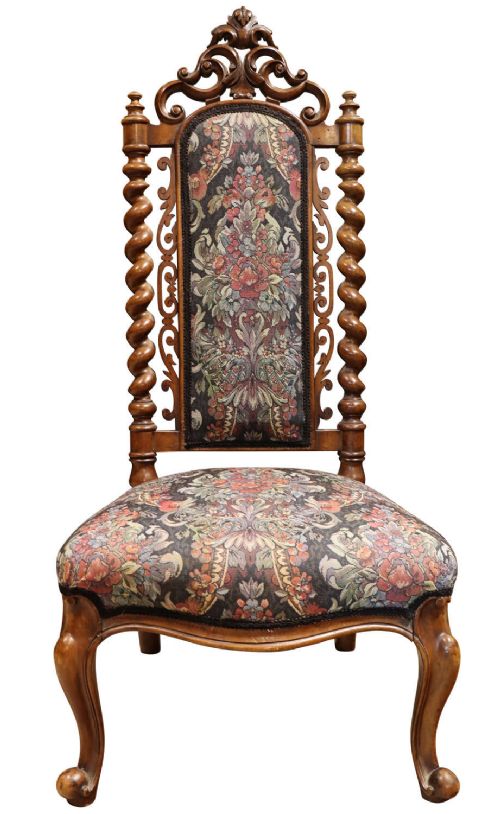
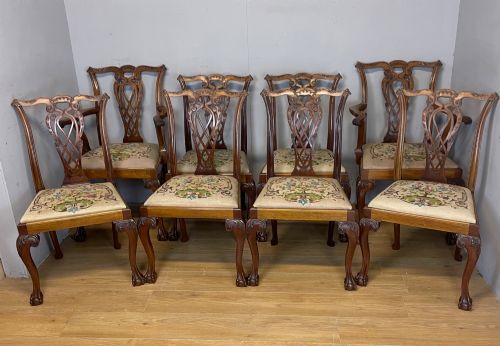
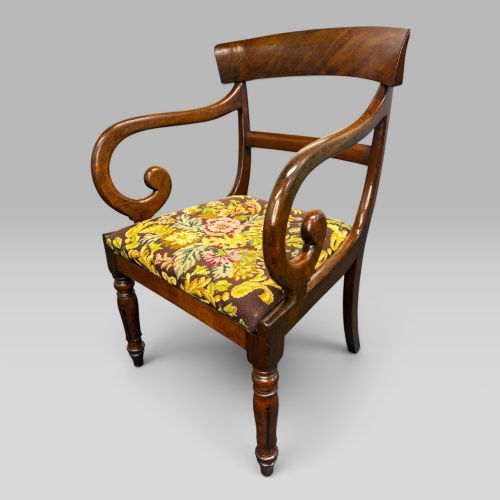
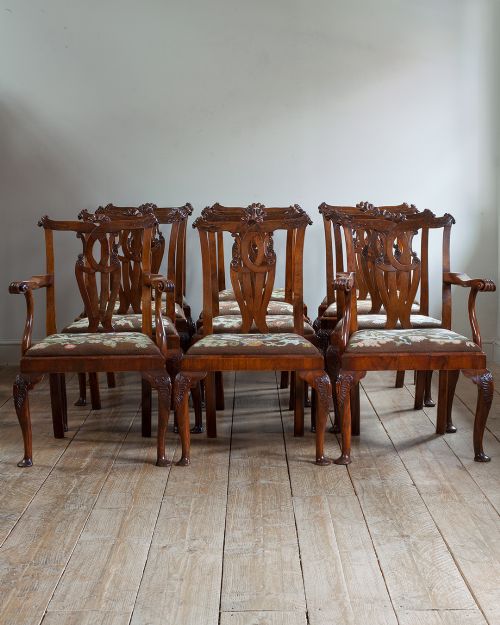
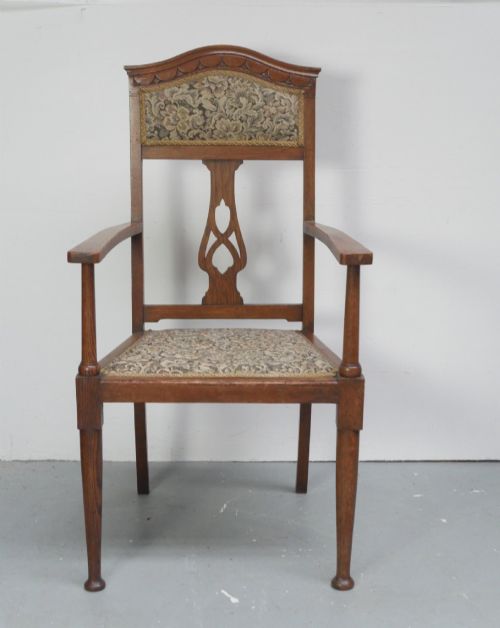
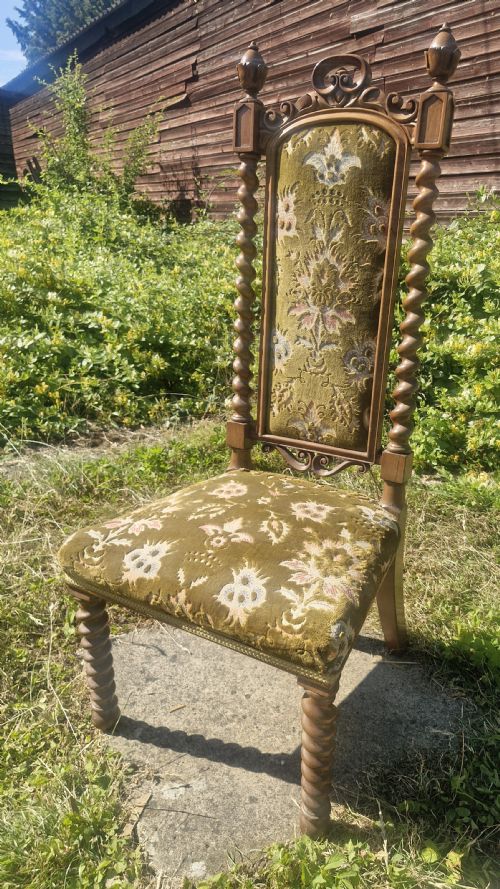
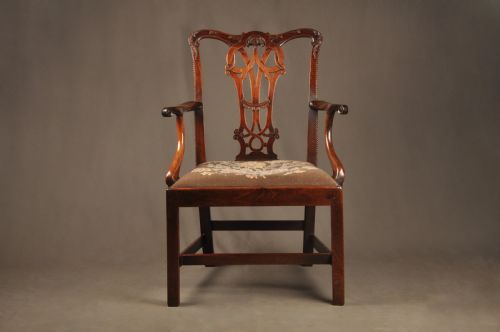
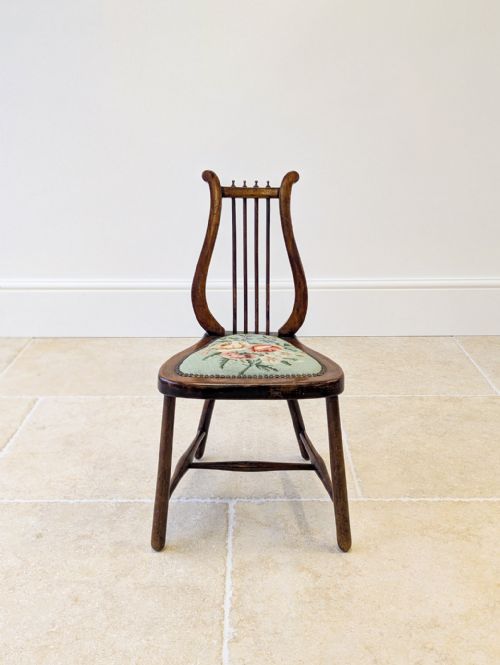
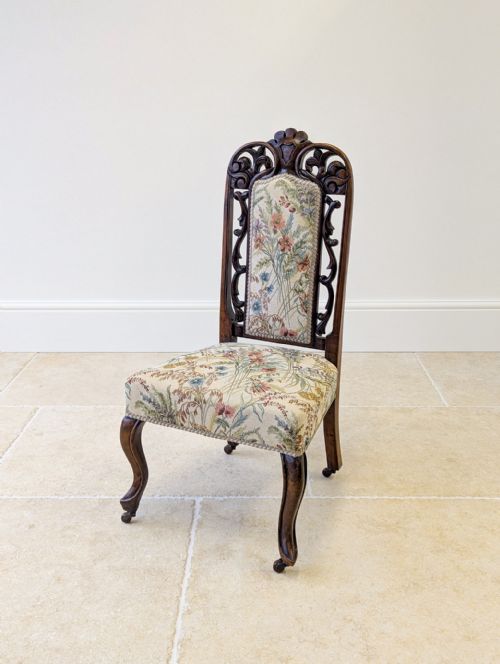
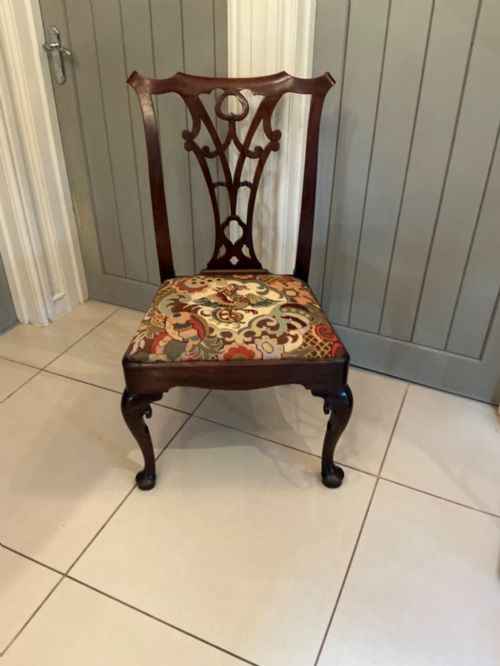
Tapestry seat dining chairs combine sturdy wooden frames with textile upholstery, appearing in forms such as side chairs, armchairs, and larger sets spanning the Georgian, Victorian, and Edwardian eras. Buyers exploring this selection will frequently encounter mahogany and walnut frames paired with woolwork, needlepoint, or woven textile seats.
The objects originate from various periods including the eighteenth and nineteenth centuries, alongside revival styles like Chippendale and Arts and Crafts. Single chairs, pairs, and large matching sets of six or eight emerge across these listings, providing options for both formal dining rooms and occasional seating.
What Varies in Quality
The refinement of the timber carving and the integrity of the frame construction distinguish different examples. Finer pieces demonstrate precise joinery and detailed woodwork executed by skilled hands, whereas simpler iterations rely on plain timber turnings and basic assembly.
The complexity and preservation of the tapestry work also set examples apart. Intricate needlepoint designs executed in wool retain visual depth, while the overall balance of the proportions dictates the visual presence of the chair around a dining table.
Several armchairs incorporate duck egg blue needlepoint, proving that historic household seating occasionally demanded a cheerful splash of colour.
Warings·Liberty & Co
The Tapestry Seat Dining Chairs Glossary
- Tapestry
- A thick textile woven or stitched with decorative designs, frequently utilised for chair upholstery. It provides both structural padding and visual ornamentation to the seat.
- Needlepoint
- A form of canvas work embroidery stitched with wool or yarn, commonly seen on Victorian and Georgian chair seats. This technique allows for detailed pictorial or floral patterns.
- Elbow chair
- An armchair designed with low rests for the arms, often placed at the head of a dining table or used as a salon seat. These pieces match the style of accompanying single side chairs.
- Ladderback
- A chair back featuring horizontal wooden slats resembling the rungs of a ladder. This regional joinery style appears across various eighteenth and nineteenth-century forms.
- Chippendale revival
- A nineteenth or twentieth-century design movement replicating the mid-eighteenth-century aesthetic of Thomas Chippendale. Pieces in this style utilise carved mahogany and ornate splats.
Tapestry Seat Dining Chairs: Frequently Asked Questions
How do I clean tapestry seats?
Vacuum the fabric gently using a soft brush attachment to remove surface dust without pulling the wool fibres. Avoid harsh chemical cleaners that can damage historical textiles.
Test any mild cleaning solution on a hidden underside area first. Professional textile conservation is recommended for older needlepoint seats.
Are these chairs suitable for daily use?
Many solid mahogany and oak dining chairs remain structurally sturdy for regular seating around a table. Check that the wooden joints feel tight and secure before heavy daily employment.
Lighter salon or decorative chairs are better suited for occasional seating or display purposes. Proper maintenance of the wooden frame prevents long-term wear.
How can I tell a Georgian chair from a Victorian copy?
Georgian chairs from the eighteenth century typically exhibit hand-cut joinery marks and lighter timber patination built through decades of handling. The timber selection often leans towards dense mahogany or native walnut with subtle hand-carved details.
Victorian revival pieces from the nineteenth century often feature machine-assisted elements and heavier, darker finishes. Examining the underside and joint construction reveals the manufacturing methods of the period.
Do tapestry seat chairs come in large sets?
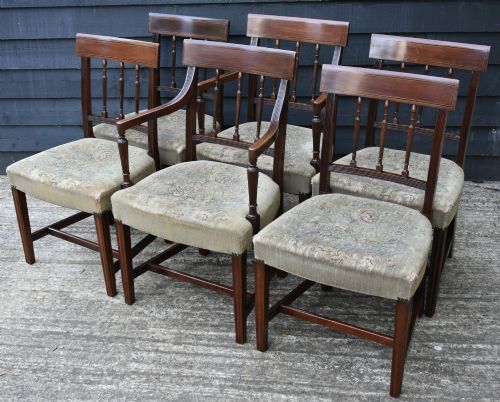
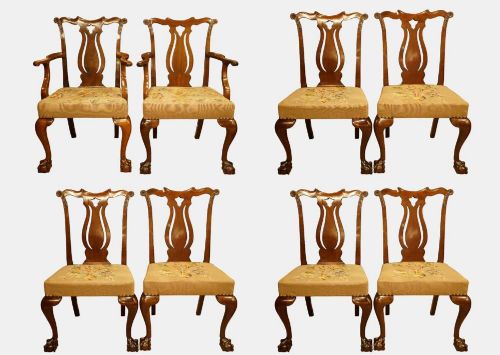
Complete dining sets of six or eight matching chairs appear frequently within historical furniture categories. These larger groups usually combine side chairs with matching armchairs for the heads of the table.
Assembled sets may show minor variations in timber tone or upholstery wear acquired over centuries. Singles and pairs also remain common for accent placement.