






Tapestry Oak Chairs
Tapestry oak chairs bring substantial timber frames and textured woven textiles together, offering period presence and robust everyday seating.
Tapestry Oak Chairs
Tapestry oak chairs combine sturdy hardwood frames with textile upholstery, appearing in forms from single armchairs to sets of dining seats. When you search for tapestry oak chairs, you encounter pieces spanning multiple centuries and revival movements.
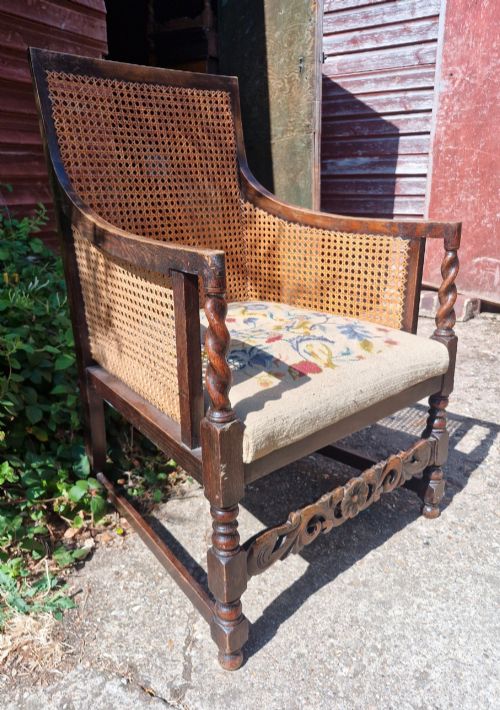
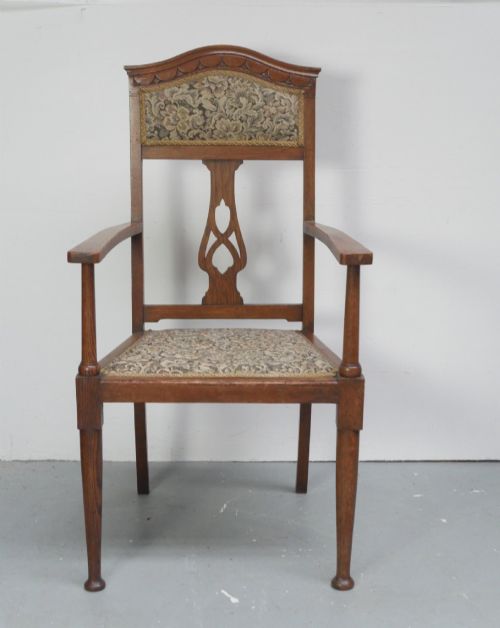
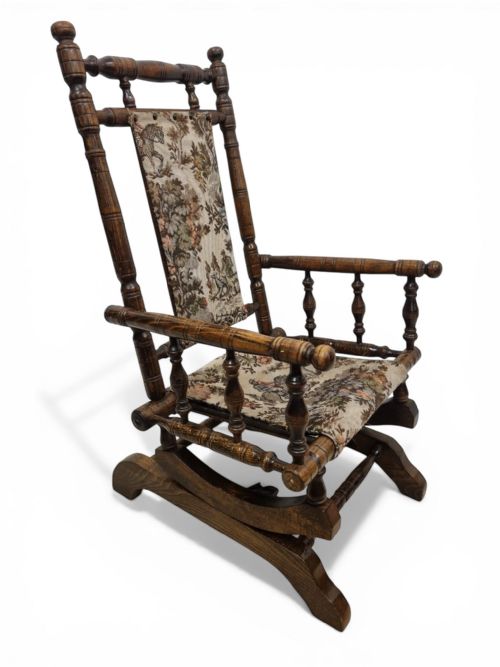
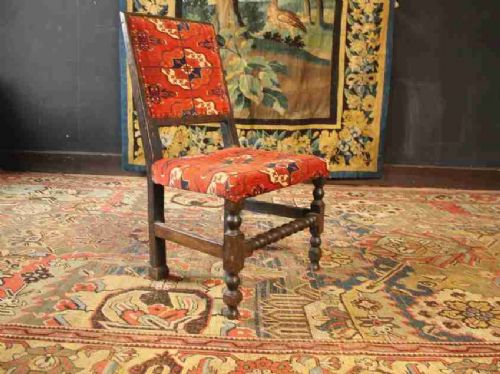
The selections on this page range from early joined back stools and Gothic revival hall chairs to Edwardian armchairs and twentieth century cross-frame seating. Dining chairs and salon suites sit alongside children rocking chairs and corner armchairs.
Origin details stretch from early English workshops to French fauteuils, demonstrating diverse regional interpretations of timber construction and woven decoration.
What varies in quality
Structural integrity separates basic timber frames from sophisticated examples, particularly visible in the tightness of joints and the depth of hand carving. Early joined construction and crisp carving denote superior craftsmanship.
The textile component introduces another tier of distinction, where dense needlepoint and hand-woven tapestry upholstery elevate a piece beyond standard fabric coverings. Original period textiles or faithful needlepoint replacements alter the overall character significantly.
Listings include oak combined with tapestry fabric, textile, brass, and walnut across Victorian, Edwardian, and seventeenth century periods.
Liberty & Co
The Tapestry Oak Chairs Glossary
- Back stool
- An early form of seating featuring a tall wooden back and a padded or solid seat, predating the standard upholstered chair. These pieces often date to the seventeenth century and utilise joined oak construction.
- Bergere
- An enclosed upholstered armchair with wooden framing exposed around the sides and back. This French-inspired form appears in later periods utilising oak and woven elements.
- Fauteuil
- An open-arm armchair with exposed wooden armrests and upholstered back and seat. Originating in France, these chairs bring distinct continental styling to oak framing.
- Prie-Dieu chair
- A low-seated ecclesiastical prayer chair designed with a supportive top rail for kneeling devotions. These pieces frequently feature rich upholstery and Gothic or Victorian revival detailing.
- Cross-frame armchair
- A seat constructed with intersecting diagonal stretchers supporting the base and legs. This form provides distinct geometric stability to twentieth century dining and salon suites.
Tapestry Oak Chairs: Frequently Asked Questions
How do I date an oak chair?
Dating relies on examining construction methods, tool marks, and timber shrinkage patterns across the frame. Joined sections and pegged tenons typically indicate earlier periods, while machine-cut components point to nineteenth or twentieth century production.
Style revivals also provide clues, as Victorian and Edwardian makers frequently emulated seventeenth century Jacobean or Gothic aesthetics.
What is tapestry upholstery?
Tapestry upholstery involves heavy woven textiles or hand-stitched needlepoint featuring pictorial or decorative patterns. These durable fabrics cover the seat pads and backrests of formal armchairs and dining sets.
In older pieces, needlepoint was worked in wool and silk to display elaborate floral or figurative scenes.
Are oak chairs suitable for daily use?
Solid oak provides exceptional structural durability, making these chairs robust enough for regular seating. Frames built with traditional joinery withstand daily weight distribution effectively.
Maintenance focuses on conditioning the wooden surfaces and protecting fragile antique textiles from excessive wear.
Where were these chairs made?
Production spans English regional workshops, Welsh vernacular makers, and continental European design centres. English oak dominates the domestic pieces, while French influences appear in imported fauteuil forms.
Local timber availability dictated whether makers utilised native oak or alternative woods like walnut.