

Tapering Silver Candlesticks
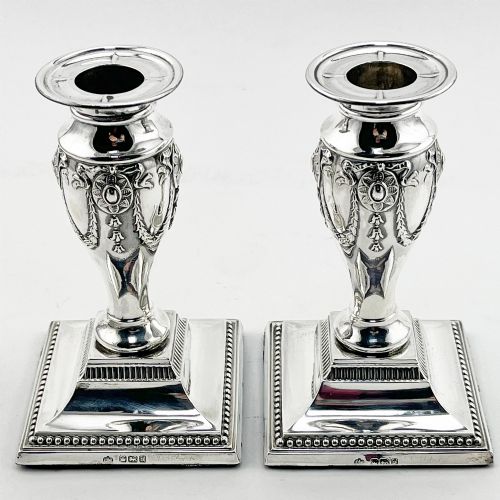
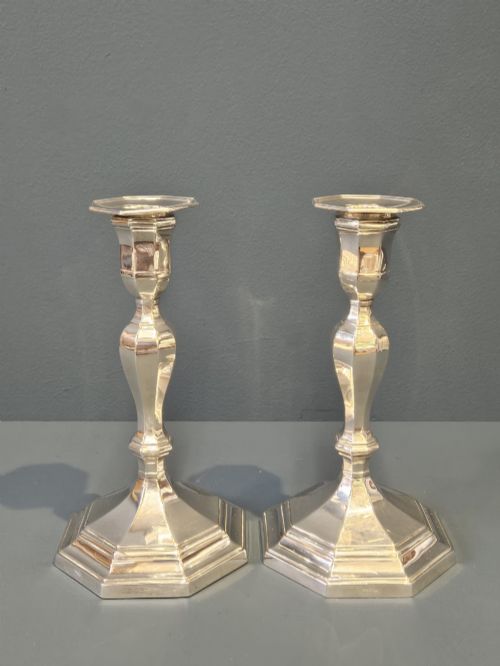
These tapering silver candlesticks bring structural form and reflective light to a dining table or desk, drawing the eye with their slender profiles.
Tapering Silver Candlesticks
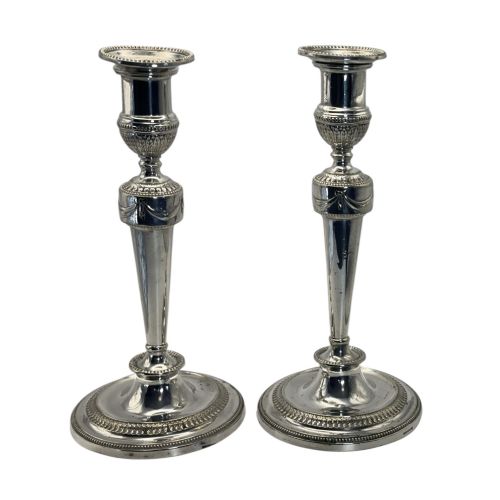
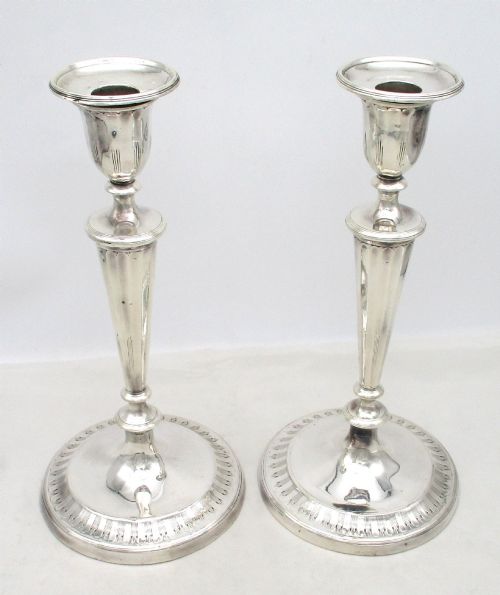
When you search for tapering silver candlesticks, you encounter items designed with stems that narrow gradually from base to nozzle, bringing balance and proportion to domestic lighting. These pieces span multiple decades, drawing on Georgian, Victorian, and Edwardian aesthetic traditions.
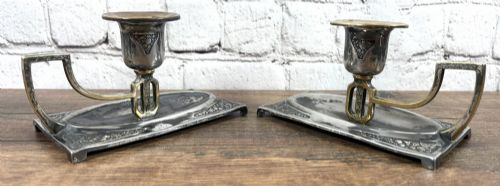
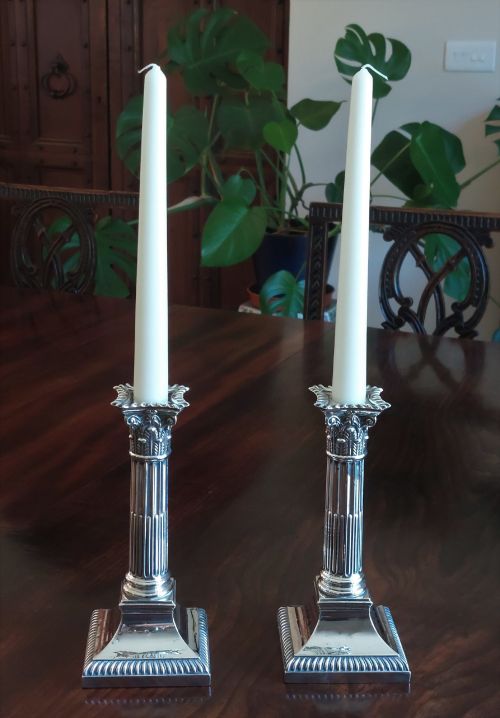
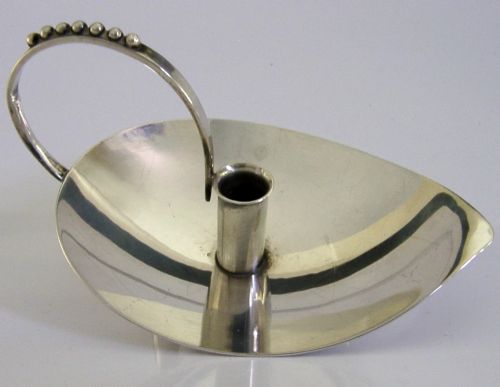
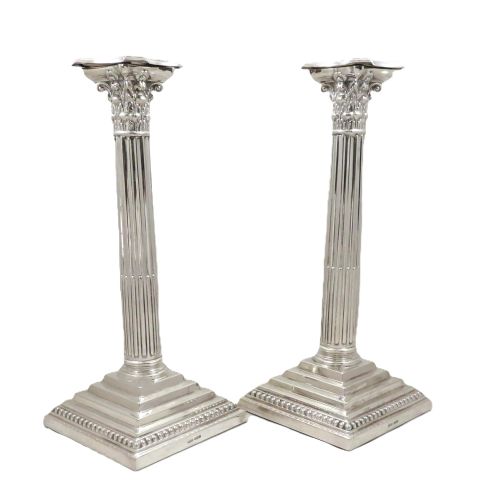
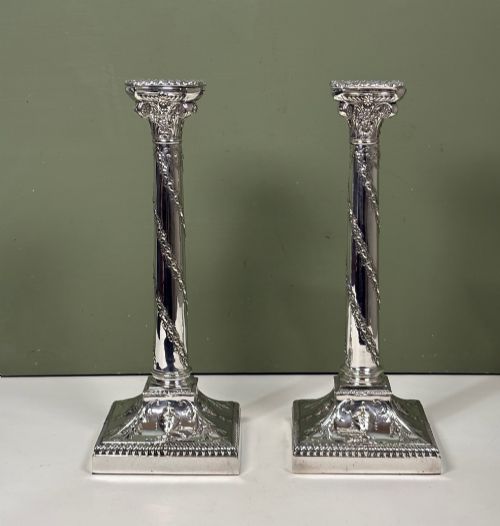
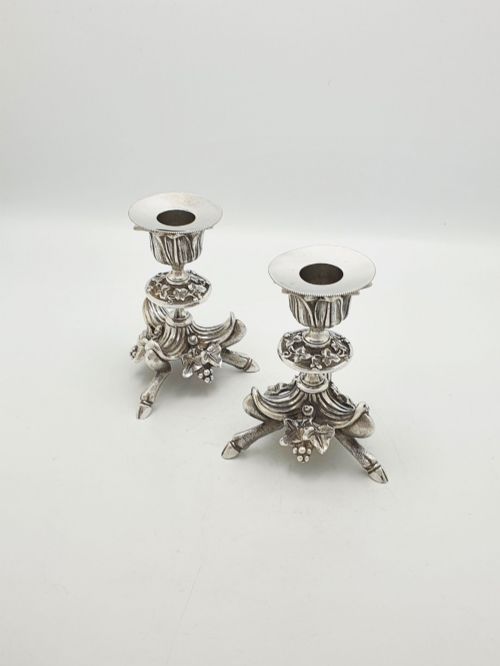
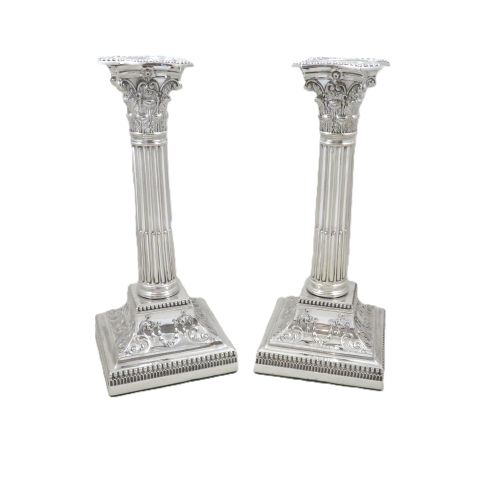
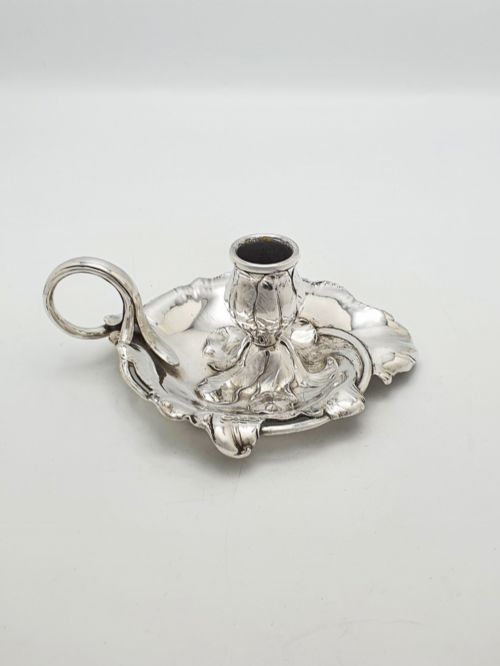
The selection on this page includes pairs and single examples, ranging from towering Corinthian columns to low chambersticks fitted with handle pans. Alongside standard candlesticks, the evidence shows desk accessories and candelabra forms originating across the nineteenth and twentieth centuries.
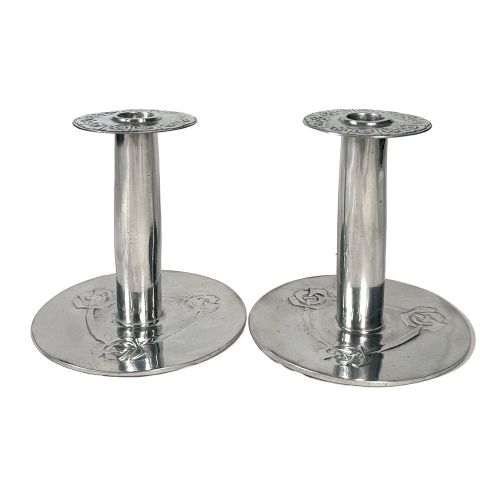
Sterling silver and silver plate dominate the offerings, supplemented by examples in pewter, copper, and electroplated nickel silver. These items reflect stylistic shifts from ornate Rococo revival curves to clean Art Deco geometry and flowing Art Nouveau lines.
Materials and construction methods
Makers utilised sterling silver and silver plate over base metals, often employing techniques such as Sheffield plating or electroplating to achieve a durable metallic finish. Pewter and copper also appear in specific Arts and Crafts designs, demonstrating alternative metallic palettes.
Casting and column construction allowed manufacturers to produce slender, upright profiles that taper towards the top socket. Details like applied borders, fluting, and figural elements were cast separately and soldered or assembled onto the main body.
Some chambersticks retain their tiny conical snuffers, resting snugly in the tray as if waiting for bedtime.
Distinguishing quality across examples
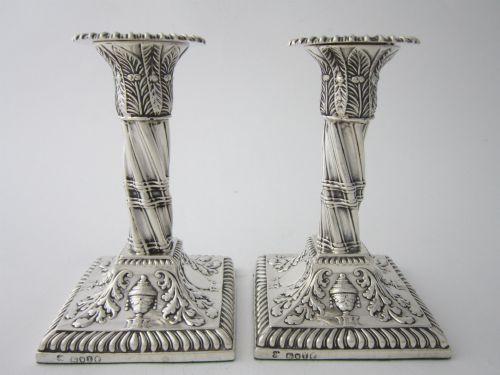
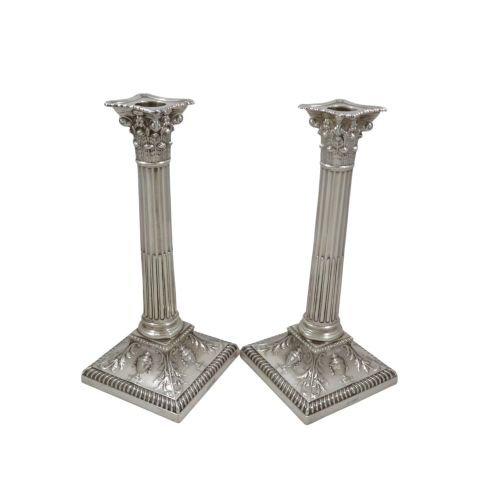
The standard of execution in chasing and surface detail separates workshop output, particularly in how sharply the acanthus leaves or flutes are rendered on column shafts. Heavier gauge metal provides structural rigidity, preventing distortion along the narrow stem.
Maker attribution and crisp hallmarks indicate provenance and adherence to strict assay standards, elevating certain pieces above unmarked or simpler plated variants. The integrity of the plating layer or the thickness of solid silver dictates longevity under regular cleaning.
Garrard & Co.·Mappin & Webb·WMF·Archibald Knox for Liberty & Co·John Pound & Co·Conrad Eduard Mappe·Geoffrey Bellam
The Tapering Silver Candlesticks Glossary
- Chamberstick
- A low candle holder fitted with a shallow pan and a loop handle for carrying from room to room. These items often include a small cone snuffer resting in the tray.
- Corinthian column
- A classical architectural order featuring an acanthus-leaf capital atop a fluted shaft. This motif appears frequently on nineteenth-century shafts.
- Old Sheffield plate
- A material made by fusing a thin sheet of silver to a thicker copper ingot before rolling them together. This technique predates modern electroplating.
- Telescopic
- A design allowing the stem to extend upwards to adjust the height of the candle. These mechanisms are found on specific period candlesticks.
- Nozzle
- The detachable or fixed cup at the top of the stem that holds the base of the candle. It catches dripping wax before it reaches the main body.
Tapering Silver Candlesticks: Frequently Asked Questions
How do I clean them safely?
Use a soft cloth and a gentle silver cleaner formulated to lift tarnish without removing the thin layer of plating. Avoid harsh abrasives, particularly on silver-plated or pewter surfaces.
Take care around soldered joints and engraved details to preserve the original finish over decades of maintenance.
What is the difference between solid silver and plate?
Solid sterling silver consists of a regulated alloy containing high purity precious metal throughout its structure, stamped with official assay office hallmarks. Silver plate involves a base metal core coated with a thin layer of silver.
Over time, heavy polishing can wear down plated surfaces to reveal the underlying metal, whereas solid pieces retain their material composition.
Were these used for dining?
Tall pairs served as centrepieces on dining tables to illuminate evening meals before electric lighting became widespread. Their tapering forms directed light downwards while maintaining sightlines across the table.
Shorter chambersticks were kept in hallways or bedrooms for individual illumination during the night.
How do I spot a chamberstick?
A chamberstick is defined by its low, saucer-like base and an attached handle loop, differing from the tall, weighted pillars meant for stationary display. They often incorporate a socket positioned centrally within the drip pan.
Many examples include a matching conical snuffer designed to extinguish the flame.
What periods do these designs belong to?
The listings span from the late eighteenth century through the Victorian, Edwardian, and Art Deco eras. Each period introduced distinct aesthetic choices, from Neoclassical revival columns to flowing Art Nouveau pewter.
Stylistic cues and maker marks help narrow down the specific decade of manufacture.