

Tapered Silver Candlesticks
These tapered silver candlesticks bring functional light and period form to a table, shaped by Victorian, Edwardian and mid-century hands.
Tapered Silver Candlesticks
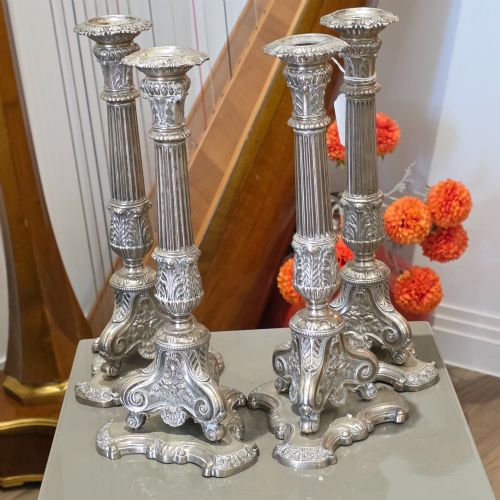
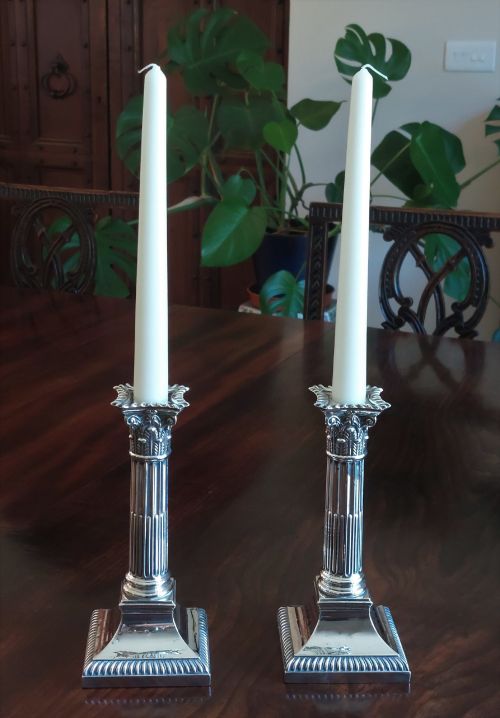
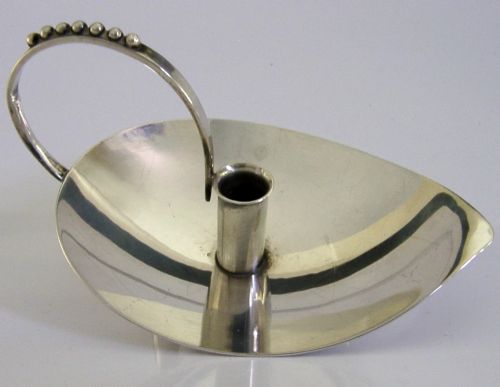
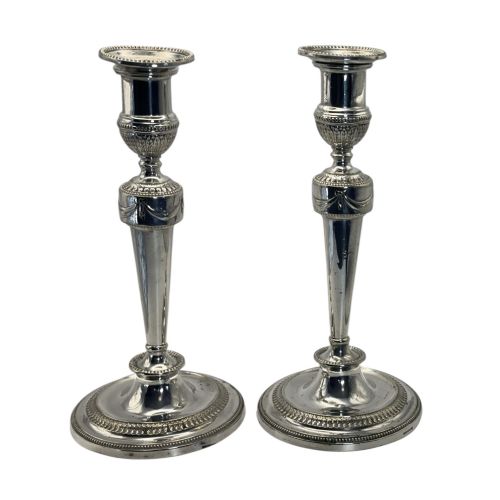
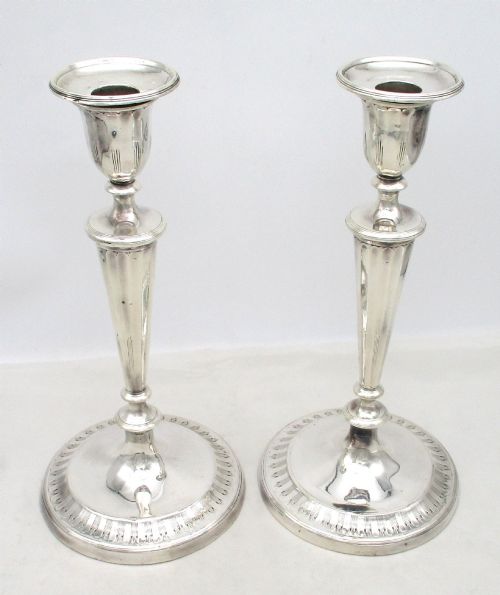
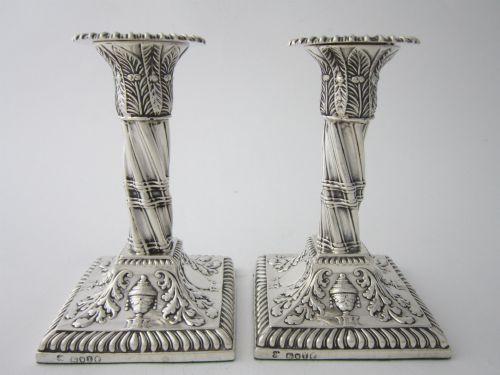
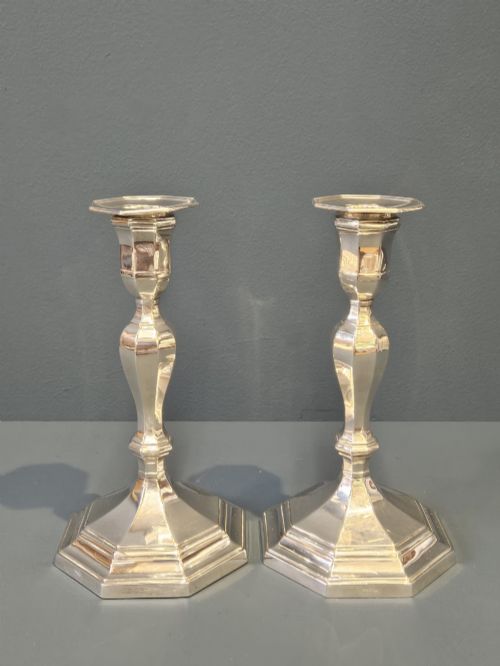
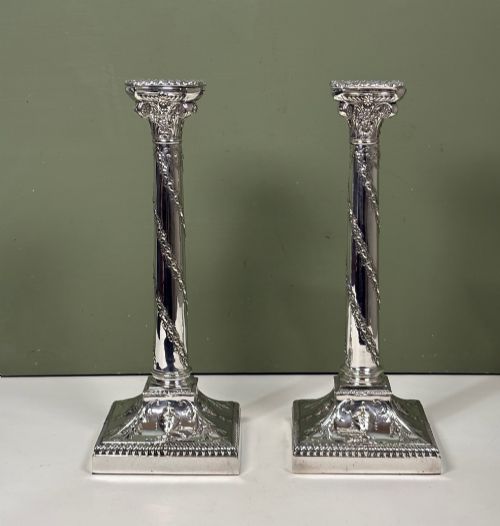
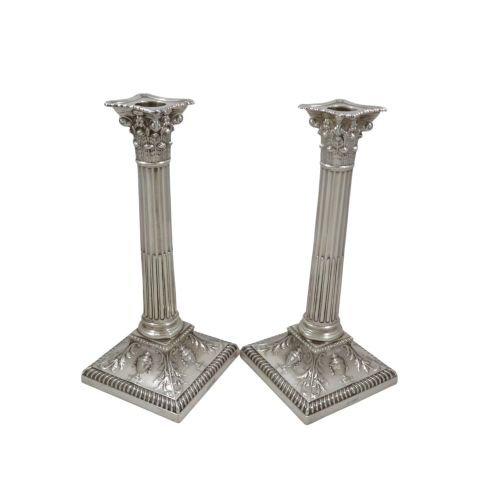
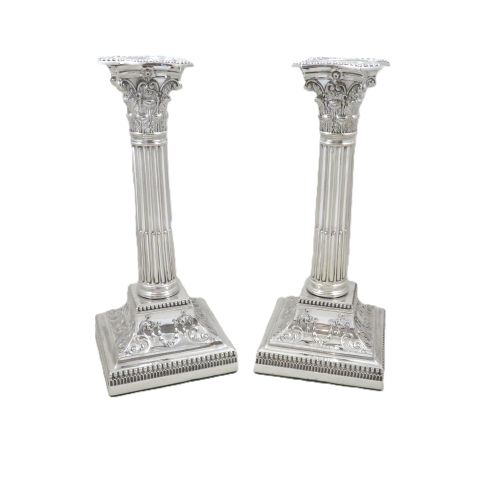
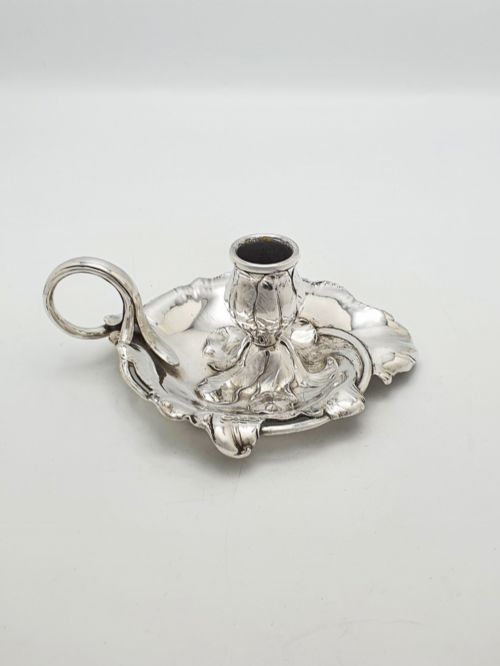
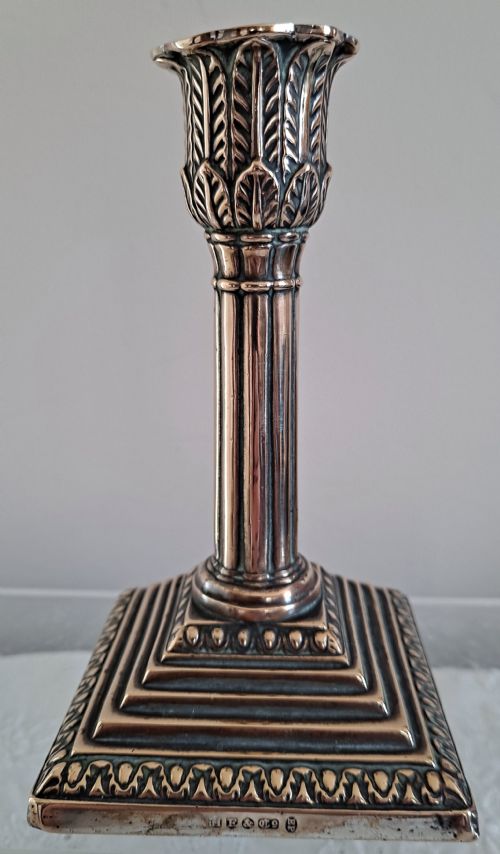
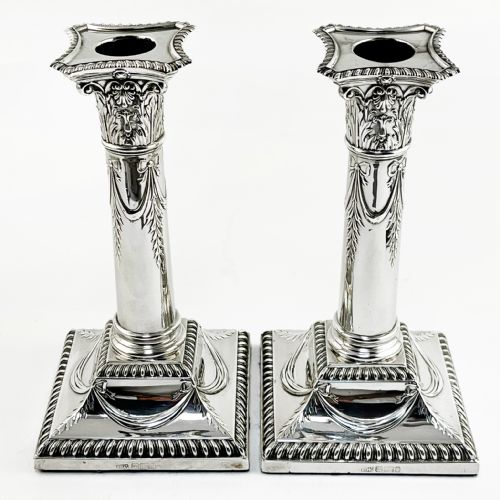
Tapered silver candlesticks encompass forms designed to support wax lighting, ranging from tall column structures to low chambersticks used for bedside reading. The selection on this page leans heavily toward pairs produced during the Victorian and Edwardian periods, alongside earlier Georgian designs and later twentieth-century iterations.
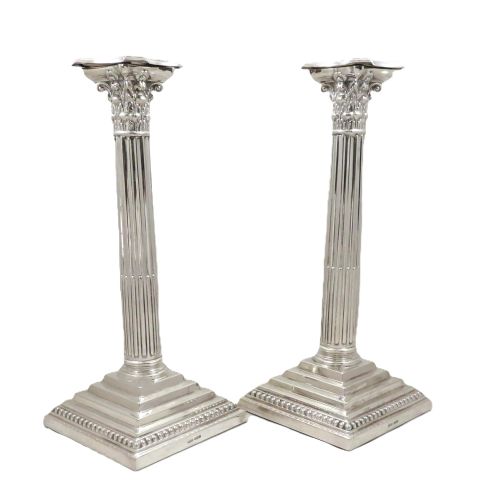
Makers utilised sterling silver and silver plate extensively, alongside metals such as copper, pewter and electroplated nickel silver. Buyers encounter diverse stylistic influences, including Neoclassical Corinthian columns, Rococo Revival curves, Art Nouveau organic lines and clean geometric Art Deco profiles.
Functional desk accessories and chambersticks appear alongside formal table candlesticks and candelabra. Many items reflect specific manufacturing hubs and retail houses from London, Sheffield and continental Europe.
How they were made
Silversmiths formed sterling silver and silver plate through spinning, stamping and casting techniques, often filling the internal bases with weighted resin or plaster to ensure stability. Old Sheffield plate required fusing a thin sheet of silver to a copper base before shaping, while electroplated nickel silver involved depositing a silver coating via an electrical current.
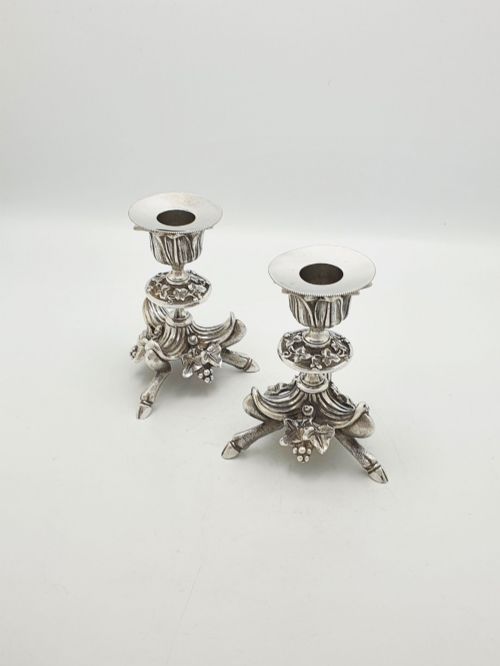
Pewter and copper pieces relied on casting and hammering methods, frequently enhanced with applied enamel details or organic motifs. Component parts like nozzles, drip pans and bases were soldered or screwed together during assembly.
Victorian desk accessories occasionally paired silver with tortoiseshell or pewter, letting writers illuminate their correspondence with natural curiosities.
What varies in quality
The standard of execution depends on the crispness of chased or cast ornamentation, such as acanthus leaves on Corinthian capitals or figural detailing on desk pieces. Substantial gauge metal and clean solder joints indicate superior construction in both solid sterling pieces and plated wares.
Original components, intact weighted bases and legible hallmarks or maker marks elevate the standing of a pair. The survival of matching drip pans and uniform patination across both items distinguish finer workshop production from standard commercial output.
Conrad Eduard Mappe·Garrard & Co·Geoffrey Bellam·Mappin & Webb·WMF·Archibald Knox for Liberty & Co·John Pound & Co
The Tapered Silver Candlesticks Glossary
- Sterling silver
- An alloy consisting of 92.5 percent silver by mass, with the remainder typically copper. British pieces carry hallmarks confirming this standard.
- Old Sheffield plate
- A material made by fusing a thin sheet of sterling silver to a copper ingot before rolling them into sheets. This technique predates modern electroplating.
- Chamberstick
- A low candle holder fitted with a shallow drip pan and a loop handle, historically carried around a house at night.
- Corinthian column
- A classical architectural order featuring capitals decorated with acanthus leaves, frequently adopted for the shafts of formal candlesticks.
- Electroplated nickel silver
- A base metal alloy of copper, nickel and zinc coated with a thin layer of silver using electrolysis.
Tapered Silver Candlesticks: Frequently Asked Questions
How do I clean tarnished silver candlesticks?
Use a soft cloth and a specialised silver polish formulated to lift tarnish without removing the underlying plating or sterling surface. Avoid abrasive brushes that can damage engraved details or thin silver plate.
After polishing, rinse the piece thoroughly in warm water and dry it completely with a lint-free cloth to prevent spotting.
What is the difference between sterling and plated?
Sterling silver is solid metal throughout, bearing official assay office hallmarks that guarantee its purity. Silver plate consists of a base metal, such as copper or nickel silver, coated with a thin layer of pure silver.
Plated items offer the visual appearance of solid silver at a different material composition, while sterling pieces retain precious metal value.
Can I burn real candles in antique sticks?
Real candles function effectively provided the base sits level and the candle diameter matches the nozzle aperture. Use wax adapters or foil if the taper is slightly loose to keep it upright.
Monitor burning candles closely to prevent wax overflow from reaching delicate antique surfaces or old felt bases.
How do I date a pair of candlesticks?
Examine the hallmarks on sterling pieces for specific date letters, maker stamps and town marks corresponding to British assay office records. Stylistic clues like Neoclassical columns or Art Nouveau whiplash lines provide reliable periods for unmarked plated items.
Construction methods, such as Old Sheffield plate seams or weighted base materials, also indicate the era of manufacture.