
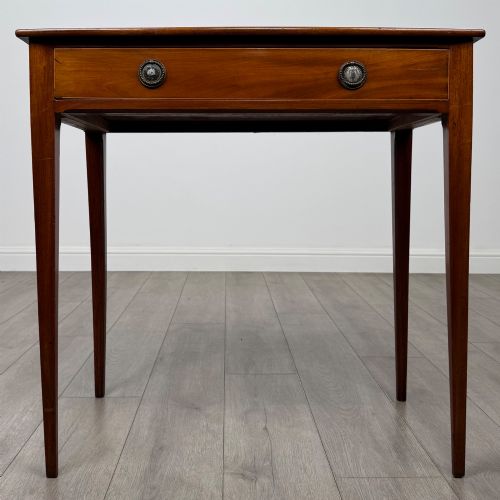
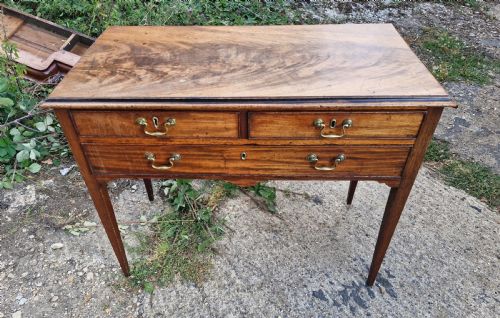
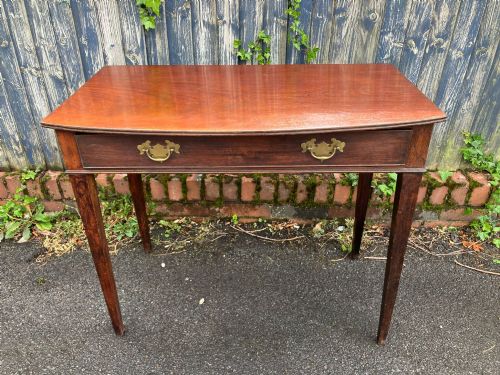
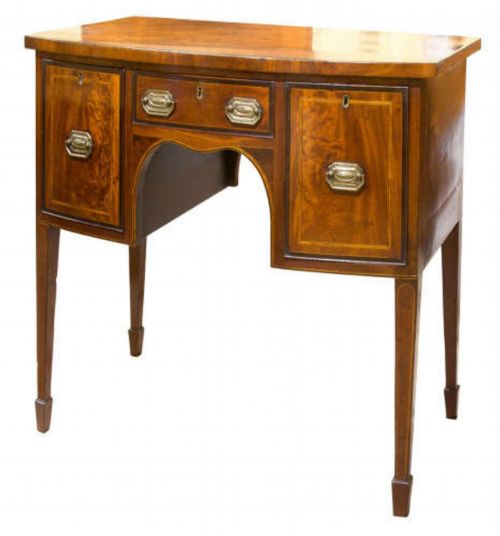
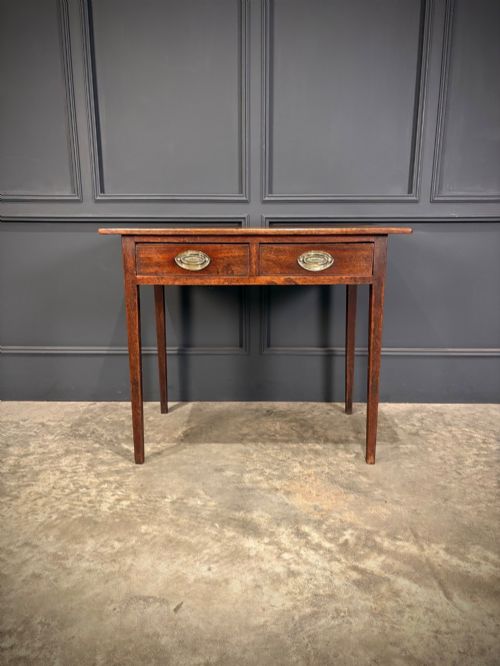
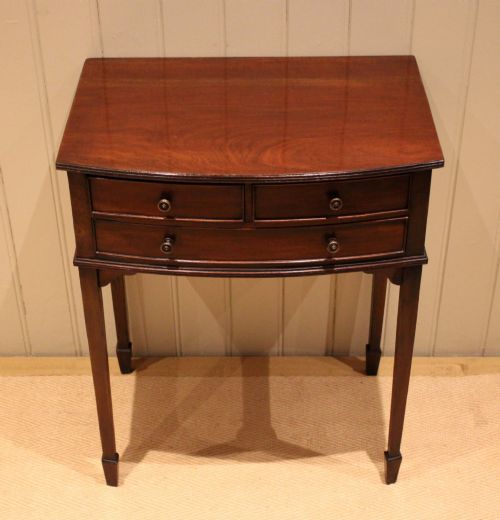

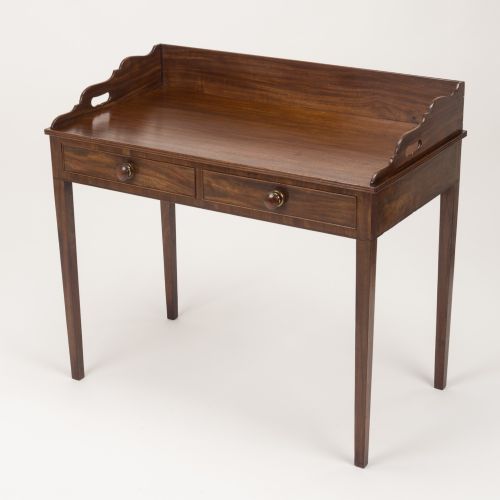
Tapered Leg Dressing Table
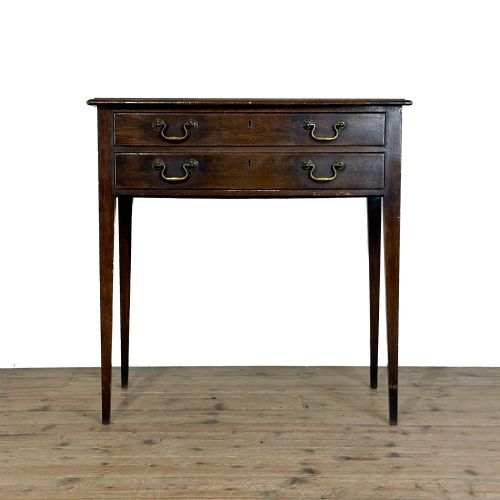
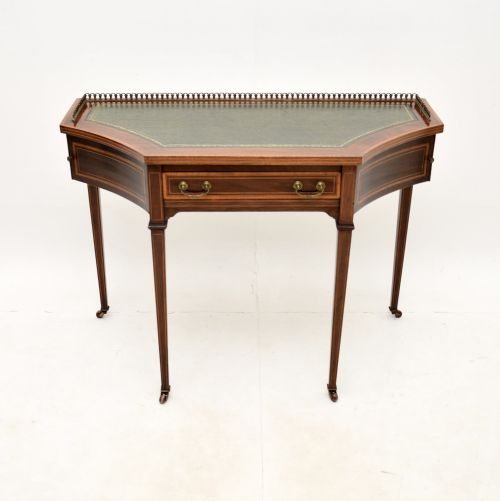
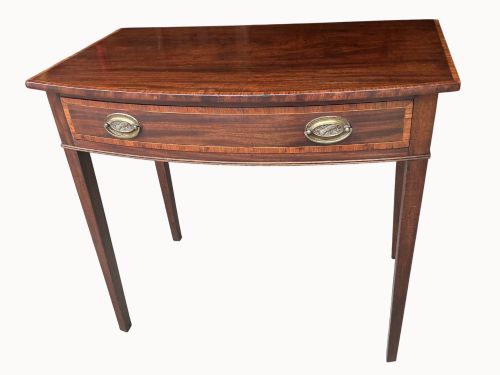
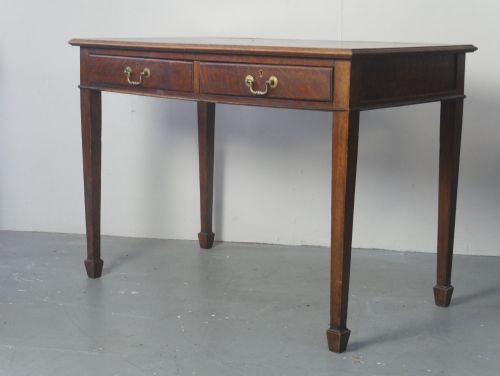
A tapered leg dressing table offers clean lines and period charm, making it a practical addition to any bedroom or dressing room.

Tapered Leg Dressing Table
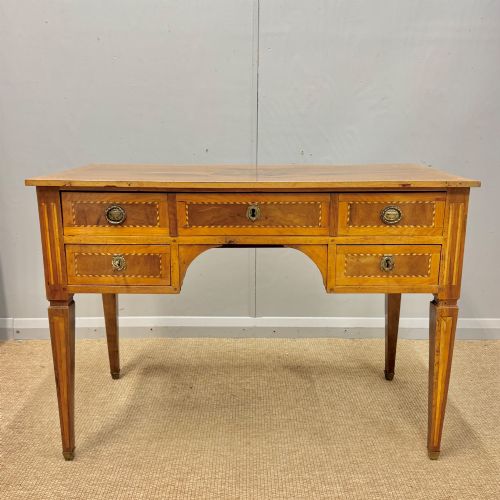
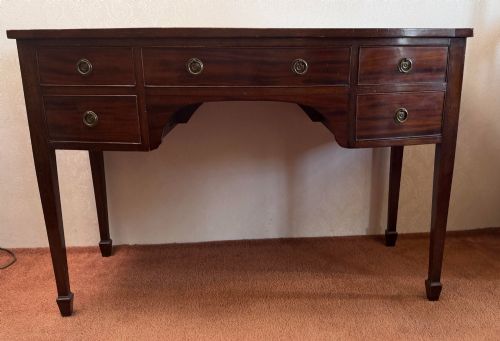
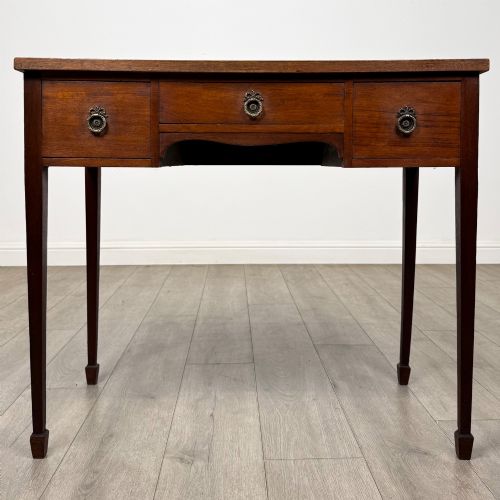
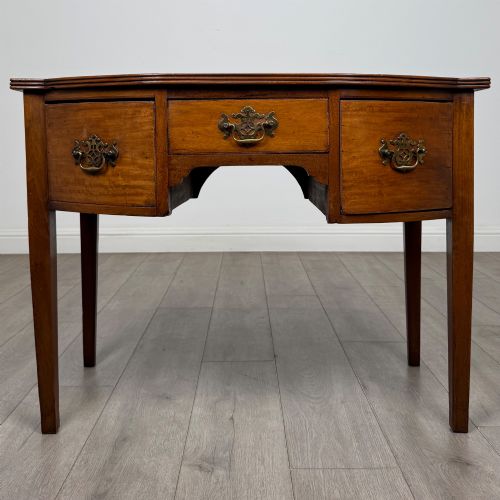
A tapered leg dressing table brings refined proportions to the bedroom, often featuring multiple drawers for storage. The evidence points to examples spanning the Georgian, Regency, and Edwardian periods.
While the archive holds a specific example of a tapered leg dressing table, current listings include related forms such as writing tables, side tables, and dressing tables in various period styles.
What varies in quality
Quality rests in the crispness of the timber selection, such as figured mahogany or burr ash, and the precision of decorative elements like boxwood inlay.
Construction standards are visible in the dovetailing of drawers, the choice of secondary woods, and the overall balance of the proportions.
Makers occasionally added secret drawers to keep private correspondence safe from wandering eyes.
The Tapered Leg Dressing Table Glossary
- Tapered leg
- A support column that narrows gradually toward the foot. This form is typical of Neoclassical and Sheraton designs.
- Inlay
- Pieces of contrasting timber or other materials fitted into a recess flush with the surface. Boxwood was commonly utilised for this decorative work.
- Marquetry
- Elaborate patterns formed from fitted veneer pieces applied to a carcass. This technique appears on select desks and dressing tables.
- Lowboy
- A small table with drawers, typically standing on four legs. These pieces often date from the Georgian period.
- Bow front
- A convex curved cabinet front. This shape is frequently found on side tables and sideboards from the eighteenth and nineteenth centuries.
Tapered Leg Dressing Table: Frequently Asked Questions
What periods do these tables come from?
The available pieces span the eighteenth century, the Georgian and Regency eras, through to the Edwardian period and the early twentieth century.
Craftsmanship and timber choices evolved across these eras, moving from solid Georgian cabinet-making to lighter Edwardian revival styles.
How were dressing tables used historically?
These tables served as personal grooming stations in bedrooms and dressing rooms, holding mirrors, cosmetics, and brushes.
Many designs incorporate drawers to keep personal items organised while maintaining a neat surface.
Can I use a dressing table as a desk?
Many period dressing tables and writing tables share similar proportions and kneehole spaces, making alternative daily use straightforward.
Consider the clearance height and drawer configuration beneath the top to ensure comfortable seating.
How do I identify a Georgian piece?
Georgian furniture often displays solid timber construction, hand-cut dovetails, and restrained decorative carving or inlay.
Stylistic cues include straight or tapered legs, brass drop handles, and classical proportions associated with the period.