

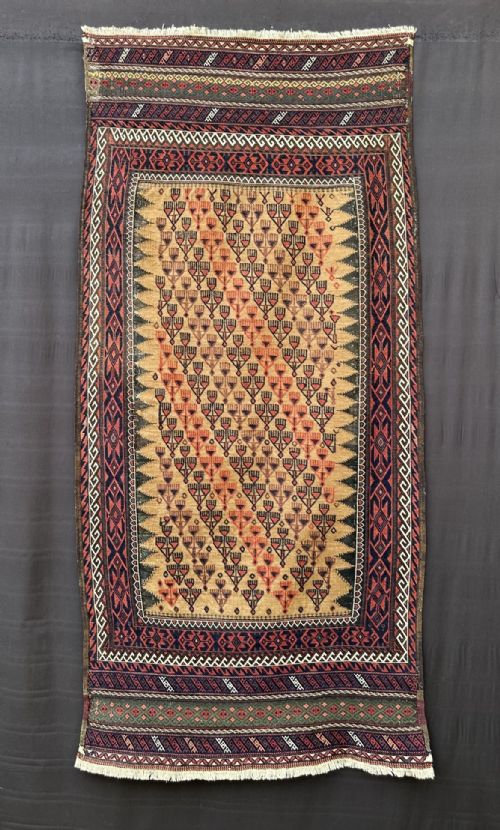


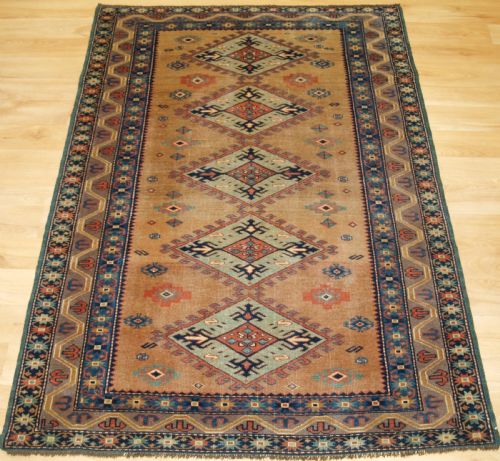


Tan Wool Rug
These tan wool rug pieces are handwoven tribal floor coverings that bring earthy warmth and texture to an interior.
Tan Wool Rug
A tan wool rug encompasses handwoven tribal and village carpets from Persia, Anatolia, the Caucasus, and Central Asia dating from the late nineteenth century through the early twentieth century. You are most likely to encounter village and nomadic pieces featuring earthy hues, camel hair, and traditional tribal motifs.
The selection ranges from small prayer rugs and long runners to dining sofreh kilims and larger room-size carpets. These flatweaves and pile rugs reflect the distinct weaving traditions of specific nomadic groups and regional weaving centres.
How they were made
Weavers utilised hand-spun wool, cotton, and camel hair, combining natural fleece tones to achieve rich, un-dyed brown and tan shades. These organic materials were knotted or flatwoven on traditional vertical and horizontal looms by tribal artisans.
Mixed techniques frequently appear, pairing durable wool pile with flatwoven kilim ends or employing camel wool for enhanced softness and resilience. Vegetable and natural dyestuffs provided the underlying palette that softened gracefully over generations of use.
Tan Wool Rug Retail Price Guide 2026
Typical asking prices for tan wool rug among the pieces listed under this phrase on Sellingantiques today, from the lower quarter to the upper quarter. They describe what is for sale here now, not the wider market.
Listings span multiple decades from the 1870s to the 1930s, featuring wool, cotton, and camel hair across Persian, Caucasian, and Anatolian styles.
What varies in quality
The fineness of the weave and the integrity of the foundation dictate the calibre of each piece, distinguishing tightly constructed village pieces from coarser nomadic work. Superior examples display exceptional wool quality with high lanolin content that yields a supple handle and enduring resilience.
Cohesion of design, clarity of tribal motifs, and subtlety of natural colour variation separate standard examples from exceptional survivals. The best pieces maintain their structural integrity while showing the organic character earned through decades of history.
The Tan Wool Rug Glossary
- Sofreh
- A ceremonial spread or dining cloth woven by tribal groups, often functioning as a flatweave or kilim. These textiles served domestic and social purposes within nomadic households.
- Prayer rug
- A small format rug featuring a mihrab or arch design used to designate a sacred space for personal devotion. They frequently display the distinctive wool and colour palette of their specific weaving region.
- Runner
- A long, narrow carpet format traditionally designed for hallways, corridors, or narrow spaces. Antique examples often showcase extended repeating medallion or geometric borders.
- Flatweave
- A textile produced without pile by interweaving warp and weft threads together tightly. These lighter pieces include kilims and sofrehs.
Tan Wool Rug: Frequently Asked Questions
Where were these tribal rugs made?
These textiles originate from nomadic and village communities across Persia, Anatolia, the Caucasus, and regions bordering Afghanistan. Tribal groups such as the Baluch, Timuri, and Lori produced them for daily domestic use.
Each weaving region developed distinct geometric vocabulary, structural techniques, and colour preferences tied to local materials. Geography and tribal migration directly shaped the patterns found on the loom.
Are these rugs durable enough for daily use?
Hand-spun wool and camel hair possess natural resilience and high lanolin content that withstands moderate foot traffic. Placing a quality underlay beneath the rug prevents slipping and reduces fibre friction.
Periodic rotation ensures even wear patterns across the surface in busier areas of the home. Antique tribal floor coverings remain remarkably practical when given sensible care.
What gives these rugs their natural tan colour?
The natural tan and brown shades come from un-dyed sheep wool, camel hair, and camel wool. Weavers selected fleeces with specific warm undertones to create neutral backgrounds without synthetic dyes.
Over decades of exposure to light and air, these natural fibres develop a rich patina that cannot be replicated artificially. This organic palette forms the foundation of their enduring aesthetic appeal.