
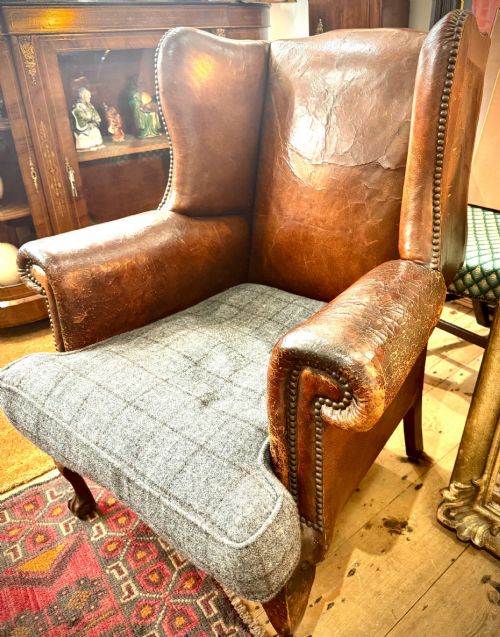


Tan Leather High Chair
These tan leather high chair options bring substantial historic seating into a room, offering rich patinated hides and sturdy timber frames.
Tan Leather High Chair
Most examples hail from the Victorian era and the early twentieth century, utilising durable hides paired with oak, mahogany, walnut, and fruitwood frames. You will frequently find styles drawing on Victorian Gothic Revival, Arts and Crafts, and Georgian aesthetics within this selection.
How they were made
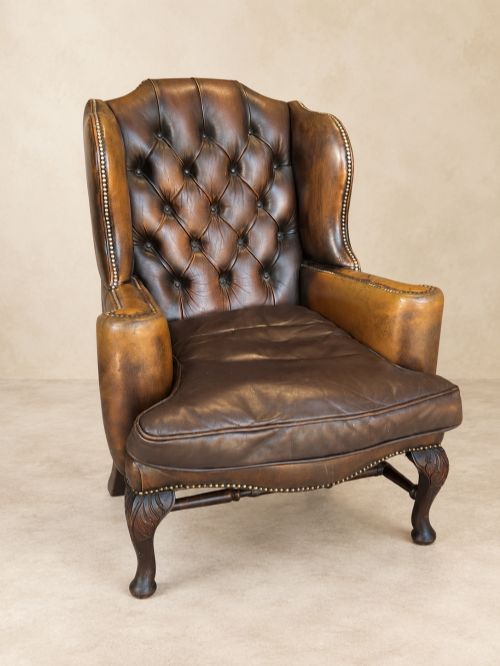
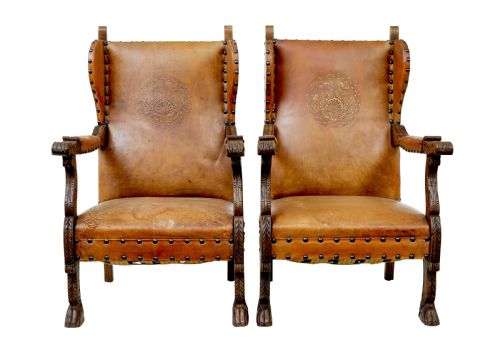
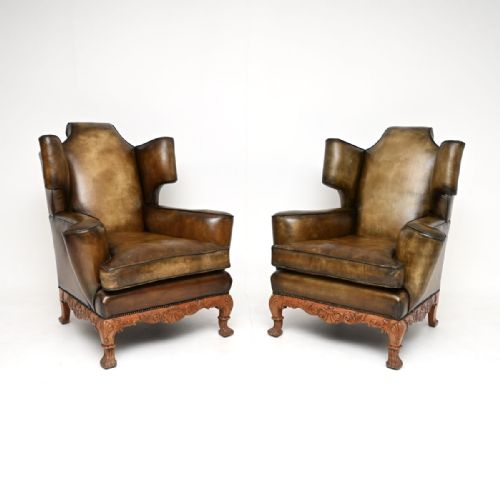
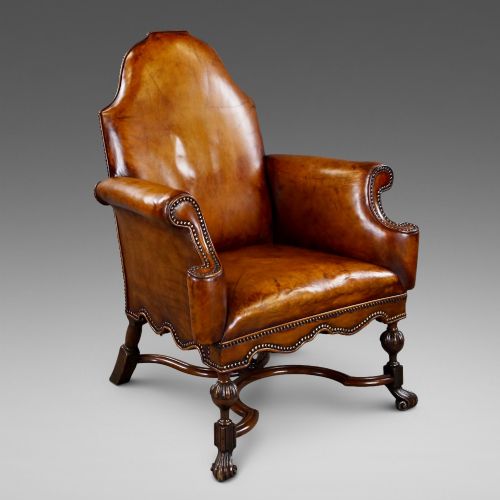
The makers constructed these frames using solid hardwoods like oak, walnut, and mahogany, often incorporating carved details, cabriole legs, or turned wooden supports. Leather upholstery was then secured to the frames, occasionally featuring embossed patterns or hand-dyed finishes.
Metal elements such as brass studs frequently appear along the seams of the leather, providing structural fastening as well as decorative contrast against the hide and timber.
What varies in quality
The distinction between ordinary and exceptional pieces rests in the depth of hand-carving on the wooden frame and the richness of the patinated leather. Finer examples display crisply articulated woodwork, such as lion carvings or turned stretchers, combined with supple, hand-dyed hides.
Proportion and structural integrity also dictate worth, where balanced frames and well-preserved upholstery demonstrate superior craftsmanship from their respective periods.
Robert Mouseman Thompson
The Tan Leather High Chair Glossary
- Wingback
- An armchair with side panels designed to shield the sitter from draughts. These panels extend upward from the arms.
- Cabriole leg
- A furniture leg that curves outward and then tapers inward, mimicking the shape of an animal's leg. It often terminates in a carved foot.
- Library chair
- A sturdy, comfortable armchair traditionally suited for reading rooms and studies. These typically feature upholstered seats and supportive armrests.
- Patina
- The deep sheen and surface alteration developed on leather and wood through age and handling. This quality signals genuine historic use.
Tan Leather High Chair: Frequently Asked Questions
Are these actual antique chairs?
The selection includes pieces originating from the nineteenth century up through the mid-twentieth century, encompassing Victorian and later periods.
Materials such as solid oak, walnut, and hand-dyed leather reflect the traditional construction methods of these historic eras.
How do I care for old leather?
Historic leather benefits from gentle cleaning and occasional conditioning to maintain the suppleness of the hide.
Keeping these chairs away from direct heat sources and strong sunlight prevents the leather and wood from drying out over time.
What rooms suit a high wooden chair?
These imposing seating options fit well in studies, libraries, or spacious living areas where their substantial frames can command attention.
Pairing them with wooden desks or placing them beside reading tables highlights their historic architectural presence.
How can I tell the period?
Stylistic clues such as Victorian Gothic carvings, Arts and Crafts simplicity, or Art Deco lines help identify the era of manufacture.
Wood types also offer guidance, as walnut and heavy oak point toward specific nineteenth and early twentieth-century revival movements.