
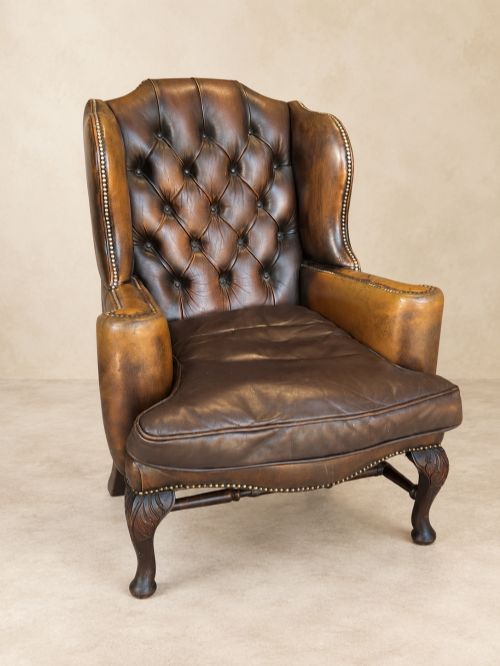
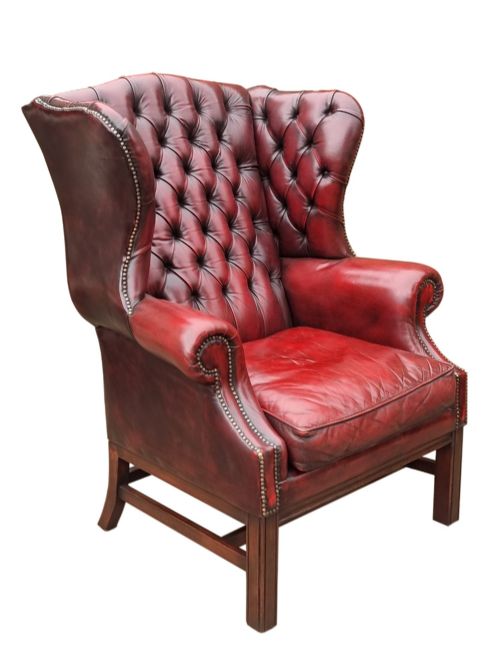


Buttoned Leather High Armchair
A buttoned leather high armchair brings deep comfort and formal presence to a room, spanning styles from Victorian revival to Regency.
Buttoned Leather High Armchair
When you search for a buttoned leather high armchair, you encounter substantial seating designed to support the back and head while keeping out draughts. These pieces include wing backs, library chairs, and porters armchairs originating from the nineteenth and twentieth centuries.
The versions most commonly met on this page span Victorian models, Edwardian examples, and later revivals from the 1920s and 1930s. They often appear in groupings or pairs, as well as single library and gaming chairs.
Makers and designers from past centuries influenced these forms, leading to Georgian style interpretations alongside Gothic Revival pieces attributed to specific architects like A.W.N. Pugin. Each variation reflects the domestic requirements of its period, from private libraries to grand halls.
How they were made
These armchairs rely on sturdy timber frames constructed from mahogany, oak, walnut, and general wood or timber. The woodwork often supports structural integrity while displaying carved details such as lion motifs or cabriole legs.
Upholstery involves high-grade leather, sometimes hand dyed to achieve rich brown and tan tones. Craftsmen secure the leather hides using brass tacks, creating the characteristic buttoned or tufted finish across the backrest.
Some library chairs included hidden compartments for pipes or gaming pieces, keeping gentlemanly distractions close at hand.
What varies in quality
The calibre of a buttoned leather high armchair depends on the depth and precision of the buttoning work and the condition of the leather hide. Hand dyed finishes and patination show how well the material ages over decades.
Frame construction also dictates value, distinguished by dense hardwoods like mahogany and walnut rather than softer timber. Carved elements, such as lion carvings on the arms or legs, separate standard utilitarian seating from elaborately commissioned library and porter chairs.
The Buttoned Leather High Armchair Glossary
- Wing Back
- An armchair style featuring protective side panels designed to shield the sitter from draughts and retain heat from a fireplace. These wings merge smoothly into the armrests.
- Buttoned
- An upholstery technique where indentations are created across the leather surface using secured buttons, forming a diamond pattern. This method keeps the internal padding evenly distributed.
- Porters Armchair
- A hooded seating form historically used in draughty halls by attendants who monitored front doors. The enclosed top creates a private, sheltered space for the occupant.
- Cabriole Leg
- A furniture leg featuring a double curve, typically arching outward at the knee and tapering inward at the foot. This design originates from classical furniture traditions.
- Gothic Revival
- An architectural and design movement drawing inspiration from medieval forms, featuring pointed arches and heavy oak frames. It gained prominence during the nineteenth century.
Buttoned Leather High Armchair: Frequently Asked Questions
What is a buttoned leather high armchair?
A buttoned leather high armchair is a tall seating piece designed with a deep backrest, upholstered in leather, and secured with tufted buttons. These chairs often feature wings or enclosed hoods to provide comfort and warmth.
They appear across various periods including the Victorian era, the Edwardian period, and later twentieth-century revivals, serving as functional reading or library furniture.
How were these armchairs used historically?
Historically, these high-backed chairs stood in libraries, studies, and grand hallways where occupants sought privacy and protection from draughts. Porter chairs sheltered doorkeepers, while library chairs supported long hours of reading.
Their robust timber frames and leather upholstery suited heavy daily use in domestic and institutional settings.
How do I live with a high leather armchair?
Living with a large leather armchair requires positioning it with enough surrounding space to let its silhouette and carved details stand out. Leather benefits from steady room temperatures and occasional conditioning to maintain its suppleness.
Pairing the chair with a reading lamp or placing it near a bookshelf highlights its traditional library function.
How can I tell the periods apart?
Dating these armchairs involves examining the timber species, leg shapes, and upholstery styles. Victorian and nineteenth-century pieces often display heavier oak construction or carved lion details, while 1920s and 1930s revivals mimic earlier Georgian aesthetics.
Subtle changes in the cut of the wings and the density of the brass tacks also provide clues to the era of manufacture.