

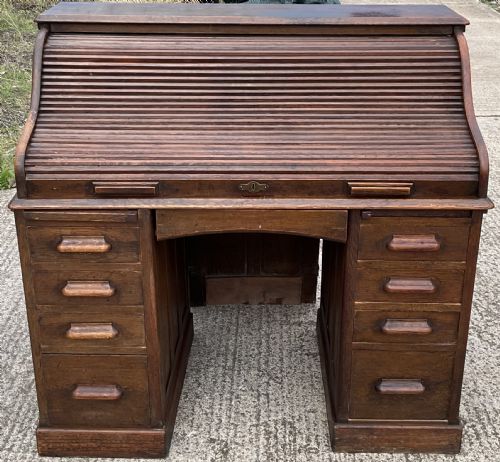
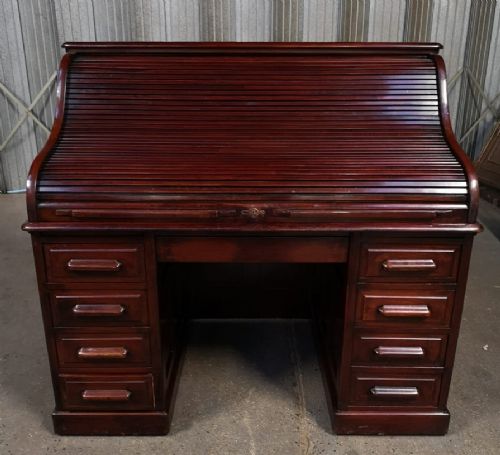
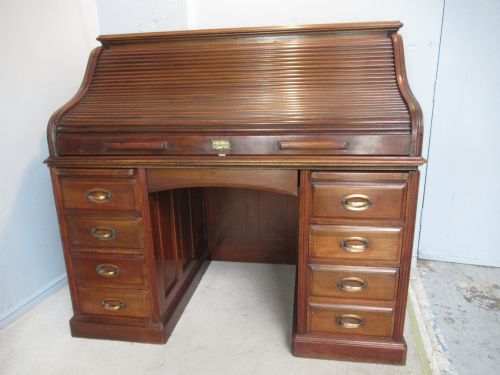
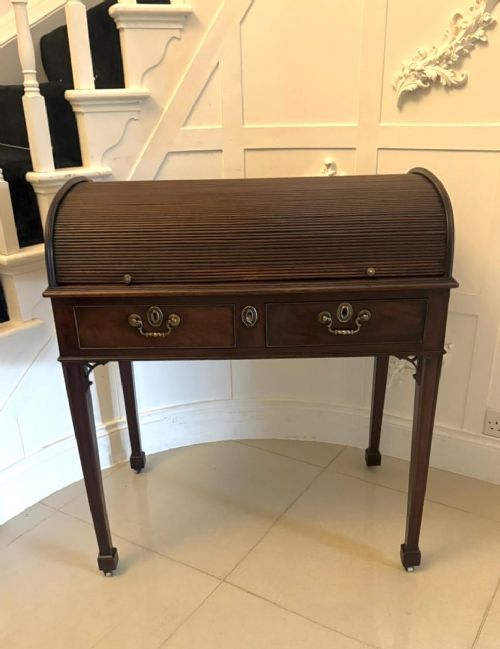


Tambour Writing Table
These tambour writing table pieces are refined desks featuring sliding slatted shutters that conceal your correspondence and papers.
Tambour Writing Table
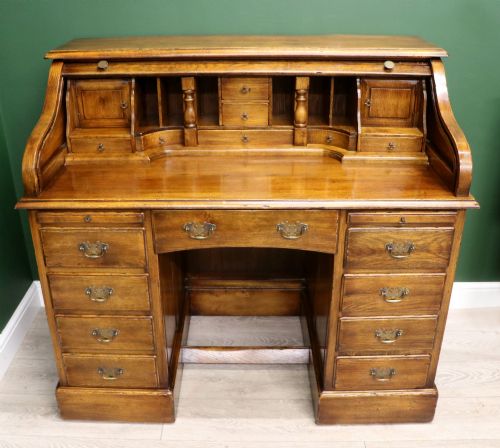
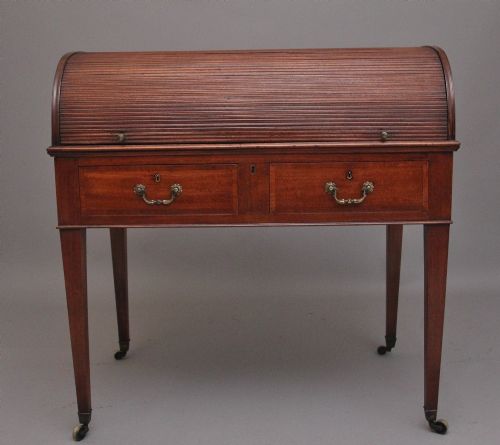
A tambour writing table is a refined desk designed for correspondence, featuring a flexible slatted shutter that slides in tracks to conceal the writing surface and inner pigeonholes. You meet these pieces in periods ranging from the eighteenth century through the Georgian, Regency, and Victorian eras up to Edwardian and later twentieth-century iterations.
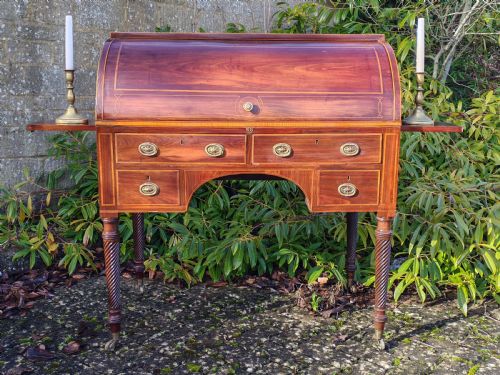
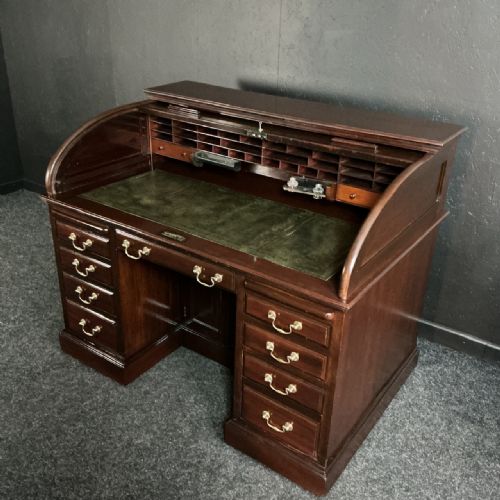
The form typically combines a writing surface - often fitted with pull-out slides or a leather insert - with a superstructure of small drawers and compartments enclosed by the characteristic slatted shutter. Woods such as mahogany, satinwood, walnut, and oak dominate the construction, frequently accented with fine inlay work or decorative crossbanding in the manner of Sheraton and Hepplewhite designs.
Materials and construction
Cabinetmakers constructed these desks using sturdy timbers like mahogany, oak, and walnut for the primary structure, often employing satinwood and partridgewood for contrasting veneers and delicate stringing lines. Secondary woods provide stability to drawer linings and internal dividers, while brass fittings supply structural strength and handle pulls.
The defining mechanism relies on individual wooden strips glued to a flexible canvas or fabric backing, allowing the shutter to curve smoothly along recessed tracks. This intricate tambour assembly requires precise woodworking so the slats slide freely without binding in their grooves.
Tambour Writing Table Retail Price Guide 2026
Typical asking prices for tambour writing table among the pieces listed under this phrase on Sellingantiques today, from the lower quarter to the upper quarter. They describe what is for sale here now, not the wider market.
Listings feature oak, mahogany, satinwood, walnut, brass, leather, and canvas across pieces spanning the Georgian, Victorian, and Edwardian periods.
What separates the fine examples
Quality rests in the precision of the slatted shutter mechanism and how smoothly the flexible curtain travels along its tracks without catching or sagging. Superior examples display tight joints, carefully selected grain patterns, and symmetrical veneer matching across the writing surface and pigeonhole interiors.
The refinement of the internal stationary fittings and the subtlety of decorative inlay distinguish high-end workshops from standard production pieces. Original brass hardware, well-fitted pull-out writing slides, and intact canvas backings to the tambour slats further elevate a desk's standing.
James Shoolbred of London
The Tambour Writing Table Glossary
- Tambour
- A flexible shutter formed of narrow wooden slats glued to a canvas backing, allowing it to slide around a curved track. This clever mechanism conceals the desk interior without requiring clearance for swinging doors.
- Cylinder desk
- A writing desk featuring a quarter-cylinder rolling lid rather than slatted strips, performing a similar concealing function. It shares many interior arrangements with its slatted counterpart.
- Bonheur du jour
- A light lady's writing desk originating in the eighteenth century, often equipped with a small cabinet or tiers of drawers above the main surface. These elegant pieces frequently incorporate fine satinwood and delicate inlay.
- Inlay
- A decorative technique where contrasting woods or other materials are set into recesses flush with the surrounding surface. It defines the stylistic elegance of Georgian and Sheraton cabinetwork.
Tambour Writing Table: Frequently Asked Questions
How do tambour shutters work?
The shutter consists of narrow wooden slats glued side by side onto a strong canvas or fabric backing. This flexible mat runs inside curved wooden grooves cut into the desk sides, letting you slide the entire curtain open or closed in one smooth motion.
Over decades of use, dust can accumulate in these tracks or the fabric backing can stretch. Keeping the channels clean ensures the tambour curtain operates smoothly without jamming.
Where were these desks used?
These desks served primarily in private studies, libraries, and drawing rooms as compact places for writing letters and managing personal accounts. Their lockable shutters allowed owners to secure sensitive documents out of sight when away from the room.
In grander homes, ladies used lighter bonheur du jour variants for daily correspondence, while larger pedestal versions suited estate offices and gentlemen's studies.
How do I care for the leather writing surface?
The leather insert on the writing surface benefits from gentle dusting and occasional conditioning with specialised wax or balm to prevent drying and cracking. Avoid using harsh household cleaners or excessive moisture, which can stain the hide and damage the surrounding wood veneers.
Many antique desks retain their original or period-replacement leather, which develops a rich patina over time that warrants careful preservation.
How can I tell a Georgian piece from an Edwardian one?
Georgian and George III examples often display dense, richly figured mahogany, delicate satinwood stringing, and hand-cut dovetails within the small internal drawers. The proportions tend to be lighter and more restrained, reflecting eighteenth-century design canons.
Edwardian interpretations, while still utilising mahogany and oak, frequently show heavier construction, machine-cut elements, and occasional factory stamps or labels. They cater to a more utilitarian home office environment rather than formal parlour use.