


Tall Standing Mirror
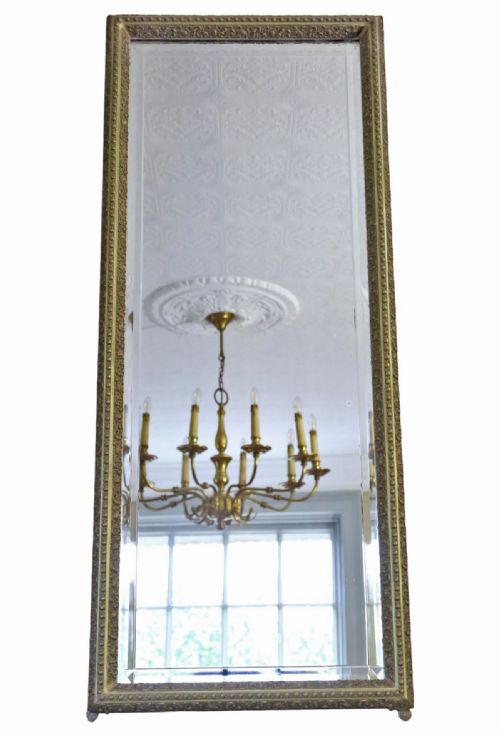
When you search for a tall standing mirror, you are looking at full-length glass framed in mahogany, giltwood, and painted wood from the nineteenth and twentieth centuries.
Tall Standing Mirror
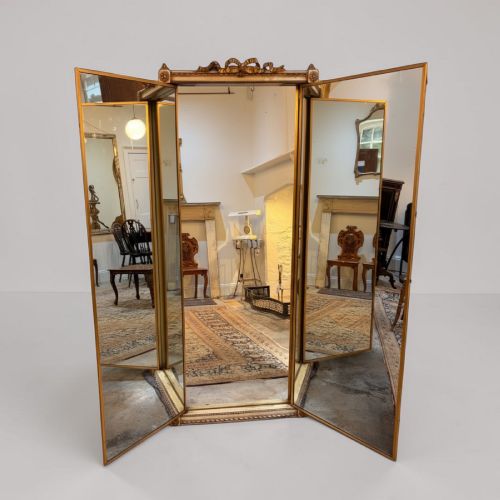
A tall standing mirror provides a complete vertical reflection, taking the form of a cheval mirror, a floor-standing dressing glass, or a tall wall-hanging piece adapted to stand. These objects appear in styles ranging from Victorian and Regency to Edwardian, Art Deco, and French Louis XVI Revival, serving functional dressing roles in bedrooms, dressing rooms, and outfitters.
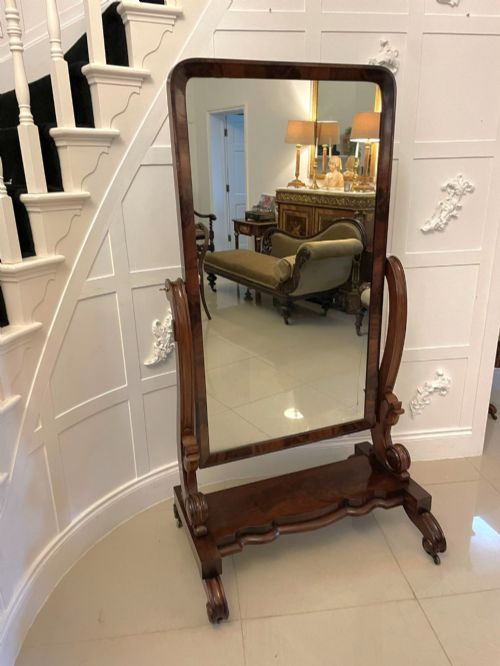
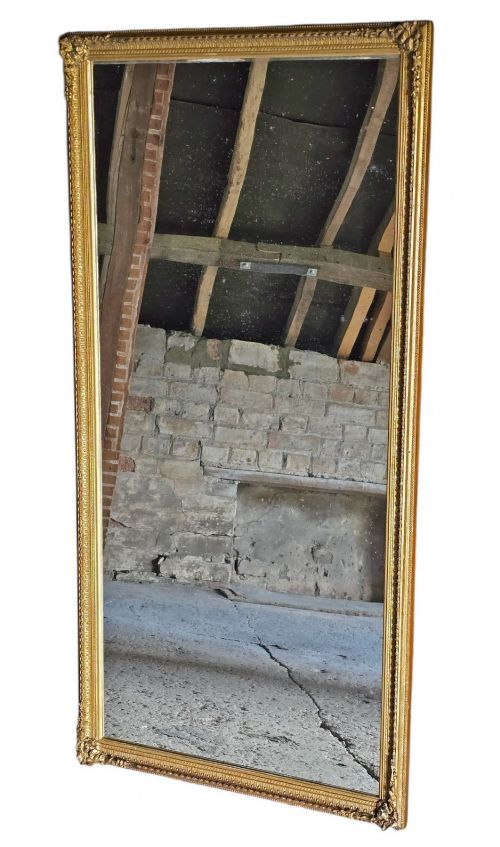
The most common versions met on this page are mahogany cheval mirrors supported on frames with sabre legs and brass castors, alongside carved wood and gesso gilt frames from the nineteenth century. Pieces originate from English, French, and Danish makers, spanning the William IV, Victorian, and Edwardian eras.
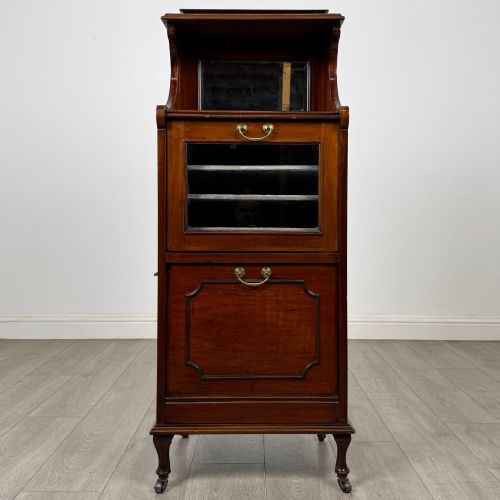
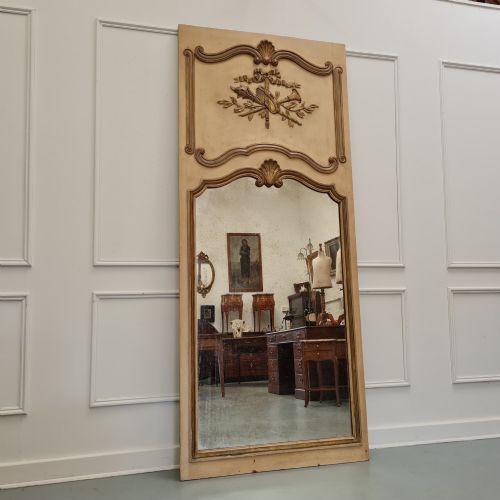
Beyond standard cheval forms, the inventory includes trumeau painted mirrors, mirrors mounted on cabinets, and large floor-standing shop fittings from gentlemen's outfitters. These taller formats use the vertical plane to anchor room proportions while fulfilling a practical domestic function.
How they were made
Makers built the structural frames using hardwoods such as mahogany, oak, and walnut, alongside softwood carcasses prepared for paint or gilding. Carved ornamentation relied on shaped wood and applied gesso to build up decorative reliefs on French and English frames.
Surfaces received finishes including gold leaf, silver leaf, black paint, and hand-applied polychrome pigments. Glass plates were set into these frames, accompanied by brass hardware such as sabots, castors, and pivot pins on swing mirrors.
One towering mirror spent its early mornings helping gentlemen look sharp inside a Victorian outfitters before retiring to a quieter domestic life.
What varies in quality
The degree of hand-carving in the wood and gesso separates standard frames from superior examples, with crisp relief work on crests and borders indicating skilled workmanship. The choice of primary timber, such as dense figured mahogany or solid walnut, dictates the baseline substance of the frame.
Original hardware, including cast brass sabots, functioning castors, and well-turned pivot mechanisms, elevates a piece. The presence of period mercury glass or heavy, clear glass plates alters the visual depth of the reflection compared to later replacements.
The Tall Standing Mirror Glossary
- Cheval mirror
- A large floor-standing mirror suspended on a frame with vertical posts that allow the glass to swing. These pivot devices let the user tilt the mirror plate to various angles.
- Gesso
- A plaster-like mixture applied to wood frames and carved or moulded before gilding or painting. It provides a smooth base for gold leaf and crisp decorative details.
- Trumeau mirror
- A decorative wall mirror often integrated into wood panelling or placed above a mantelpiece, featuring painted panels or carved scenes above the glass. Some examples are adapted for floor standing.
- Sabot
- A metal sleeve fitted to the foot of a furniture leg to protect the wood and provide a decorative termination. They appear in brass on nineteenth-century cheval frames.
- Mercury glass
- An early type of double-walled glass blown with a silvering mixture inserted between the layers. It produces a mottled, atmospheric reflection seen on older mirrors.
Tall Standing Mirror: Frequently Asked Questions
How do I use a tall standing mirror?
These mirrors stand directly on the floor to provide a full-length view for dressing and grooming. They suit bedrooms, dressing rooms, and hallways where vertical glass expands the sense of space.
Freestanding cheval versions use pivot pins to angle the glass, while floor-standing wall mirrors rest against vertical surfaces. Their substantial weight keeps them stable without permanent wall fixings.
What is a cheval mirror?
A cheval mirror is a full-length dressing glass mounted within a moveable wooden frame supported by four legs. The glass swings on central pivots so the user can adjust the viewing angle.
First developed in the eighteenth century, these mirrors became popular in Victorian and Edwardian bedrooms and gentleman's outfitters.
How do I date a Victorian mirror?
Victorian mirrors display characteristics typical of the mid to late nineteenth century, including dense mahogany frames, brass castors, and hand-carved gesso ornamentation. Construction methods like hand-cut screws and traditional joinery help confirm the period.
Comparison with documented Regency and Edwardian pieces reveals shifts in proportions and decorative motifs, such as the transition from heavy mahogany to lighter oak or painted finishes.
Are these mirrors heavy?
Most pieces possess substantial weight due to solid hardwood frames in mahogany or oak, thick glass plates, and cast brass fittings. Cheval frames require sturdy construction to support the pivoting mirror safely.
Floor-standing versions rely on wide footprints and low centres of gravity to remain stable during daily use.