

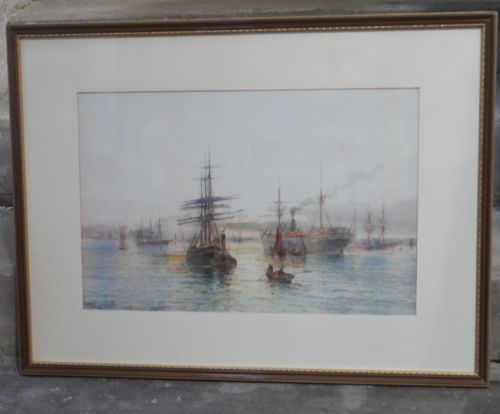


Tall Ship Maritime Art
Tall ship maritime art captures the romance and drama of historical sailing vessels through oil paintings and watercolours.
Tall Ship Maritime Art
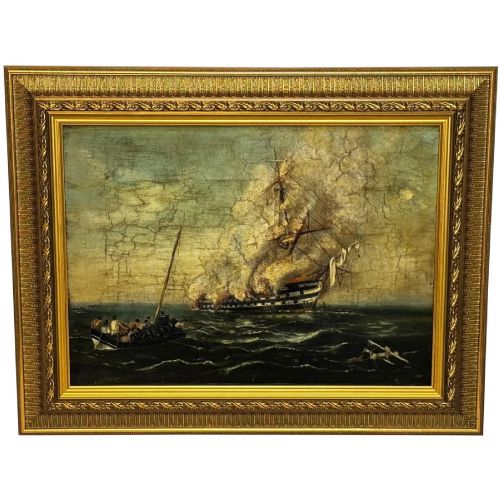
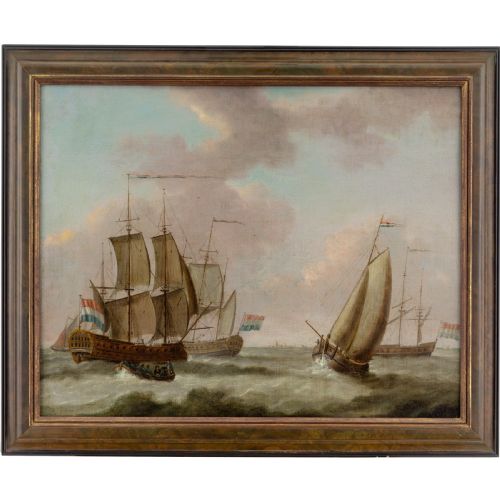
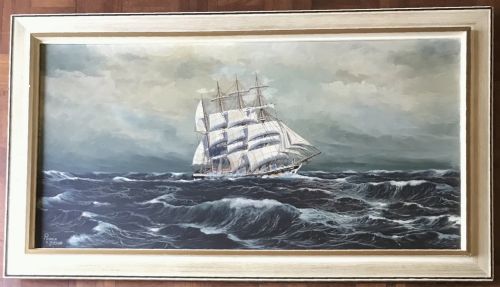
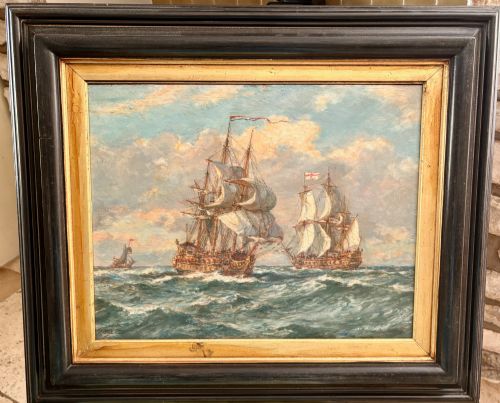
When you search for tall ship maritime art, you encounter oil paintings, watercolours, and model ships depicting historical vessels from the Georgian, Regency, and Victorian periods. These works portray harbour scenes, sea battles, and ocean-going clippers under full sail.
The selections available here range from early nineteenth-century harbour views to Edwardian watercolours and twentieth-century canvas depictions. Artists capture specific locations such as Portsmouth Harbour, Dublin Bay, and the River Humber.
Buyers seek these pieces to bring historical naval architecture and coastal atmosphere into domestic interiors. Whether a portrait of a named vessel or a stormy sea battle, each item records the dominance of sail before steam.
Materials and Techniques
Artists working within tall ship maritime art primarily employed oil paint on canvas, oil on board, or watercolour on paper. Canvas supports allowed for large-scale marine scenes with complex rigging and atmospheric sky effects, framed in giltwood.
Watercolours utilised paper to achieve luminous coastal light, particularly suited for depictions of clippers and steam-and-sail vessels. Model makers constructed scratch-built wooden ship replicas to represent historical hulls and masts in three dimensions.
Tall Ship Maritime Art Retail Price Guide 2026
Typical asking prices for tall ship maritime art among the pieces listed under this phrase on Sellingantiques today, from the lower quarter to the upper quarter. They describe what is for sale here now, not the wider market.
Several artists paid meticulous attention to the exact number of sails on a clipper, ensuring the crew would approve.
Factors Determining Quality
Quality in tall ship maritime art rests upon the accuracy of maritime rigging, hull proportions, and atmospheric perspective. Skilled painters convey the weight of water and the tension of canvas in high winds, whereas lesser works treat the sea as a flat green wash.
Provenance and attribution elevate certain pieces, particularly when signed by established marine artists or associated with specific historical ships. The handling of light on water and the depth of the tonal range distinguish accomplished works from standard decorative pieces.
Bernard Gribble·William Frederick Settle·John Callow·Frank Wood·Joseph Heard·Henry Scott Tuke
The Tall Ship Maritime Art Glossary
- Barque
- A sailing vessel with three or more masts having the fore and main masts square-rigged and the mizzen mast fore-and-aft rigged. This rig provided a balance of speed and manageable crew requirements for long voyages.
- Seascape
- A work of art depicting the sea, coastal views, or ships underway. These compositions focus on the interaction between wind, water, and vessel.
- Giltwood
- Wood carved and covered with a thin layer of gold leaf, commonly used for traditional picture frames. It provides a warm reflective border that enhances darker marine oil palettes.
- Watercolour
- A painting method in which the paints are made of pigments suspended in a water-based solution. It relies on the white of the paper to provide luminosity for skies and breaking waves.
Tall Ship Maritime Art: Frequently Asked Questions
How do I identify the date of a maritime painting?
Examine the riggings of the vessels, the clothing of figures on shore, and the framing style, as these often align with specific periods like the Regency or Edwardian eras. Signatures and dates inscribed on the canvas or reverse board offer direct confirmation.
Compare the depiction of steam-and-sail transitions or specific naval uniforms against historical records. Stylistic shifts from early nineteenth-century tonal realism to twentieth-century broader brushwork also help narrow the chronology.
Where should I hang tall ship art?
These works suit studies, libraries, or living rooms with traditional architectural details and neutral wall colours. Placing them away from direct sunlight protects watercolours and oil pigments from fading over time.
Ensure the hanging height allows eye-level viewing of the horizon line within the composition. Proper lighting using picture lights enhances the dark maritime tones and giltwood frames.
Are model ships fragile?
Scratch-built model ships contain delicate wooden rigging, paper sails, and fine cordage that require careful handling during placement and dusting. They benefit from stable indoor environments away from excessive humidity or temperature fluctuations.
Displaying models within glass cases protects the intricate rigging from accidental damage. Avoid touching the masts and threads directly when cleaning the surrounding area.
What is the difference between an oil and watercolour?
Oil paintings use pigment bound in drying oils on canvas or board, offering rich textures and deep tones suited to dramatic stormy seas. Watercolours use water-soluble pigments on paper, resulting in lighter, transparent effects ideal for coastal atmospheres.
Oils generally require protective varnish rather than glass framing. Watercolours must remain under glass with acid-free mounts to prevent paper degradation.