



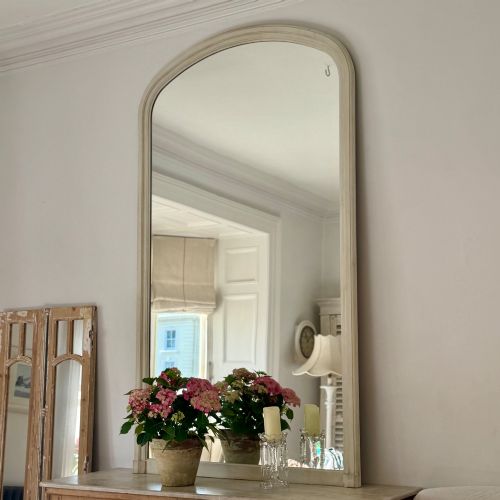


Tall Painted Wall Mirror
A tall painted wall mirror brings vertical presence and reflected light to a room, drawing the eye upward with period character.
Tall Painted Wall Mirror
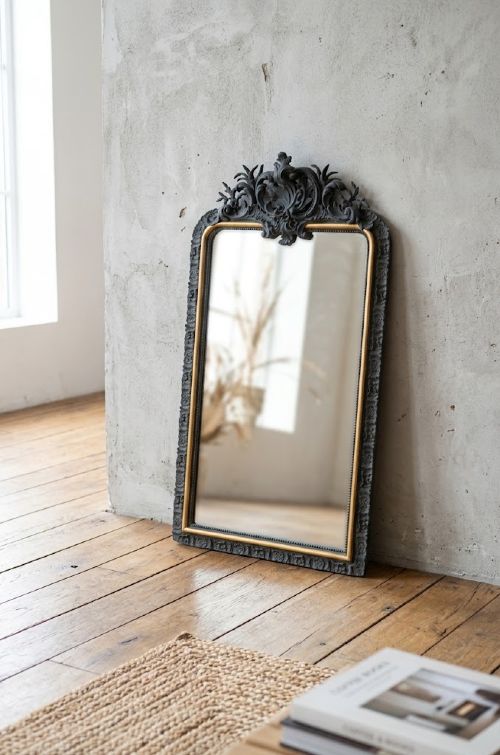
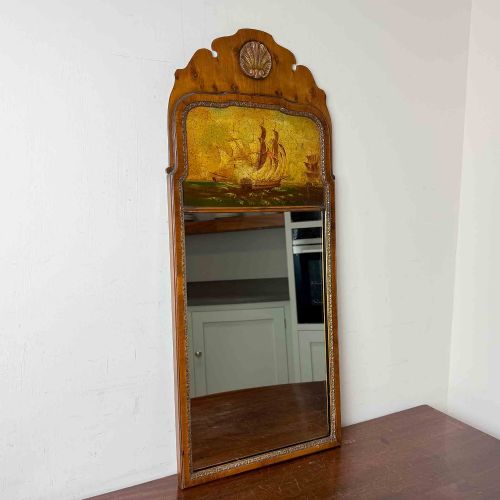
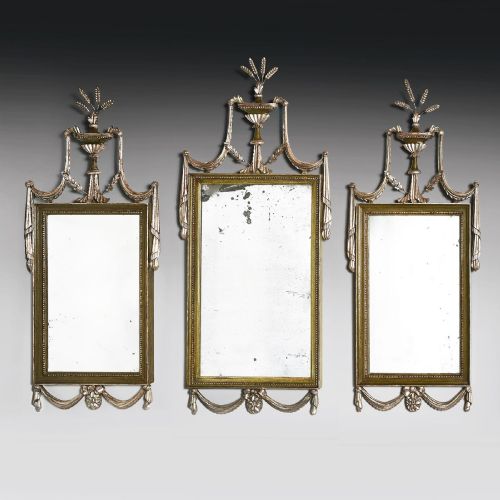
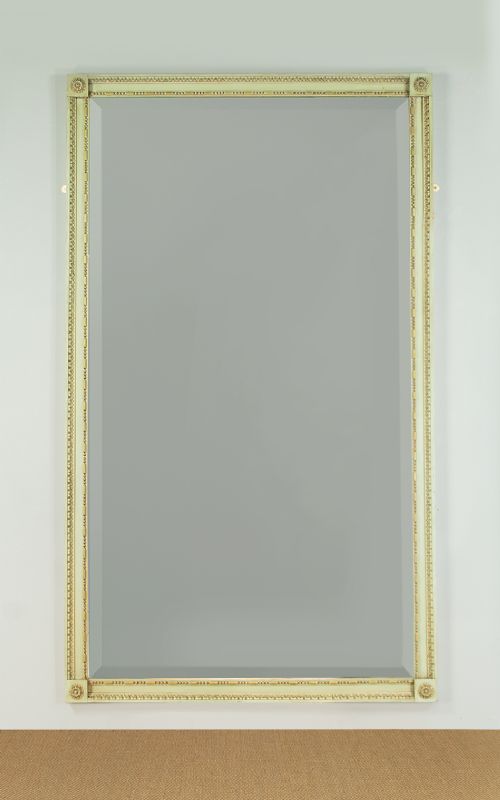
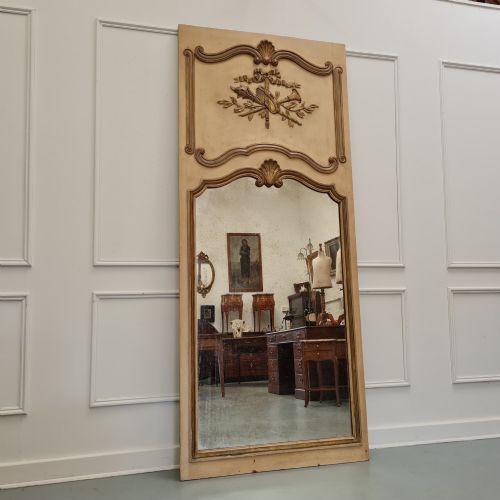
A tall painted wall mirror encompasses grand trumeaux, pier glasses and floor-length dressing mirrors designed to hang vertically or stand tall against a room boundary. These tall painted wall mirror examples span French provincial, Empire and Victorian aesthetics, often combining timber structures with applied pigment, gilt and gesso.
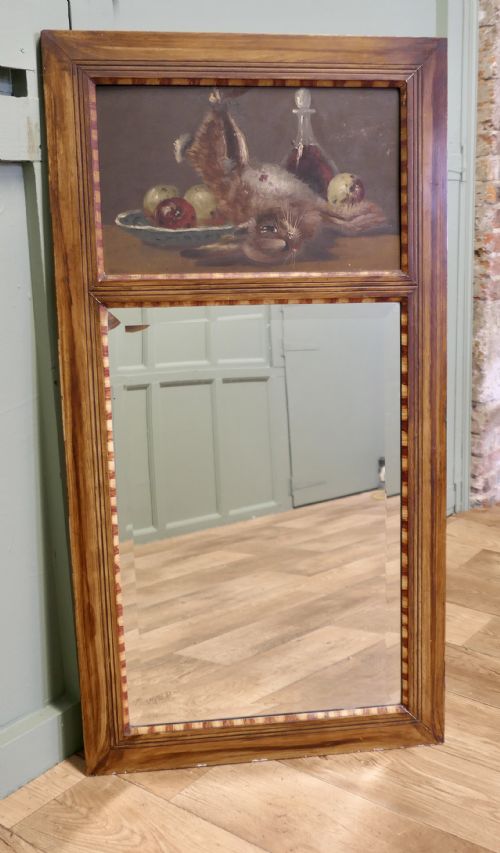
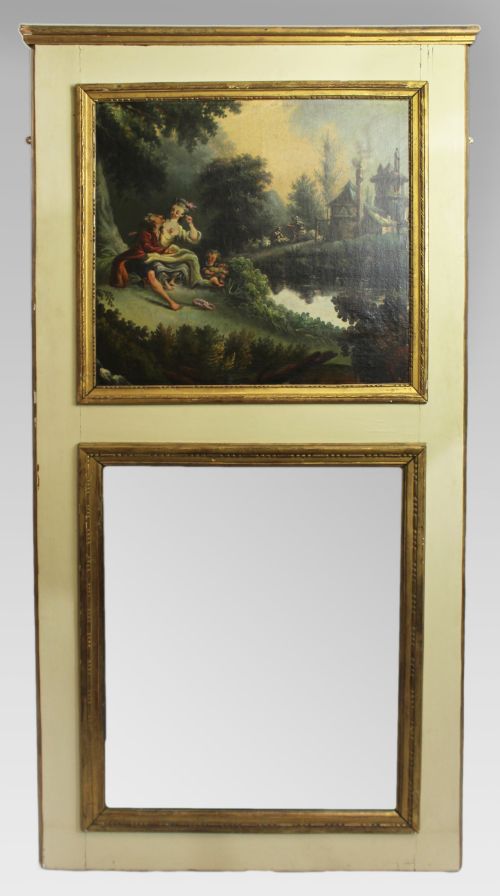
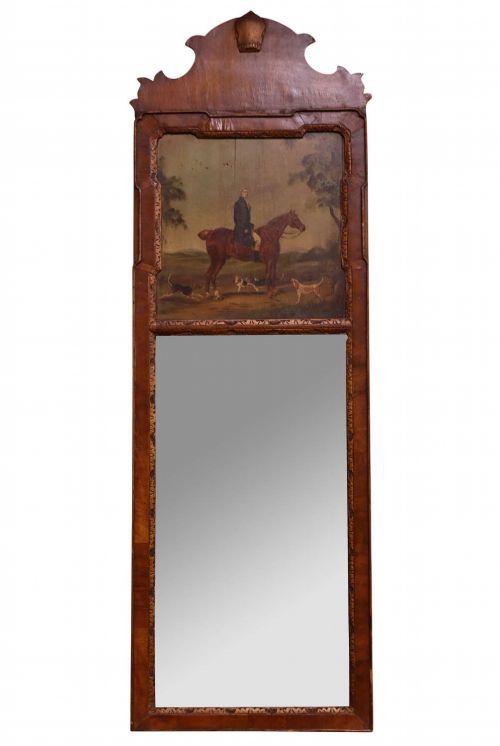
The selection leans heavily toward French regional and neoclassical forms, alongside English revival styles from the nineteenth and early twentieth centuries. Many pieces integrate oil paintings, pastoral scenes or eglomise panels into their upper sections, serving both decorative and architectural functions within high-ceilinged interiors.
How they were made
Carpenters constructed the primary carcasses from woods such as walnut, mahogany, yew and pine, often applying layers of gesso to build up high-relief scrollwork, moulding and architectural detailing. Artisans then finished these surfaces with hand-applied paint, parcel gilt or gold leaf.
Mirrors from this selection frequently incorporate mercury glass or early float glass plates, set within frames that balance structural timber with carved ornamentation. Painted finishes range from distressed bistro patinas to cream chinoiserie and over-painted gilt schemes.
One framed mirror survived a stint inside a haberdashery shop before finding its way to the antique market.
What varies in quality
The distinction between standard examples and finer pieces lies in the depth of hand-carved detail within the gesso and wood, alongside the originality of the painted surface and integration of incorporated oil paintings. Master carvers produced crisp architectural mouldings and fluid scrollwork that lesser workshops achieved with simpler, shallower casting or moulding techniques.
Condition and integrity of the original mercury glass plate and secondary wood backing also determine quality. Pieces retaining their original distressed silvering and untouched layered paint demonstrate superior historical survival compared to later restorations.
Gillows Of Lancaster
The Tall Painted Wall Mirror Glossary
- Trumeau Mirror
- A decorative wall mirror featuring an upper panel painted with a pastoral scene or oil artwork, set above the glass plate. These architectural pieces originated in eighteenth-century France and hung between windows.
- Pier Mirror
- A tall narrow mirror specifically designed to hang on the wall space between two windows, often placed above a console table. They reflect ambient light back into the centre of the room.
- Gesso
- A plaster mixture applied to wood frames to create a smooth surface for gilding and carving intricate relief details. Craftsmen built up layers before tooling floral or geometric motifs.
- Eglomise
- A cold decoration technique where artists applied gold or silver leaf to the reverse side of glass before engraving and painting designs. This created a reflective, metallic panel set into the mirror frame.
- Japanned
- A European imitation of East Asian lacquerwork, created by applying layers of varnish and resin pigments to a wooden base. It frequently appears on revival mirrors with raised oriental motifs.
Tall Painted Wall Mirror: Frequently Asked Questions
Where should I hang a tall painted wall mirror?
These vertical pieces suit high-ceilinged hallways, living rooms and bedrooms where they can anchor a wall space and reflect natural light. Placing them opposite a window maximises the optical expansion of the room.
Ensure the wall structure securely supports the weight, particularly for large trumeau and pier mirrors incorporating heavy timber frames and glass.
How do I identify a trumeau mirror?
A trumeau incorporates a distinct upper panel housing an oil painting or decorative motif directly above the glass plate. The frame usually sits flush against the wall as an architectural fixture.
They emerged from classical French interior design and frequently display neoclassical motifs, pastoral landscapes or equestrian scenes.
What is mercury glass?
Mercury glass refers to double-walled blown glass vessels or silvered mirror plates created by pouring a liquid silvering solution between glass layers. Authentic period plates develop characteristic foxing and spotting over time.
This historical silvering method produces a softer, warmer reflection than modern aluminium-backed mirrors.
How do I care for antique painted wood frames?
Maintain the painted and gilt surfaces by dusting gently with a dry, soft cloth, avoiding moisture and harsh chemical cleaning products. Stable room temperatures prevent the gesso and wood from expanding or contracting.
Protect the antique glass plate using standard glass cleaner applied to the cloth rather than directly onto the mirror surface, keeping liquid away from the frame joints.