



Tall Ornate Candlesticks
Tall ornate candlesticks bring height and presence to a room, cast in brass, bronze, silver plate and carved gilt wood across multiple centuries.
Tall Ornate Candlesticks
When you search for tall ornate candlesticks, you encounter a striking mix of lighting pieces designed to elevate candles or adapted into lamps. The items span the eighteenth, nineteenth and early twentieth centuries, drawing on varied decorative traditions.
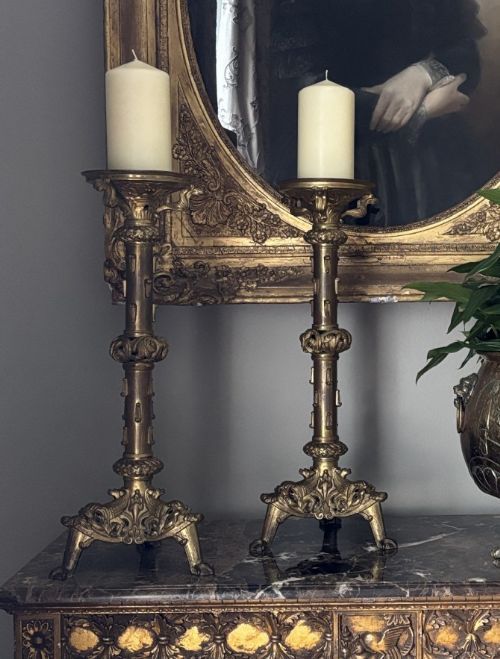
Brass and bronze forms dominate the selection, often taking inspiration from French Rococo Revival and Italianate Baroque styles. You will regularly find pairs alongside individual altar lamps, standard lamps and carved wooden candle holders.
The aesthetic leans heavily into ornate detailing, with scrollwork, chased surfaces and heavy proportions defining the category. Pieces range from domestic Victorian brass items to Spanish gilt wood lamps and French gilt bronze showpieces.
How they were made
Metal items in this group utilise casting techniques in brass, bronze and silver plate, often finished with mercury gilding or ormolu. Foundries shaped these metals into complex, multi-tiered forms featuring elaborate curves and classical motifs.
Wooden examples rely on hand carving and gesso application, frequently receiving silver leaf or gold leaf treatments to achieve a reflective surface. Artisans built up structural height through turned components and applied ornamentation before applying the final metallic leaf.
Tall Ornate Candlesticks Retail Price Guide 2026
Typical asking prices for tall ornate candlesticks among the pieces listed under this phrase on Sellingantiques today, from the lower quarter to the upper quarter. They describe what is for sale here now, not the wider market.
Some tall altar lamps have quietly changed careers from church to corner table, trading incense for ambient evening light.
What varies in quality
The standard of craftsmanship shows most clearly in the crispness of the chased detail and the weight of the cast metal. Superior examples display deeply undercut ornamentation where human hands have refined the foundry work after casting.
In wooden and gesso pieces, quality rests on the depth of the hand carving and the preservation of the original gilt surface. Pieces that retain their genuine patination without heavy modern repainting hold greater integrity.
The Tall Ornate Candlesticks Glossary
- Pricket candlestick
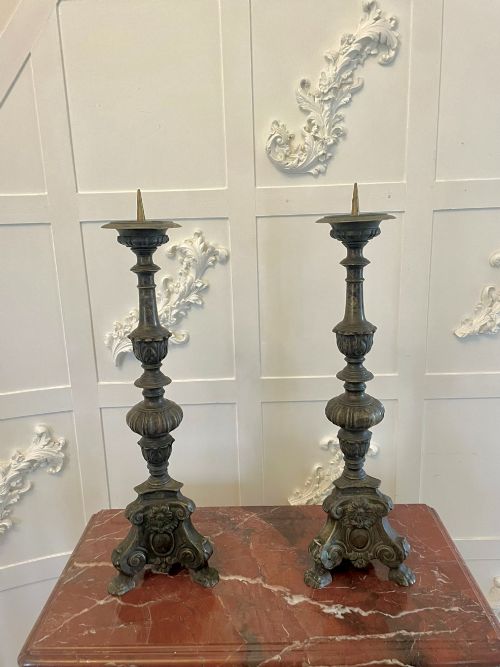
- A candlestick featuring a sharp metal spike at the top designed to secure the base of a large candle. This traditional form appears frequently in ecclesiastical and heavy domestic lighting.
- Ormolu
- Finely ground high-carat gold applied to a bronze base using a mercury amalgamation process. This technique creates a rich, durable golden finish characteristic of high-end French pieces.
- Gesso
- A plaster-like mixture applied to wood surfaces to prepare them for gilding or painting. It allows craftsmen to carve intricate relief details before applying gold or silver leaf.
- Rococo Revival
- A nineteenth-century design style drawing on eighteenth-century French motifs of asymmetry, C-scrolls and naturalistic foliage. It results in exuberant, curving forms with considerable visual movement.
- Sheffield plated
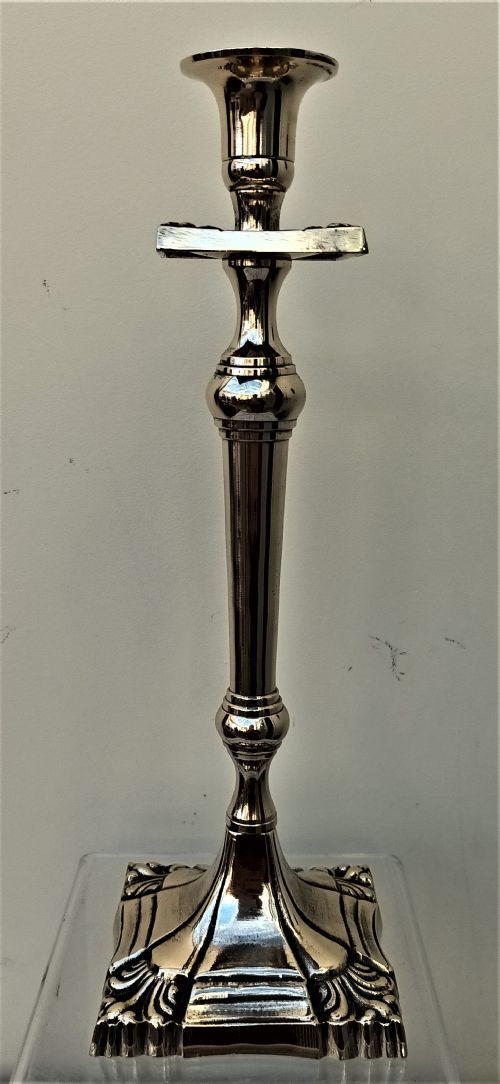
- An early method of fusing a thin layer of silver to a thicker copper core by heating and rolling the metals together. This technique produces durable domestic metalware with a distinct layered edge.
Tall Ornate Candlesticks: Frequently Asked Questions
How were tall ornate candlesticks used originally?
These tall pieces stood on altars, large dining tables or floor pedestals to provide substantial illumination in grand spaces. Their height allowed the light to project further over assembled company.
Many examples served a ceremonial or religious function, particularly pricket candlesticks and altar lamps. Domestic versions similarly combined practical lighting with a display of household status.
Can these candlesticks be used for modern candles?
Pricket candlesticks require candles with a pre-drilled base to sit securely upon the central spike. Standard socket candlesticks accommodate taper candles, though sizing can vary with antique dimensions.
Many tall pieces have been converted into standard lamps or table lamps over time. Check the fitting specifications if you plan to use them with electrical wiring rather than wax.
How do I identify a Rococo Revival piece?
Rococo Revival pieces feature exuberant curves, asymmetrical scrollwork and motifs drawn from nature such as shells and acanthus leaves. The style avoids straight lines in favour of flowing, serpentine contours.
This aesthetic appears across nineteenth-century brass, bronze and gilt metal items in the selection. The heavy cast forms often mimic eighteenth-century French prototypes with added Victorian vigour.
What is the difference between brass and ormolu?
Brass is an alloy of copper and zinc that maintains its metallic yellow appearance throughout its substance. It forms the solid structural body of many nineteenth-century candlesticks.
Ormolu refers specifically to gilt bronze, where a layer of gold is bonded to a bronze substrate. This gives the object a deeper, warmer lustre than standard polished brass.