
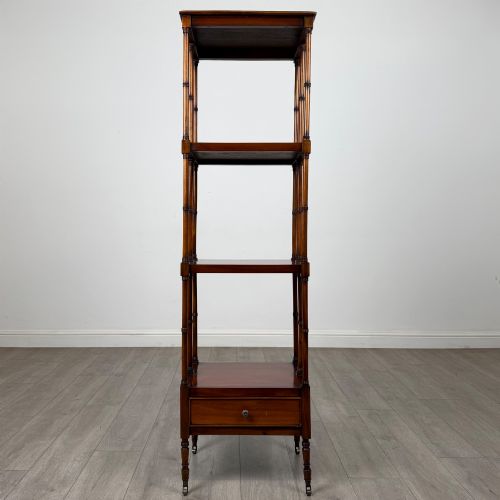
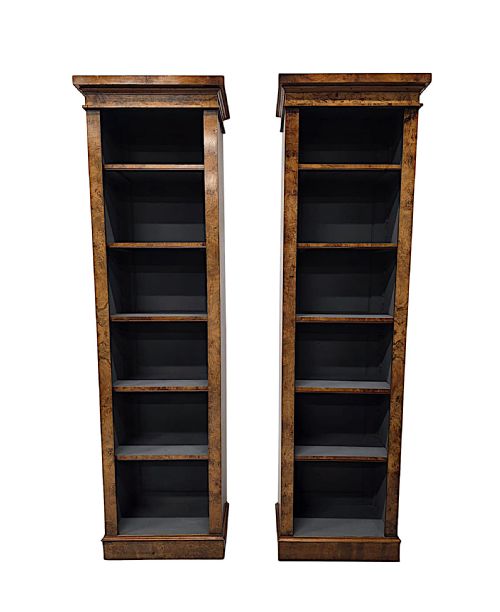
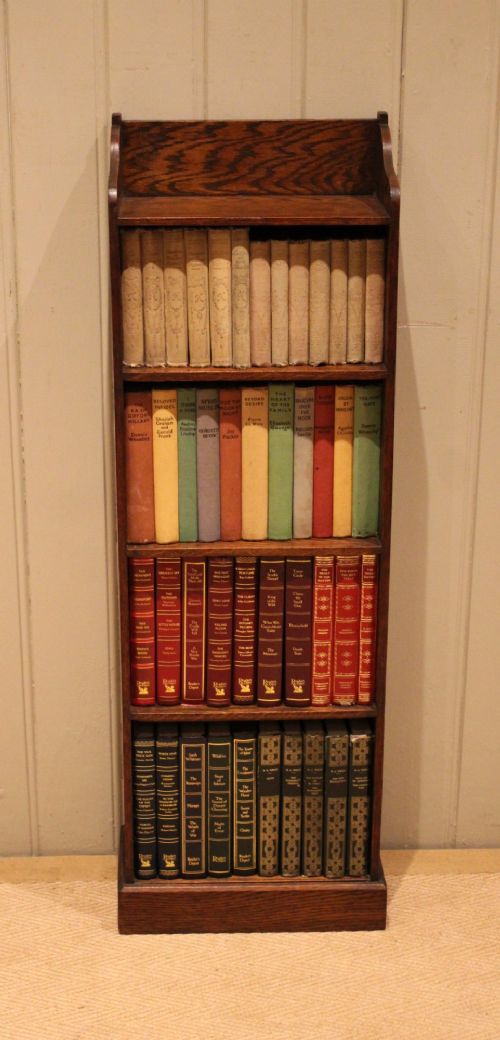
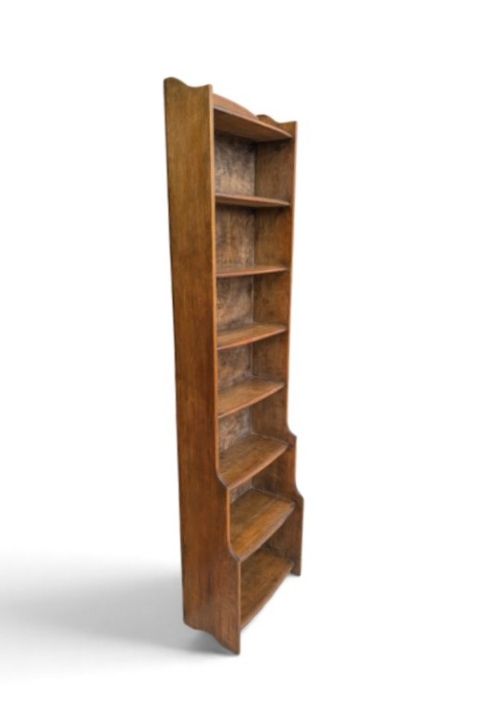



Tall Narrow Open Shelving
Tall narrow open shelving brings vertical storage into tight spaces through slender proportions and accessible tiers.
Tall Narrow Open Shelving
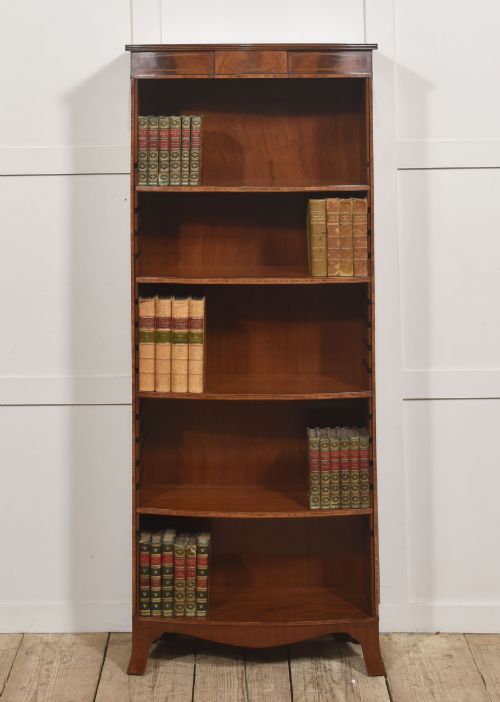
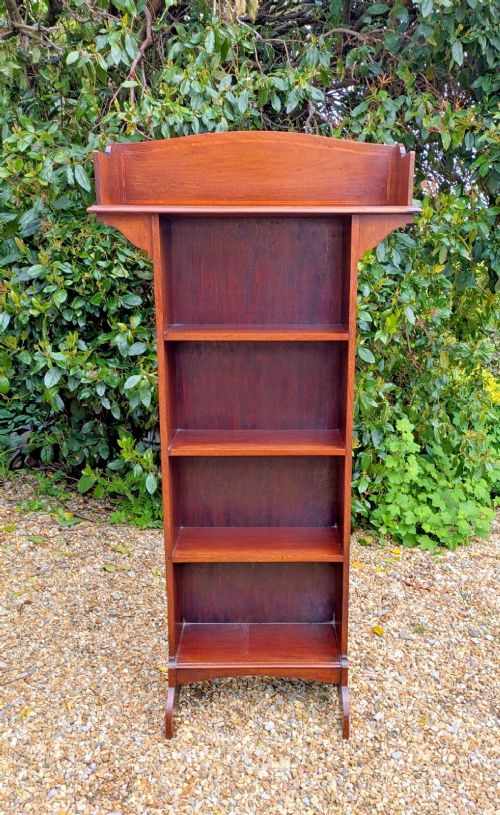
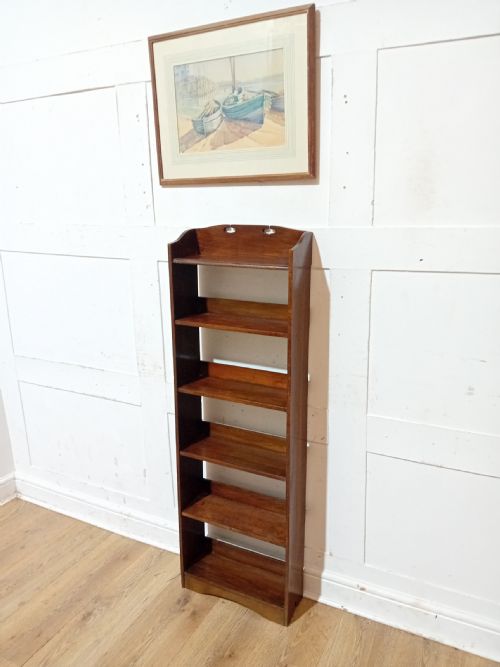
Tall narrow open shelving comprises bookcases, display shelves, and whatnots designed to fit confined footprints while offering multiple tiers for storage and display. You will frequently encounter examples shaped by Edwardian and Victorian cabinet-making traditions, alongside pieces from the Arts and Crafts movement and the interwar decades.
The dominant timbers appearing across these items include oak and mahogany, often complemented by burr walnut, satinwood, and pine with painted finishes. Makers applied these woods to freestanding bookcases and standing shelves that make efficient use of vertical room in domestic interiors.
Materials and Construction
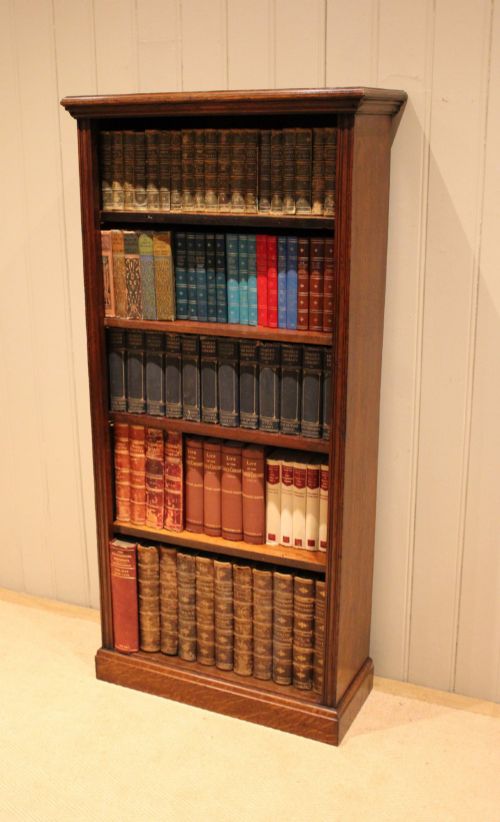
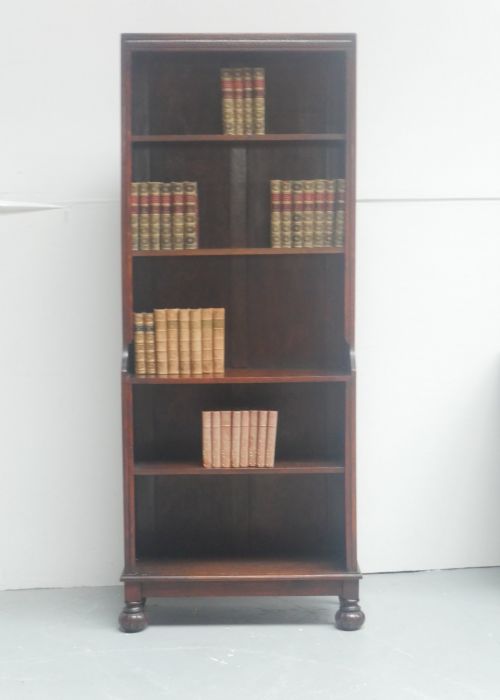
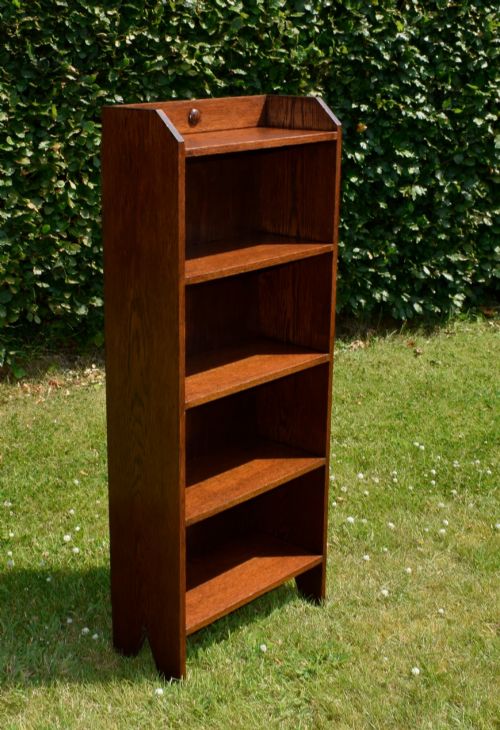
Makers constructed these tall open shelves primarily in solid oak, mahogany, and walnut, frequently employing adjustable wooden shelves or beaded edges to frame the upright sides. Inlaid details, brass hardware, and ormolu mounts occasionally accent the timber surfaces.
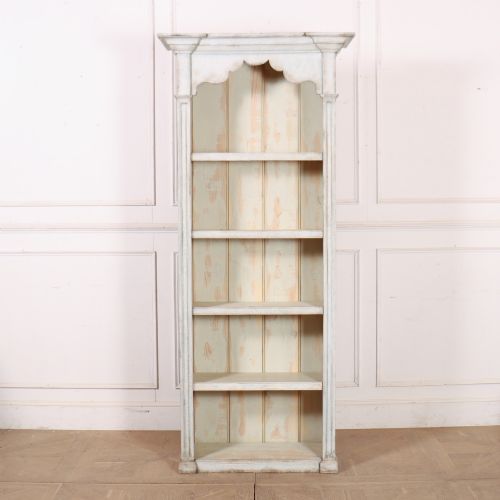
Painted finishes and French provincial styles provide lighter alternatives to dark hardwood structures. Joinery techniques from the nineteenth and early twentieth centuries ensure stable upright frames despite narrow proportions.
Materials documented across the pieces include oak, mahogany, burr walnut, walnut, pine, paint, satinwood, brass, and rosewood.
Assessing Build and Proportion
Quality reveals itself in the choice of timber figures, such as burr walnut or figured mahogany, and the precision of inlaid woodwork. Superior pieces maintain visual balance across slender dimensions without sacrificing structural rigidity.
Finer examples integrate thoughtful details like adjustable shelving mechanisms and subtle mouldings. The integrity of the joints and the handling of secondary woods distinguish standard utilitarian pieces from more refined workshop productions.
WYLIE LOCHHEAD of GLASGOW·E.A. TAYLOR
The Tall Narrow Open Shelving Glossary
- Whatnot
- A multi-tiered open piece of furniture used for displaying ornaments or books. These tall stands utilise vertical space efficiently.
- Ormolu
- Gilded bronze mounts applied to furniture for decorative effect. Such metalwork appears on select nineteenth-century pieces.
- Inlay
- Contrasting woods or materials set into the surface of a piece to create decorative patterns. Mahogany examples frequently feature this detail.
- Arts and Crafts
- A design movement prioritising traditional craftsmanship and simple forms. Pieces from this period often highlight honest construction in oak.
Tall Narrow Open Shelving: Frequently Asked Questions
Where should I place tall narrow open shelving?
These pieces suit tight wall spaces, alcoves, and hallways where standard furniture proves too bulky. Their slender footprints provide storage without dominating the room.
They work well in studies for books or in living areas for displaying ornaments and collections.
How do I identify an Edwardian bookcase?
Edwardian pieces often feature light mahogany or oak timbers, sometimes with delicate string inlay. They reflect the lighter domestic tastes of the early twentieth century.
Their proportions remain slender, continuing late nineteenth-century forms while shedding heavy Victorian ornamentation.
Are the shelves adjustable on these bookcases?
Many tall examples incorporate adjustable shelving systems to accommodate books of varying heights. Cabinet makers used wooden supports or pegged brackets for this purpose.
Check individual pieces to confirm whether the tiers are fixed or movable.
What woods were used for these shelves?
Oak and mahogany appear most frequently, providing sturdy frames for heavy book collections. Walnut, burr walnut, and satinwood serve more decorative purposes.
Softer woods like pine and elm also feature, often painted or left in their natural state.