
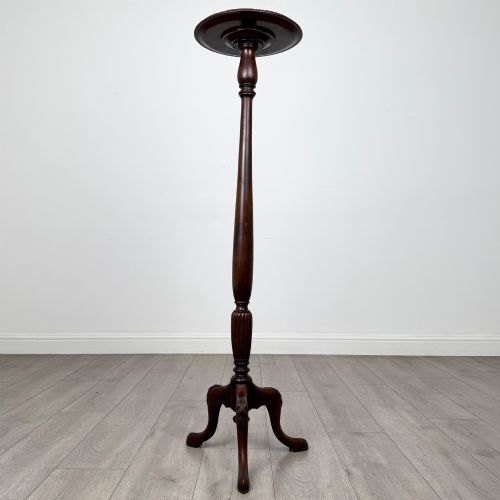
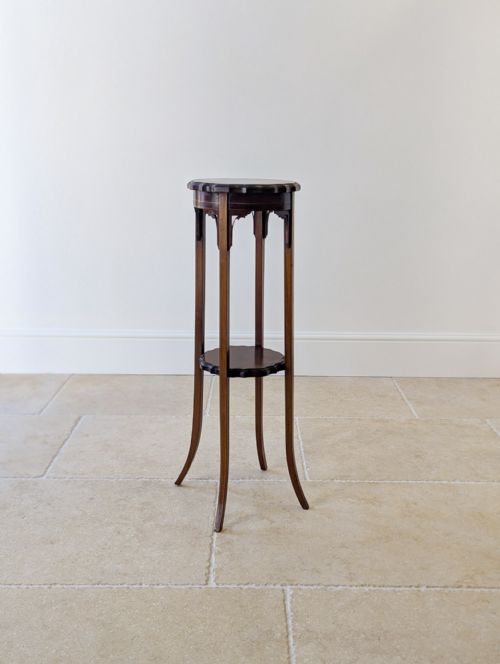
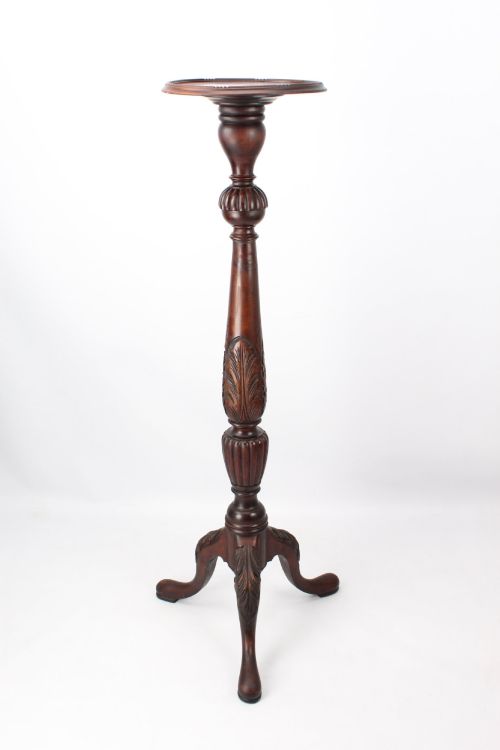

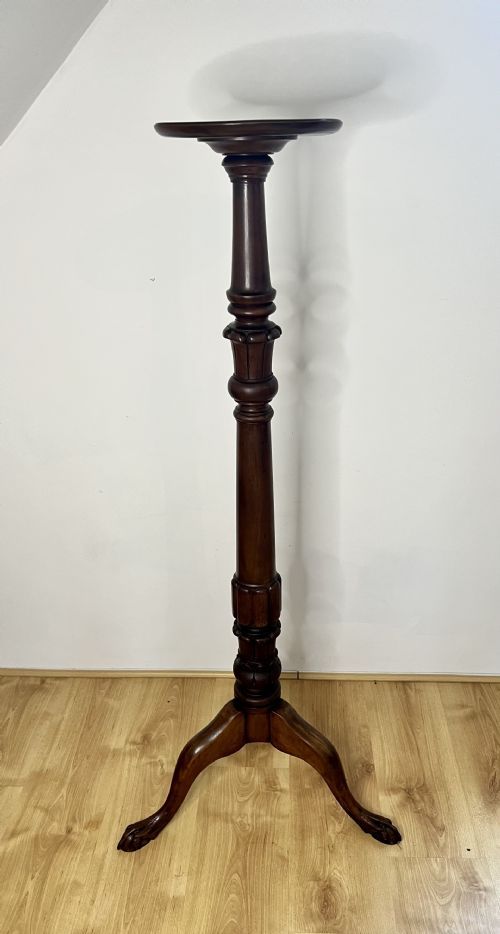

Tall Mahogany Torcheres
Tall mahogany torcheres are slender elevated display stands that elevate plants, lamps and busts with architectural poise.
Tall Mahogany Torcheres
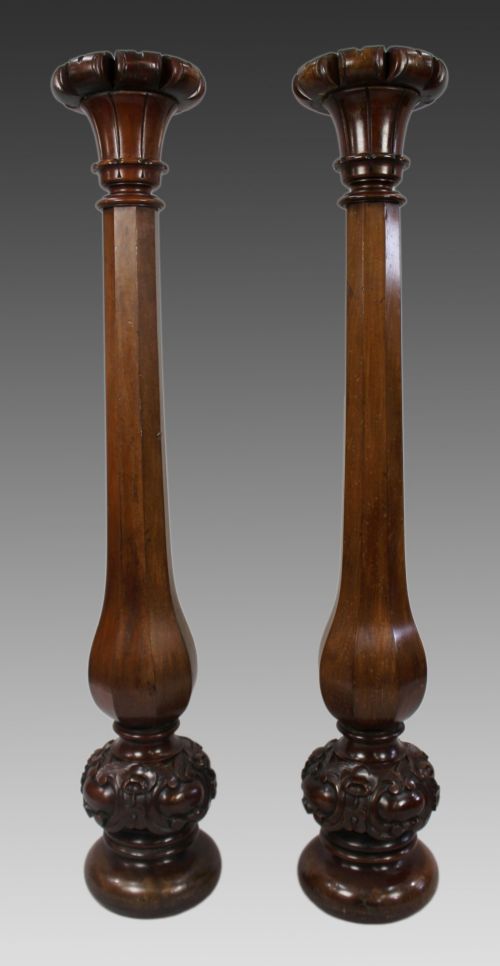
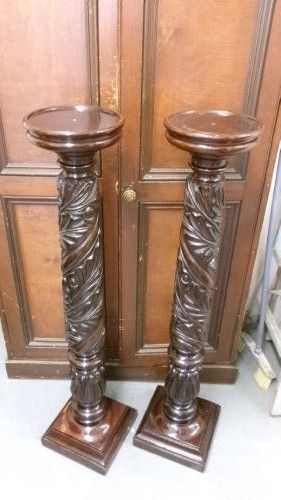
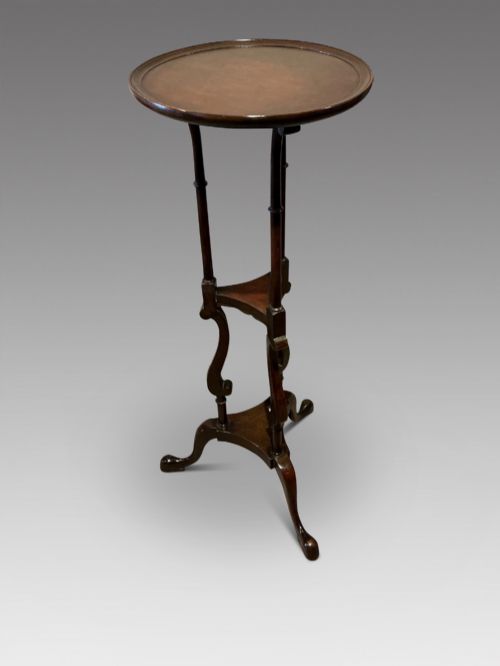
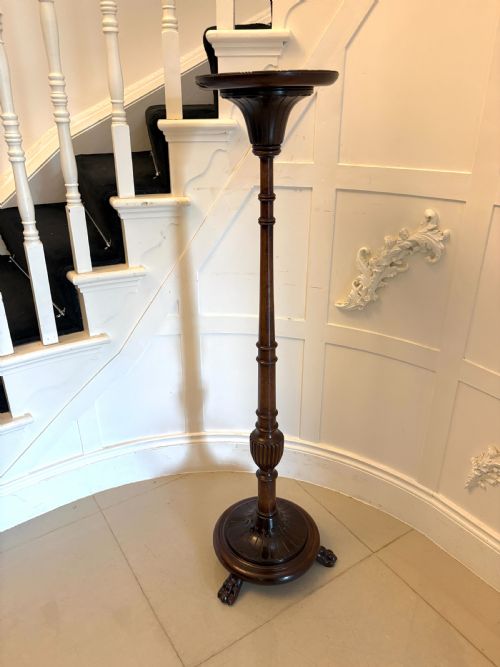
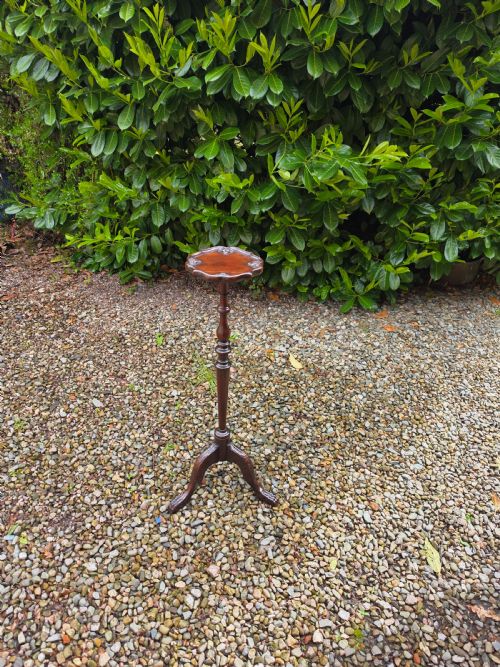
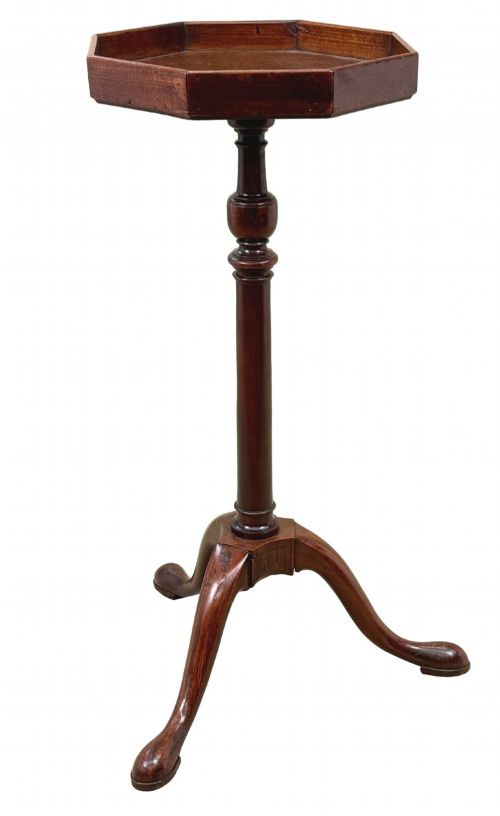
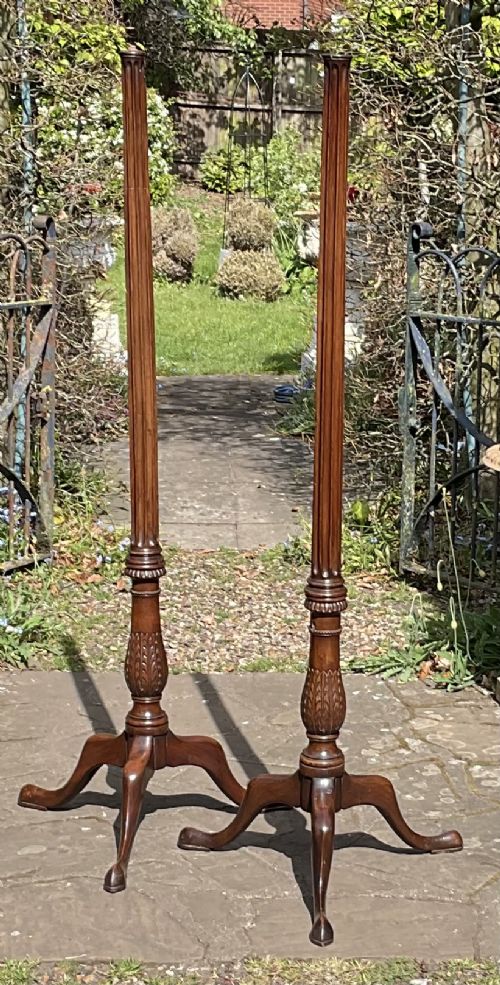
Tall mahogany torcheres are upright display stands designed to hold lamps, plants, jardinières and sculptural busts at an elevated position in a room. When you examine this selection, you encounter pieces spanning from the eighteenth century through the Victorian and Edwardian eras.
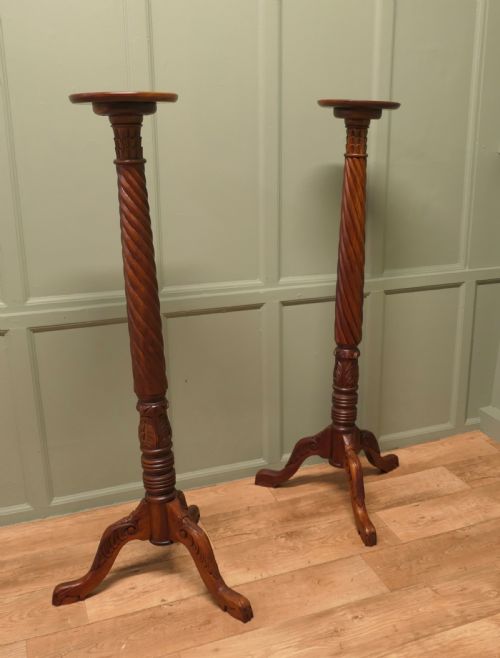
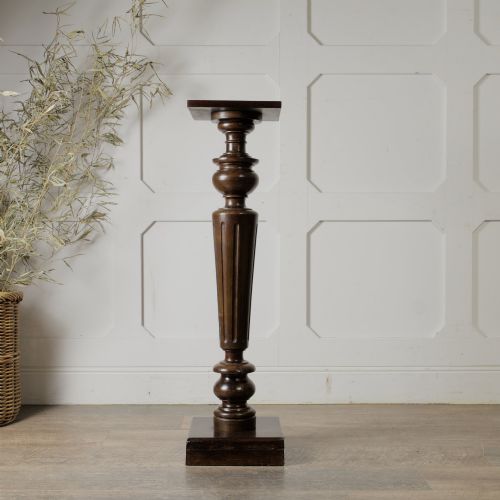
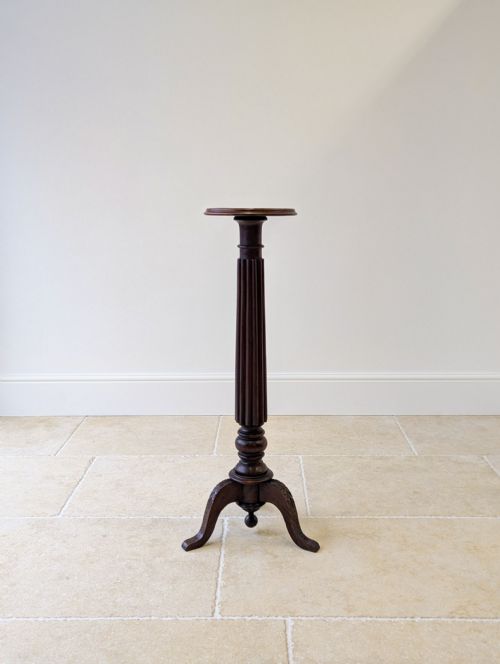
The versions most frequently met on this page include Victorian and Edwardian examples featuring slender turned columns, tripod bases and carved plant stands. Makers across these periods utilised dense timber to create stable vertical columns that served both functional lighting and decorative display roles.
Materials and construction methods
Makers constructed these tall stands primarily using solid mahogany and hardwood, frequently incorporating brass fittings and delicate satinwood inlay for decorative contrast. Timber selection focused on grain density and weight distribution to ensure stability in tall, slender column forms.
Joinery techniques combined heavy turned wood sections with robust tripod or plinth bases to support top platforms without tipping. Carved details appeared on knees and columns during revival periods, while ebonised wood provided dark accent elements on specific pedestals.
Listings for tall mahogany torcheres span Victorian, Edwardian, and Georgian periods, incorporating brass details and satinwood inlay.
Quality factors in tall stands
Quality in these upright stands rests upon the weight and grain figure of the mahogany timber and the crispness of any carved ornamentation on the knees or column. Superior examples display balanced proportions between the slender shaft and the supporting base.
The integrity of the structural joints and the originality of the timber surface separate standard production pieces from finer workshop creations. Heavier solid construction and subtle inlay work indicate higher manufacturing standards.
The Tall Mahogany Torcheres Glossary
- Torchere
- A tall stand originally designed to hold a candle or torch, later adapted for lamps, plants and busts. These pieces provide vertical height in interior decoration.
- Plinth
- A heavy base or square block supporting a pillar, statue or torchere column. It anchors the vertical weight of the stand.
- Jardiniere
- An ornamental pot or stand for holding plants and flowers, often integrated into tall pedestal designs. They appear frequently in Edwardian formats.
- Tripod base
- A three-legged support system commonly found on nineteenth-century stands. This configuration ensures stability on uneven floor surfaces.
Tall Mahogany Torcheres: Frequently Asked Questions
What were tall torcheres originally used for?
These tall stands initially supported heavy wax candles to illuminate dark rooms before electric lighting became common.
Over time, households repurposed them to hold floral arrangements, lamps and decorative art objects.
How do I style a torchere in a modern room?
Place a torchere in an empty corner to add vertical interest and height variation to your furniture arrangement.
They also function effectively as display columns for trailing plants, ceramic urns or reading lamps.
Are these stands stable enough for heavy items?
Most antique torcheres feature weighted tripod or plinth bases designed to counterbalance the height of the column.
However, very tall pieces require careful placement away from high-traffic areas to prevent accidental tipping.
How do I distinguish Victorian from Edwardian stands?
Victorian examples generally exhibit heavier carvings, darker finishes and robust turned mahogany columns.
Edwardian pieces tend to feature lighter proportions, satinwood inlay work and more refined plant stand tops.