
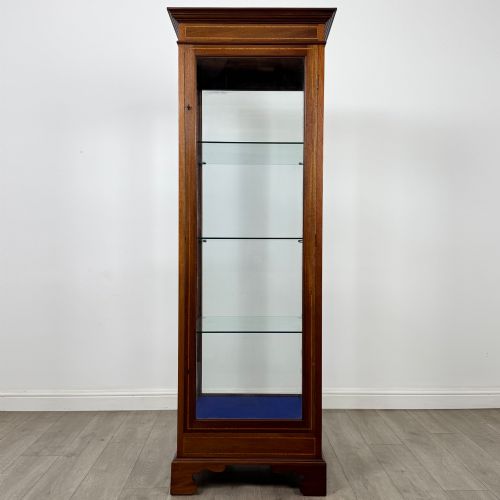
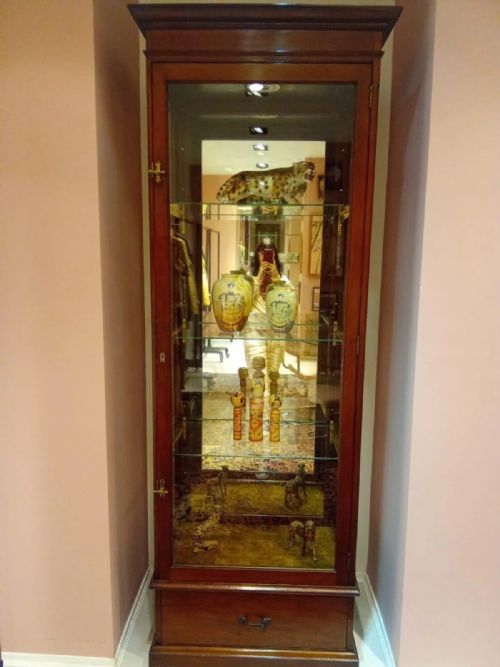
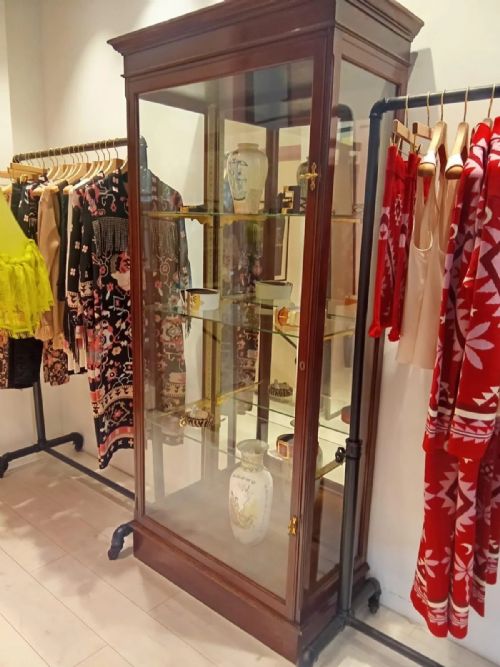


Tall Mahogany Showcase
A tall mahogany showcase is a stately display piece designed to exhibit prized collections or goods, bringing structured elegance to any interior.
Tall Mahogany Showcase
When you search for a tall mahogany showcase, you encounter upright display furniture built to present objects clearly through glazed panels. These items emerge primarily from the Victorian and Edwardian periods, alongside later interwar commercial examples.
The pieces on this page span several forms, including freestanding shop display cabinets, bow front cabinets, and inlaid bijouterie cabinets. Edwardian and 1900s variations appear most frequently, constructed to house china, taxidermy, or retail merchandise.
Makers and workshops utilised rich timbers and extensive glass to maximise visibility from every angle. Such cabinets serve domestic collectors and commercial spaces alike, functioning as commanding focal points within a room.
Materials and construction methods
Makers constructed these showcases predominantly from solid mahogany, frequently incorporating satinwood crossbanding and delicate inlay work for decorative contrast. The primary timber provides a robust structural frame designed to support heavy glass panels and internal shelving.
Extensive glazing forms the main body of each showcase, paired with brass hardware and occasionally fabric linings or mirrored backs. Adjustable glass shelves allow interior configurations to adapt to the height of the objects displayed within.
The listings on this page span the Victorian, Edwardian, and 1920s eras, featuring mahogany, glass, brass, and satinwood.
Assessing quality and craftsmanship
Quality in a tall mahogany showcase rests upon the refinement of the timber and the sophistication of the joinery. Superior examples display subtle satinwood inlay, well-fitted brass fittings, and clean, unblemished glazing.
Commercial provenance and structural integrity further distinguish different grades of cabinet. Pieces originating from known commercial outfitters or featuring bow fronts and multiple glazed doors represent the more ambitious end of the range.
E. Pollard & Co. Ltd.
The Tall Mahogany Showcase Glossary
- Mahogany
- A durable, deep reddish-brown tropical hardwood prized for furniture construction. It takes a fine polish and provides the primary structural body for these showcases.
- Bijouterie cabinet
- A glazed display table or cabinet specifically designed for small valuables, jewellery, and curiosities. They often feature fabric-lined interiors to protect delicate items.
- Crossbanding
- A decorative border technique where thin strips of veneer are laid across the grain of the primary wood. Satinwood frequently provides this contrasting border on mahogany furniture.
- Cloche
- A bell-shaped glass cover used to protect and display delicate objects or taxidermy. These domed glass covers sit upon a wooden base within a showcase context.
- Jugendstil
- The continental European variant of Art Nouveau, characterised by flowing organic lines. This style appears on select turn-of-the-century pedestal and display cabinets.
Tall Mahogany Showcase: Frequently Asked Questions
Where should I place a tall showcase?
Position your showcase against a sturdy wall in a room with stable lighting to highlight the interior contents safely. Avoid placing tall wooden furniture directly in front of heat sources or in harsh direct sunlight.
Ensure there is sufficient clearance around the doors for easy access to the glass shelves. These upright cabinets suit living rooms, studies, and hallways where vertical space allows them to stand comfortably.
How do I clean the glass shelves?
Remove objects carefully from the interior before attempting to clean the adjustable glass shelves. Use a soft cloth and a mild glass cleaning solution applied to the cloth rather than sprayed directly onto the cabinet.
Take care to avoid spraying liquid near the mahogany wood or brass fittings, as moisture can damage polished timber. Wipe dry immediately to prevent streaks and protect the surrounding frame.
Can I adjust the internal shelving?
Many Edwardian and Victorian display cabinets feature adjustable glass shelves supported by metal brackets or wooden rests. You can reposition these shelves to accommodate taller objects by carefully shifting them to alternative slots.
Handle the glass plates with caution during adjustment to avoid chipping the edges against the wooden interior walls. Verify that each shelf rests securely on all supports before placing items back inside.
How do I date an Edwardian showcase?
Examine the construction details, wood types, and decorative motifs to determine the approximate period of manufacture. Edwardian pieces often combine mahogany with lighter satinwood inlay and simpler linear forms than heavy Victorian furniture.
Commercial labels or stamps inside the door frame can occasionally reveal the workshop or retailer responsible. Comparing the hardware style and glazing thickness also helps narrow down the decade.