
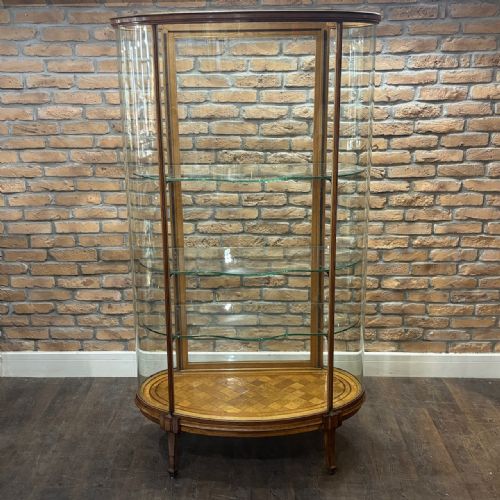
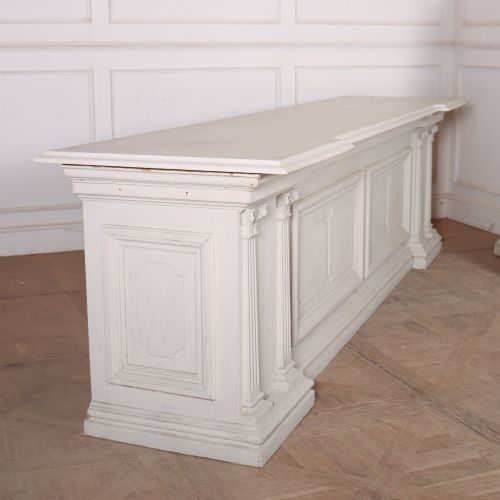
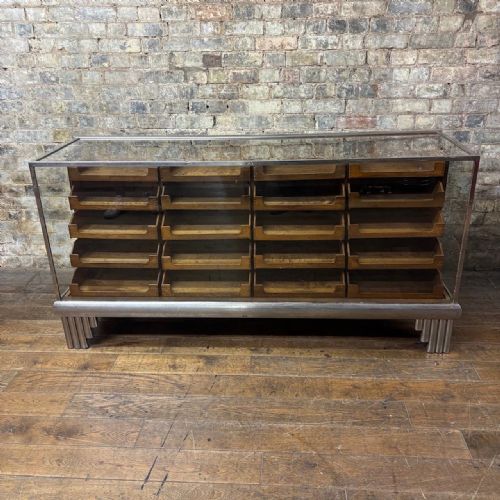
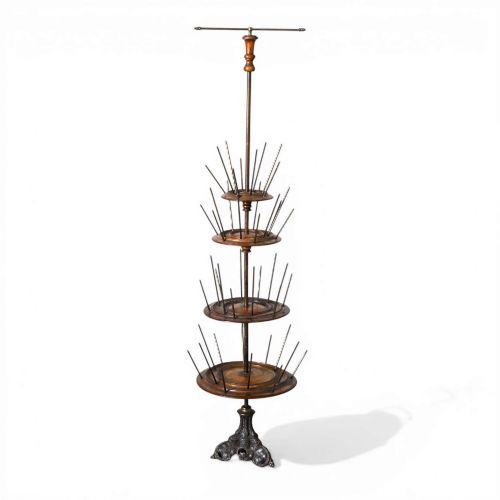


Retail Shop Display Counter
A retail shop display counter organises goods behind glass and timber, offering sturdy presence and clear visibility for any interior space.
Retail Shop Display Counter
A retail shop display counter serves as the primary transaction and presentation unit in commercial settings, built to protect and showcase goods. When searching for a retail shop display counter, buyers encounter heavy timber structures designed for daily retail use across past centuries.
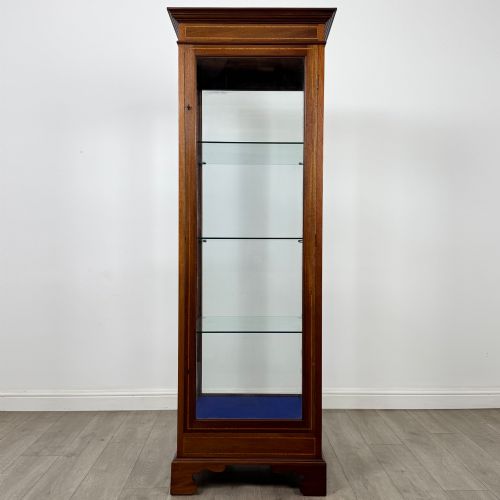
The selections span standard shop counters, glazed display cabinets, and tall freestanding units originating from the Victorian era through the 1930s commercial period. Oak and mahogany predominate, often featuring glass panels, brass hardware, and specialised tiered or drawer layouts for specific trades.
How They Were Made
Craftsmen built these commercial fixtures using durable hardwoods such as oak, mahogany, and pine, joined to withstand heavy daily traffic in shops and apothecaries. Structural framing frequently incorporates brass, cast iron, or chrome to support large glass panels and mirrored interiors.
Surfaces receive specialised finishes, ranging from clear polished wood and ebonised treatments to original paint and velvet-lined display tiers. Specialised makers integrated metal framing and multi-drawer configurations to serve distinct trades like drapery, confectionery, and pharmacy.
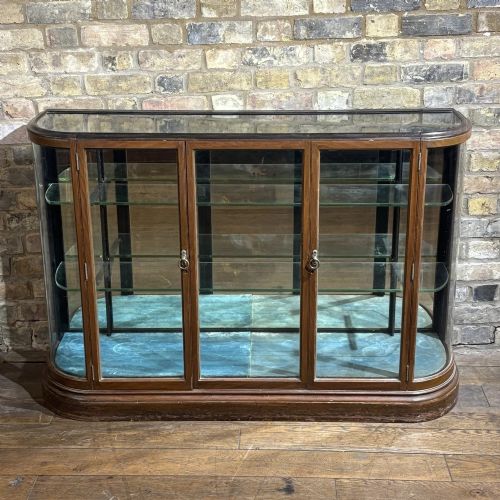
Specialised forms include haberdashery counters with dozens of drawers, bow-end cabinets, and countertop apothecary display cases.
What Varies in Quality
The distinction between standard commercial fittings and superior examples lies in the integrity of the timber framing, the clarity of the original glass, and the sophistication of the hardware. Maker attribution to notable shopfitters elevates the standing of a piece.
Original painted surfaces, intact mirrored interiors, and specialised configurations like multi-drawer apothecary units or bentwood bow ends separate mass production from bespoke architectural commissions.
F. Sage & Co.·Dudley & Co·John Stow Ltd of Bradford·Saml. Elliott & Sons
The Retail Shop Display Counter Glossary
- Haberdashery counter
- A long timber fixture fitted with numerous shallow drawers originally used for selling small sewing items and fabrics. These pieces often feature glass tops or fronts for inspecting small goods.
- Countertop display cabinet
- A smaller glazed case designed to sit atop a main service counter to highlight high-value items such as chocolates, tobacco, or jewellery. They position merchandise directly at eye level for customers.
- Bow end
- A curved glass or timber termination at one or both ends of a display counter or cabinet. This design softens rigid rectangular lines and improves viewing angles from multiple directions in a room.
- Apothecary counter
- A specialised commercial unit featuring many small drawers and compartments used by chemists and pharmacists. They store medicines and herbs while providing an orderly display surface.
- Shopfitter
- A specialist firm responsible for designing and manufacturing interior retail furniture and architectural joinery. Prominent examples include companies that constructed heavy timber and brass fixtures for high street merchants.
Retail Shop Display Counter: Frequently Asked Questions
What trades used these retail shop display counters?
Merchants across numerous trades utilised these fixtures, including grocers, drapers, chemists, and confectioners who needed secure presentation surfaces.
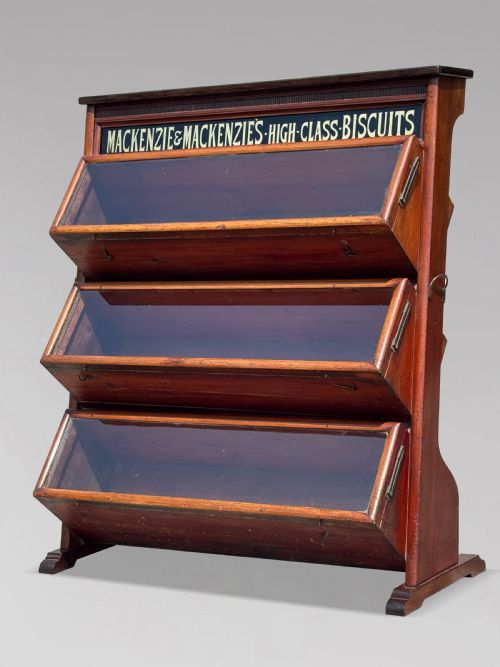
Specific goods like biscuits, chocolate, and tobacco required dedicated glazed cabinetry to protect stock while remaining visible to buyers.
How do I identify the period of a counter?
Period identification relies on examining the timber types, hardware materials, and construction techniques characteristic of Victorian, Edwardian, or 1930s commercial design.
Heavier mouldings and dense mahogany often point to the nineteenth century, whereas cleaner lines and the introduction of aluminium or chrome suggest the interwar decades.
How should I integrate a retail counter at home?
These large timber and glass units function effectively in domestic settings as kitchen islands, sideboards, or bookcases.
Glazed display sections allow collectors to exhibit ceramics or glassware safely while adding architectural weight to a room.
Are original painted finishes common on these counters?
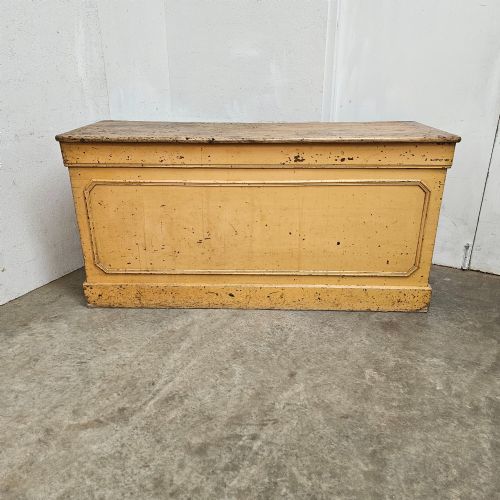
Original painted surfaces do appear on select French provincial and domestic shop furniture from the nineteenth century.
These coatings show natural wear that reflects decades of commercial utility rather than modern restoration.