


Narrow Glass Display Case
A narrow glass display case holds precious objects safely while taking up very little floor space in a crowded room.
Narrow Glass Display Case
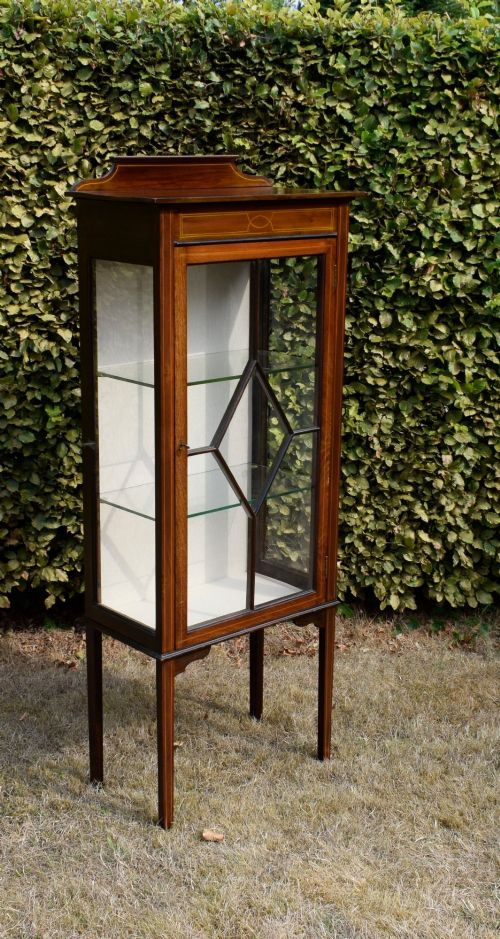
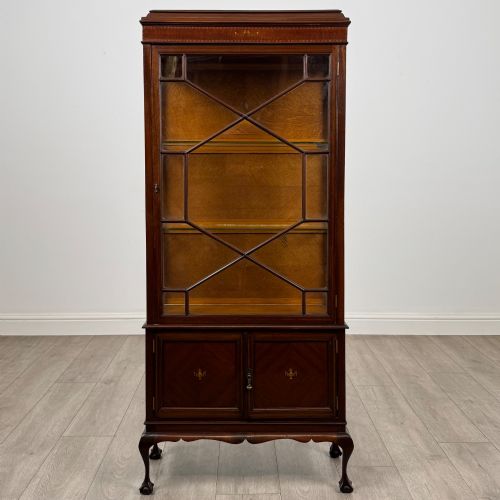
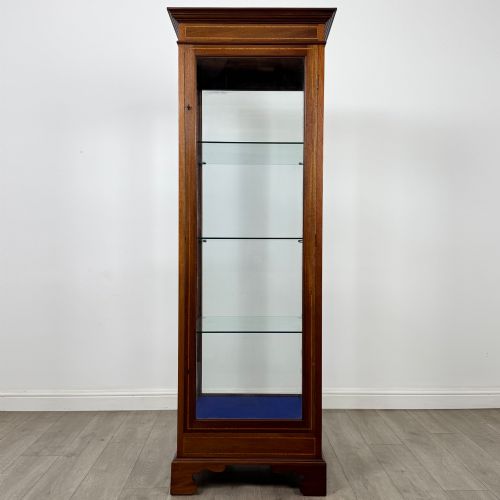
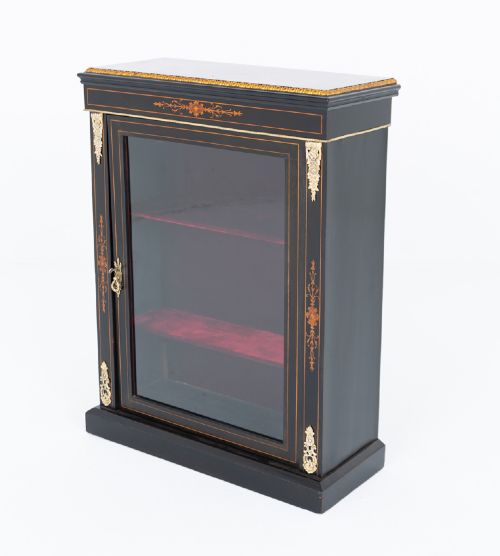
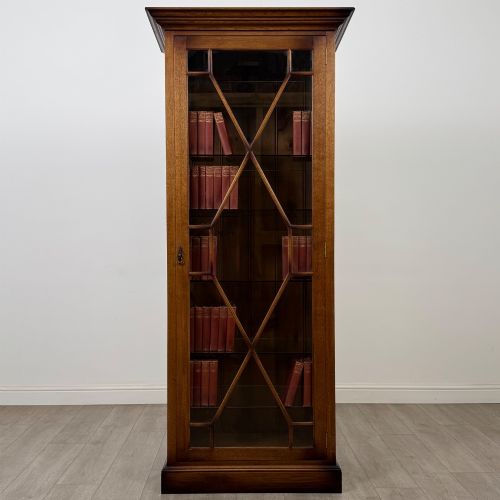
A narrow glass display case provides a tall, slender footprint designed to fit tight wall spaces while offering maximum visibility for collections. These pieces primarily date from the Victorian and Edwardian eras, alongside several from the 1930s interwar period and the late nineteenth century.
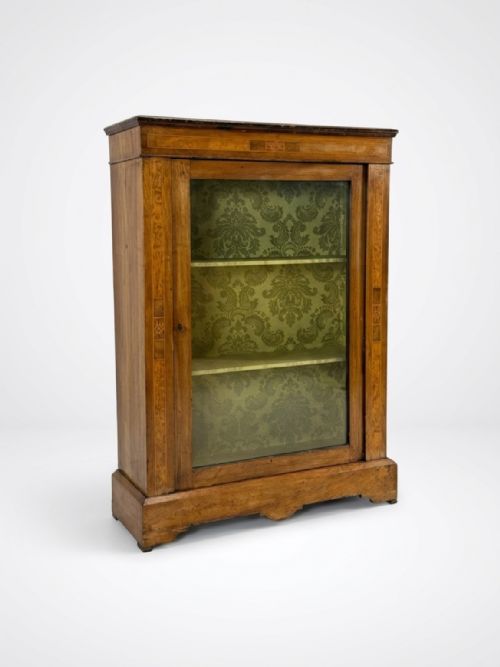
The selection here encompasses several distinct forms, most notably pier cabinets, tall freestanding shop display cases, and glazed bookcase cabinets. Shoppers most frequently encounter Edwardian mahogany display cabinets and Victorian walnut pier cabinets within these listings.
Makers utilised various regional styles, ranging from classic Georgian revival and Gothic revival to French provincial and Edwardian Sheraton revival. Each format serves the fundamental purpose of framing curated objects behind glass panes.
How they were made
Cabinet makers built the primary carcass structures using dense hardwoods such as mahogany, walnut, oak, and ebonised wood, often incorporating satinwood for contrast. Timber selection governed the structural integrity and dictated the final visual weight of each slender cabinet.
Glazing forms the central functional element, supported by fitted brass hardware and occasionally lined with fabric backgrounds. Inlaid marquetry and delicate stringing frequently decorate the exterior timber surfaces on pieces from the Edwardian Sheraton revival style.
Techniques varied between domestic furniture production and commercial shop fitting, as seen in the distinction between tall freestanding shop cases and refined parlour pier cabinets. Joinery relied on traditional framing methods to support heavy glass doors without warping.
Some Victorian pier cabinets wear porcelain Sevres plaques like tiny medals, proving that even timber needed a bit of ceramic jewellery.
What varies in quality
The refinement of the timber grain and the precision of inlaid marquetry largely determine the upper tier of these cabinets. Plain walnut and straightforward mahogany sit at a different level of craftsmanship compared to richly figured veneers and intricate ebonised finishes.
Structural proportion defines the distinction between standard production items and pieces designed with exceptional architectural presence. Fine brass mounts and original fabric linings further separate ordinary storage from high cabinet-making.
The Narrow Glass Display Case Glossary
- Pier cabinet
- A low or tall slender cabinet designed specifically to fit the wall space between windows, known as a pier. These pieces frequently feature glass doors and delicate inlaid woodwork.
- Pier glass
- A tall mirror designed to hang on the wall space between windows, often paired beneath or above matching furniture. This term frequently appears alongside pier cabinets in nineteenth-century interiors.
- Ebonised wood
- Timber treated with a dark finish to imitate expensive ebony. Victorian cabinet makers applied this technique extensively to create stark, dramatic furniture contrasts.
- Sheraton revival
- A late nineteenth and early twentieth-century design movement copying the light, neoclassical furniture forms of Thomas Sheraton. These items display satinwood inlay, tapered legs, and restrained classical motifs.
- Sevres plaques
- Porcelain panels produced by the Sevres factory in France, frequently mounted onto nineteenth-century cabinet doors for decorative effect. They add colourful highlights to dark timber surfaces.
Narrow Glass Display Case: Frequently Asked Questions
How do I identify a Victorian pier cabinet?
Victorian pier cabinets typically present dark timbers like walnut or ebonised wood, often decorated with inlaid marquetry or porcelain plaques. They were built tall and narrow to occupy the wall space between windows.
Examine the construction joints and timber patination to understand the age. Most examples date from the mid to late nineteenth century.
What is the difference between Edwardian and Victorian cabinets?
Edwardian cabinets generally display lighter mahogany or satinwood timbers, frequently incorporating Sheraton revival styling with delicate stringing and bright inlay. Victorian versions lean towards heavier walnut, ebonised finishes, and Gothic revival influences.
Both periods favoured narrow footprints, but Edwardian pieces often look airier and less ornate than their mid-nineteenth-century predecessors.
Can these cabinets hold heavy books?
Glazed bookcase cabinets from the 1930s or late nineteenth century feature sturdy oak or mahogany shelving built to bear substantial weight. Pier cabinets and delicate display cases, however, suit lighter decorative objects and porcelain collections.
Check the internal shelf supports and timber thickness before loading any narrow cabinet with heavy volumes.