
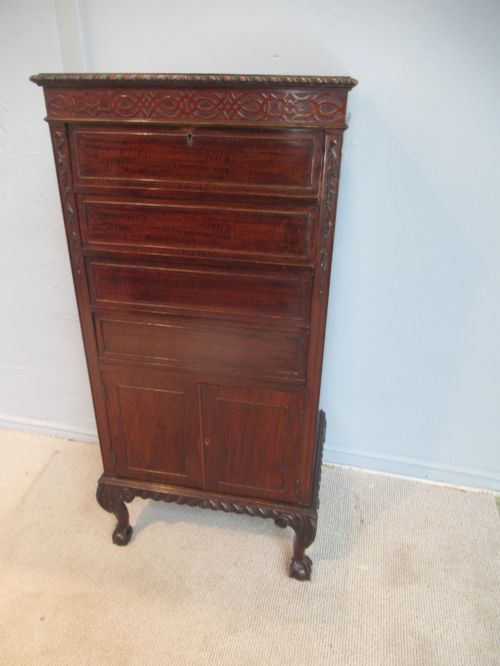


Tall Mahogany Filing Cabinet
A tall mahogany filing cabinet organises papers with weight and presence, bringing traditional timber into a modern study.
Tall Mahogany Filing Cabinet
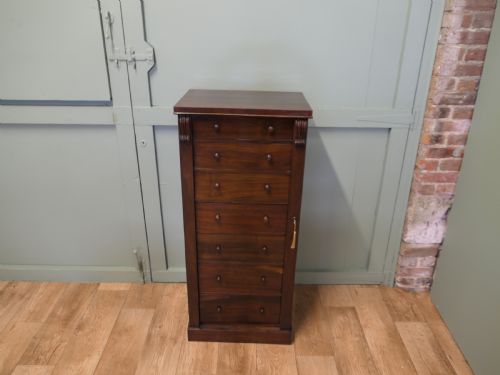
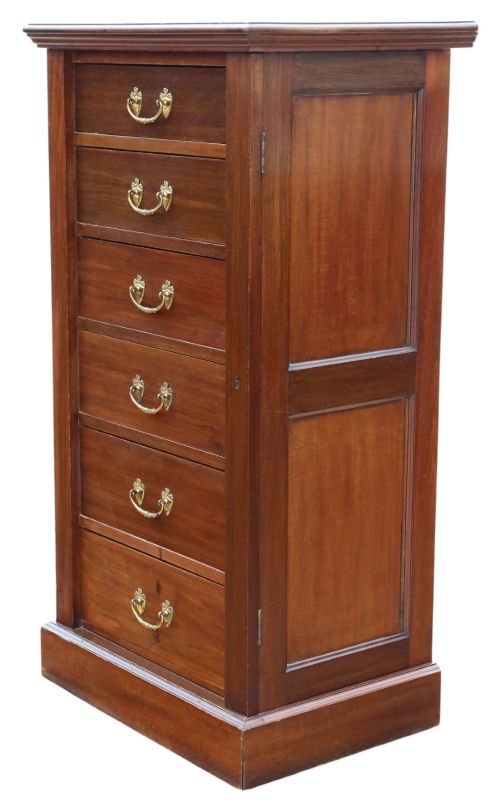
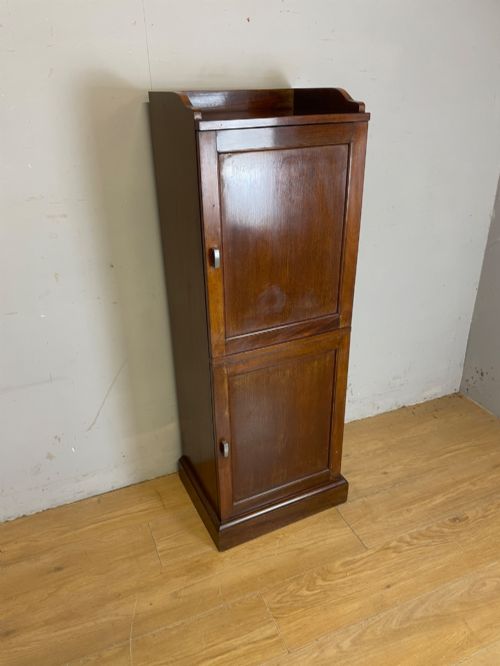
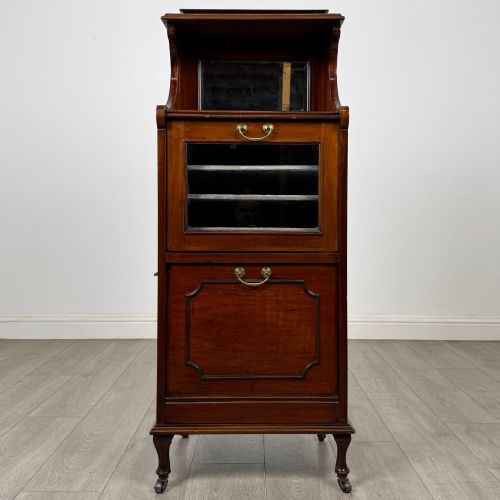
A tall mahogany filing cabinet brings together vertical storage and rich timber, appearing in forms from office filing units to music cabinets and Wellington chests. When searching for a tall mahogany filing cabinet, a buyer encounters pieces originating from the nineteenth and early twentieth centuries, spanning Edwardian, Victorian, and Georgian styles.
The practical function of these tall cabinets is to hold documents, music sheets, or general paperwork within stacked drawers. Many examples on this page take the form of narrow chests of drawers or specialised cartonnier cabinets equipped for correspondence.
Origins vary across British and French workshops, utilising solid mahogany alongside secondary timbers like hardwood. A buyer is most likely to meet Edwardian office models or late nineteenth century music cabinets adapted for modern document storage.
How they were made
Makers constructed these tall cabinets primarily from solid mahogany and select hardwoods, often applying polished finishes to highlight the natural grain. Structural integrity depended on sturdy joinery to support the weight of multiple stacked drawers.
Hardware played a functional and decorative role, incorporating brass handles, locks, and occasionally gilt bronze mounts. Some French cartonnier styles integrated leather elements into their design, while inlaid details appeared on music cabinets from the Edwardian period.
Some music cabinets spent a century holding waltzes before settling down to store modern tax returns.
What varies in quality
Quality in a tall mahogany filing cabinet rests upon the selection of timber and the precision of the drawer construction. Finer pieces display carefully matched mahogany grains across the drawer fronts and solid secondary woods within the internal structure.
The refinement of the hardware and any decorative additions distinguish standard utility pieces from finer examples. Superior cabinets maintain smooth drawer operation and robust locking mechanisms, reflecting the standard of their original workshops.
The Tall Mahogany Filing Cabinet Glossary
- Wellington Chest
- A tall, narrow chest of drawers secured by a hinged locking side bar. This locking mechanism holds all drawers shut simultaneously with a single key.
- Cartonnier
- A formal tabletop or tall cabinet fitted with compartments and drawers for organising papers and documents. Originating in France, these pieces frequently feature leather labels or accents.
- Music Cabinet
- A specialised tall cabinet originally designed to store sheet music. These often feature shallow drawers or drop-front compartments suited for flat paper storage.
- Edwardian
- A stylistic period spanning the reign of King Edward VII until the First World War. Furniture from this era often lighter in proportion while drawing inspiration from earlier Georgian designs.
- Mahogany
- A durable tropical hardwood valued for its deep reddish-brown colour and stability. It accepts fine polishing and was the primary material for high-grade cabinetry.
Tall Mahogany Filing Cabinet: Frequently Asked Questions
How were tall filing cabinets used originally?
These cabinets served in offices, libraries, and studies to sort correspondence, ledgers, and documents. Tall proportions allowed maximum storage capacity while occupying minimal floor space in busy rooms.
Music cabinets and cartonnier units fulfilled a similar organizational role for households and professionals, keeping loose papers flat and accessible within dedicated drawers.
How do I fit a tall cabinet into a modern room?
A tall mahogany filing cabinet works well in home offices, studies, or living areas where vertical storage is required. The rich timber tones pair easily with both contemporary and traditional interiors.
Ensure you measure the ceiling height and clearance for drawer pull-out before placement, as these vertical pieces demand adequate wall space to sit comfortably.
How do I tell an Edwardian piece from a Victorian one?
Victorian furniture tends to feature heavier proportions, denser timber selection, and darker finishes. Pieces from this era often emphasise solidity and traditional carving.
Edwardian items generally exhibit lighter forms and occasionally incorporate revival styles or subtle inlay work. Examining the internal secondary woods and construction methods often clarifies the period.