



Tall Legged Chest of Drawers
A tall legged chest of drawers elevates storage on slender supports, offering upright proportions and refined period craftsmanship that anchors a room.
Tall Legged Chest of Drawers
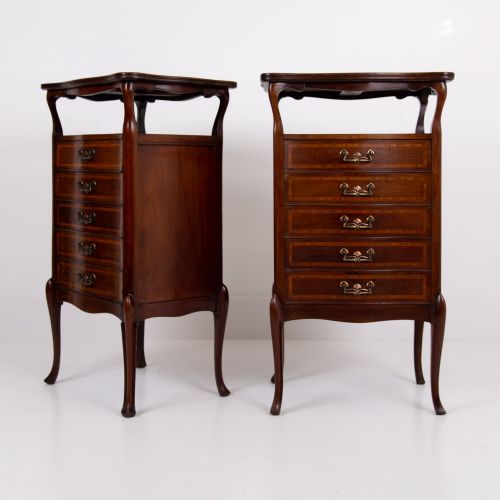
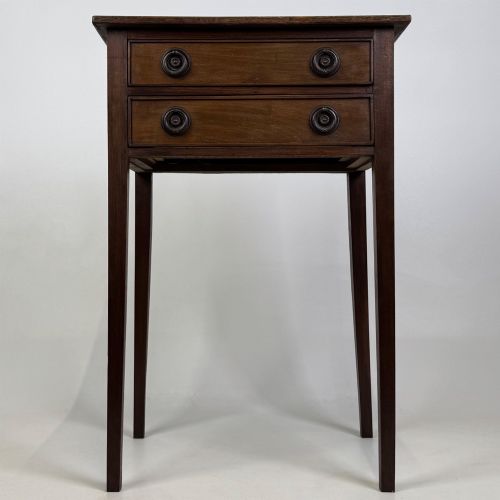
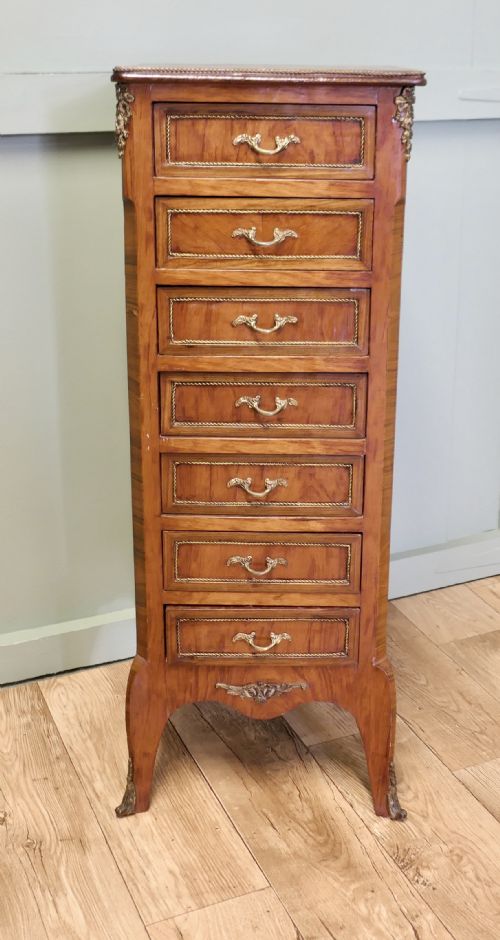
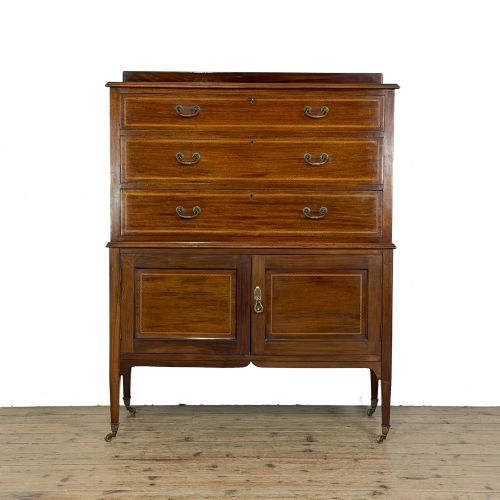
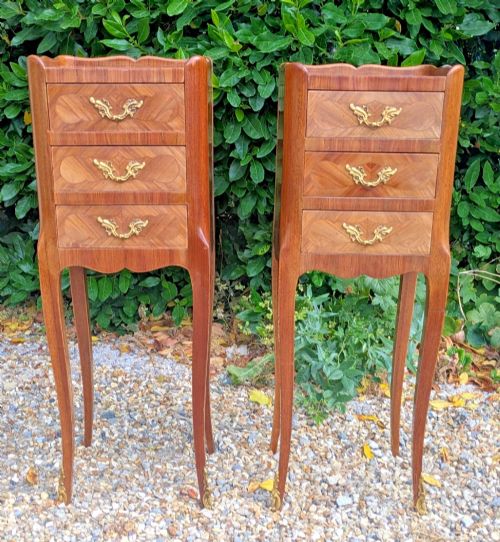
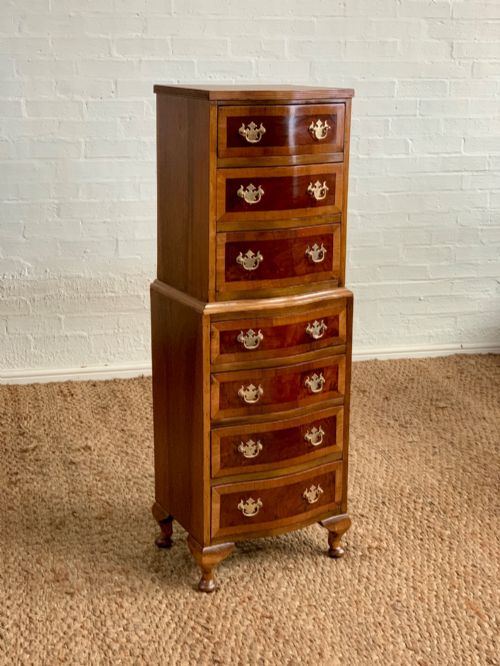
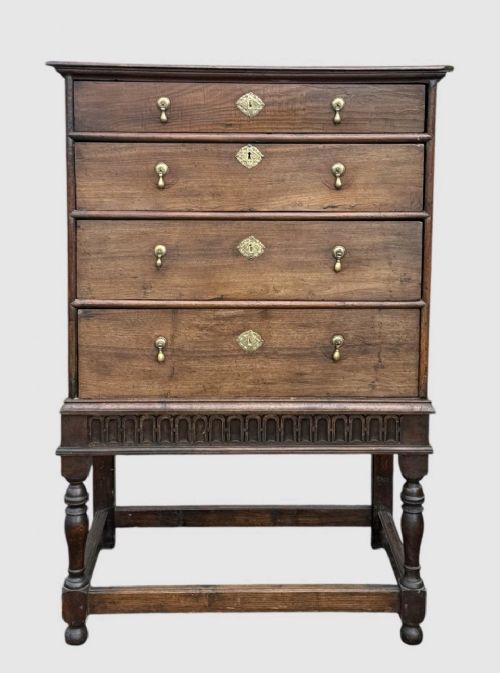
A tall legged chest of drawers encompasses elevated storage furniture designed with upright vertical dimensions and raised stands or legs. When you search for this phrase, you encounter forms ranging from early eighteenth-century oak and walnut chests on stand to twentieth-century mahogany tallboys and revival pieces.
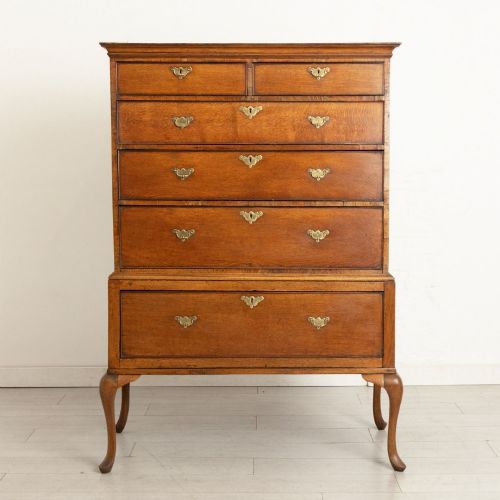
The most common formats on this page include walnut and mahogany chests on stand featuring cabriole legs, alongside tall chests of drawers dating from the Georgian, Edwardian, and subsequent twentieth-century periods. These pieces combine deep drawer storage with the visual lightness of elevated legs, departing from standard floor-standing carcases.
How they were made
Cabinet makers utilised dense hardwoods including mahogany, oak, and walnut, frequently applying burr walnut or oyster veneers to primary surfaces. Stands and elevated legs were shaped from solid timber, sometimes incorporating carved details or banding.
Construction methods involved pegged joints in earlier oak pieces, precise dovetailing for drawer carcases, and applied mouldings or brass hardware such as drop handles and backplates.
Listings feature walnut, mahogany, oak, and satinwood, spanning the eighteenth, nineteenth, and twentieth centuries.
What varies in quality
Quality rests in the selection of timber figures, such as matched burr walnut or figured mahogany veneers, and the integrity of the original stand or base structure. Finer examples retain their original brass handles, crisp carving on cabriole legs, and undisturbed surface patination.
Lower tiers of quality often involve later replacements to the leg supports, mismatched drawer linings, or replacement hardware that disrupts the period balance of the piece.
The Tall Legged Chest of Drawers Glossary
- Chest on stand
- A two-part form consisting of a main drawer section elevated upon a separate open frame with legs. This configuration lifts storage higher off the floor and lightens the visual mass of the furniture.
- Tallboy
- A tall chest of drawers or a chest on chest configuration providing significant vertical storage capacity. These pieces maximise vertical wall space while maintaining a relatively small floor footprint.
- Cabriole leg
- A furniture leg that curves outward in a convex arc and tapers inward in a concave arc, terminating in a foot. This form became prominent during the Queen Anne and Georgian periods.
- Oyster veneer
- Circular slices cut transversely from small branches or roots of walnut or olive trees, arranged to create intricate repeating patterns across a surface. It demands high precision from the cabinet maker.
- Banding
- A narrow strip of contrasting timber inlaid around the perimeter of drawer fronts or tabletops as a decorative border. It frames the primary veneer and accentuates the geometry of the piece.
Tall Legged Chest of Drawers: Frequently Asked Questions
What is a tall legged chest of drawers?
A tall legged chest of drawers is an elevated storage piece combining an upright drawer carcase with a raised stand or legs. These forms reduce visual heaviness while providing ample vertical storage.
They appear in various styles from the eighteenth century through to twentieth-century revivals, utilising woods like walnut, mahogany, and oak.
How do I identify an 18th-century chest on stand?
Eighteenth-century examples often display pegged construction, hand-cut dovetails, and timber choices like figured walnut, oak, or mahogany. They frequently feature cabriole legs characteristic of the period.
Revival pieces from later eras emulate these traits, but period examples show authentic timber ageing and traditional joinery methods.
Where should I place a tall chest in my home?
The elevated design makes these pieces suitable for bedrooms, hallways, or living spaces where floor area is limited. Their vertical proportions draw the eye upward without crowding the room.
Consider pairing them with lower furniture items to balance room heights and utilise the top surface for display.