

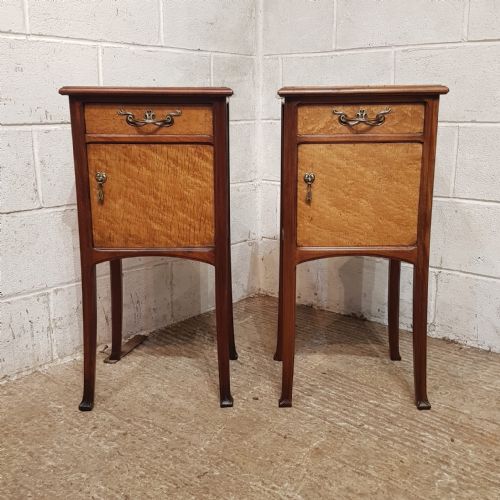


Tall French Bedside Tables
Tall french bedside tables offer compact height and continental elegance, standing beside a high bed with useful surface space and discreet storage.
Tall French Bedside Tables
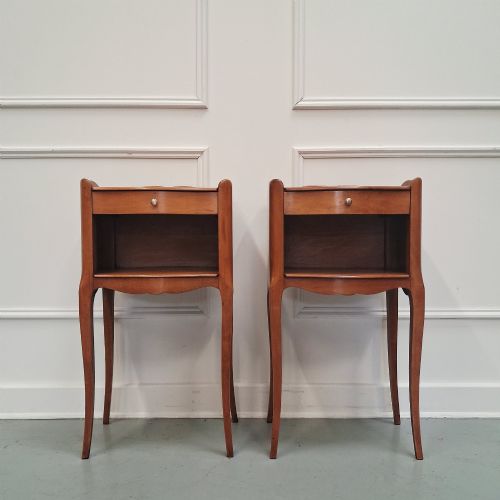
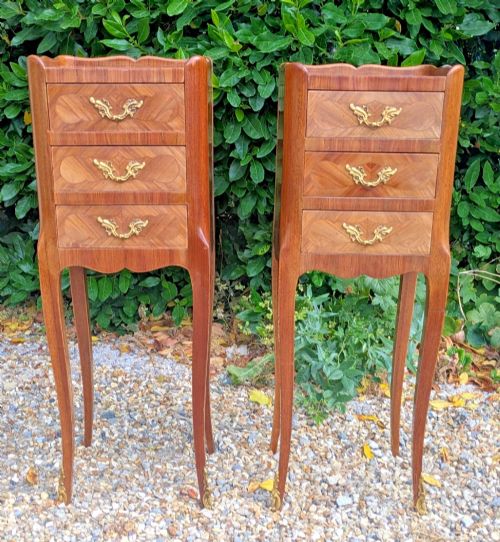
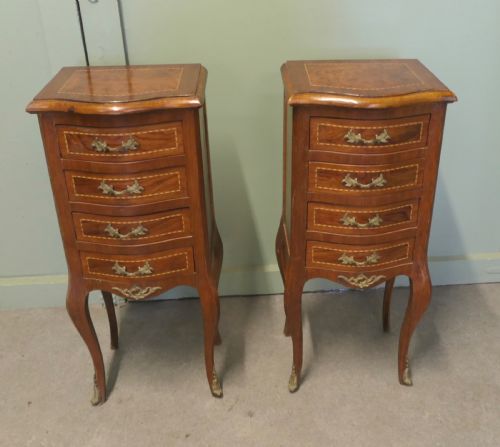
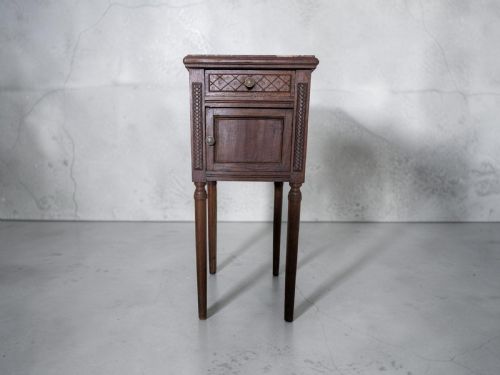
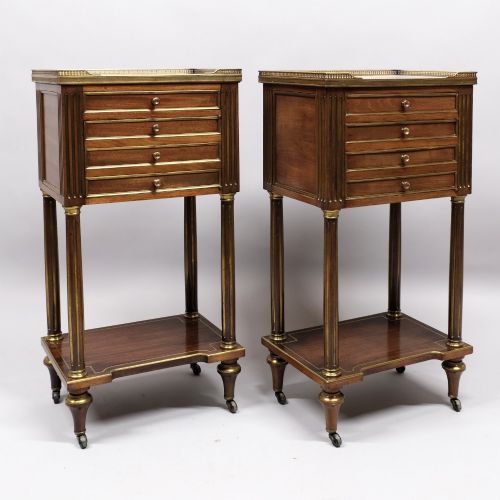
Tall french bedside tables bring vertical presence and enclosed storage to the bedroom, stepping up from standard low stands to match taller mattress heights. These pieces emerge in styles ranging from nineteenth century Empire to nineteen-thirties geometric forms, often found as matched pairs with multiple drawers or cupboards.
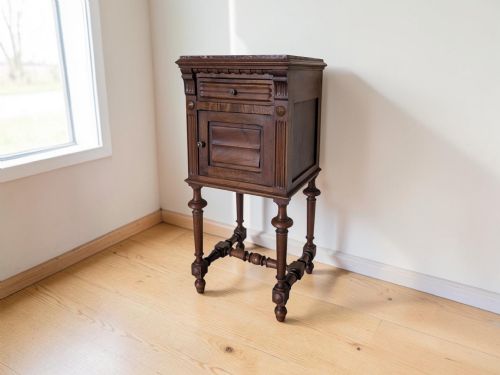
The selections span bedside cabinets, side lockers, and tall nightstands, frequently featuring neat proportions designed to occupy minimal floor space while providing maximum utility. Walnut, mahogany, and kingwood bodies appear alongside marble tops and brass mounts, reflecting diverse periods from Victorian times through the early twentieth century.
Buyers encounter traditional French provincial designs alongside neoclassical and Louis XV styles, each bringing distinct decorative character to a bedroom scheme. The taller format ensures bedside essentials sit comfortably within reach of elevated mattresses without awkward bending.
Materials and Construction
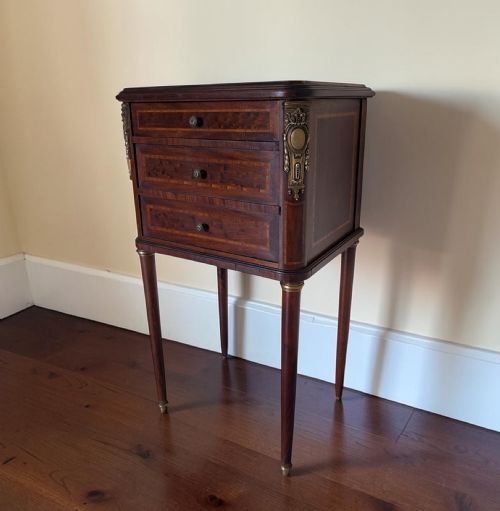
Cabinet makers constructed these pieces using dense hardwoods like mahogany, walnut, rosewood, and kingwood, frequently applying decorative veneers such as parquetry and floral marquetry across drawer fronts and surfaces. Timber carcases were built with traditional joinery to support heavy stone elements.
Marble slabs provide durable, cool table tops on many examples, while cast brass and ormolu mounts accent corners, keyholes, and feet. Metal detailing and brass galleries enhance the continental aesthetic, pairing with fitted side locks and tambour fronts on select cabinets.
Current selections span the nineteenth century through the nineteen-thirties, featuring walnut, mahogany, marble, and brass.
Markers of Distinction
Superior examples distinguish themselves through the precision of their timber veneers and the crispness of their ormolu mounts, where hand-chased brass details show refined definition. The integration of matching marble tops and smoothly operating drawers reflects high standards of workshop execution.
Proportion and decorative restraint separate finer cabinets from standard utility pieces, with balanced hardware and precise parquetry elevating the design. The harmony between wood grain selection and metal ornamentation dictates the overall refinement of each piece.
The Tall French Bedside Tables Glossary
- Ormolu
- Gilded bronze ornamentation applied to furniture mounts and decorative hardware. It provides a bright metallic contrast against dark hardwoods like mahogany and walnut.
- Marquetry
- Decorative patterns formed by inserting thin pieces of wood veneer into a structured background. Floral and geometric motifs appear frequently on cabinet doors and tabletops.
- Parquetry
- Geometric mosaic woodwork arranged in repeating patterns across panel surfaces. This technique showcases contrasting timber tones within precise grid structures.
- Tambour
- A flexible shutter door constructed from narrow vertical strips of wood glued to a canvas backing. It slides smoothly along tracks to enclose cabinet storage.
Tall French Bedside Tables: Frequently Asked Questions
How do I choose the right height?
Match the table top level to the top of your mattress for comfortable access during the night. Taller frames accommodate deep mattresses and elevated bed bases common in traditional sleeping quarters.
Consider the vertical clearance needed for lamps or bedside water jugs before selecting a specific cabinet height.
Are marble tops original?
Many period cabinets feature fitted marble slabs designed to protect the timber surface from spills and hot items. These stone inserts were standard additions on high-end French bedside furniture.
Inspect the edges of the stone to confirm it sits flush within the wooden retaining gallery of the tabletop.
How do I tell periods apart?
Nineteenth-century pieces often display heavier classical proportions, deep mahogany tones, and robust Empire styling. Early twentieth-century examples lean towards streamlined forms, lighter kingwood veneers, and art deco influences.
Examine the hardware style and veneer patterns for clues regarding the specific decade of manufacture.
Can I use them as side tables?
Their compact footprint makes these cabinets versatile enough for living rooms or hallways as well as bedrooms. The enclosed storage proves useful for small items in narrow spaces.
Pairing a matching set beside a sofa or in a hallway creates functional surface space with distinct continental character.