

Tall Desk
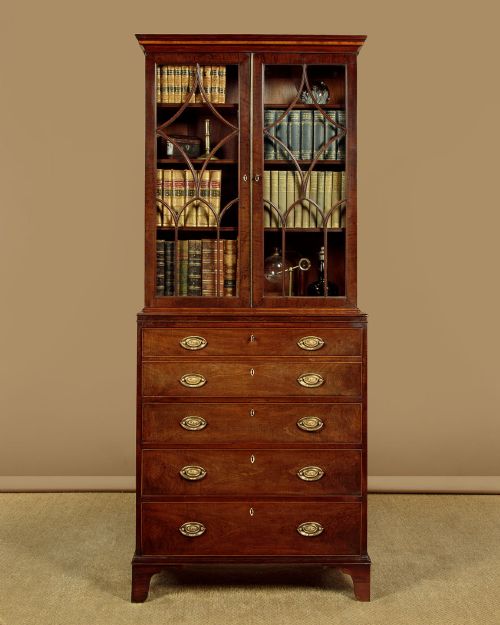
A tall antique desk brings practical writing space and height to a room, offering everything from Georgian bureau bookcases to upright writing cabinets.
Tall Desk
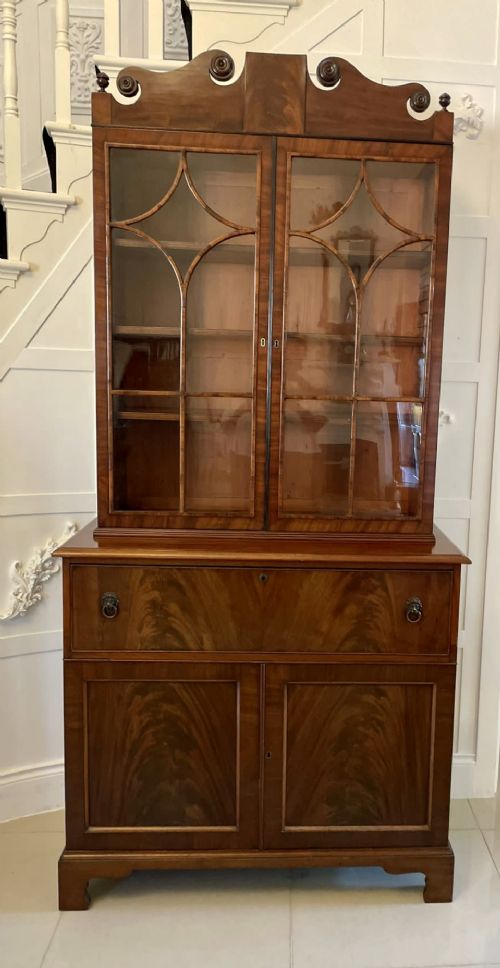
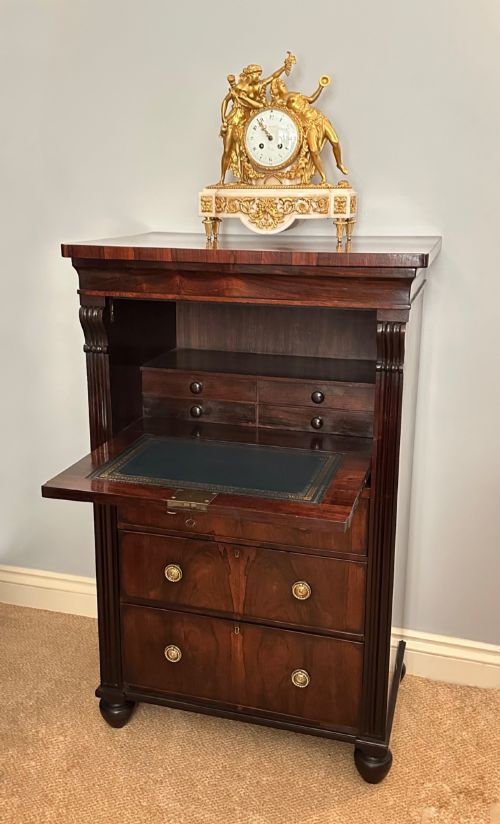
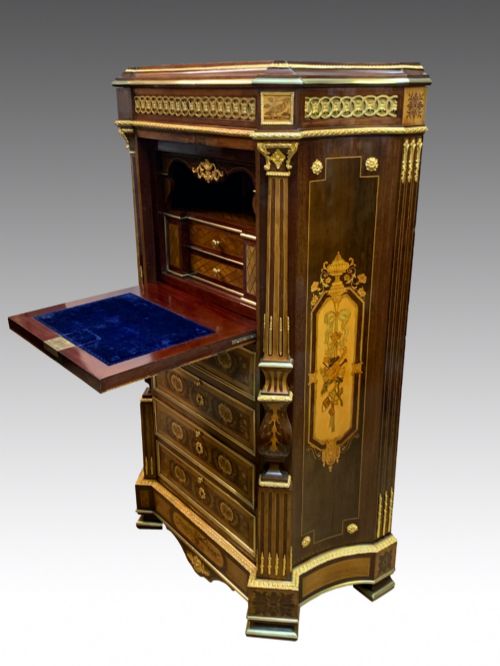
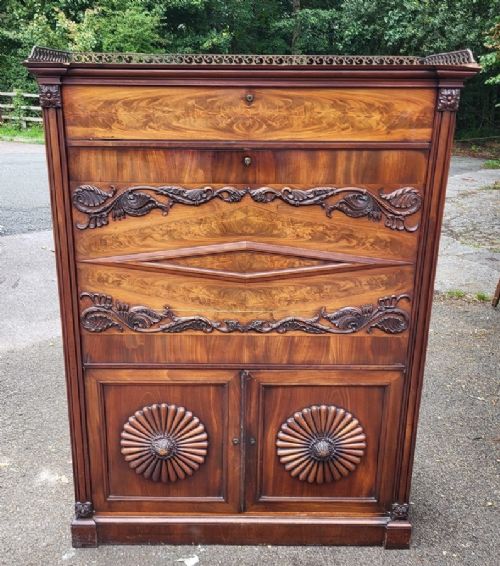
When you search for a tall antique desk, you encounter upright writing furniture designed to house correspondence and books while conserving floor space. The selections span Georgian, Victorian, and Edwardian periods, appearing as secretaire bookcases, abattants, and escritoires.
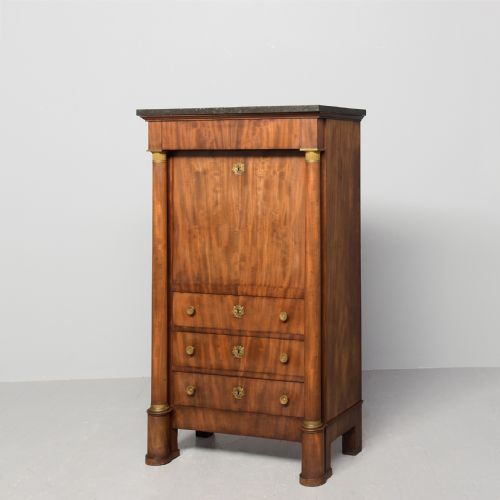
You are most likely to meet mahogany and walnut bureau bookcases alongside French secretaire cabinets featuring drop-front writing surfaces and fitted interior drawers. These pieces combine vertical storage with dedicated writing compartments.
How they were made
Cabinet makers utilised dense timber stocks, notably mahogany, walnut, oak, and flame mahogany veneers, applying them to carcases constructed with traditional joinery. Finer examples incorporate marquetry inlay, ormolu mounts, and specialised brass hardware.
Writing compartments often feature secret drawers and fitted pigeonholes concealed behind a drop-front fall or tambour shutter. Upper sections frequently integrate glazed bookcase doors or open shelving secured with brass locks.
Several pieces conceal secret compartments behind miniature drawer fronts, designed for private papers.
What varies in quality
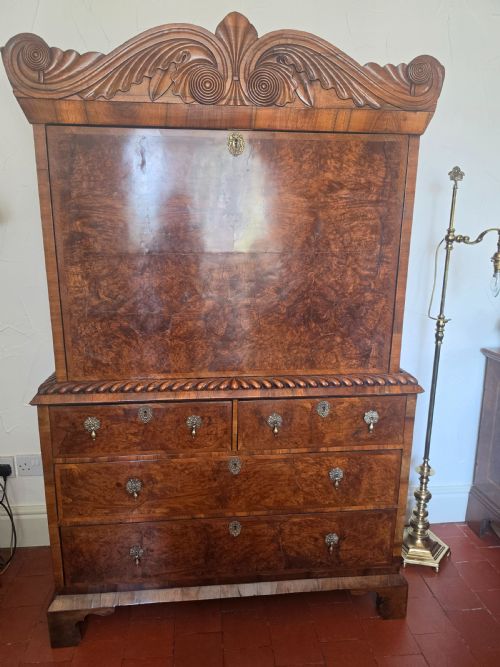
The distinction between standard utility pieces and superior examples rests in the selection of timber veneers, such as richly figured flame mahogany or burr walnut. Finer construction displays meticulous attention to interior pigeonholes, concealed compartments, and original brass fittings.
Proportion and execution also define the upper tier of pieces, where balanced cabinet design meets refined marquetry or carved detailing. The integration of functional elements like smooth-acting fall fronts and well-fitted secretaire drawers marks the work of premier makers.
Gillows·Maison Krieger
The Tall Desk Glossary
- Secretaire
- A desk or cabinet featuring a pull-out or drop-front drawer that conceals a writing surface and small compartments. This form allows a tall piece of furniture to function as a fully equipped workspace.
- Escritoire
- An upright writing cabinet with a fall-front flap that opens to reveal pigeonholes and drawers. It represents a traditional European form designed for correspondence.
- Bureau Bookcase
- A combination of a sloping-front desk below and a shelved bookcase above. These tall units maximise vertical storage in libraries and studies.
- Abattant
- A French upright cabinet with a vertical drop-front panel used for writing. It typically conceals an internal arrangement of small drawers and compartments.
- Tambour
- A sliding door constructed from narrow vertical strips of wood glued to a canvas backing. This mechanism allows access to desk interiors without requiring clearance for swinging doors.
Tall Desk: Frequently Asked Questions
What is a secretaire abattant?
A secretaire abattant is an upright cabinet featuring a hinged front panel that folds down to create a writing surface. This vertical format conceals numerous internal drawers and pigeonholes while maintaining a compact footprint.
Such pieces originated in France and appeared through the nineteenth century in walnut and mahogany. They provide concealed workspace without dominating the floor area of a room.
How do I use a tall desk in a modern room?
A tall writing cabinet or bureau bookcase functions effectively as a focal point in a study or living area. The vertical proportions draw the eye upward while offering enclosed storage for books and stationery.
Drop-front writing sections can remain closed when not in use to conceal papers and laptops. Upper shelving provides display space for volumes and decorative objects.
What woods were used for tall desks?
Cabinet makers predominantly utilised mahogany, walnut, and oak for structural stability and rich grain patterns. Flame mahogany veneers and burr walnut appeared on finer nineteenth-century pieces to create striking visual depth.
Secondary woods like pine or oak were used for internal drawer linings and carcase backs. Specialised items also incorporated exotic timbers such as kingwood and rosewood.
How do I distinguish Georgian from Victorian desks?
Georgian pieces, dating through the eighteenth and early nineteenth centuries, typically exhibit restrained neoclassical lines and astragal glazed doors. Mahogany and walnut predominated, with emphasis on architectural proportions and subtle brass hardware.
Victorian and later nineteenth-century examples often display bolder carving, heavier cornices, and more ornate interior fittings. Burr walnut and flame mahogany veneers became widespread, alongside diverse regional cabinet-making styles.