





Taisho Japanese Pottery
Taisho Japanese pottery brings together expressive relief-modelled vessels and decorated Satsuma wares from the early twentieth century.
Taisho Japanese Pottery
Taisho Japanese pottery encompasses sculptural vessels, decorative bowls, tea sets and figurines produced during the early twentieth century and the transitional decades bridging the Meiji and Taisho periods. Buyers exploring this category encounter distinct regional traditions, most notably the heavily modelled Sumida Gawa wares alongside finely painted Satsuma and Kutani ceramics.
The objects span practical items such as pitchers, mugs, cups and saucers alongside large display vases, suiban brush washers and sculptural jars. Many pieces reflect the cross-currents of traditional Japanese craftsmanship and changing aesthetic demands of the 1900s to the 1930s.
Materials and construction
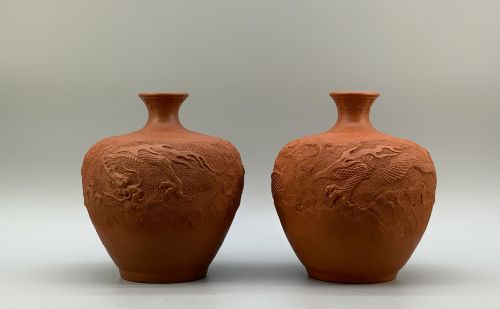
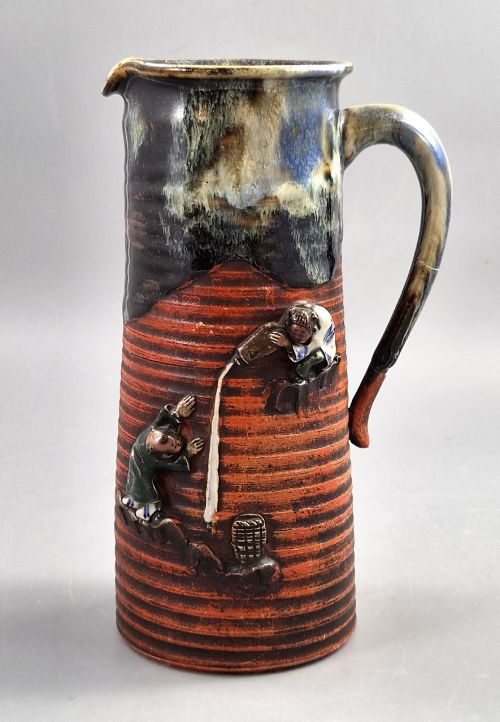
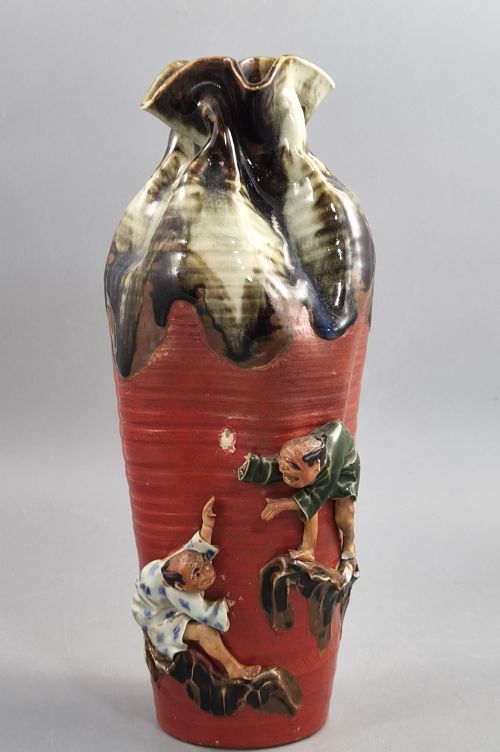
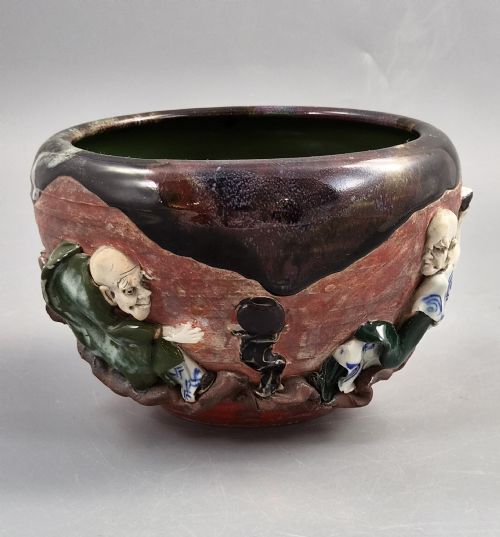
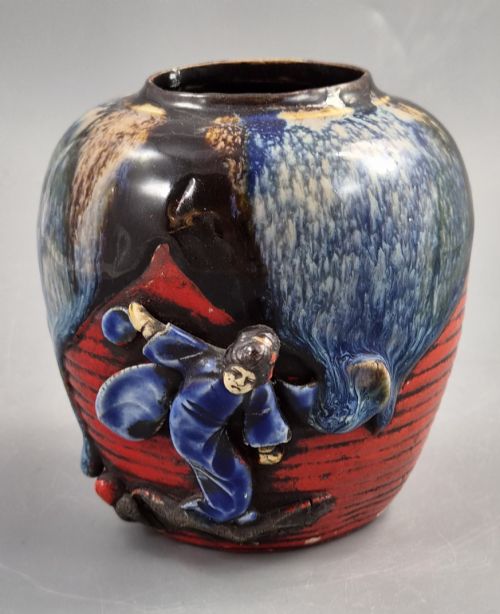
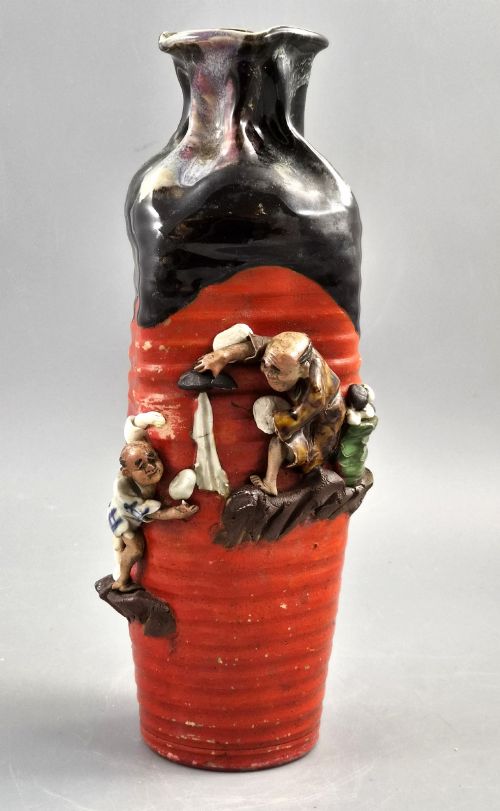
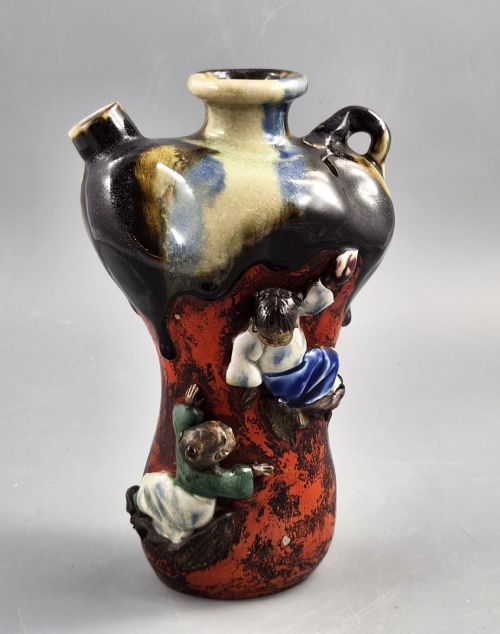
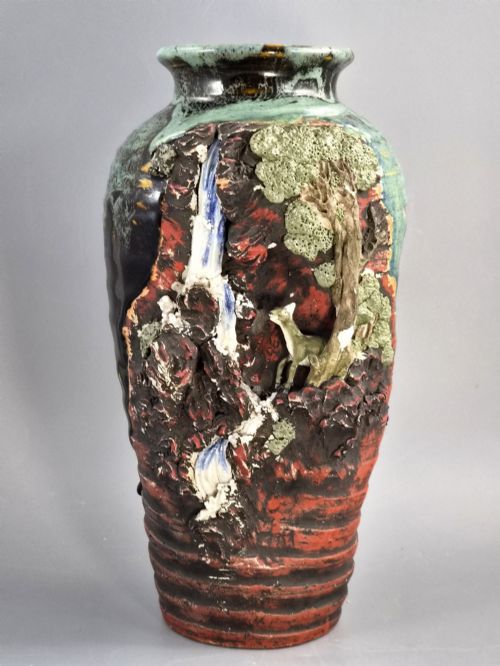
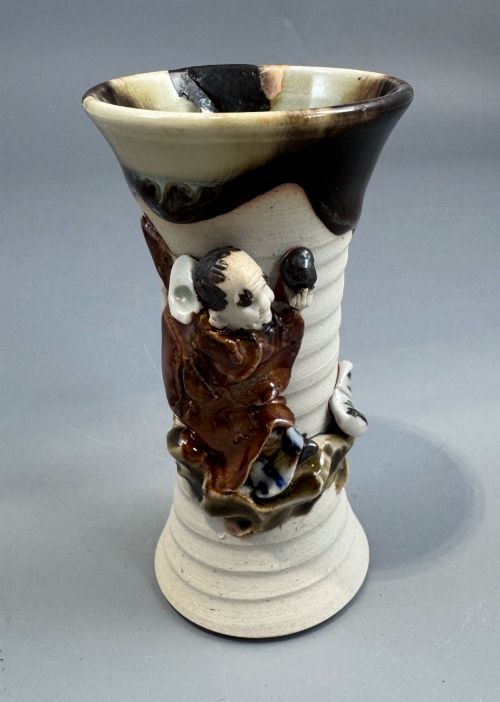
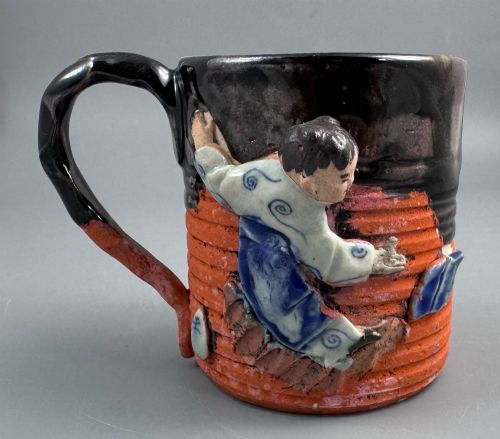
Potters utilised earthenware and heavy stoneware bodies as foundations for sculptural pieces, applying wet clay by hand to form high-relief figures of sages, dragons, and children crawling across the outer walls. These tactile elements are combined with distinctive thick flambé glazes that pool and run around pinched rims and textured surfaces.
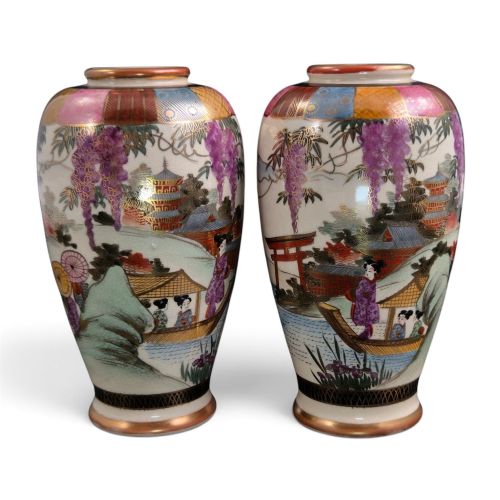
Fine Satsuma and Kutani pieces employ white ceramic and porcelain painted in detailed enamel palettes, frequently enhanced with intricate gold leaf and raised moriage decoration. Signed works often incorporate artist seals pressed directly into the damp clay or painted in iron-red on the base.
Listings feature earthenware, stoneware, and porcelain decorated with enamel, gold leaf, and flambé glazes across multiple decades.
Evaluating craftsmanship
Quality in taisho japanese pottery rests on the control and depth of the glaze effects and the vigour of the modelling. Superior Sumida Gawa pieces display expressive, sharply defined relief figures securely bonded to the body with harmonious runs of blue or red flambé glaze rather than flat, listless surfaces.
In painted wares, the precision of the enamel work and the crispness of the gilding determine distinction. Finer examples balance intricate motifs such as wisteria or landscape scenes without crowding the structural form of the vase, bowl or tea set.
Inoue Ryosai·Ishiguro Koko·Makuzu Kozan II·Tagawa·Taniguchi
The Taisho Japanese Pottery Glossary
- Sumida Gawa
- A style of Japanese pottery originating from the banks of the Sumida River in Tokyo, known for heavy earthenware bodies and applied relief figures.
- Satsuma
- A type of Japanese pottery with a crackled ivory earthenware glaze, typically decorated with polychrome enamels and gold leaf.
- Moriage
- A decorative ceramic technique using piped clay trails to build up raised designs and textures on the surface of the piece.
- Flambé Glaze
- A streaked or variegated glaze produced by complex kiln reactions, creating dramatic pools of colour across the ceramic surface.
- Suiban
- A shallow basin or tray traditionally used for flower arrangements or as a brush washer on a scholar's desk.
Taisho Japanese Pottery: Frequently Asked Questions
What is Sumida Gawa pottery?
Sumida Gawa pottery is a distinctive type of Japanese ceramic featuring heavily textured clay bodies and applied sculptural figures in high relief. These pieces often display dripping flambé glazes in blues and reds.
Makers worked near Tokyo, creating pitchers, vases, and brush washers that bridge the Meiji and Taisho eras with playful or dramatic narrative scenes.
How do I date taisho japanese pottery?
Dating relies on stylistic markers, transition periods noted on signatures, and the specific mix of traditional motifs with early twentieth-century manufacturing techniques. Pieces often span the Meiji and Taisho eras around nineteen hundred to nineteen thirty.
Examining the base for artist signatures, kiln marks, and the type of glaze crackle helps narrow the production window.
How should I display heavy relief vases?
Heavy relief vases require sturdy, stable surfaces that can support their substantial weight and uneven sculptural profiles. Placing them away from busy backgrounds allows the applied figures and flambé glazes to stand out.
Ensure adequate clearance around pieces with protruding dragons or climbing figures to prevent accidental contact.