





Tableware Silver Creamer
These pieces of tableware silver creamer bring practical elegance to the table, offering a refined vessel for serving milk or cream.
Tableware Silver Creamer
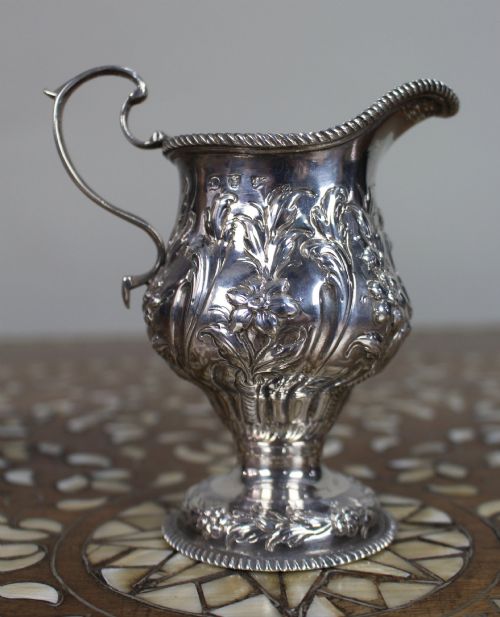
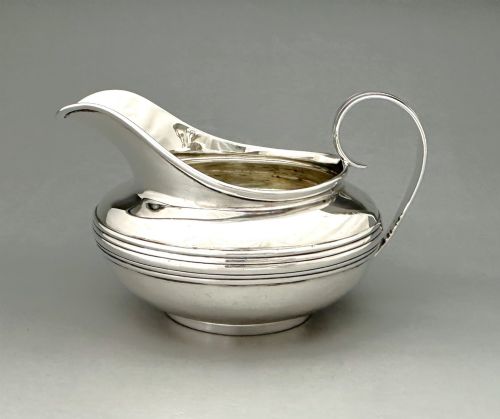
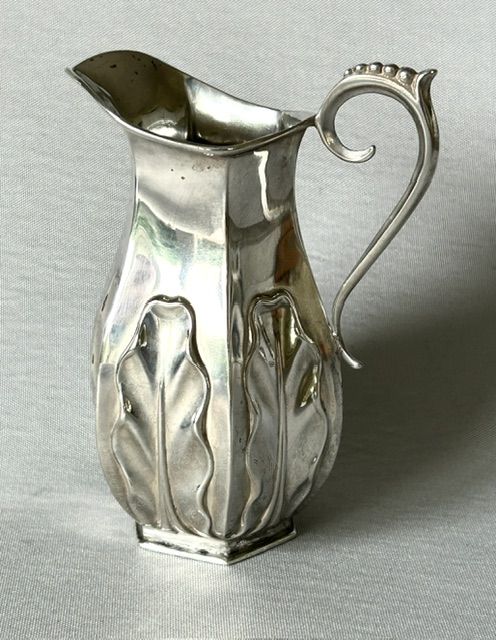
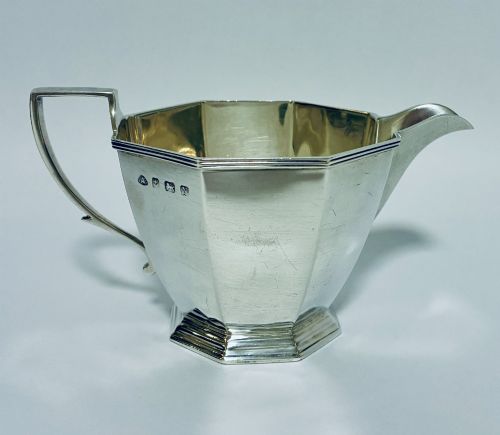
A tableware silver creamer serves as a dedicated vessel for pouring cream or milk during tea and coffee service. The pieces gathered here span periods from the eighteenth century through the Georgian, Victorian, and Edwardian eras, extending into Art Deco and Arts and Crafts designs.
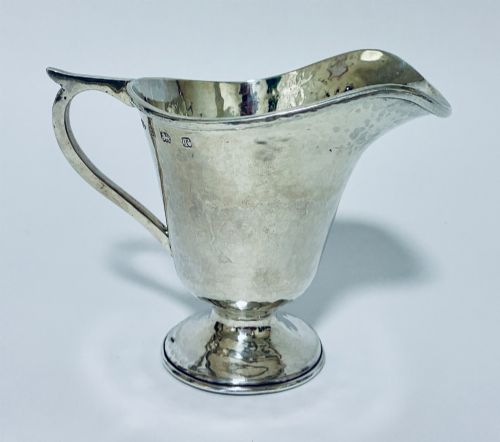
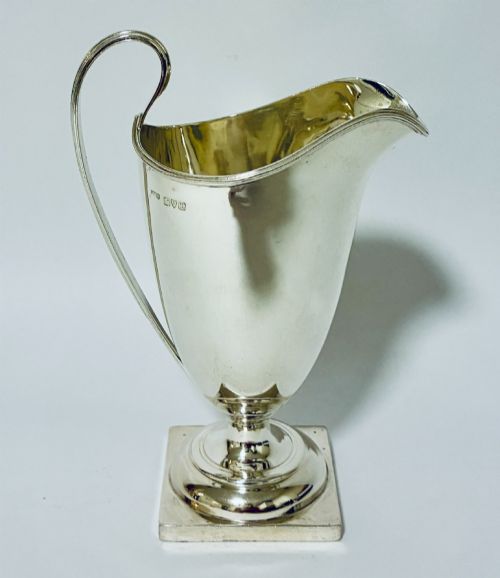
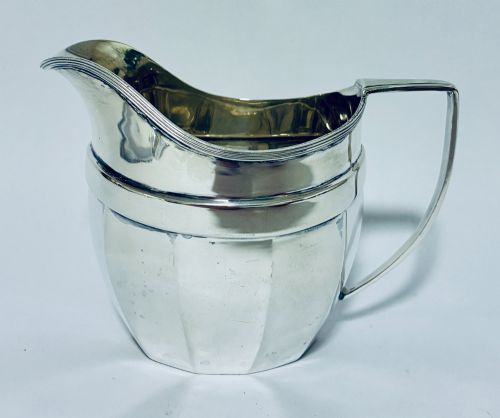
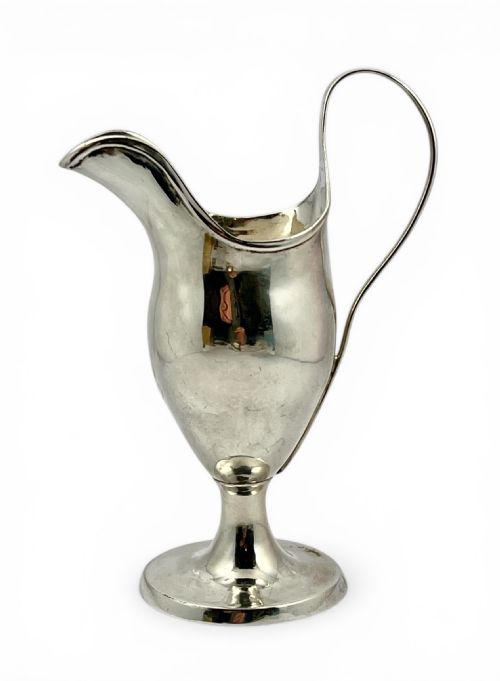
Forms range from simple milk jugs and helmet creamers to pedestal jugs and novelty cow creamers. Many appear individually, whilst others form part of larger tea services or matched sugar bowl and cream jug pairs.
Origins stretch across British provincial workshops, London assay offices, Ireland, Scotland, Italy, and America. Buyers encounter sterling silver, silver plate, and occasional interior gold wash or gilt finishes across these diverse geographic traditions.
Materials and construction
Makers utilised sterling silver and silver plate as the primary structural materials for these vessels. Many examples incorporate interior gilding, gold wash, or gold gilt surfaces to protect the silver from dairy acids.
Metalsmiths employed traditional techniques such as bright cutting, hammering, and casting to shape the bodies and handles. Supplementary textiles like silk and velvet occasionally appear in associated presentation or lining contexts.
Listings span Georgian, Victorian, Edwardian, and Art Deco styles, featuring sterling silver, silver plate, and gold wash finishes.
Assessing the work
Quality rests upon the crispness of decoration, such as hand-engraved bright cutting or naturalist details, and the integrity of the metalwork. Substantial gauge silver and balanced handle construction distinguish superior examples from lighter pieces.
Maker marks, clear hallmarks, and provincial attributions elevate the standing of a jug. Pieces retaining original gilding inside the bowl display a higher level of preserved finish.
James Gordon·John Emes·Peter and Ann Bateman·John Rawlings·Robert Pringle and Sons·Mappin and Webb·Robert Hennell
The Tableware Silver Creamer Glossary
- Sterling silver
- A silver alloy containing 92.5 percent pure silver by mass, standard for quality British tableware. It provides the durable foundation for traditional creamers and milk jugs.
- Silver plate
- A base metal coated with a thin layer of silver, common in Edwardian and later tea sets. This method offered an accessible alternative to solid sterling.
- Bright cut
- An engraving technique utilising faceted cuts that reflect light from various angles. It creates sparkling geometric or floral patterns on Georgian and Victorian surfaces.
- Helmet creamer
- A jug featuring an expanded spout and flared rim resembling a classical helmet. This eighteenth-century silhouette is typical of George III designs.
- Pedestal jug
- A vessel raised upon a footed base or pedestal stand. This form provides height and stability, frequently seen in mid-Victorian examples.
Tableware Silver Creamer: Frequently Asked Questions
How do I date a silver creamer?
Examination of the hallmarks stamped on the metal provides the exact assay office, date letter, and maker's mark. Style indicators such as bright cutting or helmet shapes also point to specific periods like the Georgian era.
Comparing the form and decorative motifs against known historical styles helps narrow down production decades when marks are worn.
What is the difference between a creamer and a milk jug?
Creamers are traditionally smaller vessels intended to hold concentrated cream for tea or coffee. Milk jugs are slightly larger in capacity to accommodate greater volumes of milk.
Both forms share similar handle and spout configurations across the various stylistic periods represented in the collection.
How should I clean antique silver creamers?
Gentle washing with warm water and mild soap removes daily dust and residues. Dedicated silver polishing cloths maintain the shine without harming engraved details.
Harsh chemical dips should be avoided, particularly on pieces with interior gold wash or gilt finishes.
Are these jugs suitable for daily use?
Solid sterling silver pieces are robust enough for regular serving duties when handled with care. Silver plated items also function well for hosting, provided they are washed by hand.
Delicate antique pieces with thin walls or fragile handles are often best reserved for display or gentle occasional service.