

Tabletop Vanity Glass
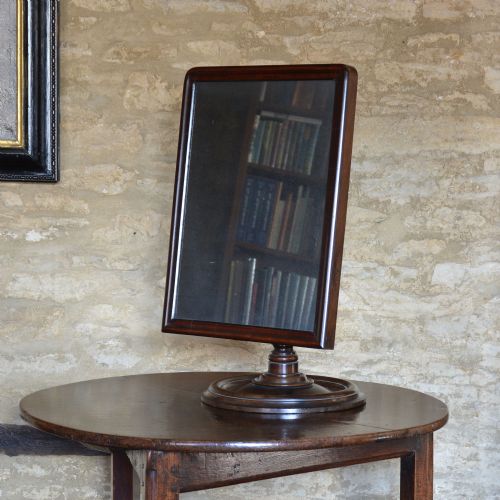
A tabletop vanity glass brings practical elegance to a dressing surface, offering a pivoting mirror plate for close personal grooming.
Tabletop Vanity Glass
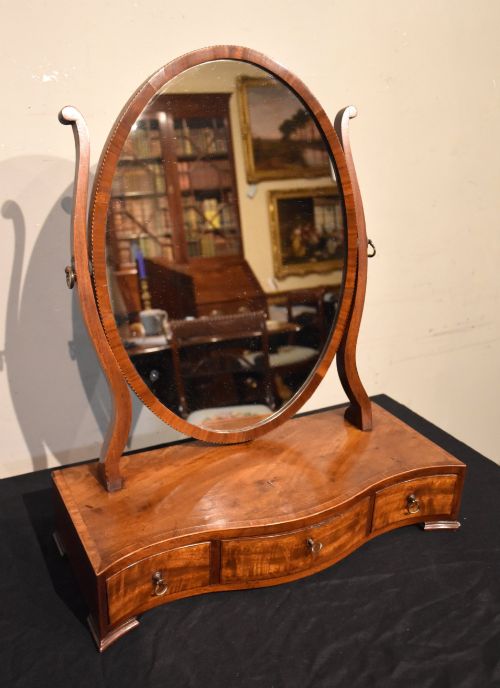
When searching for tabletop vanity glass, buyers find a range of portable dressing mirrors designed to sit securely upon a chest or table. These pieces span centuries of domestic life, originating primarily as essential items for personal grooming and hair arrangement in bedrooms and dressing rooms.
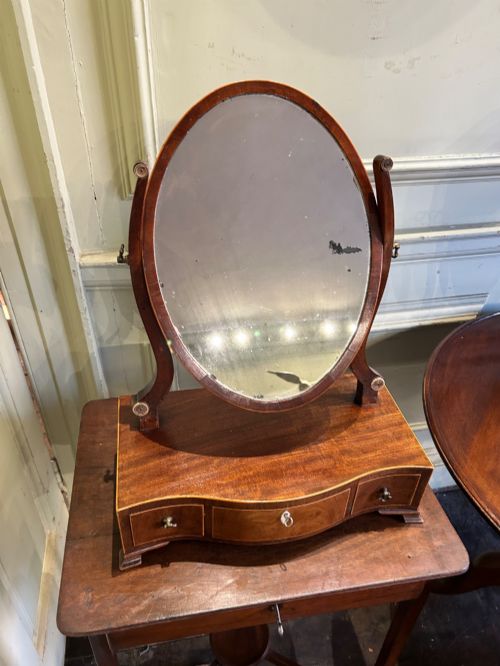
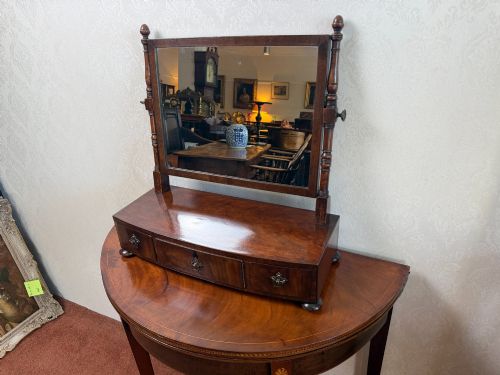
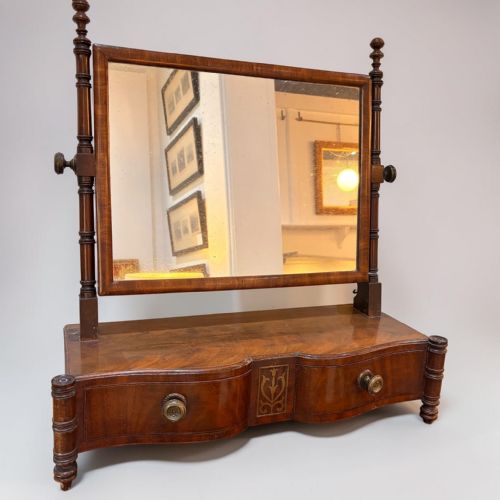
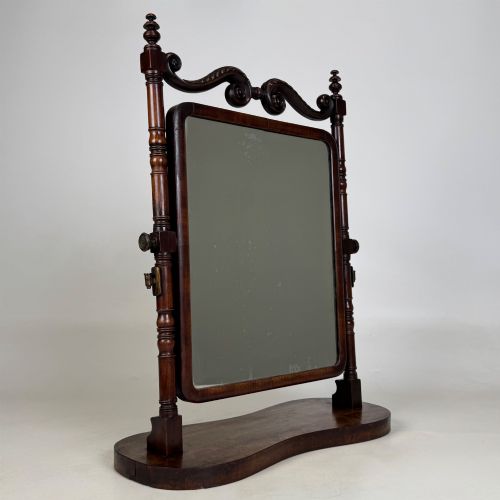
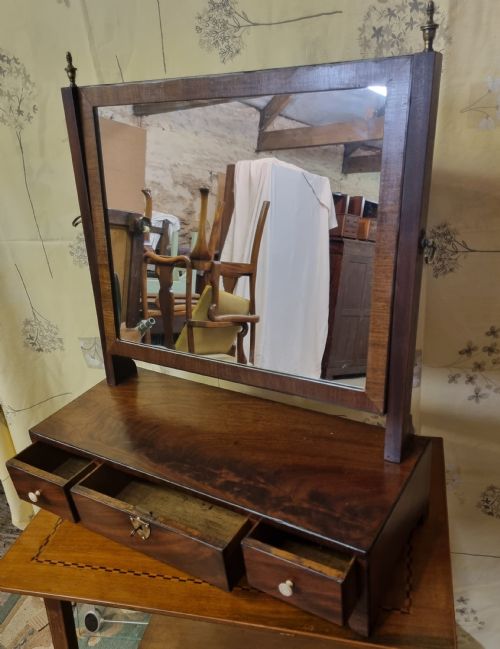
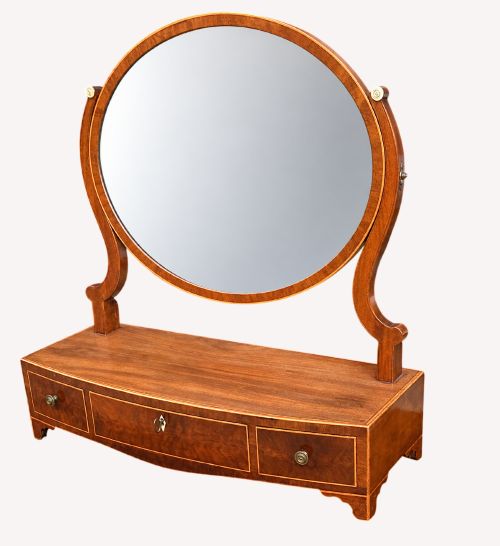
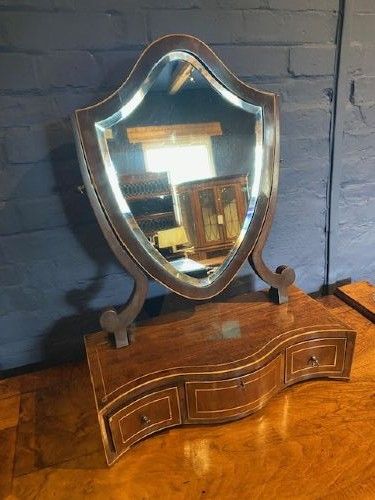
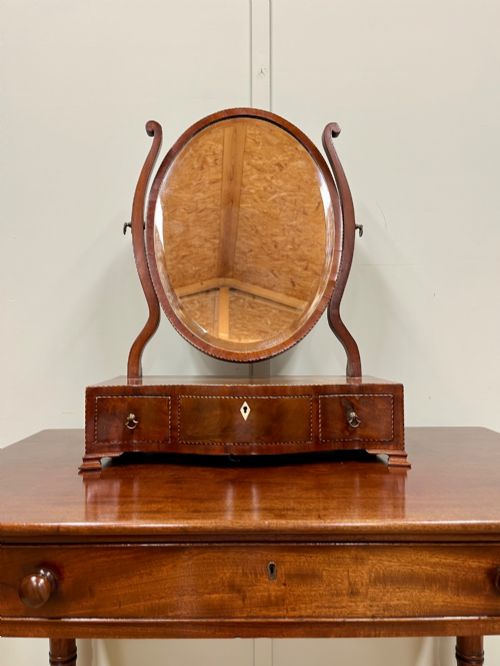
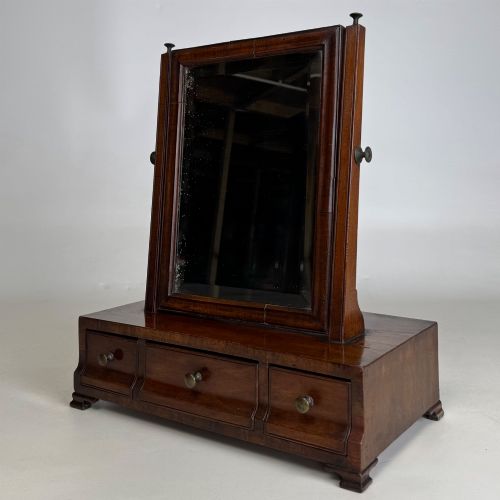
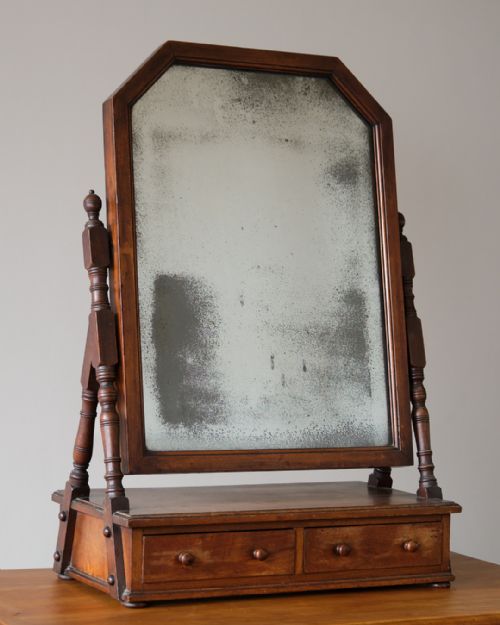
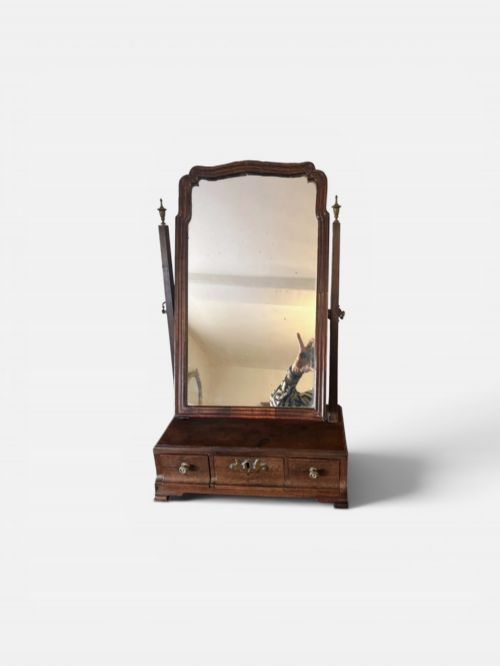
The most common examples encountered on this page date from the Georgian, Regency, and Victorian periods. They typically take the form of an adjustable swing plate mounted within upright standards, frequently resting upon a small box base fitted with drawers.
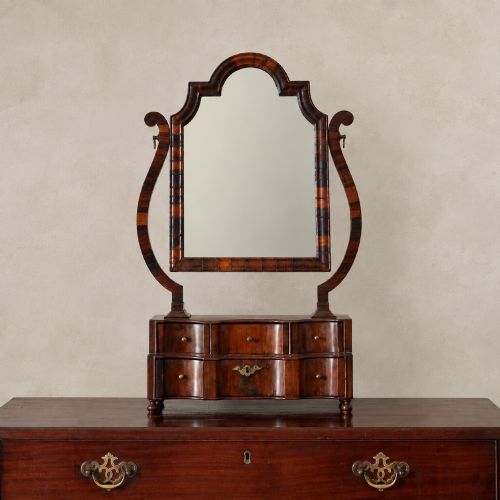
Object forms appear under various historical names including toilet mirrors, dressing glasses, and shaving mirrors. While some remain simple frame structures, others incorporate intricate cabinet work with serpentine fronts, jewellery compartments, or bureau fitments.
Materials and Construction
Cabinet makers utilised dense native and exotic timbers such as mahogany, walnut, and kingwood to construct the sturdy support frames and box bases. Finer examples display decorative embellishments including boxwood inlay, crossbanding, and Dutch marquetry work.
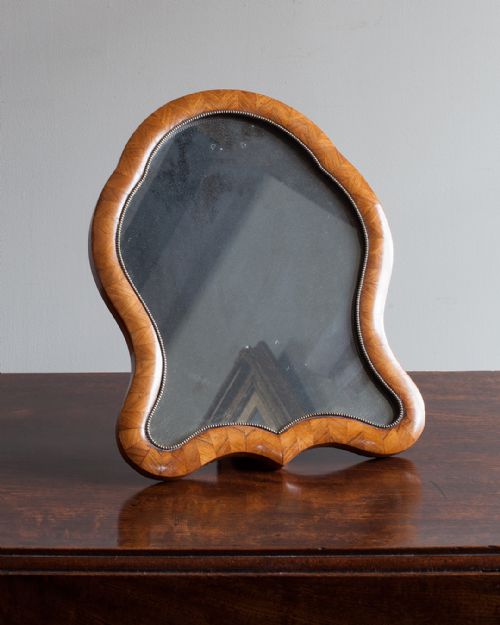
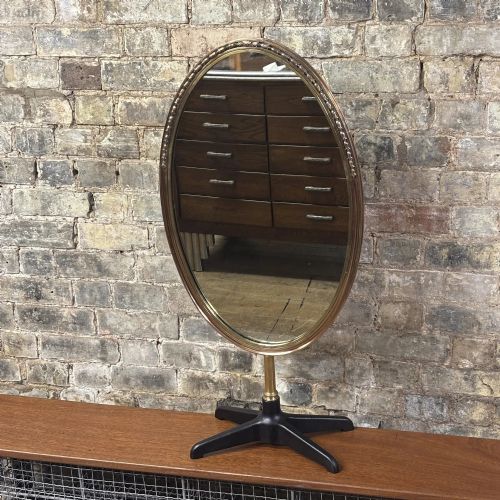
Metal components provide structural pivot points and decorative detailing, with brass, cast bronze, and silver plating appearing on hardware and candle sconces. The mirror plates themselves consist of traditional silvered glass, occasionally held within parcel-gilt or carved wooden frames.
Tabletop Vanity Glass Retail Price Guide 2026
Typical asking prices for tabletop vanity glass among the pieces listed under this phrase on Sellingantiques today, from the lower quarter to the upper quarter. They describe what is for sale here now, not the wider market.
A scientific optical mirror from Victorian London proves that even looking at your own reflection required precision engineering.
Assessing Quality
Quality reveals itself in the selection of timber veneers and the precision of the cabinet joinery on the base box. Superior pieces exhibit thoughtful grain matching, crisp carving details, and well-executed boxwood inlay rather than plain surfaces.
The mechanism of the swing frame determines daily utility and durability, where smooth pivoting action and well-fitted original mirror plates distinguish finer workshops from standard production items.
Heal & Sons·Thomas Rubergall of London
The Tabletop Vanity Glass Glossary
- Toilet mirror
- A small portable mirror designed for tabletop use during personal grooming. These units often incorporate small drawer compartments in their wooden bases.
- Swing mirror
- A mirror plate mounted on pivots between two vertical upright posts. This allows the glass to tilt at various angles for the user.
- Crossbanding
- A decorative border technique where thin strips of veneer are laid with the wood grain running perpendicular to the surrounding panel. It frames the primary timber surface on drawer fronts and table tops.
Tabletop Vanity Glass: Frequently Asked Questions
How were tabletop vanity glasses used?
These mirrors provided a portable reflection surface for morning routines, hair styling, and shaving before dedicated dressing tables became common.
Placed upon chests of drawers or writing surfaces, they allowed users to adjust the angle of the glass for optimal lighting.
Where should I place a vanity glass?
Position the mirror on a sturdy chest of drawers, sideboard, or dressing table where the height suits comfortable seated or standing use.
Ensure the surface receives adequate natural light from a window to make the best use of the adjustable glass plate.
How do I identify a Georgian mirror?
Georgian examples often feature solid mahogany or walnut construction, frequently displaying hand-cut dovetails within the base drawers and subtleogee moulding.
Earlier pieces from this era lean towards restrained architectural proportions, while later variants introduce serpentine fronts and delicate inlay.
Why do some mirrors have drawers?
The box base functions both as a weighted support for the pivoting frame and as secure storage for small personal items.
Owners stored jewellery, cosmetics, and shaving gear within these compartments to keep dressing areas neat and organised.