







Tabletop Storage Drawers
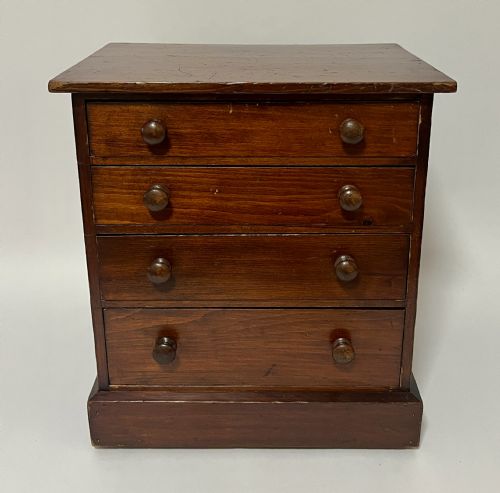
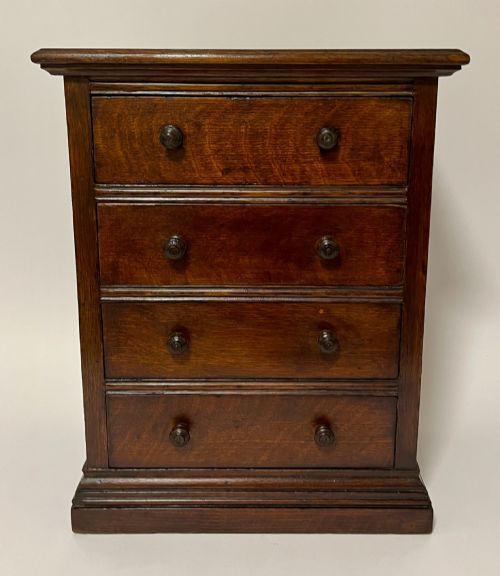
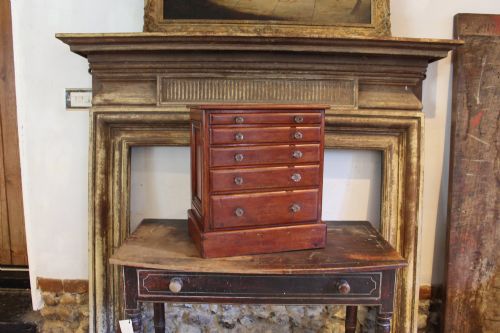
Tabletop storage drawers are compact wooden containers built for keeping small possessions ordered, spanning miniature chests, spice cabinets and specialised collectors pieces.
Tabletop Storage Drawers
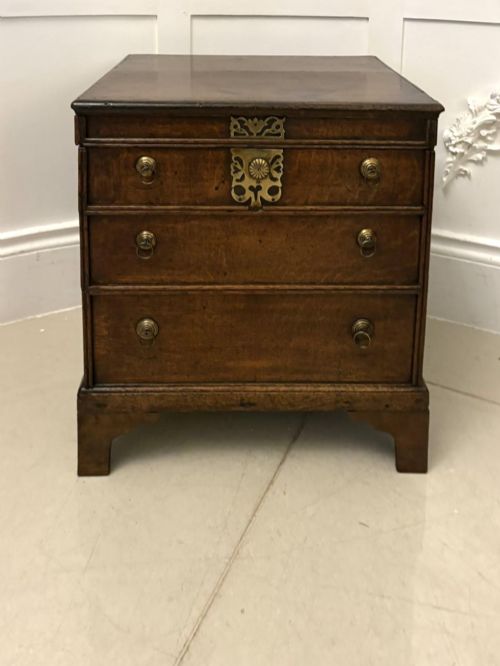
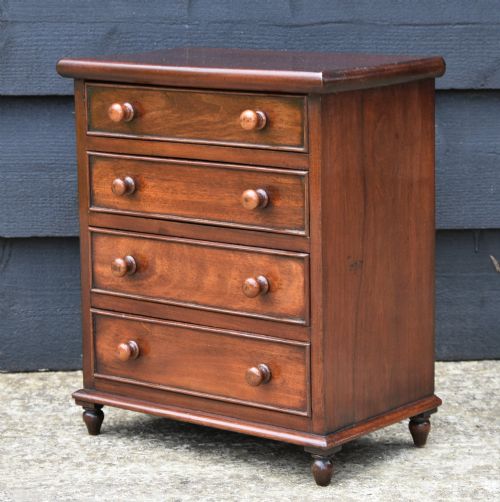
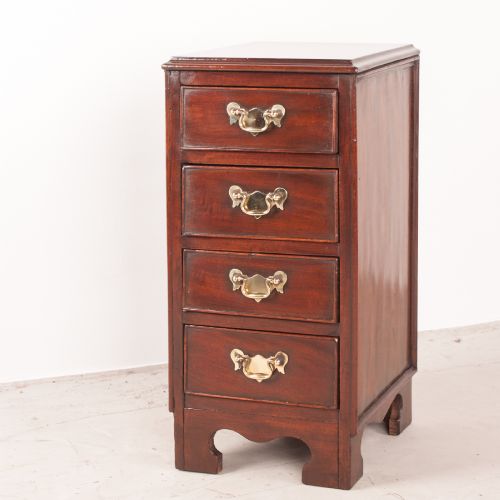
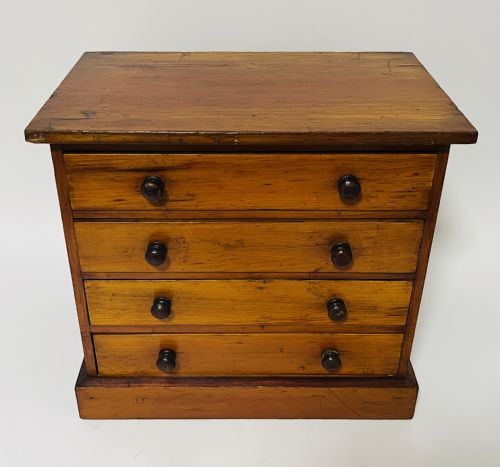
Tabletop storage drawers encompass diverse compact forms designed to sit on furniture surfaces, including miniature chests of drawers, spice cabinets, apprentice pieces, and collectors cabinets. These pieces range from early eighteenth-century oak and elm coffers to Victorian mahogany specimens and twentieth-century utilitarian pine units.
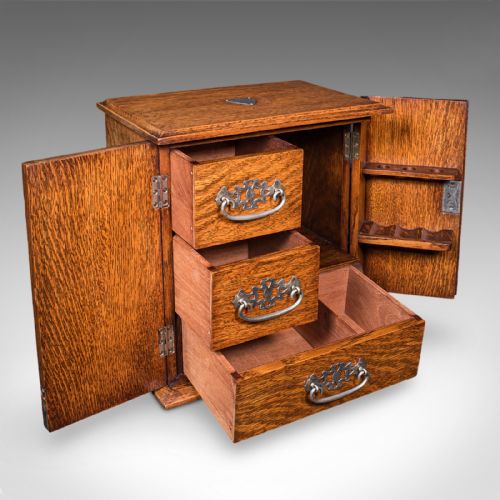
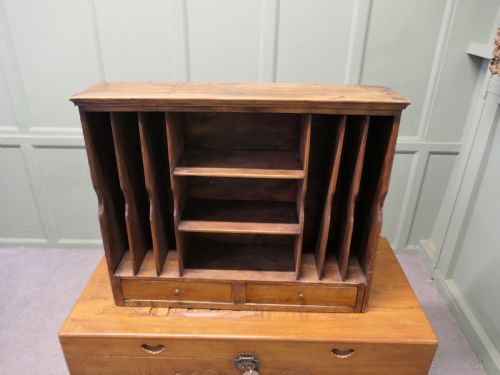
The selections available lean heavily toward nineteenth-century Victorian pieces alongside Georgian and Edwardian examples, constructed in miniature chest formats or banks of multiple small drawers. Buyers encounter functional filing shelves, apothecary units, and smoking cabinets alongside domestic trinket chests.
Materials and Construction
Makers utilised a variety of solid timbers including mahogany, oak, pine, elm, walnut, fruitwood, and burr elm, often pairing primary woods with secondary linings. Brass handles, drop pulls, and bronze animal decorations provide the functional and decorative metalwork.
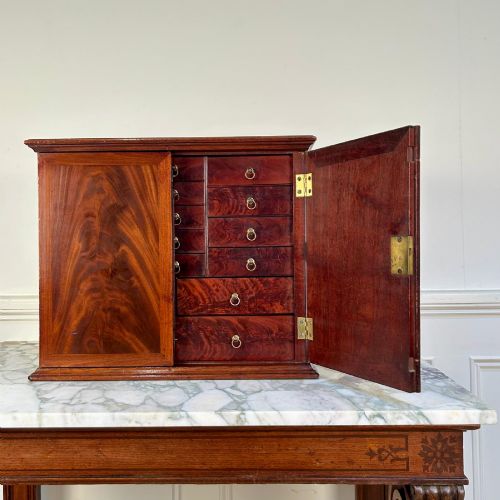
Construction methods vary from traditional joined box construction on early coffers to dovetailed miniature drawers and fitted interior compartments found in nineteenth-century specimen and microscope slide cabinets.
Tabletop Storage Drawers Retail Price Guide 2026
Typical asking prices for tabletop storage drawers among the pieces listed under this phrase on Sellingantiques today, from the lower quarter to the upper quarter. They describe what is for sale here now, not the wider market.
Victorian doctors clearly required miniature sanctuaries, as evidenced by specialised smoking and apothecary cabinets fitted with tiny compartments for pills and tobacco.
Evaluating Quality
Quality rests upon the choice of timber and the intricacy of the internal arrangement, distinguishing standard utility storage from figured mahogany or burr elm presentation cabinets. Fine grain selection, well-fitted drawer runners, and original brass hardware elevate certain specimens above plain stained pine equivalents.
The integrity of the construction, such as the precision of dovetailing and the retention of original patination on surfaces like elm and oak, separates master cabinetwork from simpler workshop output.
Luxmore's of Ilfracombe
The Tabletop Storage Drawers Glossary
- Apprentice piece
- A small-scale item demonstrated by a craftsman seeking master status. These frequently take the form of miniature chests of drawers.
- Specimen cabinet
- A specialised piece containing multiple shallow drawers for housing natural history collections, fossils, or microscope slides. These units often feature tight-fitting glazed or panelled doors.
- Coffer
- A traditional box or chest with a hinged lid, sometimes built in miniature form or incorporating drawer sections below. Georgian and earlier examples appear frequently in oak.
- Patina
- The surface sheen and coloration developed through age, handling, and wax polishing on timber surfaces. Elm and oak pieces often exhibit rich patination.
Tabletop Storage Drawers: Frequently Asked Questions
What were tabletop storage drawers used for?
These compact units served various domestic and professional purposes, from housing spices and tobacco to organising medical supplies and small documents. Specialised variations held natural history specimens, jewellery, or sewing equipment.
Their small footprint allowed them to sit conveniently upon desks, sideboards, or tables in studies, shops, and parlours.
How do I identify an apprentice piece?
Apprentice pieces typically present as miniature versions of standard furniture, such as small chests of drawers or coffers, executed with high technical skill. They demonstrate the cabinetmaker's mastery of joints and proportions before admission to a guild.
Dimensions remain notably small, and timber choices match those used in full-sized furniture of the period.
What is the difference between a specimen cabinet and a spice cabinet?
Specimen cabinets generally feature numerous uniform, shallow drawers intended for organising natural history items or slides, sometimes protected by locking doors. Spice cabinets typically offer fewer, deeper drawers designed for kitchen ingredients and culinary goods.
Timber choices and internal fittings also differ, with specimen units often utilising fine hardwoods like mahogany and satinwood.