



Table Top Swing Mirror
A table top swing mirror offers the practical elegance of adjustable reflection, sitting gracefully upon a chest or bureau.
Table Top Swing Mirror
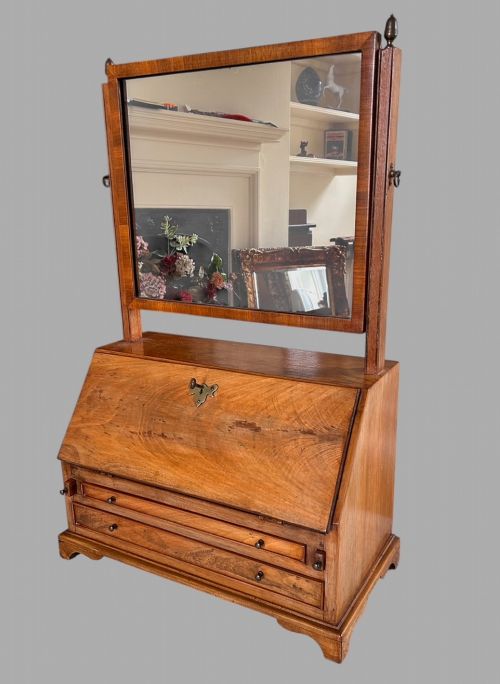
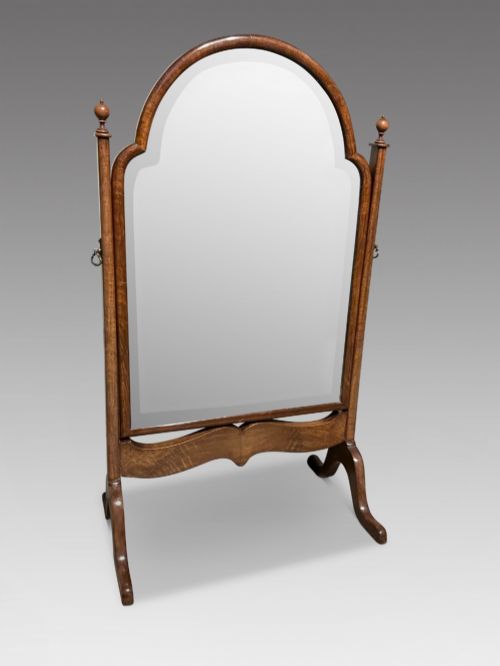
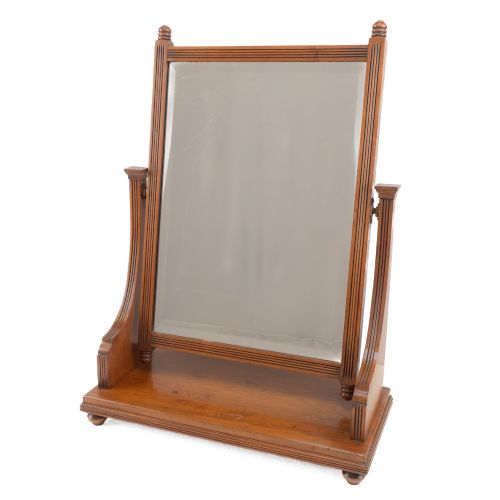
A table top swing mirror is a freestanding looking glass mounted on pivoting pivots within a supportive frame, designed to rest securely on a dressing table, chest of drawers, or bureau. These pieces range from compact Georgian toilet mirrors with fitted drawer bases to larger Victorian and Edwardian cheval designs incorporating marble tops or jewellery cabinets.
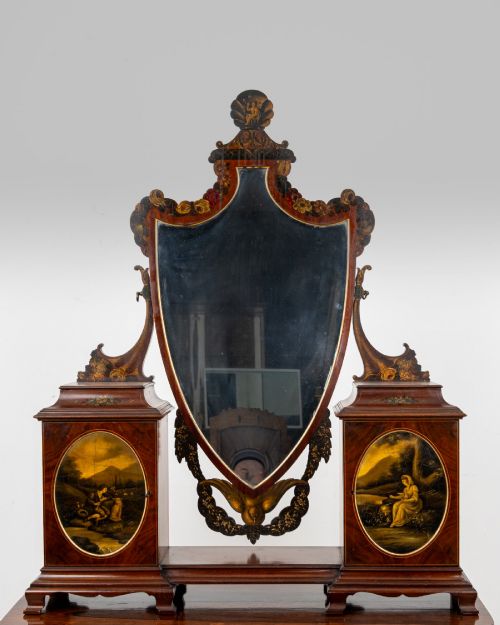
The versions most commonly met on this page date from the eighteenth century through to the early twentieth century, spanning Georgian, Victorian, and Edwardian periods. They frequently utilise dense timbers like mahogany, walnut, and satinwood, occasionally featuring painted finishes or intricate inlaid details.
Object types listed under this search include dressing table mirrors, vanity mirrors, toilet mirrors, and table top bureaux. Whether oval, rectangular, or serpentine in form, each example provides both functional adjustment and period character.
Materials and construction
Cabinet makers constructed these mirrors using solid and veneered timbers such as mahogany, walnut, satinwood, and burr walnut, often selecting woods with prominent figuring to enhance the visual depth of the frame and base. Brass fittings, including adjusting screws, finials, and mounts, were employed to secure the pivoting mirror plate and add subtle metallic contrast.
Mirror glass was set within rebated frames and supported by upright arms attached to a heavy base or box plinth, which sometimes housed one or more small drawers. More elaborate examples integrated marble tops and specialised cabinetry like jewellery compartments into the structural design.
Table Top Swing Mirror Retail Price Guide 2026
Typical asking prices for table top swing mirror among the pieces listed under this phrase on Sellingantiques today, from the lower quarter to the upper quarter. They describe what is for sale here now, not the wider market.
The selection includes regional English pieces from the Georgian, Victorian, and Edwardian eras, incorporating form variations from simple dressing mirrors to bureau combinations.
Factors of quality
The distinction between standard and superior pieces rests on the choice of timber and the precision of the cabinet work, particularly the figuring of the mahogany or satinwood and the seamless joining of drawer boxes. Finely cut veneers, balanced proportions, and original brass hardware elevate an example beyond basic utility.
Construction details such as dovetailed drawer joints and the retention of the original mirror plate and pivoting mechanism indicate superior workshop standards. The incorporation of sophisticated elements like serpentine fronts, marble slabs, or integrated jewellery cabinets marks the upper tier of these pieces.
The Table Top Swing Mirror Glossary
- Cheval mirror
- A full-length or large tabletop mirror suspended in a frame that allows it to swing freely through a full circle. This form provides versatile angles for reflection.
- Toilet mirror
- A smaller dressing mirror designed to sit on a table, frequently incorporating small drawers in the base for cosmetics or trinkets. These were essential bedroom furnishings in Georgian and Victorian households.
- Serpentine
- A furniture shape characterised by a waving outline, curving outward in the centre and inward at the sides. This contour demands advanced woodworking skill to execute properly.
- Satinwood
- A durable, lustrous hardwood with a yellowish sheen, highly favoured in the eighteenth and nineteenth centuries for fine cabinet work and inlay. It reflects light brightly.
- Burr walnut
- Timber taken from a walnut tree's growth deformity, yielding complex, swirling grain patterns. It was sliced into decorative veneers for high-end furniture bases.
Table Top Swing Mirror: Frequently Asked Questions
Where should I place a table top swing mirror?
These mirrors sit comfortably on any sturdy chest of drawers, sideboard, or dressing table in a bedroom or hallway. Ensure the supporting surface is deep enough to accommodate the base and weight of the frame.
Because they are freestanding, they can be repositioned easily to catch natural light. Keep them away from direct, harsh sunlight to protect antique wood finishes and mirror silvering over time.
How do I adjust the swing mirror tension?
Most antique mirrors use threaded brass side screws or pivot pins that pass through the upright arms into the mirror frame. Tightening or loosening these fittings alters the resistance against the pivoting action.
Carefully check the hardware on your specific piece before making adjustments. If the screws are stiff, applying a tiny amount of appropriate lubricant can prevent damage to the surrounding timber.
Were these mirrors used for shaving or dressing?
Historically, smaller examples functioned as toilet or shaving mirrors, placed on commodes or washstands for morning routines. The pivoting glass allowed users to adjust the angle for personal grooming.
Over time, larger versions evolved into dedicated dressing table accessories or decorative display items. Their drawer bases also stored small personal valuables, letters, and accessories.
How do I distinguish between Georgian and Victorian examples?
Georgian mirrors tend to feature restrained proportions, mahogany construction, and simpler box bases with bracket feet. Their lines reflect classical restraint and refined joinery.
Victorian and Edwardian versions often display greater variety, including heavier proportions, marble tops, painted surfaces, or elaborate serpentine fronts. They also incorporate wider stylistic revivals like the Queen Anne taste.