

Syrian Mother of Pearl
Syrian mother of pearl items bring intricate geometric patterns and shimmering nacre into a room through centuries-old woodworking traditions.
Syrian Mother of Pearl
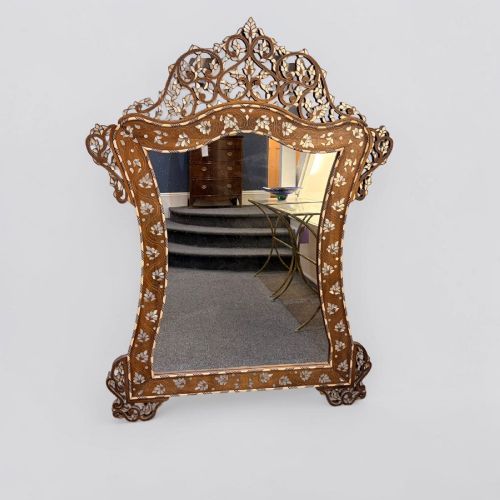
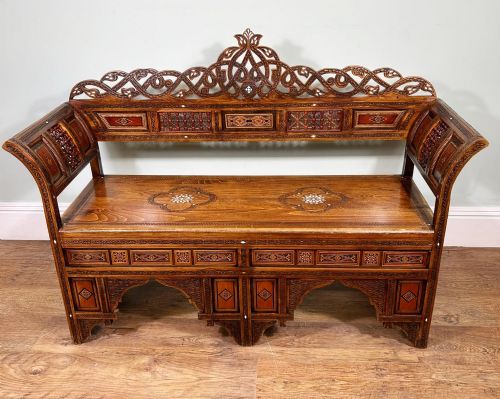
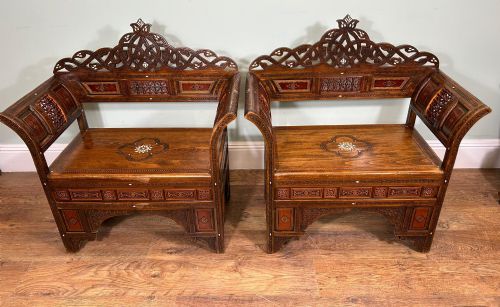
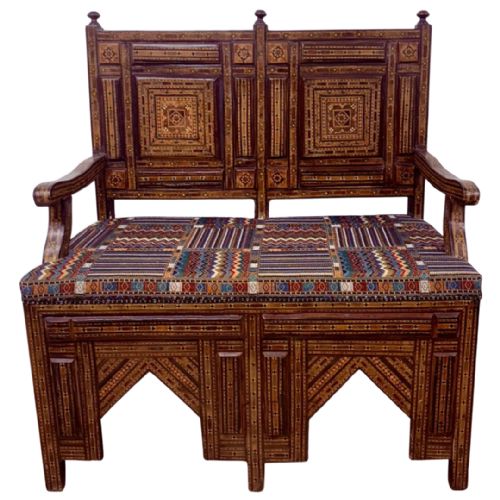
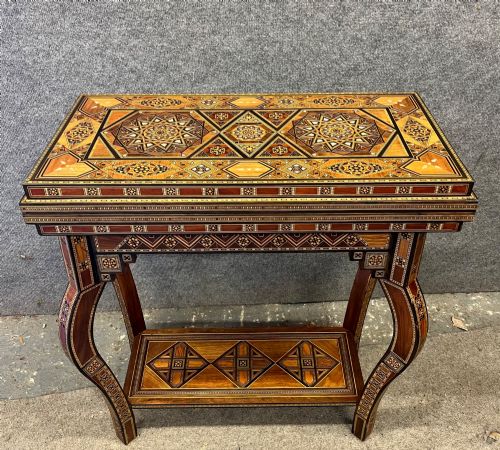
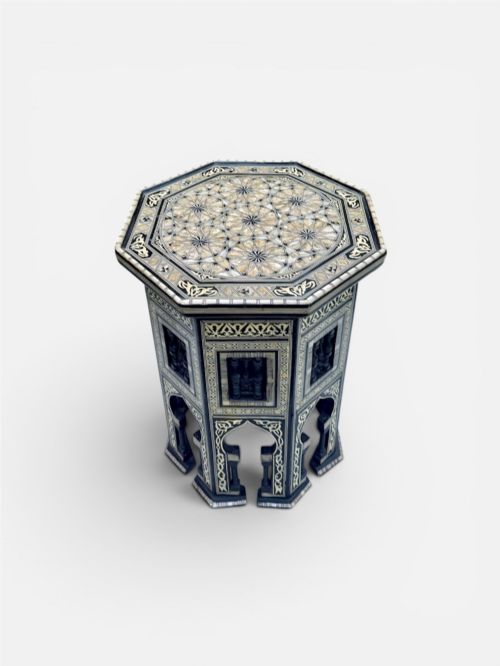
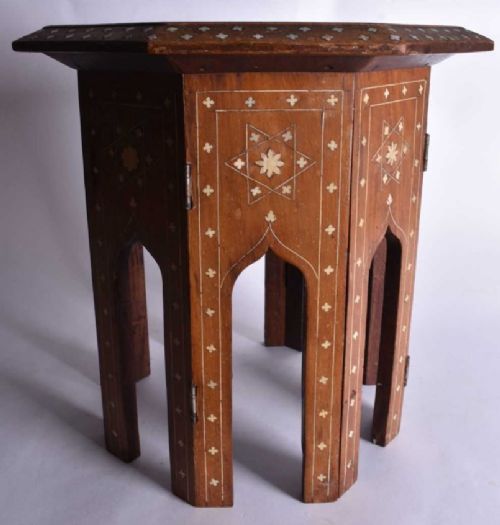
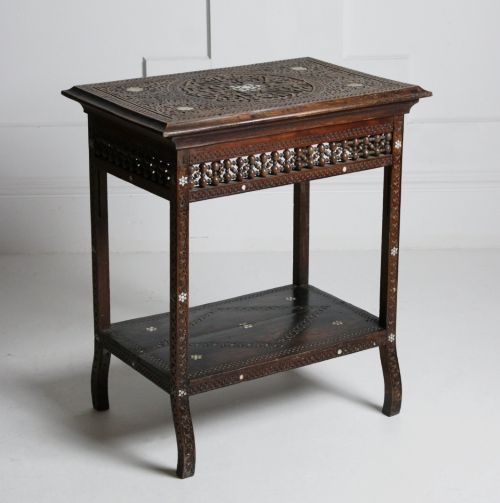
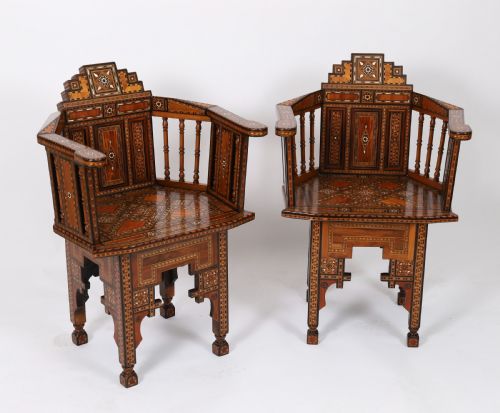
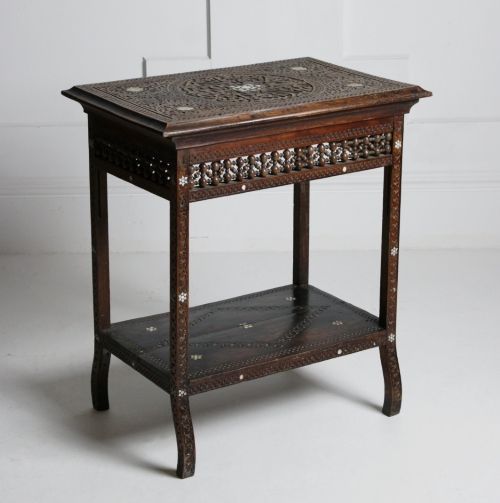
When you search for Syrian mother of pearl, you encounter a distinct tradition of Near Eastern furniture and decorative objects dating from the nineteenth century into the early decades of the twentieth century. These pieces encompass octagonal and hexagonal side tables, games tables, armchairs, and wall mirrors shaped by regional craftsmanship.
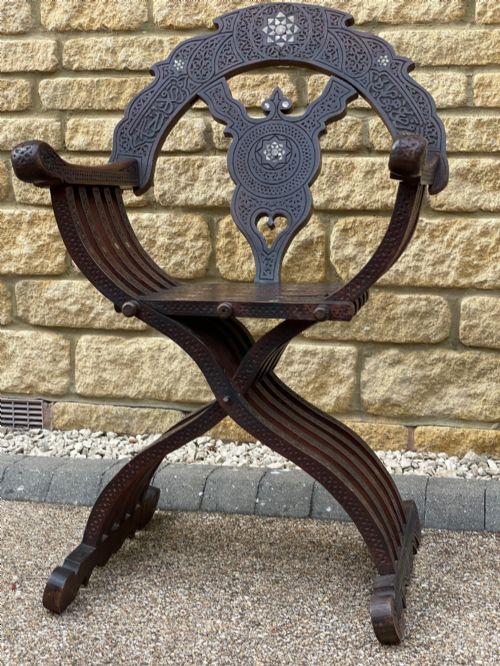
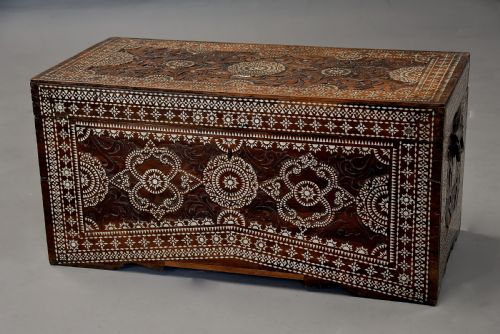
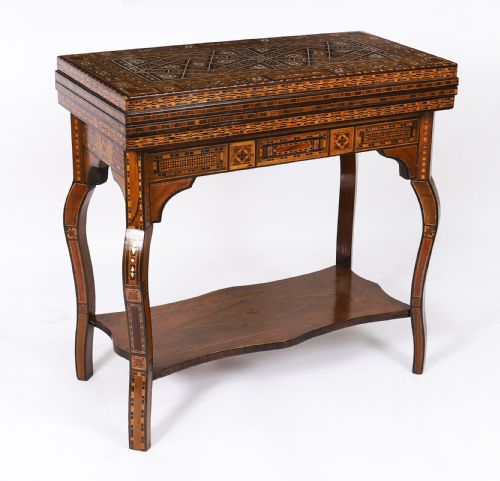
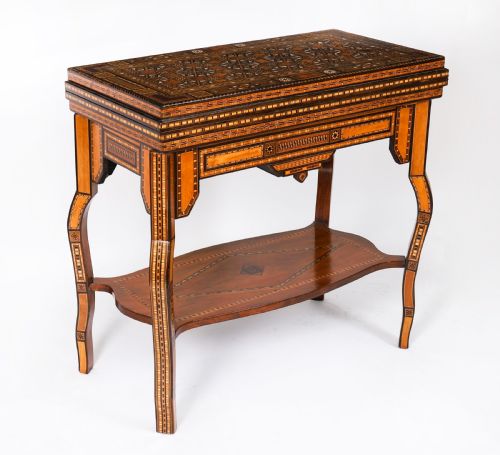
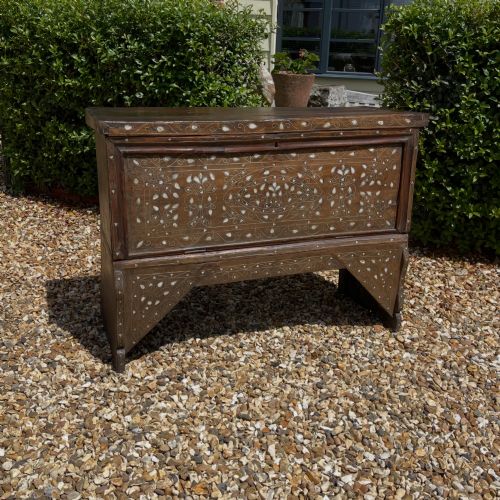
The most common forms on this page are folding occasional tables and multi-tiered side tables created in Damascus and wider Levantine workshops. Alongside tables, you find seating including Savonarola chairs and armchairs, plus storage trunks and architectural mirrors.
Many examples emerge from the intersection of traditional Ottoman design and the European aesthetic tastes of the late nineteenth and early twentieth centuries. Makers incorporated diverse influences, resulting in pieces that served both local domestic roles and export markets catered to by retailers such as Liberty and Co.
Materials and Techniques
The foundation of these pieces relies on solid timbers including walnut, fruitwood, hardwood, and olivewood, often ebonised or paired with contrasting specimen woods. Artisans constructed complex geometric frameworks to support detailed surface decoration.
Surfaces feature meticulous inlay work combining iridescent mother-of-pearl, nacre-shell, and bone segments cut into geometric polygons. These individual pieces fit tightly within carved wooden channels, secured with traditional adhesives and finished by hand.
Even the travel boards were built ready for a serious match, packing entire chess and backgammon empires into folding wooden shells.
Evaluating Craftsmanship
Quality rests upon the density and precision of the geometric mosaic work across the wooden substrate. Finer examples display tightly registered tessellation with minimal filler material between the mother-of-pearl and bone elements.
The structural ambition of the piece also dictates its standing, moving from simpler surface panels to deeply carved woodwork, complex folding mechanisms, and multi-tiered architectural forms. Well-preserved original surfaces retain the full tonal depth of the shell and timber without extensive modern rebuilding.
Liberty and Co
The Syrian Mother of Pearl Glossary
- Nacre
- The iridescent internal layer of mollusc shells utilised for shimmering inlay work. This organic material shifts in tone from silver to pink under changing light.
- Mashrabiya
- An architectural element of projected wooden windows featuring intricate latticework. In mirrors and furniture, this translates to delicate pierced wooden screens.
- Parquetry
- Geometric mosaic woodwork formed by fitting small veneer blocks together. It creates repeating patterns across table tops and cabinet surfaces.
- Savonarola chair
- An X-frame folding chair constructed from multiple curved wooden slats. This Renaissance form was adopted by Levantine makers for inlaid occasional seating.
Syrian Mother of Pearl: Frequently Asked Questions
How do I date these tables?
Dating relies on timber choice, construction methods, and stylistic links to European retailers from the late nineteenth and early twentieth centuries. Earlier pieces often display denser ebony and boxwood stringing.
Later items from the 1920s tend to utilise simpler hardwood carcasses with broader mother-of-pearl tesserae. Comparing the joinery underneath provides further clues to the manufacturing decade.
Were these items made for export?
Many objects were produced in Damascus and the Levant specifically for the European market, satisfying a Victorian and Edwardian fascination with Moorish design. British firms imported these wares to supply domestic interiors seeking exotic furnishings.
At the same time, similar forms continued to serve traditional functions within regional Ottoman households. This dual destination accounts for the variety of tables, games boards, and mirrors found today.
How should I care for the inlay?
Maintenance requires keeping pieces away from direct sunlight and fluctuating heat sources to prevent the wood from shrinking and loosening the shell segments. Natural waxes applied sparingly help nourish the timber without harming the nacre.
Dusting should be done gently with a soft, dry cloth to avoid catching delicate edges of bone and pearl. Careful environmental control ensures the adhesive bonds remain stable over decades.
What games were played on these tables?
Many folding and occasional tables feature multi-purpose surfaces designed for chess, cards, and backgammon. The inlaid boards formed an integral part of the tabletop, often revealing backgammon points when opened.
These versatile pieces allowed households to transition a room from social gaming to ordinary display use. Travelling boards also existed for portable entertainment during transit.