





Syrian Inlaid Furniture
Syrian inlaid furniture pieces are intricate wooden items decorated with bone, shell, and metal, sought after for their elaborate geometric and floral surface patterns.
Syrian Inlaid Furniture
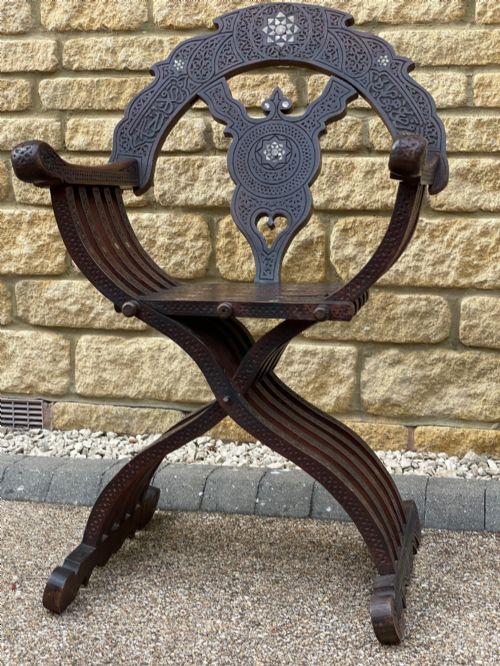
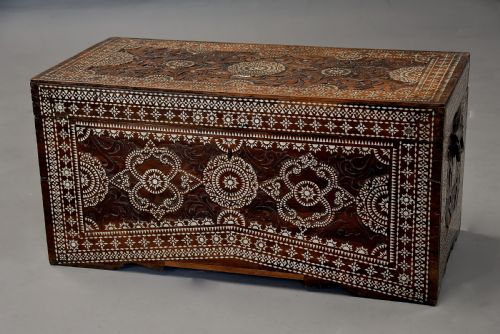
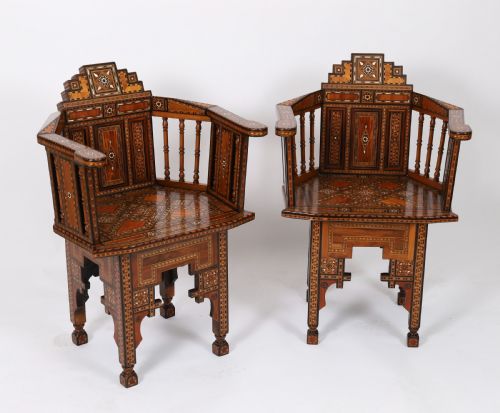
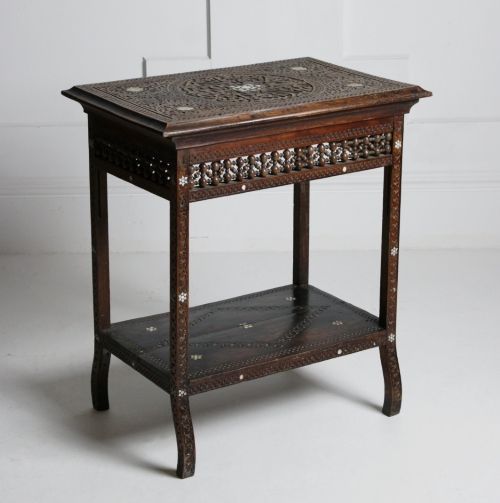
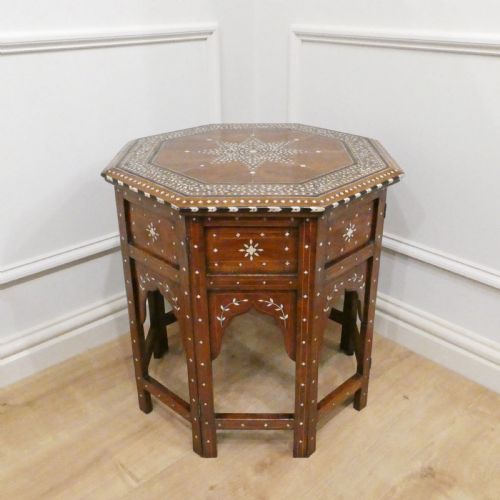
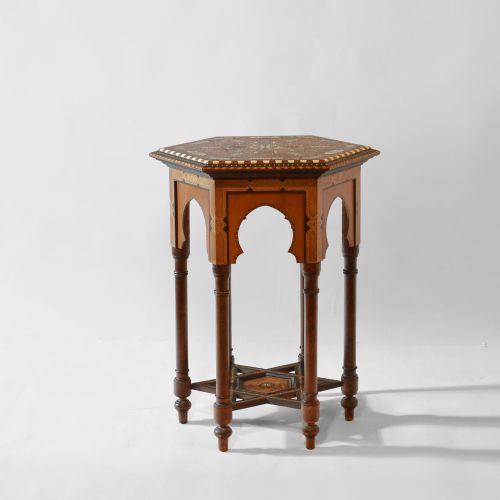
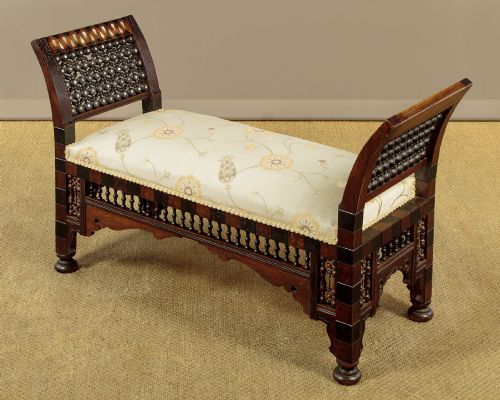
Syrian inlaid furniture encompasses tables, seating, and storage pieces originating from the Middle East and associated revival movements. These items range from octagonal occasional tables and games tables to armchairs, window seats, and large trunks.
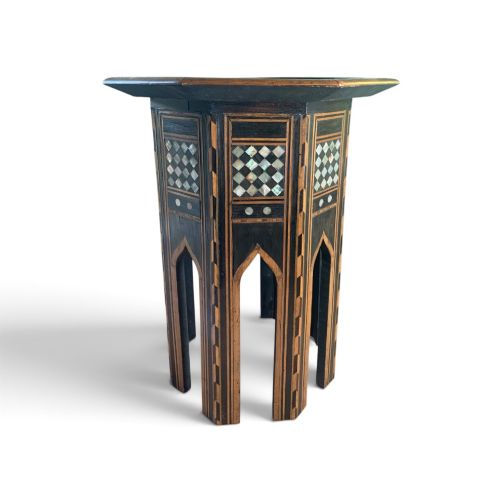
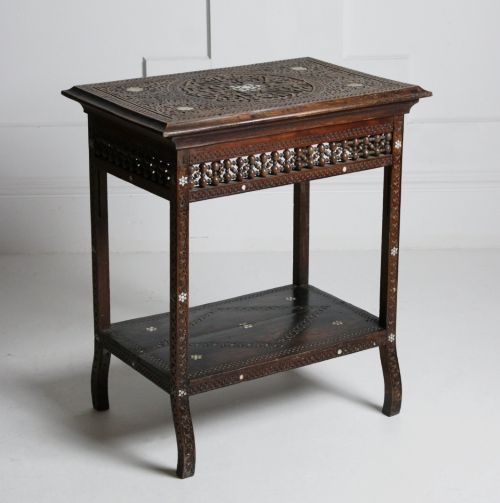
The objects frequently date from the nineteenth and early twentieth centuries, spanning periods such as the Victorian era and the 1900s to the 1930s. Side tables and occasional tables form the most common type encountered on this page.
Design influences in these pieces draw upon Moorish, Ottoman, Levantine, and Mamluk traditions. Certain examples also reflect British retail connections through Liberty style designations.
How they were made
Maker construction relies on solid timbers such as walnut, hardwood, ebony, and ebonised wood forming the primary carcase and framework. Surfaces are carved and shaped to receive geometric tessellation.
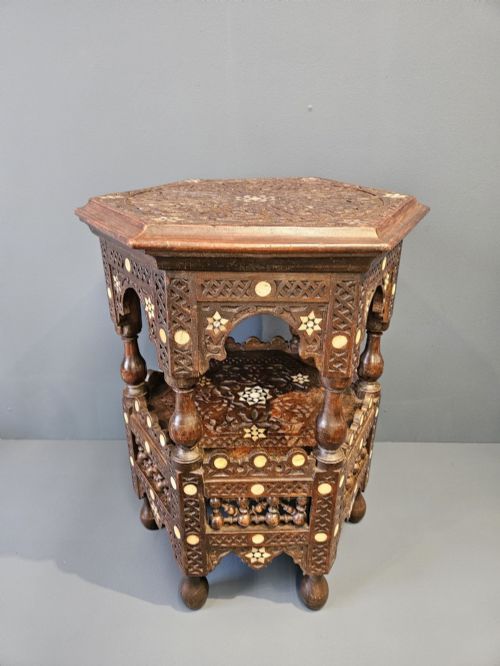
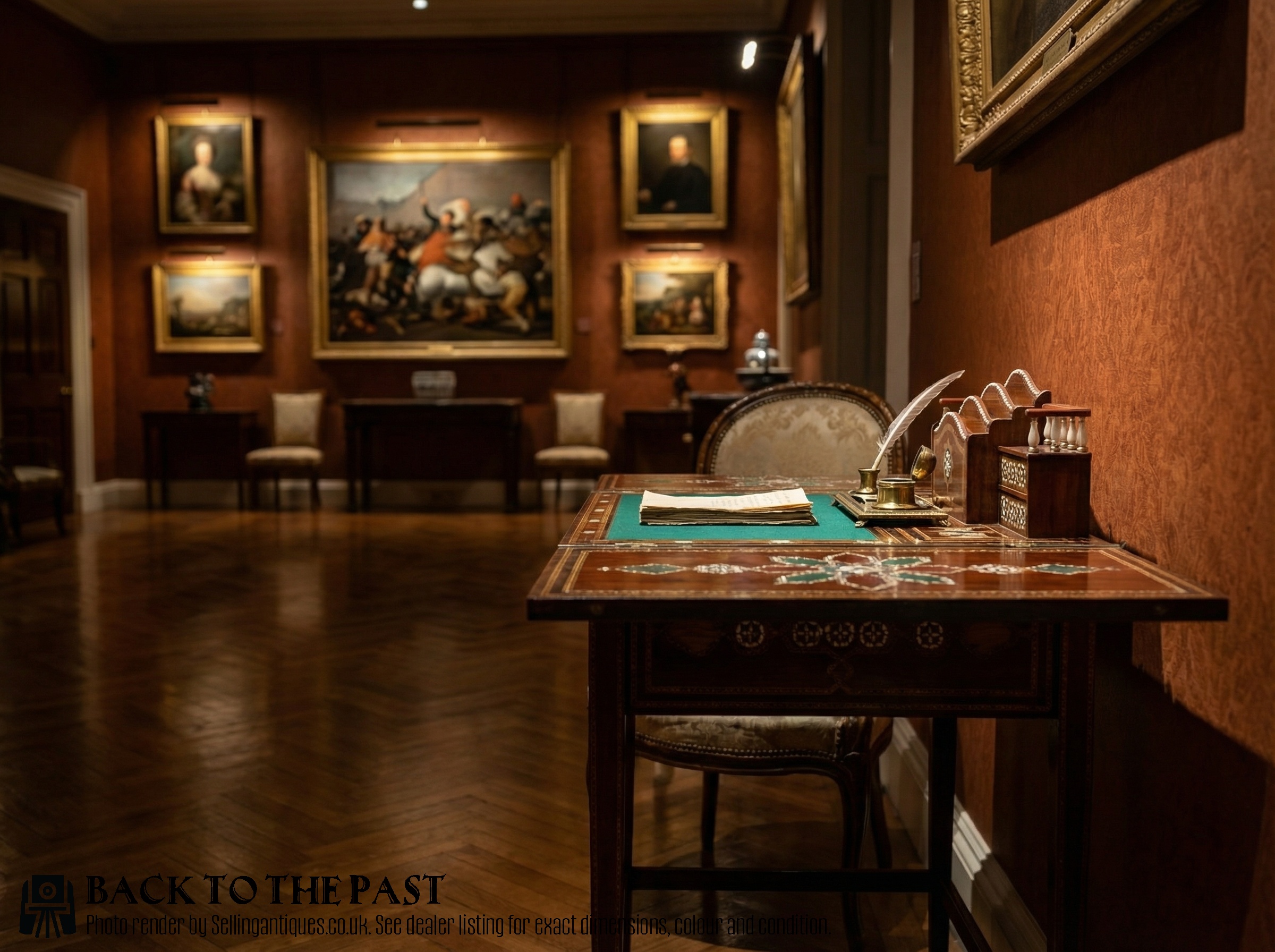
Decoration is achieved through the intense application of bone, mother-of-pearl, abalone, white-metal, and brass inlay pieces. Individual fragments of shell and bone are meticulously cut and fitted into intricate mosaic patterns across the wood.
Several tables here are described as octagonal, built specifically to catch the eye from multiple angles in a Victorian drawing room.
What varies in quality
Quality rests in the density and precision of the inlay work across the wooden surface. Pieces featuring extensive mother-of-pearl and bone mosaic across every visible plane demand greater skill than those with sparse decoration.
The complexity of the underlying woodwork also determines standard, seen in carved openwork, multi-tiered forms, and metamorphic designs. Choice of materials, including ebony or substantial hardwood bases, separates standard production from finer work.
Liberty & Co.
The Syrian Inlaid Furniture Glossary
- Moorish Revival
- A nineteenth-century architectural and decorative style drawing inspiration from Islamic North Africa and Spain. It incorporates horseshoe arches, intricate carving, and dense geometric surface patterns.
- Mother-of-Pearl
- The iridescent inner layer of mollusc shells used extensively for decorative inlay. Small geometric pieces are cut and embedded into wood to catch the light.
- Parquetry
- A geometric mosaic of wood pieces used for decorative floors or furniture surfaces. In these pieces, it combines with bone and shell inlay.
- Cairoware
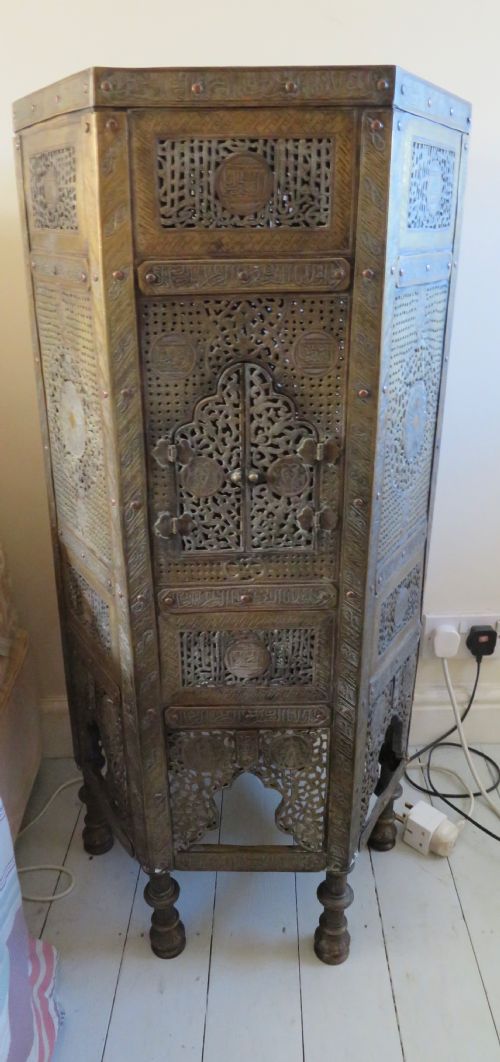
- Metalwork objects from Egypt inlaid with silver, copper, and gold. It appears on brass tables within this decorative tradition.
- Hoshiarpur
- A North Indian town renowned for intricate wooden tables and chairs inlaid with bone and resin. Pieces from this tradition often circulate alongside Syrian furniture due to similar aesthetic styles.
Syrian Inlaid Furniture: Frequently Asked Questions
What is Syrian inlaid furniture?
Syrian inlaid furniture consists of wooden furnishings decorated with intricate geometric mosaics made from bone, mother-of-pearl, and shell. These pieces include tables, chairs, cabinets, and chests created in the Middle East and within nineteenth-century revival movements.
Craftsmen utilised traditional woodworking techniques to embed contrasting materials into walnut and hardwood carcases. The resulting surface patterns draw upon Islamic and Ottoman design traditions.
How do I identify period pieces?
Period identification relies on examining the timber construction, the ageing of the inlay materials, and stylistic markers. Nineteenth and early twentieth-century examples exhibit hand-cut bone and shell work set into solid hardwoods rather than modern synthetic substitutes.
Construction methods underneath the mosaic, such as traditional joinery and timber shrinkage, help confirm age. Retail labels or specific revival classifications like Moorish or Mamluk also assist in dating.
Where were these pieces used?
These furnishings were produced for domestic interiors in the Middle East and later imported for European and British homes adopting exotic revival styles. Occasional tables, conversation seats, and window benches suited nineteenth-century reception rooms.
Trunks and coffers served practical storage functions while displaying decorative craftsmanship. Smaller tables often functioned as lamp stands or coffee tables in drawing rooms.
How do I care for inlaid furniture?
Care requires maintaining stable indoor humidity to protect both the timber carcase and the delicate bone or shell inlay. Sudden temperature shifts can cause the wood to expand and individual inlay fragments to loosen.
Cleaning should involve dusting gently with a dry, soft cloth without applying harsh chemical polishes. Excess moisture must be avoided to prevent damage to the adhesive and natural materials.