
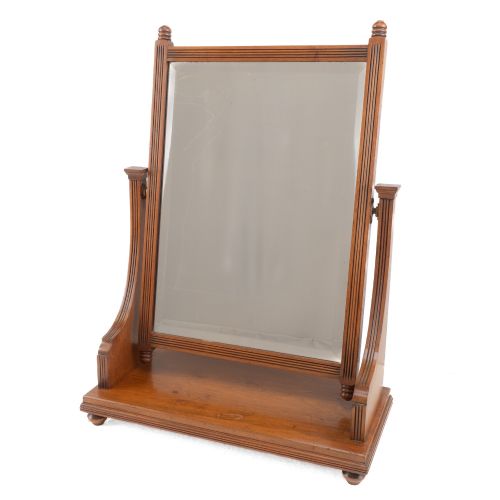
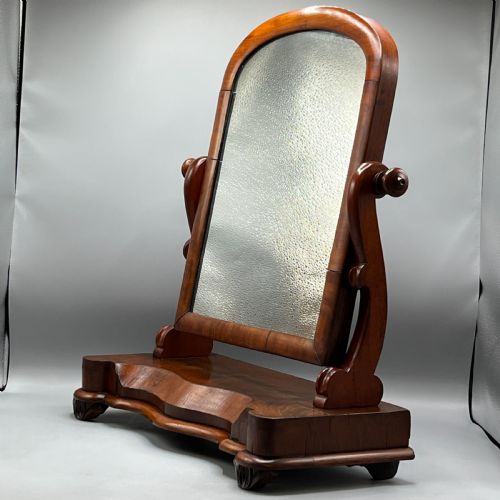


Swivelling Cheval Mirror
A swivelling cheval mirror offers full-length reflection framed in timber, designed to pivot effortlessly for the daily routine.

Swivelling Cheval Mirror
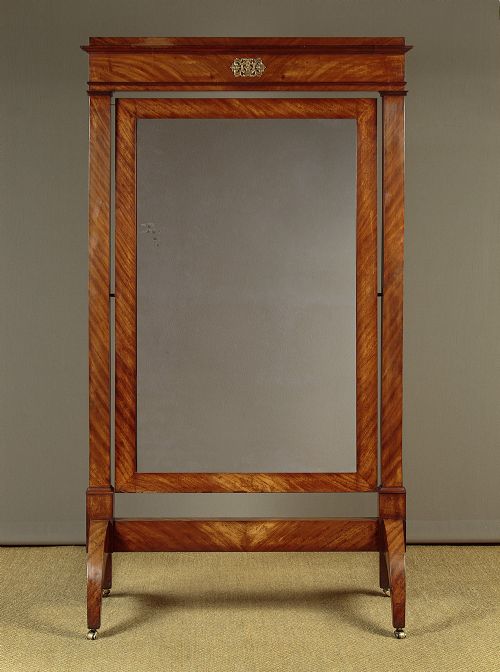
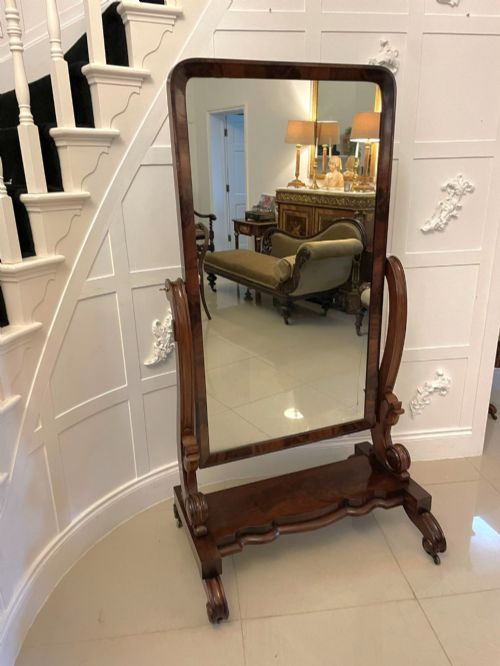
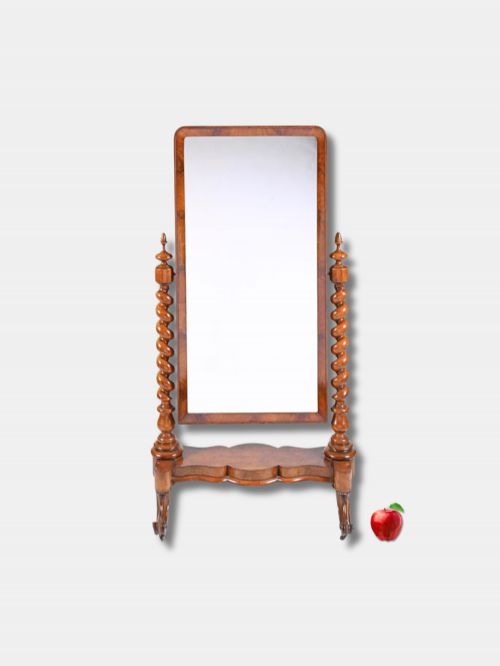
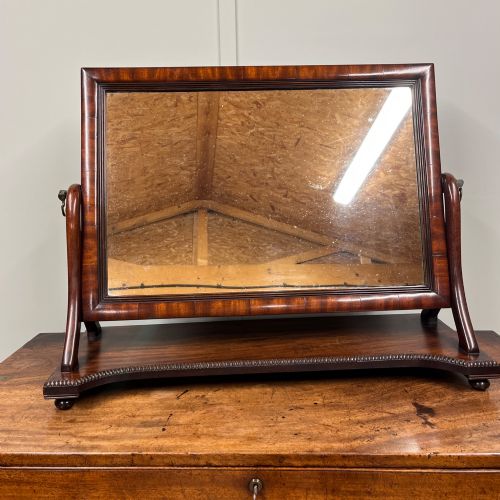
A swivelling cheval mirror is a freestanding full-length glass plate mounted on vertical pivots, allowing the frame to tilt forward or backward. You will most frequently encounter nineteenth-century mahogany examples standing on floor supports, alongside smaller table-top dressing variants.
The selections span Georgian, Regency, Victorian, and Edwardian periods, demonstrating how the form evolved from heavy floor-standing frames to lighter inlaid Edwardian styles and oak or walnut versions.
How they were made
Cabinetmakers utilised dense timbers such as mahogany, walnut, burr walnut, and oak to construct the sturdy uprights and bases necessary to support heavy glass plates. Brass hardware, including pivots, sabots, and castors, provided both mechanical function and polished detail.
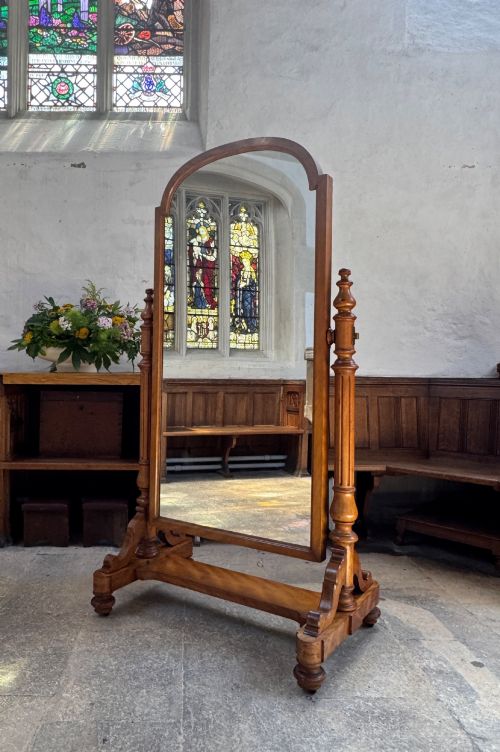
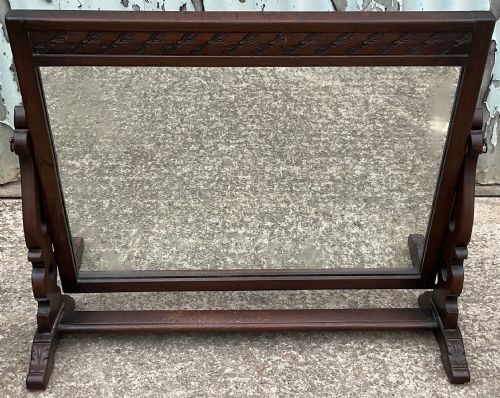
Frames incorporated carved decoration, barley twist supports, or subtle inlaid lines, while mirror glass was set securely within adjustable mounts often featuring brass candle holders or swing arms.
Listings feature woods such as mahogany, walnut, burr walnut, oak, and satinwood across Victorian, Georgian, Regency, and Edwardian periods.
What varies in quality
Quality rests in the weight and proportion of the timber frame and the smoothness of the swivelling mechanism. Finer examples display carefully selected grain figures, substantial brass castors, and robust structural joinery that prevents the tall frame from wobbling on its pivots.
The Swivelling Cheval Mirror Glossary
- Cheval mirror
- A freestanding full-length mirror supported by a frame with vertical pivots. It allows the user to tilt the glass plate to various angles.
- Toilet mirror
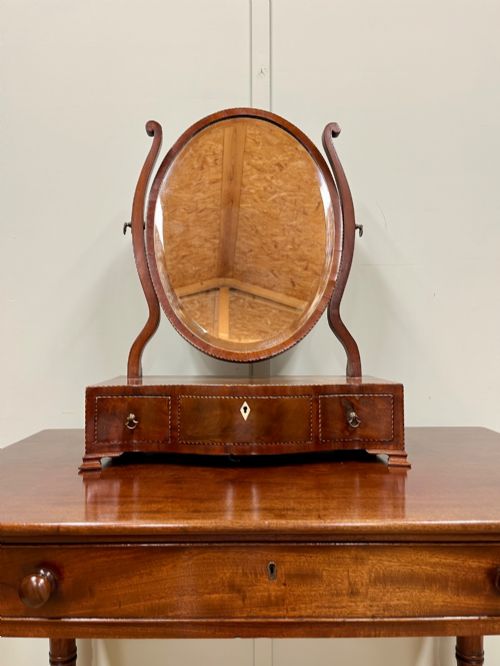
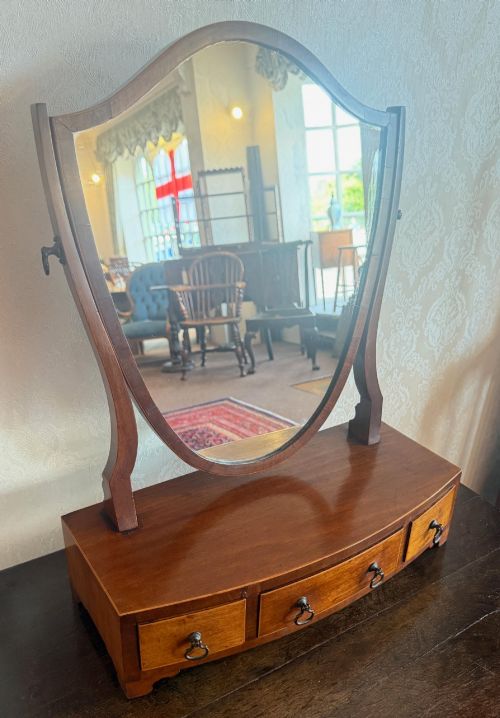
- A smaller mirror designed to sit upon a dressing table or chest of drawers. These often incorporate small drawers in the base plinth.
- Sabots
- Metal protective caps fitted to the feet of furniture legs. They are frequently cast in brass on Regency and William IV pieces.
- Barley twist
- A type of turned wooden support resembling a spiralling rope. This decorative feature appears on mid-nineteenth-century frames.
Swivelling Cheval Mirror: Frequently Asked Questions
Where should I place a cheval mirror?
These mirrors suit bedrooms and dressing rooms where full-length reflection and adjustable angles assist with dressing.
Ensure the floor beneath the heavy frame is level so the pivoting mechanism operates smoothly without straining the upright supports.
How do I tilt the mirror safely?
Grip the sides of the frame gently near the central pivots while adjusting the angle. Avoid pushing the top or bottom edges directly.
Check that the brass pivot screws or thumb nuts are correctly tensioned so the glass remains in your chosen position.
How do I identify a Victorian mirror?
Victorian pieces frequently utilise rich mahogany or walnut timber with substantial scroll supports or barley twist columns. Look for deep colour and sturdy proportions characteristic of the era.
Construction details such as hand-cut screws and traditional joinery help confirm the nineteenth-century date.