

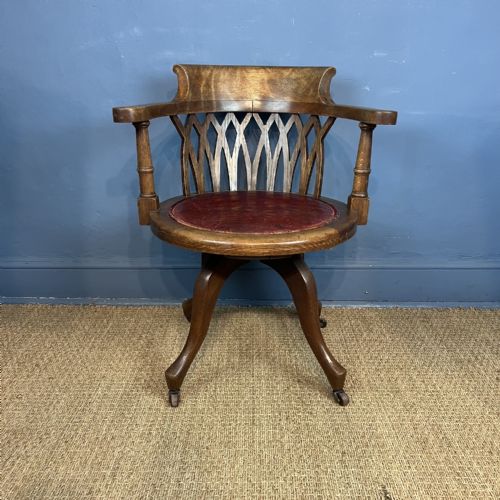
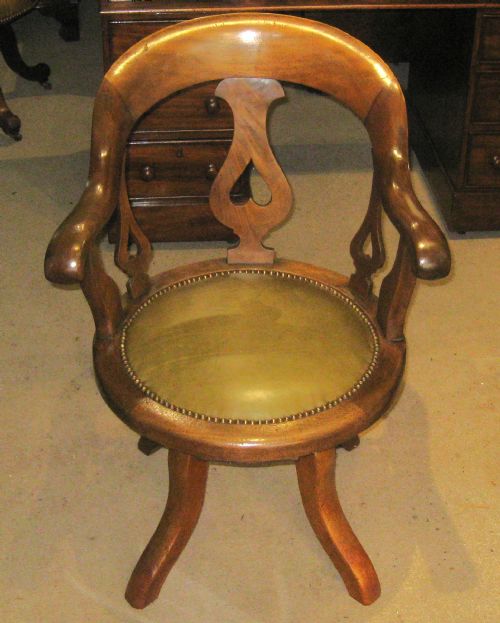
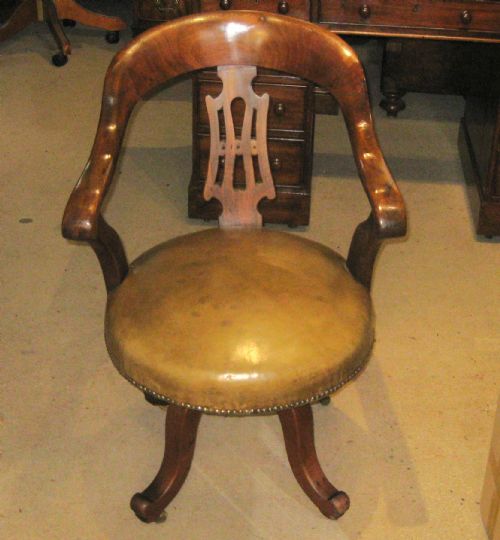
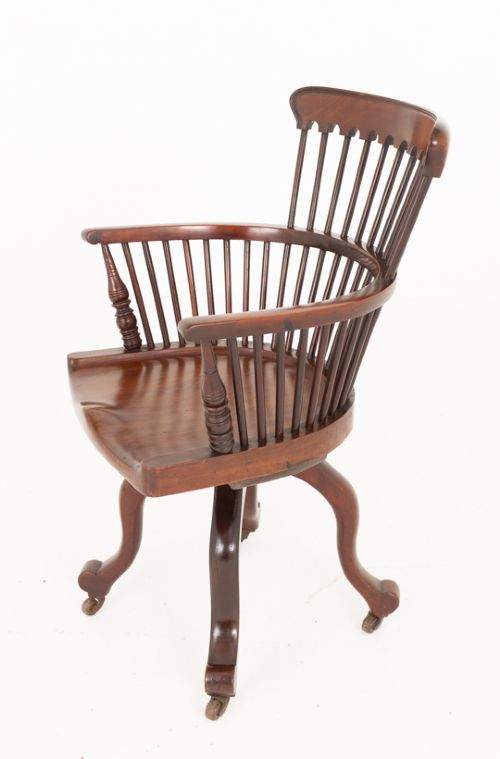
Swivelling Captains Chair
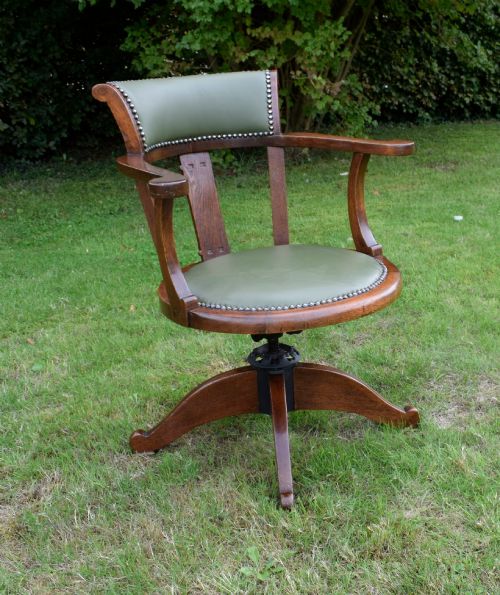
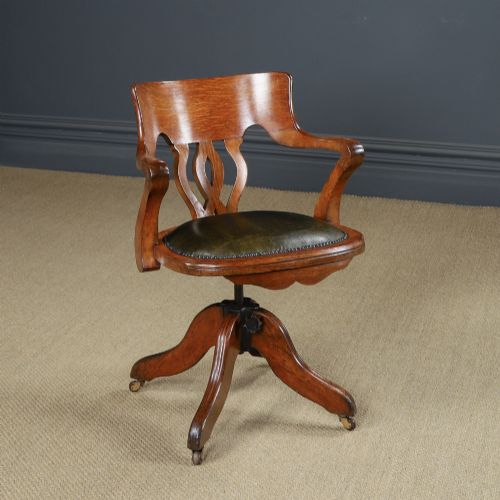
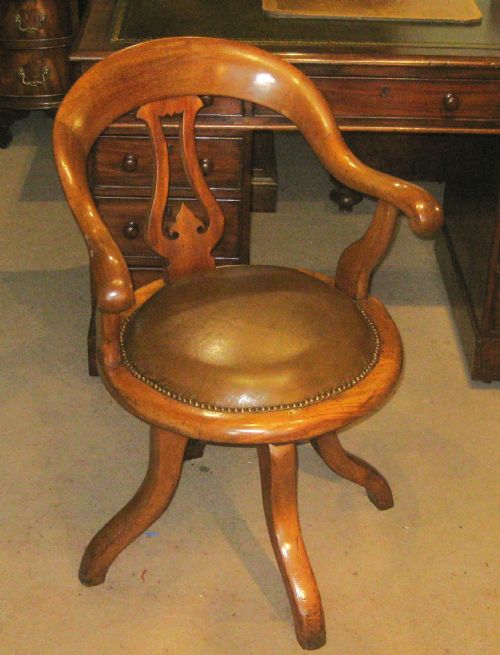
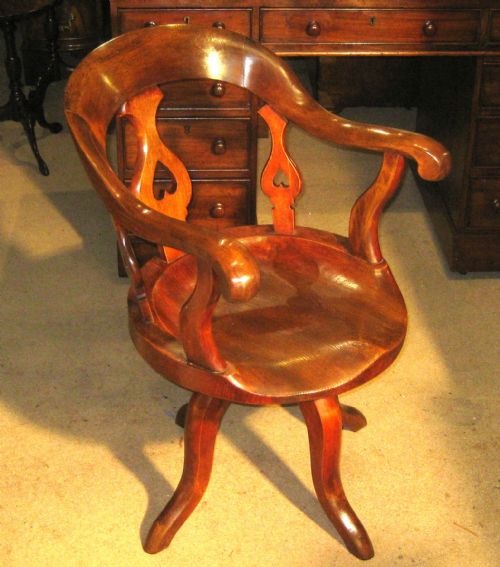
A swivelling captains chair brings solid timber and aged leather to the desk, offering a working seat built for steady productivity.
Swivelling Captains Chair
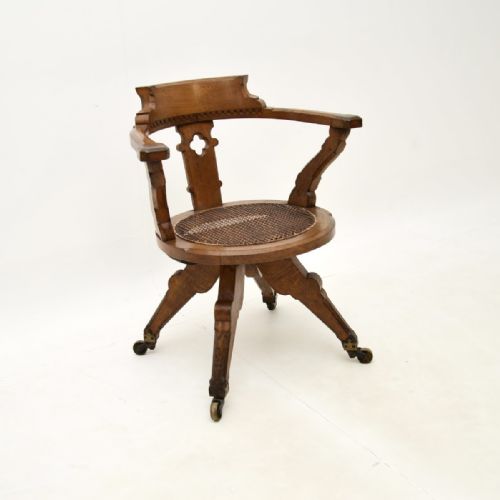
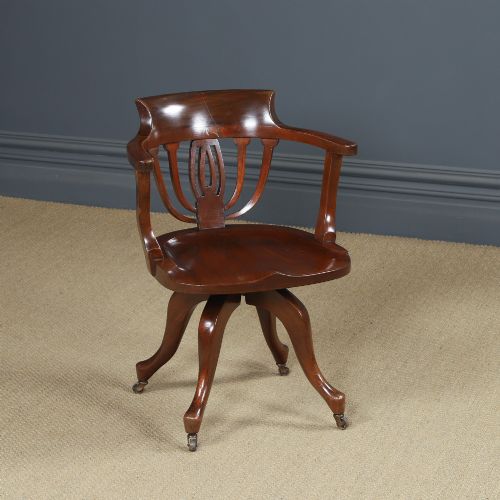
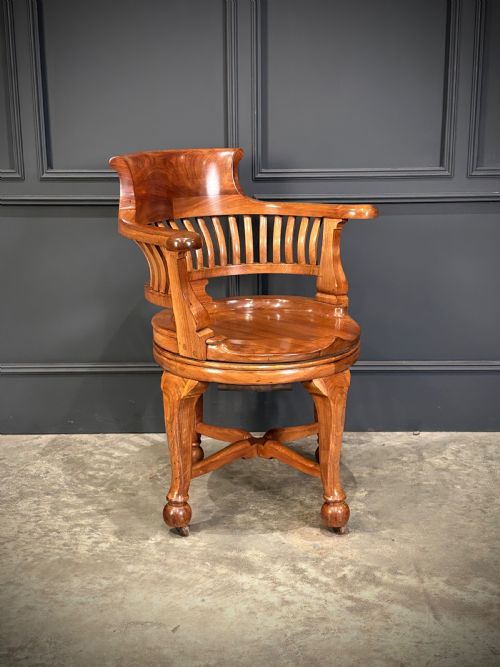
A swivelling captains chair is a robust desk chair designed for movement, combining a revolving seat with a supportive wooden frame and upholstered pad. You will most commonly encounter Victorian and Edwardian examples on this page, originating from the nineteenth and early twentieth centuries.
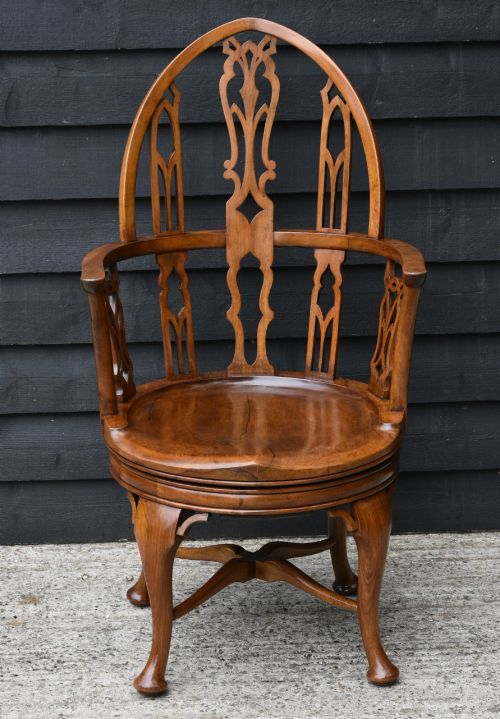
The form appears primarily as an office chair, desk chair, or armchair, frequently adapted with a swivel mechanism for ease of movement. Many pieces reflect specific stylistic periods such as Gothic Revival, Arts and Crafts, or the Aesthetic Movement.
Ship forms also emerge within this category, including items recorded as ships chairs or associated with maritime lines like P and O. These pieces adapt the standard revolving office format to withstand nautical conditions.
How they were made
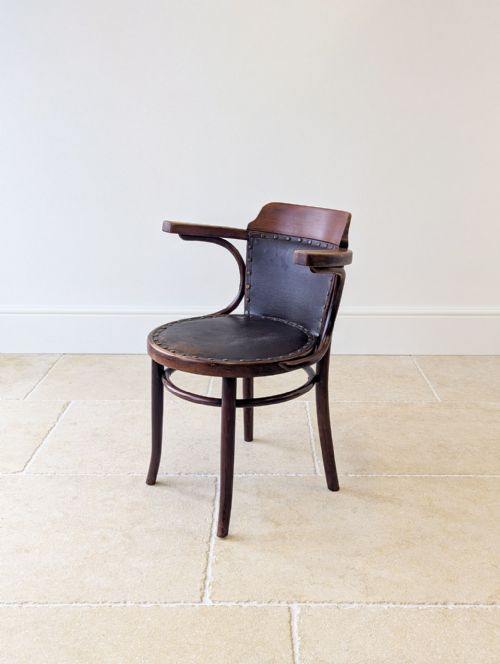
Construction relies heavily on durable timbers such as mahogany, oak, and walnut, shaped into solid frames and curved backs. Bentwood and beech also appear in lighter models, while cast iron and brass provide structural support for the rotating mechanisms.
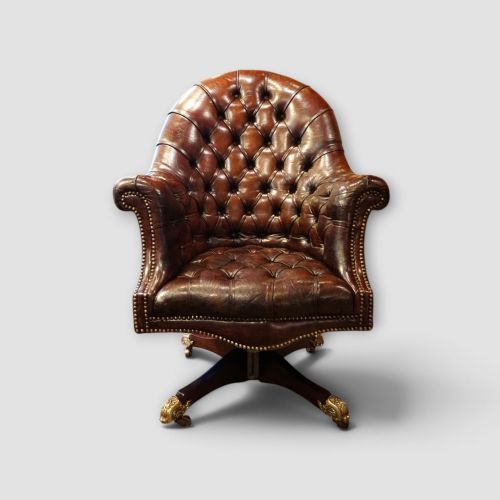
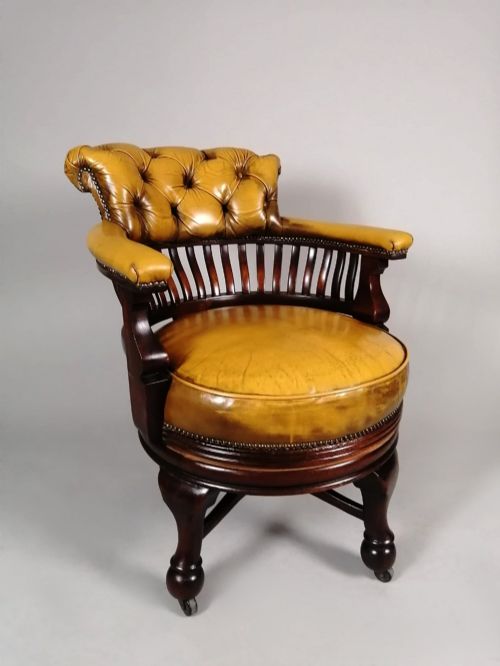
Seats and backrests are frequently upholstered in leather, green leather, tan hide, or bergere panels, secured to the wooden structure with traditional fixings. Carved details and exposed grain define the aesthetic of the heavier oak and mahogany variants.
Some solid oak examples spent their early days keeping secretaries upright across stormy seas on passenger liners.
What varies in quality
Quality rests in the weight of the timber and the complexity of the carving, distinguishing simple utilitarian models from heavily ornamented pieces. Golden mahogany and richly figured walnut command attention through their natural grain and depth of finish.
The engineering of the swivel mechanism and the integrity of the original upholstery determine the functional standard of the chair. Pieces retaining their adjustable height screw or tilt function alongside patinated hide show superior preservation.
Thonet·S and H Jewell
The Swivelling Captains Chair Glossary
- Revolving
- A design that allows the seat to turn in a full circle on a central spindle. This movement relies on an undercarriage of wood or metal.
- Bergere
- A style of seating panel woven from cane or wicker, offering a lighter texture against solid timber frames. It appears on selected turn-of-the-century office chairs.
- Gothic Revival
- A nineteenth-century design movement drawing inspiration from medieval architecture, characterised by pointed arches and heavy carved tracery. This style lends a dramatic silhouette to oak and walnut desk chairs.
- Bentwood
- Wood steamed and bent under pressure into curved shapes, notably utilised by makers like Thonet. This technique creates resilient, flowing lines for armchairs and desk seats.
- Aesthetic Movement
- A late Victorian design philosophy prioritising visual beauty over narrative function, often featuring ebonised surfaces and refined lines. Chairs from this movement focus on artistic harmony in the study.
Swivelling Captains Chair: Frequently Asked Questions
How do I date a swivelling captains chair?
Dating depends on observing the timber, hardware, and stylistic details such as Gothic Revival carvings or Aesthetic Movement lines. Victorian examples often utilise solid mahogany and heavy turnings, while Edwardian pieces introduce lighter oak frames and bentwood elements.
Mechanical components like cast iron spindles and brass adjustments also offer clues to the manufacturing decade.
Where were these chairs used originally?
These chairs served primarily in studies, private offices, and shipboard cabins where stability and movement were equally necessary. Maritime examples, including those linked to passenger lines, were built to remain steady on moving vessels.
Domestic libraries and commercial offices utilised the revolving desk chair for efficient daily administration.
How do I care for the leather seat?
Leather upholstery requires gentle cleaning with a soft cloth and occasional treatment with appropriate conditioning balms to maintain flexibility. Avoid placing the chair in direct sunlight to prevent the hide from drying out.
Preserving the original patina involves protecting the surface from excessive moisture while allowing natural wear to show.