



Swiveling Floor Mirror
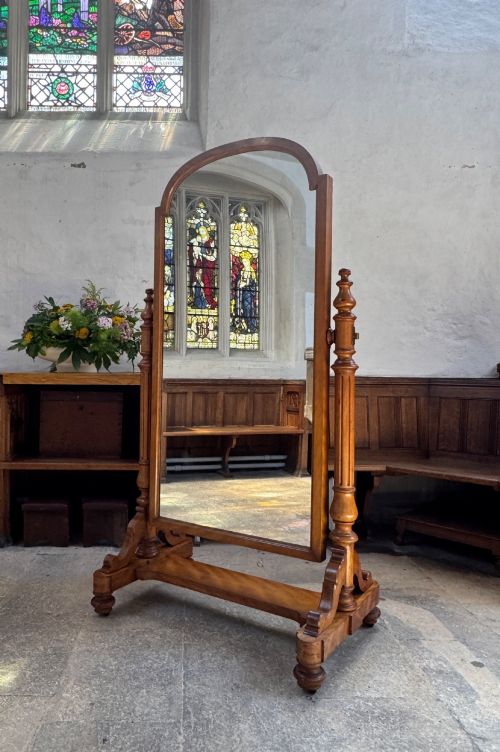
A swiveling floor mirror offers a full-length reflection suspended on pivots, allowing the glass to tilt for dressing.
Swiveling Floor Mirror
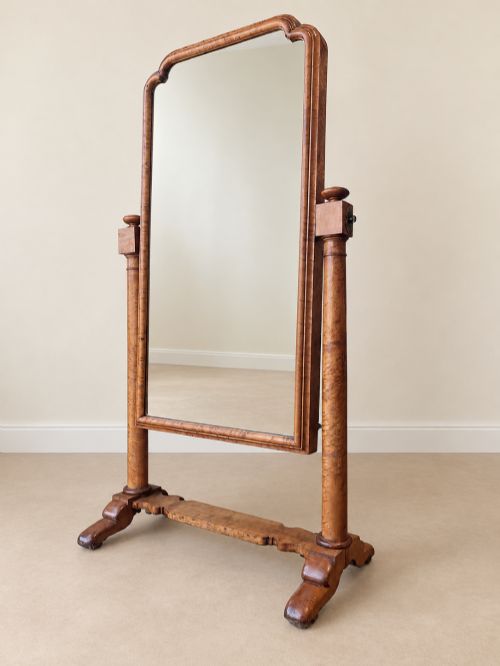
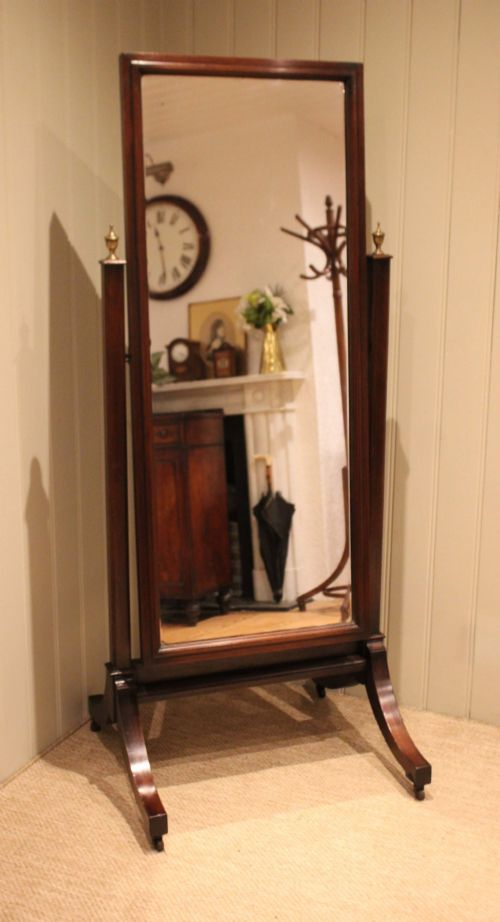
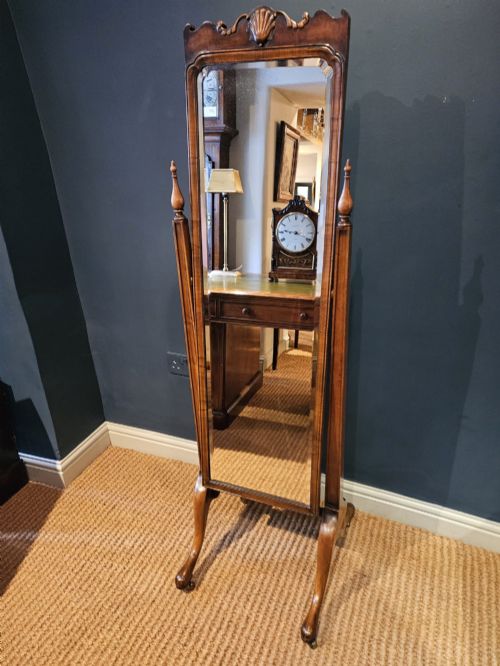
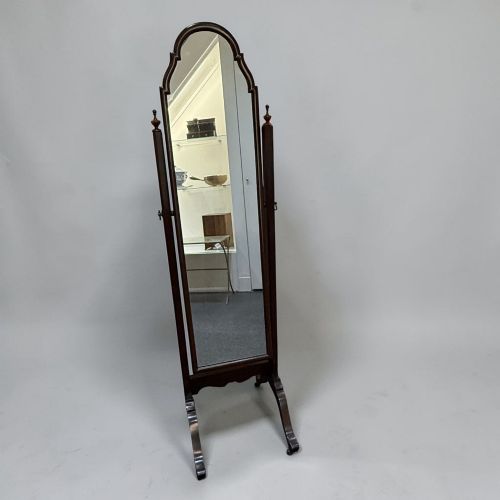
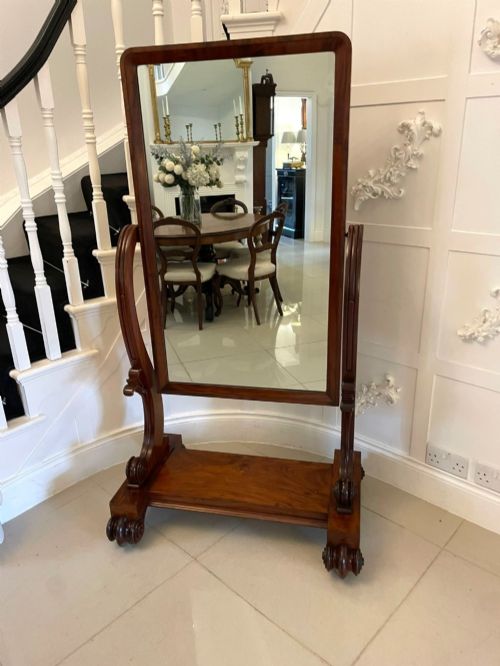
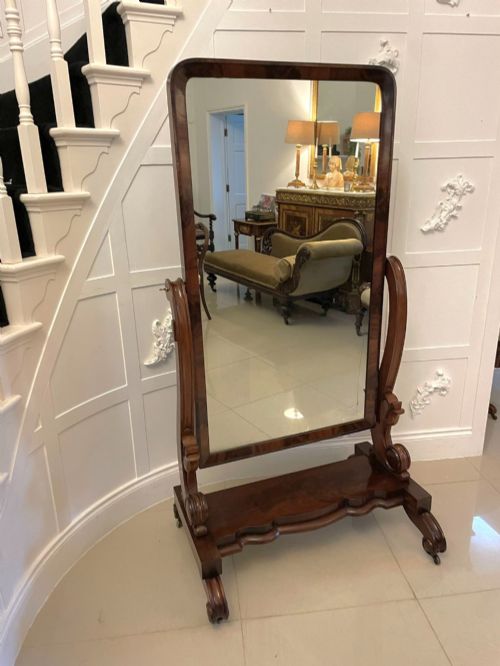
A swiveling floor mirror, commonly known as a cheval mirror, stands independently on a frame rather than hanging on a wall. You will most frequently encounter mahogany examples dating from the nineteenth century, including Victorian and Edwardian periods.
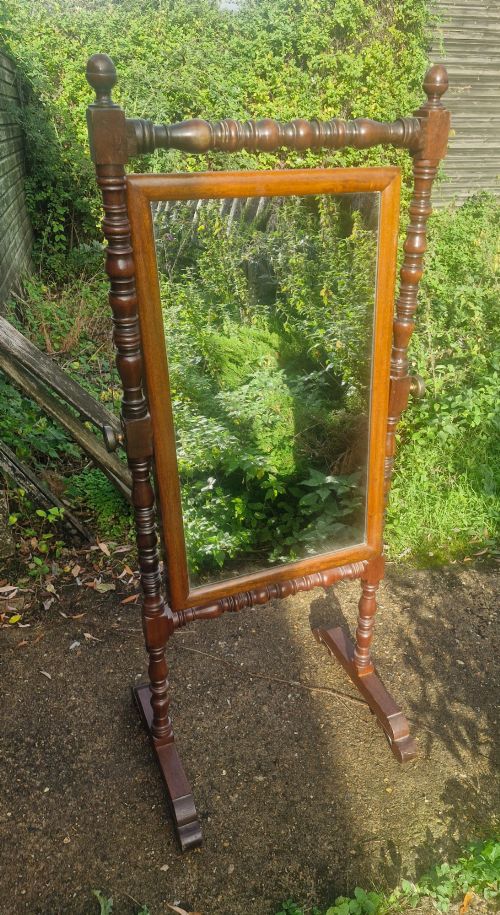
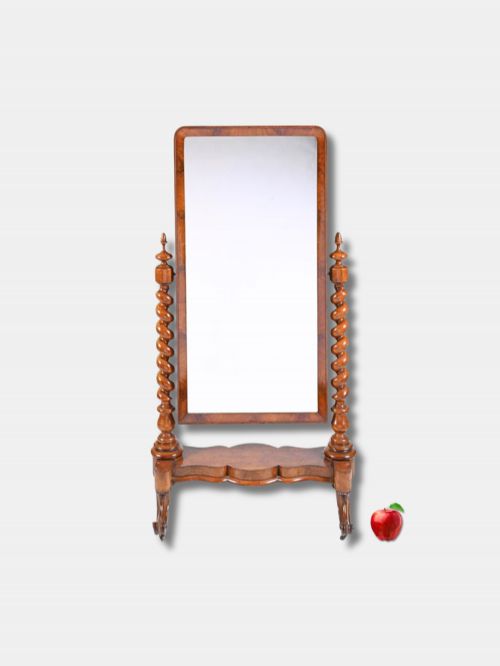
These pieces function as dressing and robing mirrors, designed to show the entire figure. Forms range from simple Georgian and Regency designs to elaborate Victorian pieces featuring barley twist supports or brass articulated candle holders.
The selection includes specialised workshop pieces such as gentleman's outfitters mirrors, boot maker's mirrors, and antique shop dressing mirrors. Frames span various woods like walnut, satin birch, and satinwood, alongside revival styles from the George III and Queen Anne eras.
How they were made
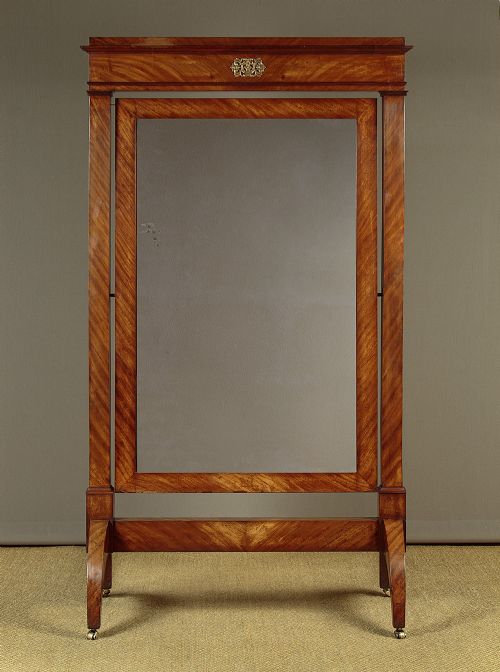
Cabinetmakers constructed the frames primarily from dense timbers such as mahogany and walnut, occasionally employing satinwood or satin birch for lighter decorative effects. Brass hardware, including adjustable pivots, sabots, and castors, provided structural movement and mobility.
Glass plates were set into sturdy wooden stands, often supported by sabre legs or turned columns like barley twist pillars. Marquetry inlay, carving, and gilding added surface detail to the timber frames of later Edwardian and revival pieces.
Swiveling Floor Mirror Retail Price Guide 2026
Typical asking prices for swiveling floor mirror among the pieces listed under this phrase on Sellingantiques today, from the lower quarter to the upper quarter. They describe what is for sale here now, not the wider market.
Listings span the Georgian, Regency, Victorian, and Edwardian periods, featuring materials from glass and brass to mahogany, walnut, and satin birch.
What varies in quality
The weight and stability of the supporting frame dictate much of the structural integrity, particularly since tall glass plates exert significant leverage on the pivot points. Superior examples utilise dense, well-figured timbers like burr walnut or substantial mahogany that prevent wobble during tilting.
The refinement of the brass mechanism determines how smoothly the mirror pivots and holds its angle without slipping. Finer execution appears in the precision of decorative elements, from crisp wood carving and marquetry inlay to quality brass castors and articulated candle holders.
Versace
The Swiveling Floor Mirror Glossary
- Cheval mirror
- A freestanding full-length mirror hung on vertical pivots within a frame. The term derives from the French word for horse, referencing the four-legged trestle stand.
- Sabots
- Metal sleeves fitted over the base of furniture legs for protection and decoration. In these pieces, they are typically cast in brass.
- Barley twist
- A type of turned wooden support carved in a helical spiral resembling a twisted rope. This decorative turning appears frequently on Victorian frames.
- Marquetry
- Inlaid patterns applied to wooden surfaces using various veneers to create pictorial or geometric designs. It is often found on Edwardian satinwood frames.
- Articulated
- Jointed or hinged to allow movement, such as brass candle holders that swing outward from the mirror frame.
Swiveling Floor Mirror: Frequently Asked Questions
What is a cheval mirror?
A cheval mirror is a freestanding full-length dressing glass suspended on pivots within a supportive wooden frame. This design allows the user to tilt the glass angle freely.
Such pieces date across the Georgian, Regency, and Victorian periods, serving practical functions in bedrooms and dressing rooms.
How do you date an antique floor mirror?
Dating relies on timber choices, leg styles, and construction methods characteristic of specific eras. Regency and early nineteenth-century examples often feature sabre legs, while Victorian pieces frequently display barley twist supports.
Revival styles from the Edwardian period adopt earlier Georgian motifs like satinwood inlay, requiring careful examination of secondary woods and hardware.
Where were these mirrors used?
These mirrors stood in domestic dressing rooms, bedrooms, and grand country houses for full-length attire checks. Specialised versions also served commercial environments such as gentleman's outfitters and boot makers' shops.
The inclusion of brass candle holders on certain nineteenth-century examples indicates they provided additional illumination during dressing.
How do you maintain the swiveling mechanism?
The pivoting mechanism relies on side screws or pins that can be gently adjusted to control the tension of the swinging glass. Keeping the brass pivots clean ensures the mirror holds its set angle without straining the wooden uprights.
Regular care involves dusting the timber frame and supporting legs while avoiding excessive moisture near the mirror plate edges.