



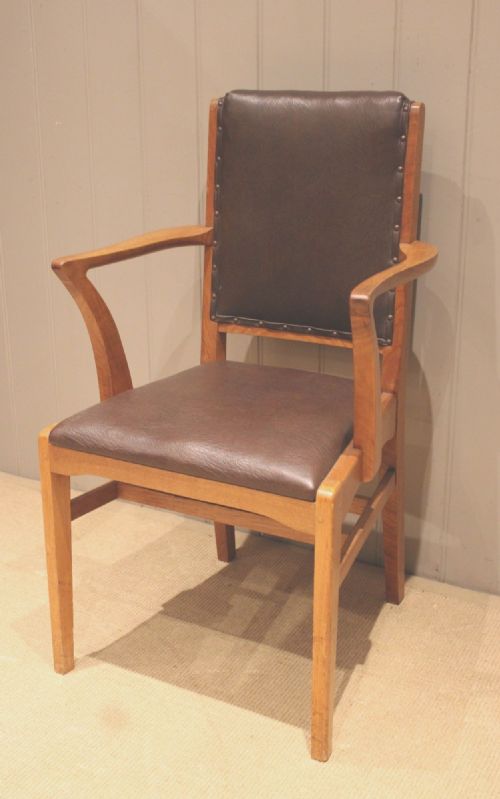


Swivel Arm Desk Chair
These swivel arm desk chair examples offer the mechanical height adjustment and mobility needed for daily study.
Swivel Arm Desk Chair
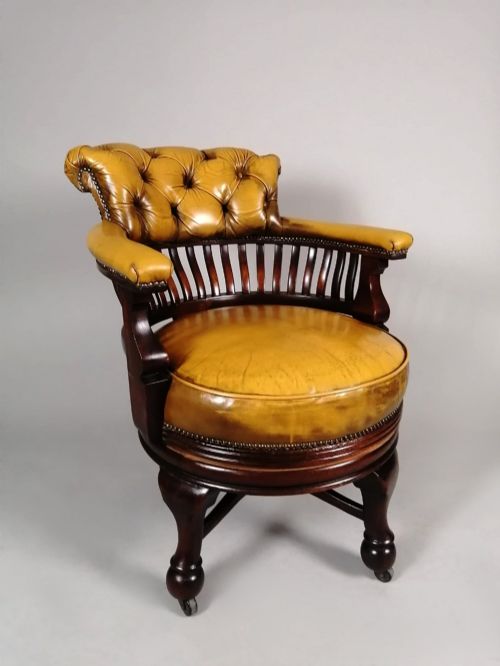
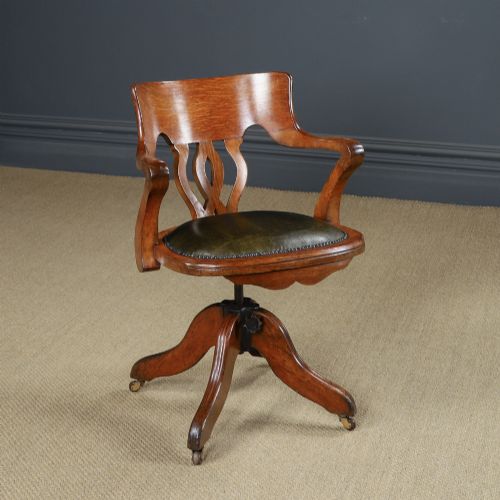
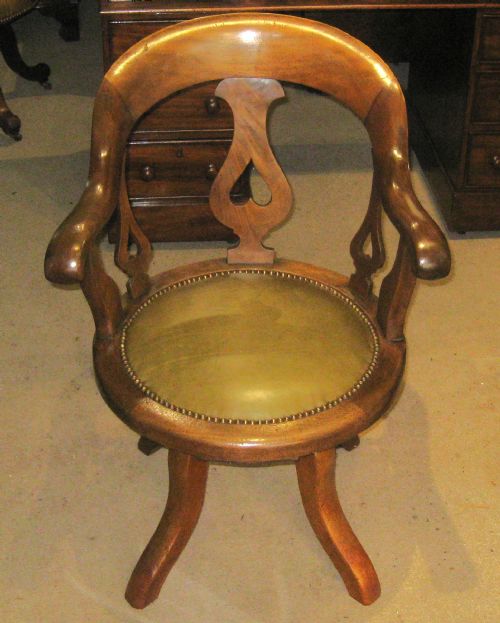
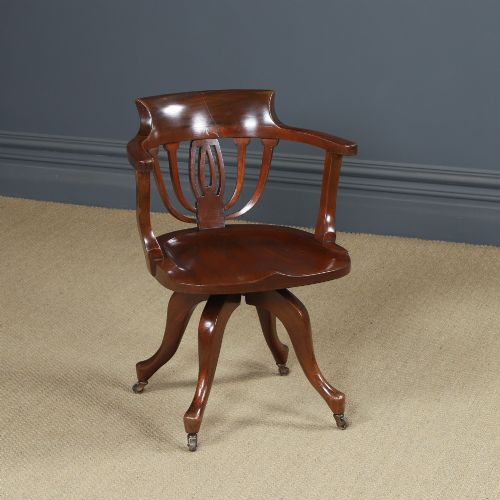
A swivel arm desk chair combines a pivoting seat mechanism with supportive armrests for office or library use. Buyers seeking a swivel arm desk chair encounter forms dating from the nineteenth century through the interwar period.
The dominant examples on this page hail from the Victorian and Edwardian eras, constructed in solid timbers like oak and mahogany. These pieces feature revolving actions designed to grant easy movement across a workspace.
Makers utilised sturdy woods and metal screw mechanisms to create enduring seating for studies and counting houses. The selection ranges from carved Victorian Gothic Revival library seating to simpler Art Deco office chairs.
Construction and materials
Makers fashioned frames from dense hardwoods such as oak, mahogany, ash, and beech, often employing bentwood techniques for curved components. Iron and cast iron form the heavy undercarriages and central threaded spindles that enable the revolving action.
Upholstered versions incorporate supple leather seat pads fastened with brass tacks over supportive padding. Joinery methods relied on sturdy dowels and carved framing to withstand the daily strain of twisting and leaning.
Swivel Arm Desk Chair Retail Price Guide 2026
Typical asking prices for swivel arm desk chair among the pieces listed under this phrase on Sellingantiques today, from the lower quarter to the upper quarter. They describe what is for sale here now, not the wider market.
Several heavy oak examples were originally designed as fully rotating ships chairs to keep sailors steady at their desks.
Assessing quality in revolving seating
Quality rests in the smoothness of the mechanical swivel action and the rigidity of the timber frame under weight. Superior examples display crisp hand-carving on the crest rails and arms rather than plain, factory-milled surfaces.
The choice of primary timber dictates the grade of the piece, with richly figured golden mahogany and quarter-sawn oak representing the better end of the range. Original leather upholstery showing an even patina holds greater distinction than later replacements.
The Swivel Arm Desk Chair Glossary
- Revolving
- Describes a seat mechanism that rotates fully on a central vertical axis. This allows the user to turn easily between different areas of a desk.
- Bentwood
- Wood softened by steam and bent into curved structural forms. This technique created resilient armrests and back rails without heavy joinery.
- Quarter-sawn
- Timber cut radially from the log to expose decorative grain patterns. Oak prepared this way resists warping and displays distinctive fleck markings.
- Gothic Revival
- A nineteenth-century design style drawing on medieval architectural motifs. Pieces show pointed arches, heavy mouldings, and deep relief carving.
Swivel Arm Desk Chair: Frequently Asked Questions
How do I adjust the height on these chairs?
Most of these chairs utilise a threaded iron spindle beneath the seat. Turning the entire upper chair body clockwise or anticlockwise raises or lowers the seating position.
Once the desired height is reached, locking levers or simple friction collars secure the post depending on the specific period mechanism.
Are these chairs suitable for daily computer work?
These pieces were built for nineteenth and early twentieth-century writing desks rather than modern computer setups. Their lower seat heights and upright postures suit traditional writing tasks.
While sturdy enough for regular use, they lack the pneumatic height adjustment and tilt tension controls found in modern office seating.
How should I maintain the leather upholstery?
Leather seat pads benefit from occasional treatment with a neutral leather balm or wax to prevent drying and cracking. Avoid harsh chemical cleaners that strip the original finish and patina.
Keeping the leather conditioned preserves the supple texture acquired over decades of use in studies and libraries.
How do I tell a Victorian chair from an Edwardian one?
Victorian examples often display heavier proportions, darker woods, and more elaborate carved ornamentation. Pieces from this era frequently include Gothic Revival details or rich mahogany frames.
Edwardian and interwar pieces tend towards lighter oak construction, simpler lines, and occasional bentwood components reflecting changing domestic tastes.