



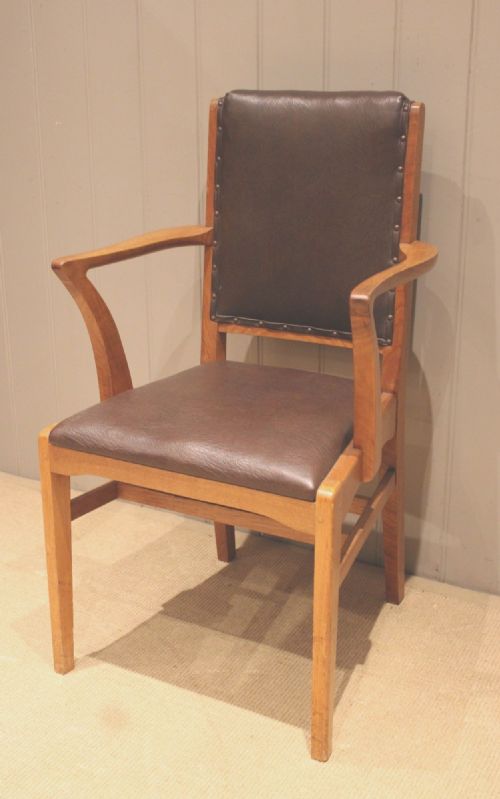


Swivel Arm Chair
A swivel arm chair brings practical mobility and period character to a study, built from sturdy timbers like oak, mahogany, and teak with revolving bases.
Swivel Arm Chair
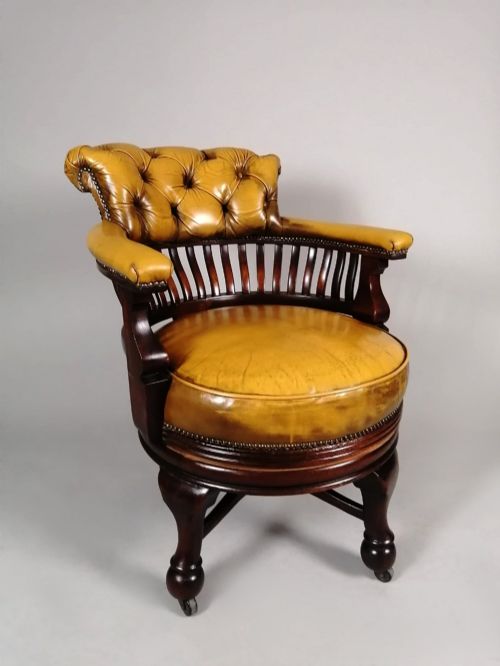
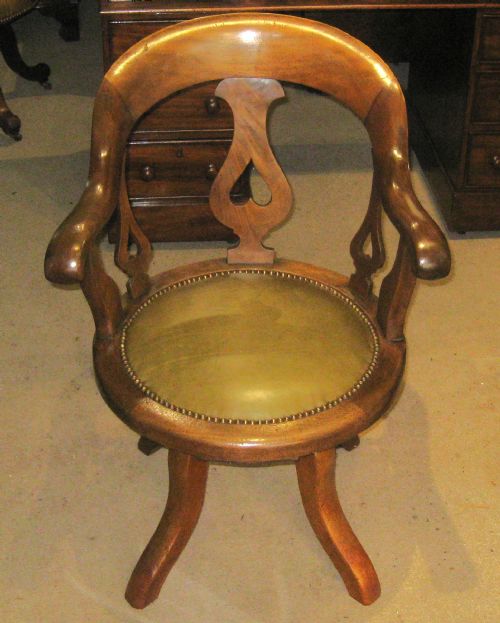
A swivel arm chair sits at the intersection of nineteenth-century office utility and domestic comfort, designed primarily for working at a desk. When you search for swivel arm chair, you encounter examples predominantly from the Victorian, Edwardian, and Art Deco periods, alongside interwar pieces.
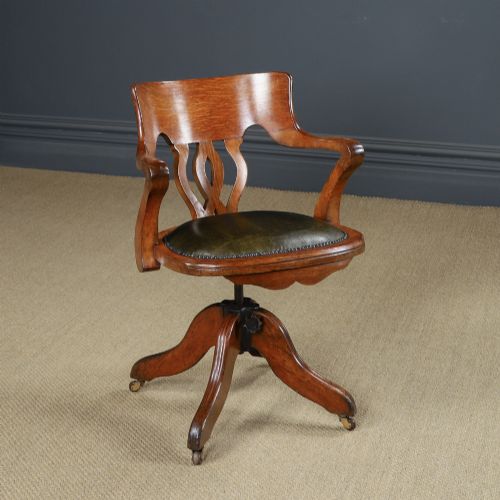
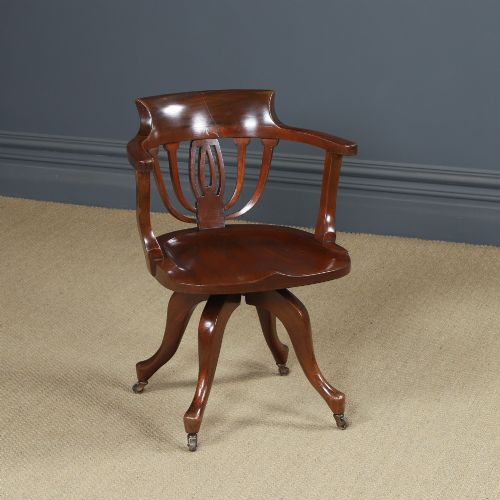
The form typically combines a supportive desk chair silhouette with a rotating mechanism, often set on a timber or cast iron base. Oak and mahogany dominate the offerings, frequently paired with leather upholstery for daily use.
Most pieces date from the late nineteenth and early twentieth centuries, reflecting the growth of administrative spaces during the Victorian and Edwardian eras. You will find both heavily carved statement chairs and simpler, utilitarian designs intended for offices and libraries.
How they were made
Cabinet makers built these chairs using durable hardwoods including oak, mahogany, teak, ash, and beech, often selecting timber for its strength under rotational stress. Frames utilise traditional joinery, sometimes incorporating bentwood techniques to achieve curved armrests and back rails.
Mechanisms rely on iron and brass components to permit smooth rotation and, in many instances, adjustable height settings. Upholstery consists of leather fixed to the seat and back, secured with traditional studding.
Swivel Arm Chair Retail Price Guide 2026
Typical asking prices for swivel arm chair among the pieces listed under this phrase on Sellingantiques today, from the lower quarter to the upper quarter. They describe what is for sale here now, not the wider market.
Some chairs demand vigorous legwork just to stay pointed at the ledgers.
What varies in quality
Quality rests in the substance of the timber framing and the engineering of the swivel mechanism beneath the seat. Heavier woods and robust iron or brass internal pivots provide greater stability during constant daily movement.
The integration of the revolving movement with the wooden undercarriage dictates the refinement of the piece. Superior examples maintain smooth rotation without excessive play in the column, while simpler workshop chairs prioritize plain utility over decorative carving.
The Swivel Arm Chair Glossary
- Revolving
- A seating design that incorporates a mechanical pivot allowing the upper portion of the chair to turn full circle. This movement relies on a central spindle fixed to a base.
- Bentwood
- Wood softened by steam or boiling water and pressed into curved forms. This technique creates continuous, flowing structural lines without heavy joints.
- Planter's chair
- A specialised armchair featuring extended, pivoting arms designed to support outstretched legs. Originating in colonial contexts, these chairs are typically fashioned from durable tropical timbers such as teak.
- Ships chair
- A robust seating form engineered to withstand movement at sea, often featuring heavy carved construction and secure anchoring. These chairs frequently incorporate fully rotating mechanisms within compact frames.
Swivel Arm Chair: Frequently Asked Questions
Are swivel arm chairs comfortable for daily desk work?
Many period examples were specifically designed for long hours at administrative desks, featuring supportive upholstered backs and padded leather seats.
The ergonomic consideration given to Victorian and Edwardian office seating makes them surprisingly practical for modern working environments.
How do I date a swivel arm chair?
Dating relies on identifying the timber species, the style of the carving, and the sophistication of the mechanical swivel base. Victorian and Edwardian pieces often display distinct period motifs and heavier hardware compared to later interwar designs.
Examining the construction methods beneath the seat reveals whether the pivoting mechanism belongs to the nineteenth or early twentieth century.
What woods were commonly used for these chairs?
Cabinet makers predominantly utilised oak, mahogany, teak, ash, and beech depending on the workshop origin and intended setting.
Formal library and office chairs usually featured mahogany or oak, while utilitarian or provincial examples employed ash and beech.
Can I adjust the height of antique swivel chairs?
Certain Edwardian and Victorian models incorporate mechanical screw or threaded spindle adjustments beneath the seat to alter the height.
Not all revolving chairs adjust vertically, as some simply rotate on a fixed-height pivot column.