




Swiss Wood Carving Pair
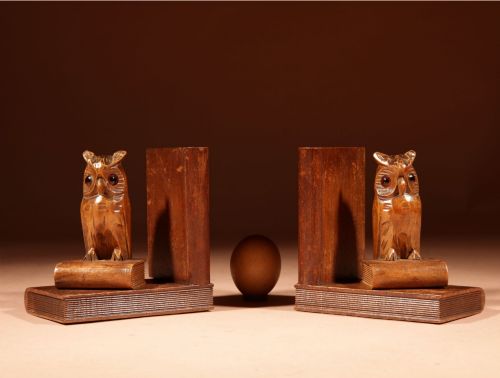
A swiss wood carving pair brings character and natural detail into a room, featuring animal and figure subjects crafted in the traditional Alpine manner.
Swiss Wood Carving Pair
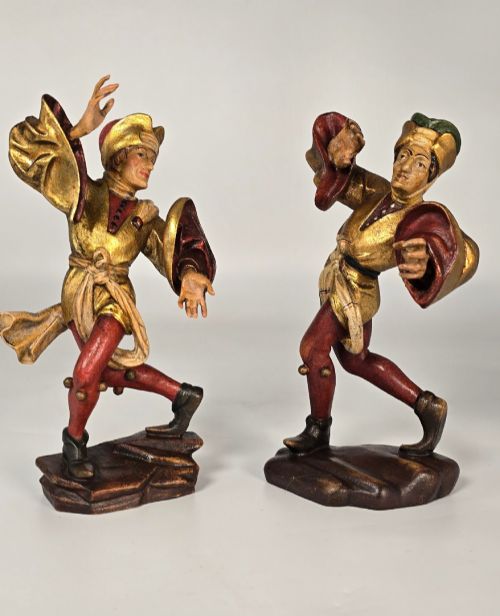
A swiss wood carving pair consists of matching decorative objects, figures, or functional items created in wood through traditional carving techniques. These sets typically span the nineteenth century and the early decades of the twentieth century, often reflecting Black Forest or Swiss folk art traditions.
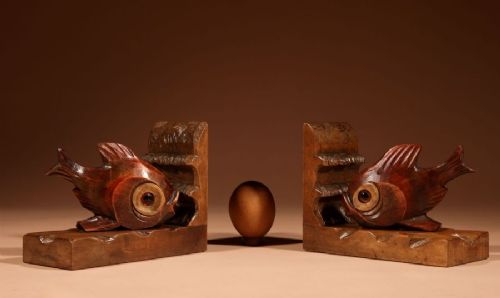
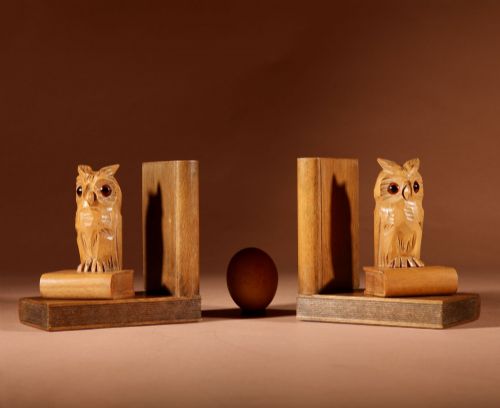
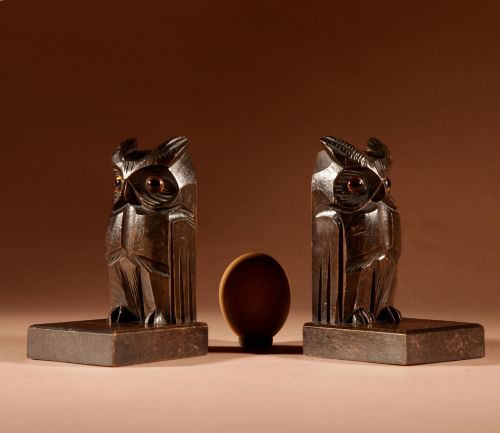
Bookends form a common group within this search phrase, frequently depicting owls, bears, or goldfish with glass eyes. Other pairings include animal sculptures of ibex, chamois, fawns, cows, and bulls, alongside functional items such as inkwells, sewing cases, frames, and wall plaques.
How they were made
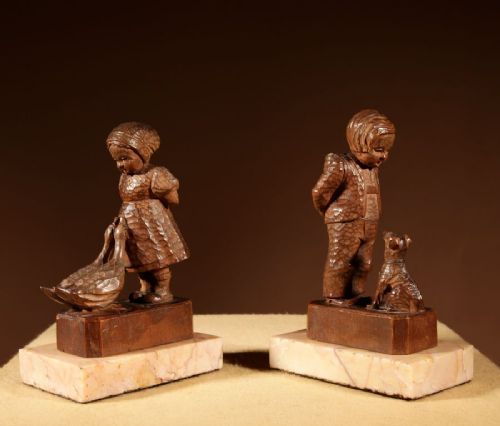
Makers often incorporated glass inserts for animal eyes to enhance realism, while surfaces received subtle staining or wax finishes to highlight the natural grain of the timber. Some specific items combined carved wooden panels with secondary materials such as marble bases.
Swiss Wood Carving Pair Retail Price Guide 2026
Typical asking prices for swiss wood carving pair among the pieces listed under this phrase on Sellingantiques today, from the lower quarter to the upper quarter. They describe what is for sale here now, not the wider market.
Materials recorded on this page range from limewood and linden wood to fruitwood, walnut, marble, and glass.
What varies in quality
Quality in a swiss wood carving pair rests upon the anatomical accuracy and expressive depth of the carving. Master carvers captured movement, muscular tension, and realistic textures in fur and feathers, whereas lesser examples remain stiff and simplified.
Proportion and symmetry between the two pieces determine the success of the pairing. The handling of delicate projections, such as antlers or floral elements, separates finely detailed studio work from standard commercial production.
The Swiss Wood Carving Pair Glossary
- Black Forest
- A regional style of wood carving originating in the border regions of Switzerland and Germany. It is characterised by naturalistic depictions of animals and rustic foliage.
- Limewood
- A pale timber with a fine, even grain favoured by European carvers for its lack of prominent splintering. It allows for crisp details in high relief.
- Folk art
- Utilitarian and decorative objects created by traditional artisans rather than academic sculptors. These pieces emphasise local materials and regional iconography.
- Hunting trophy
- A wall plaque or decorative mount carved to resemble animal heads or antlers. These were popular in alpine interiors during the Victorian period.
Swiss Wood Carving Pair: Frequently Asked Questions
What animals appear most often?
Bears, owls, and cows dominate the subjects, alongside fawns, ibex, and chamois. Domestic and wild alpine creatures reflect the regional wildlife of the carving centres.
Fish and cats also occasionally appear in functional objects like bookends and inkwells.
How do I care for these carvings?
Keep wooden surfaces away from direct sunlight and excessive heat sources to prevent the timber from splitting. Dust gently with a dry, soft brush.
A light application of appropriate wood wax can nourish the surface when necessary.
Are these pieces signed?
Most antique carvings remain unsigned, as makers typically worked anonymously for regional workshops and retailers. Signed examples do exist on certain animal figures.
Attribution relies on style, material, and carving technique rather than signatures.
What periods do these pieces date from?
The inventory spans the nineteenth century through to the early decades of the twentieth century, including Victorian examples. The majority date from around nineteen hundred to nineteen thirty.
Stylistic continuity makes precise dating dependent on construction methods and wear.