
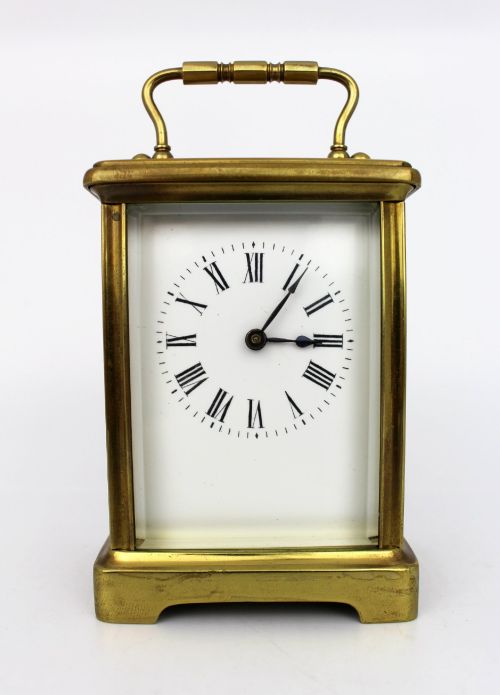


Swiss Movement Desk Clock
These Swiss movement desk clock pieces bring precise horology and striking periods into daily working spaces, offering both reliable timekeeping and period design.
Swiss Movement Desk Clock
When you search for a swiss movement desk clock, you encounter precision timepieces spanning from the nineteenth century through the mid-twentieth century. The selection contains carriage clocks, table clocks, skeleton timepieces, and specialised forms designed for domestic and travel use.
The versions you meet most frequently on this page include mid-century modern designs and traditional carriage clocks housed in brass or gilt brass frames. These objects reflect the evolution of Swiss engineering integrated into Victorian, Edwardian, Art Deco, and mid-century aesthetic frameworks.
How they were made
Constructed using durable base metals such as brass, gilt brass, and steel, these clocks frequently incorporate glass panels to display the internal mechanics. Finishes include gold plate and rhodium plating to protect and adorn the metalwork.
Makers utilised enamel for dial faces and incorporated specialised travel cases for portability. The internal Swiss movements rely on intricate gear trains and escapements assembled by skilled horologists.
One miniature model was built specifically for the Chinese market, proving that good timekeeping transcends language.
What varies in quality
The distinction between tiers rests upon the complexity of the movement and the finish of the exterior metalwork. Pieces featuring specialised complications such as grande sonnerie or skeletonised inline designs demonstrate higher horological ambition than standard timepieces.
Material application also dictates standing, with heavy gilt brass, rhodium plating, and fine enamel work separating standard domestic models from luxury examples made for export or high-end retailers.
Jaeger LeCoultre·Mappin and Webb
The Swiss Movement Desk Clock Glossary
- Carriage clock
- A portable spring-driven clock designed for travel, traditionally featuring a rectangular brass case with glass panels and a swing handle on top. They originated in France and often housed precise Swiss movements.
- Skeleton timepiece
- A clock designed with an openwork frame and dial that exposes the internal gears and movement to view. This style emphasises the mechanical motion of the clock.
- Grande sonnerie
- A complex striking mechanism that chimes the hours and quarters automatically on every quarter-hour. It represents a high level of watchmaking skill.
- Rhodium plating
- An electrolytic coating applied to base metals to provide a bright, durable, and corrosion-resistant silver-white finish. It appears on mid-century modern timepieces.
Swiss Movement Desk Clock: Frequently Asked Questions
What is a swiss movement desk clock?
A swiss movement desk clock is a portable or stationary timekeeping device driven by precision mechanical components manufactured in Switzerland. These pieces range from nineteenth-century carriage clocks to mid-century modern skeleton timepieces.
They combine functional utility with decorative metal and glass housings suited for desks, tables, and travel.
How do I date a carriage clock?
Dating a carriage clock involves examining the style of the brass case, the shape of the handle, and the characteristics of the enamel dial. Victorian and Edwardian examples often display traditional cast brass frames and platform escapements.
Later mid-century models shift toward streamlined inline forms and contemporary metallic finishes like rhodium plating.
Where were these clocks used?
These clocks served primarily in domestic interiors, offices, and studies as functional timekeepers that doubled as decorative objects. Travel versions included fitted leather cases for safe transit during journeys.
Specialist variants were also produced for export markets, catering to collectors and international clientele.
How do I care for a mechanical desk clock?
Maintaining a mechanical desk clock requires regular winding according to its movement type, such as standard or eight-day springs. Placing the clock on a stable, level surface ensures the escapement beats evenly.
Professional servicing helps preserve the internal gears and keeps the Swiss movement running accurately over time.