






Gilt Metal Mantle Clock
These gilt metal mantle clock selections combine timekeeping with sculptural presence, offering a decorative centrepiece for a mantelpiece.
Gilt Metal Mantle Clock
A gilt metal mantle clock is a decorative domestic timekeeper designed to sit on a fireplace mantel or shelf, combining a metal casing with a mechanical movement. When searching for a gilt metal mantle clock, buyers encounter pieces ranging from smaller boudoir designs to grander garniture sets flanked by matching ornaments.
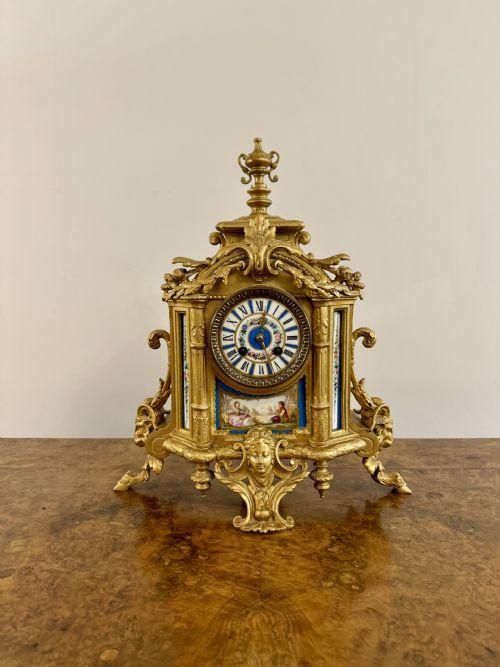
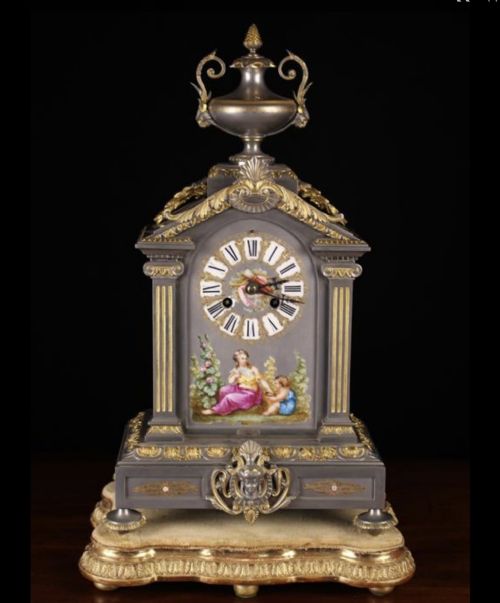
The selections span various periods including the nineteenth century and Victorian eras, alongside specific revival movements. French workshops produced many of the ornate examples seen here, often incorporating porcelain panels or marble bases alongside the gilded metalwork.
Forms vary from portico and architectural designs to figural and industrial pieces, such as beam engine clocks. Buyers will frequently find French models featuring eight-day movements alongside British fusee timepieces and later twentieth-century variations.
How they were made
These clocks rely on metalworking techniques such as ormolu casting, where brass or bronze received a layer of gold amalgam, alongside simpler gilt metal applications. Workshops shaped ebonised wood, marble, alabaster, and toleware to form the structural housings that supported the metal frames and dials.
Enamel dials with painted numerals frequently face behind protective glass bezels, housing mechanical gear trains driven by springs or weights. Porous porcelain plaques, often hand-painted with floral or pastoral scenes, were integrated into the metal facades of French garniture sets to add colour and texture.
The listings span from the eighteenth century through the Victorian era into the 1960s, using materials like porcelain, brass, marble, and ormolu.
What varies in quality
Quality in these timepieces rests upon the crispness of the metal casting and the depth of the gilding, where finer pieces retain sharp chisel work and bright mercurial finishes. The integration of materials marks the distinction between standard production and superior work, particularly in how porcelain panels and marble bases fit the metal chassis.
The sophistication of the movement dictates the standing of the piece, with signed mechanisms from established makers offering greater mechanical refinement. Heavier gauge metals, original patination, and complete garniture sets rather than isolated units elevate the stature of an individual clock.
Leroy & Fils·Andre Guilmet·P.H MOUREY·Jaeger Le Coultre·Wm. Gilbert·Vincenti & Co.
The Gilt Metal Mantle Clock Glossary
- Gilt metal
- A base metal surface treated with a gold-coloured finish or coating. This creates the appearance of solid gold while using more workable underlying metals.
- Ormolu
- Finely chased bronze that has been gilded with real gold using a mercury amalgamation process. This technique produces a rich, durable lustre characteristic of high-end French pieces.
- Garniture set
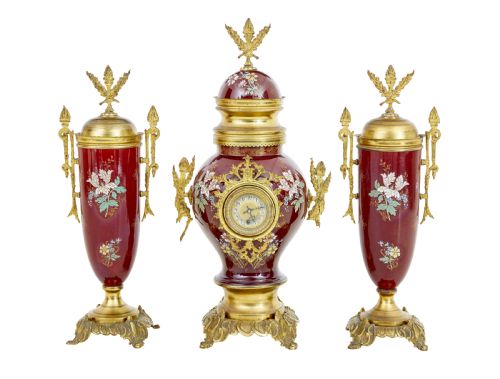
- A central clock accompanied by matching side ornaments such as urns or candelabra. These sets were designed to create a balanced display across a mantelpiece.
- Fusee timepiece
- A clock movement featuring a conical pulley that equalises the declining power of the mainspring as it unwinds. This mechanism improves timekeeping accuracy over the course of the running period.
- Portico clock
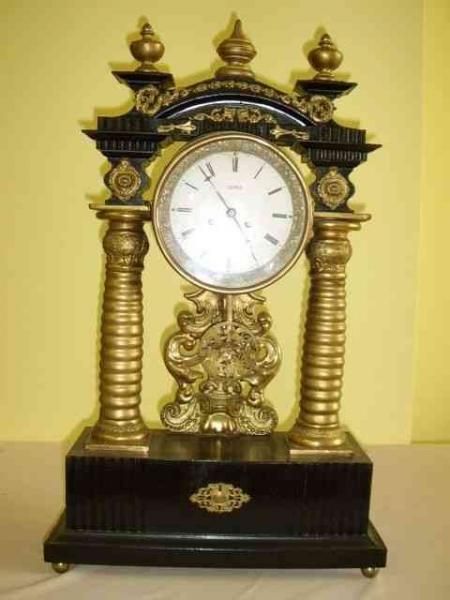
- A clock housed within a architectural frame supported by four or more columns. The pendulum often swings visibly within the central opening between the pillars.
Gilt Metal Mantle Clock: Frequently Asked Questions
How do I wind an eight day mantle clock?
Most mechanical clocks of this type use a key inserted into winding holes on the dial to tension the springs inside the movement.
Care should be taken not to overwind the mechanism, stopping when firm resistance is met.
Where should I place a gilt metal clock?
These clocks are traditionally positioned on a mantelpiece, sideboard, or desk where their decorative cases can be viewed clearly.
Avoid placing them in areas subject to direct sunlight, dampness, or heavy vibrations that could affect the delicate movement.
What is a clock garniture set?
A garniture set consists of a main clock flanked by matching decorative objects like urns or vases designed to sit together.
They originated in France to create a cohesive decorative arrangement on large mantelpieces.
How do I distinguish French and British clocks?
French pieces of this era frequently employ ornate gilt metal, porcelain panels, and cast garnitures in revival styles.
British examples more often utilise fusee movements housed in simpler wooden or architectural cases.