

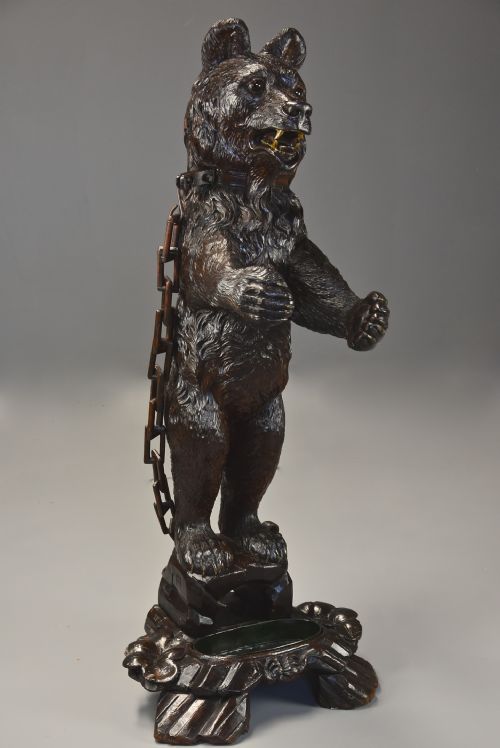


Swiss Carved Stick Stand
These swiss carved stick stand pieces are striking Black Forest hall stands fashioned as carved bears, prized for their dramatic presence.
Swiss Carved Stick Stand
The dominant material format on this page is carved wood, frequently specified as lindenwood or lime wood, combined with metal drip pans and sometimes glass or mirror elements. These pieces range from compact single-stick holders to large exhibition quality oak tree and bear combinations.
Most examples hail from the nineteenth century, encompassing dates around 1860, 1880, 1890, and extending into early twentieth century pieces from 1910 and 1920. The forms serve both a utilitarian hallway function and a dramatic sculptural purpose.
Materials and construction
Makers utilised lime wood, lindenwood, and carved hardwood to fashion the intricate anatomical details of bears and the gnarled surfaces of oak trees. Hand-carving tools shaped every fold of fur and facial expression directly into the timber.
Functional metal components, such as integrated drip pans, were incorporated into the wooden bases to catch moisture from wet umbrellas and sticks. Optional glass and mirror additions were fitted into larger hallstand backboards to reflect hallway light.
Swiss Carved Stick Stand Retail Price Guide 2026
Typical asking prices for swiss carved stick stand among the pieces listed under this phrase on Sellingantiques today, from the lower quarter to the upper quarter. They describe what is for sale here now, not the wider market.
Every single bear stand on this page is ready to guard your umbrella with unwavering wooden loyalty.
Judging the quality
Quality rests entirely on the depth and realism of the wood carving, distinguishing standard utility items from exhibition quality masterpieces. Finer examples display meticulous attention to anatomical proportion in the bear and deeply undercut foliage or tree bark.
Scale and complexity also divide the range, moving from modest single-stick holders to large double stick stands incorporating multiple bears and structural oak tree elements. The crispness of the original surface finish dictates the visual impact of the piece.
The Swiss Carved Stick Stand Glossary
- Black Forest
- A nineteenth-century decorative carving tradition originating in central Europe, famous for naturalistic animal sculptures and rustic furniture. This style defines the bear motifs seen on these stands.
- Lindenwood
- A pale, fine-grained wood favored by traditional carvers for its smooth texture and predictable response to hand tools. It permits the high level of detail found on these bears.
- Hall stand
- A large furniture piece combining coat hooks, a mirror, and a umbrella or stick base designed for an entrance hall. Many stick stands double in function as full hallstands.
- Drip pan
- A removable metal tray fitted at the base of a stick stand to collect water from wet umbrellas. These protect the underlying wooden floor from moisture damage.
Swiss Carved Stick Stand: Frequently Asked Questions
What is a swiss carved stick stand?
It is a decorative hallway accessory, primarily made in the Black Forest style, featuring hand-carved bears holding sticks and umbrellas.
These pieces combine functional storage with ornate nineteenth-century wood sculpture.
How were these stands used?
They stood in grand entrance halls to hold walking sticks, canes, and wet umbrellas for residents and guests.
The metal base tray caught moisture while the upright wooden figures offered sturdy support.
What wood was used?
Carvers relied on lindenwood, lime wood, and general carved hardwood to execute the intricate fur and tree textures.
These timbers allowed for deep undercutting and realistic sculptural forms.
How do I date a piece?
Dating relies on stylistic markers from the nineteenth century, including Victorian influences and specific exhibition pieces from the eighteen sixties to eighties.
Later examples extend into early twentieth-century production around nineteen twenty.