





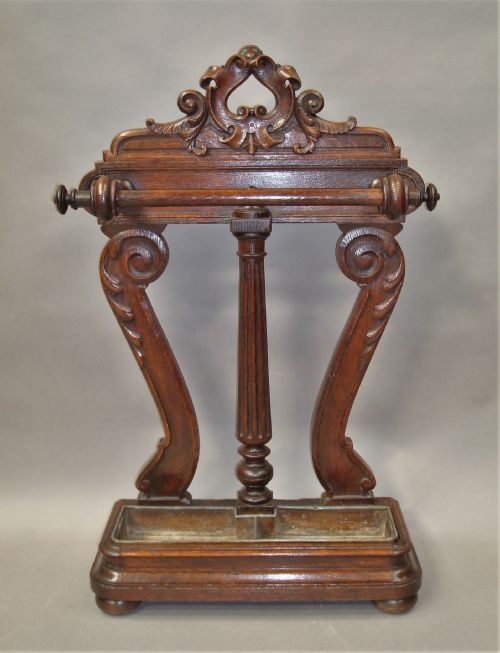


Carved Wooden Cane Holder
These carved wooden cane holder examples organise hallway clutter with distinct period character, offering functional presence in oak, walnut, and lindenwood.
Carved Wooden Cane Holder
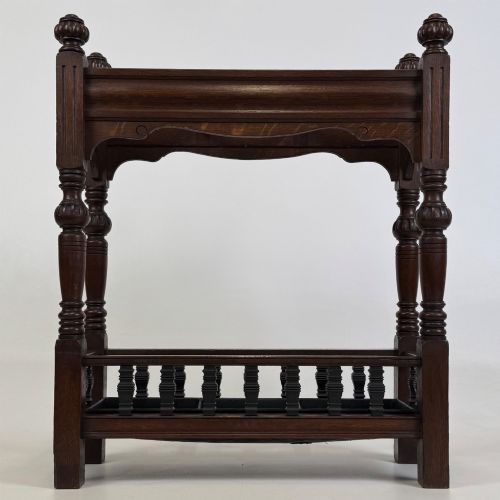
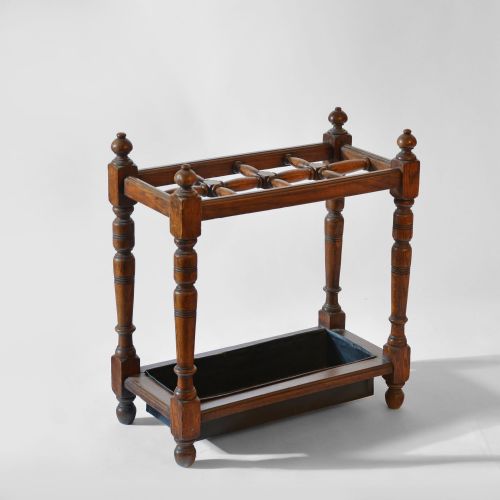
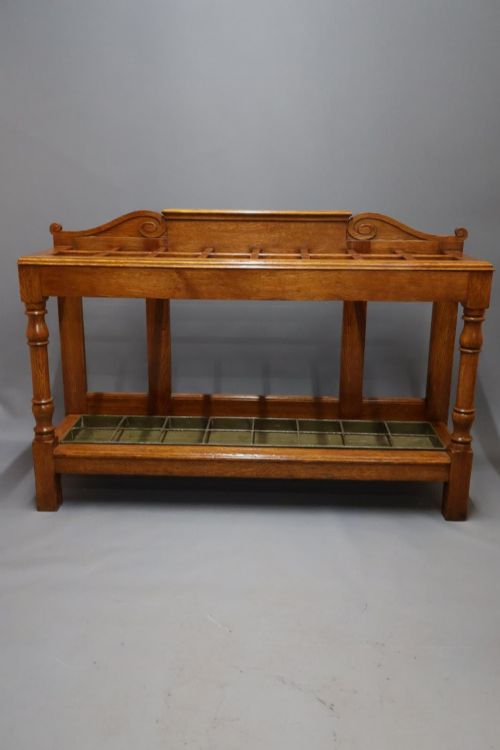
A carved wooden cane holder serves as a functional hallway furnishing designed to store walking sticks, umbrellas, and parasols safely. The listings on this page span the nineteenth and twentieth centuries, encompassing Victorian, Edwardian, and Arts and Crafts examples.
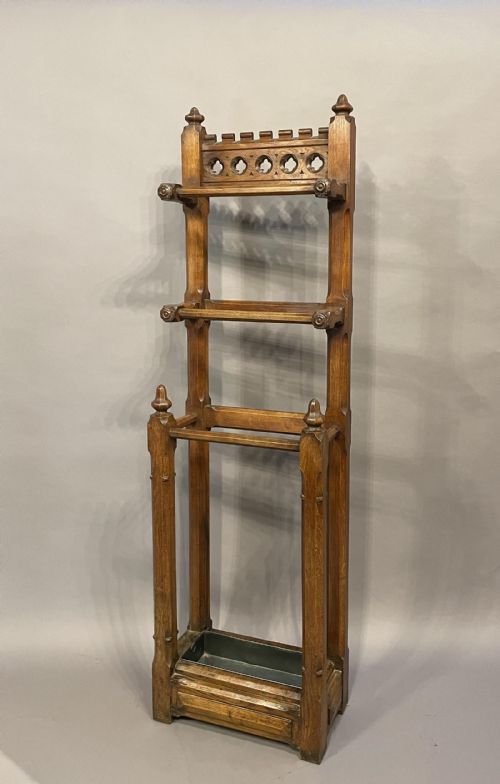
Most pieces encountered here are constructed from oak, walnut, or carved wood, frequently appearing in styles such as Gothic Revival, Aesthetic Movement, and Black Forest. Forms range from simple umbrella stands and stick stands to elaborate demi-lune hall stands.
Materials and construction methods
Construction relies heavily on timbers such as oak, mahogany, walnut, and lindenwood, shaped through traditional joinery and coopered barrel techniques. Metal and brass components frequently appear alongside the timber framework to provide structural support and drip trays.
Carved detailing, relief work, and turned elements define the decorative surfaces, particularly evident in Black Forest animal carvings and Edwardian embellishments. Caned panels are also utilised in specific variants to lighten the visual weight of the hall furniture.
Carved Wooden Cane Holder Retail Price Guide 2026
Typical asking prices for carved wooden cane holder among the pieces listed under this phrase on Sellingantiques today, from the lower quarter to the upper quarter. They describe what is for sale here now, not the wider market.
Several stands feature carved bears whose outstretched paws double as practical hooks for your daily walking cane.
Assessing quality in hall stands
Quality varies according to the depth and precision of the carved wooden detailing, especially visible in figurative Black Forest pieces and Gothic Revival mouldings. The selection of timber grain, the integrity of the joinery, and the presence of original metal drip trays distinguish finer examples.
Proportion and scale play significant roles, with larger country house stands demonstrating greater ambition in design compared to modest domestic pieces. The harmony between structural oak or walnut and supplementary brass or cane elements marks the distinction at the upper end.
The Carved Wooden Cane Holder Glossary
- Demi-lune
- A half-moon shape characteristic of hall stands designed to sit flush against a wall. This profile saves floor space in narrow hallways.
- Coopered barrel
- Construction method utilising vertical wooden staves bound together, typical of cylindrical stick stands. It echoes the traditional craft of the cooper.
- Black Forest
- A style of wood carving originating from central Europe, known for realistic animal figures such as bears holding holders. These pieces often incorporate deep relief work.
- Arts and Crafts
- A design movement prioritising traditional craftsmanship and visible construction over industrial ornament. Pieces in this style emphasise honest materials like oak.
- Gothic Revival
- An architectural and decorative style employing pointed arches, tracery, and heavy mouldings. Hall stands in this taste reflect medieval ecclesiastical design.
Carved Wooden Cane Holder: Frequently Asked Questions
How were these stands used originally?
These pieces stood in entrance halls and boot rooms of large houses to receive wet umbrellas and walking sticks upon entry. They kept hallways tidy while displaying the social taste of the household to visitors.
Servants emptied the metal or brass drip trays regularly to protect wooden floors from moisture damage. Their placement near the front door made them an essential daily utility for Victorian and Edwardian residents.
How do I tell Victorian from Edwardian stands?
Victorian stands tend to feature heavier timbers, darker finishes, and dense ornamentation associated with Gothic Revival or Aesthetic movements. Their construction is robust, often incorporating robust oak and cast metal elements.
Edwardian examples generally appear lighter in proportion, sometimes incorporating caned panels or simpler geometric lines. The transition reflects changing domestic tastes towards brighter, less congested entrance spaces.
Where should I place a stand at home?
These holders suit narrow hallways, entrance lobbies, or porches where everyday outdoor accessories accumulate. Their vertical orientation ensures they occupy minimal floor space while offering substantial storage capacity.
Ensure the internal metal or brass drip tray remains in place to catch moisture from umbrellas. This practical measure protects modern flooring from water marks originating from vintage timber bases.