

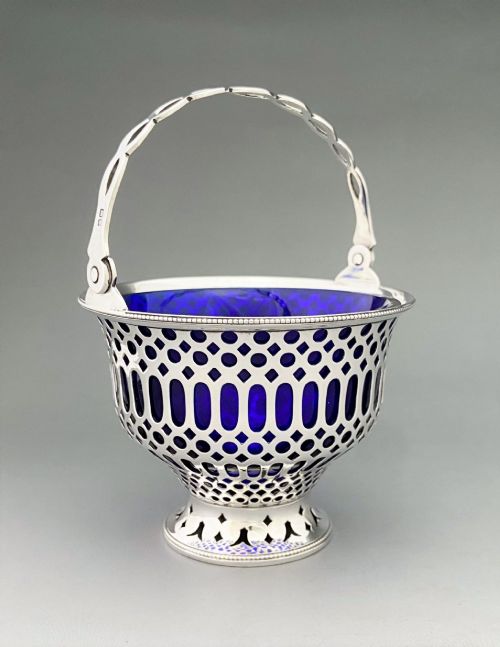


Swing Handle Dish
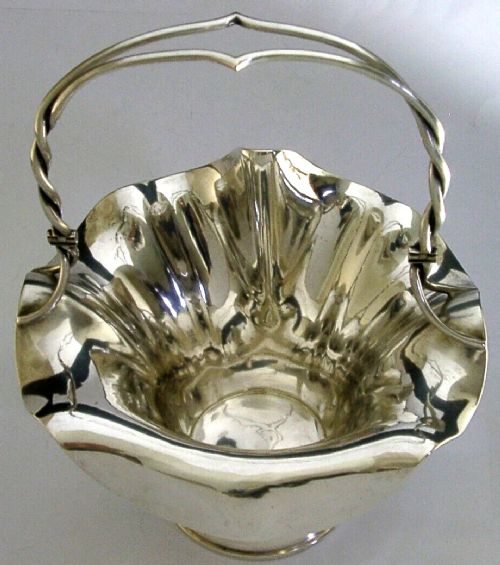
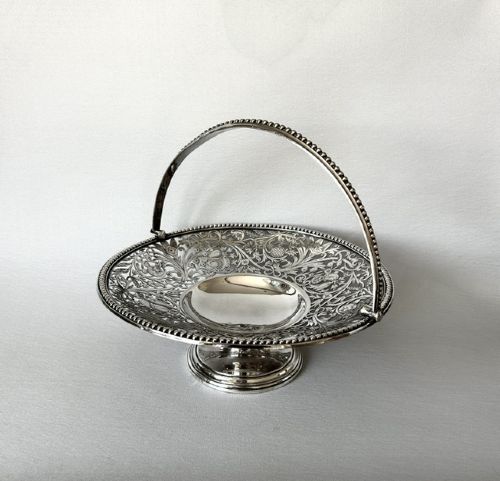
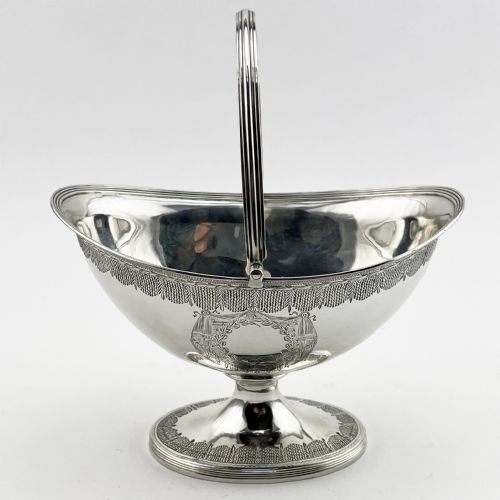
A swing handle dish brings flexible elegance to the table, offering a movable arch over forms meant for fruit, sugar or sweets.
Swing Handle Dish
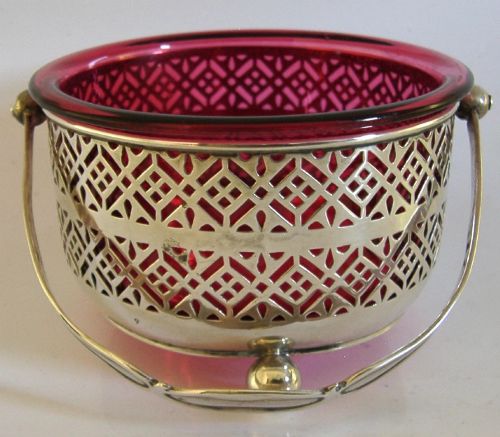
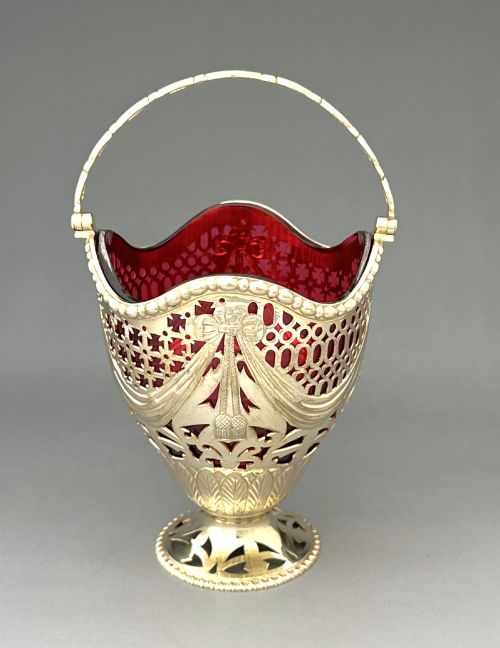
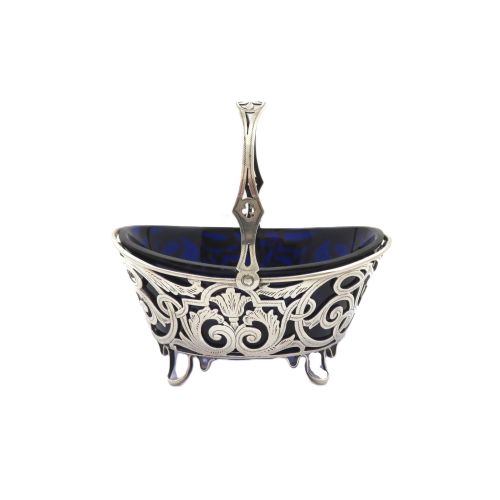
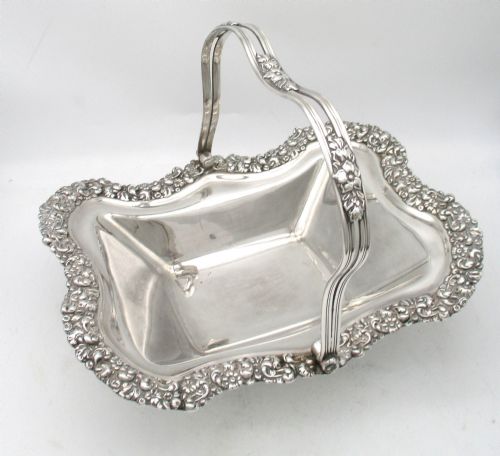
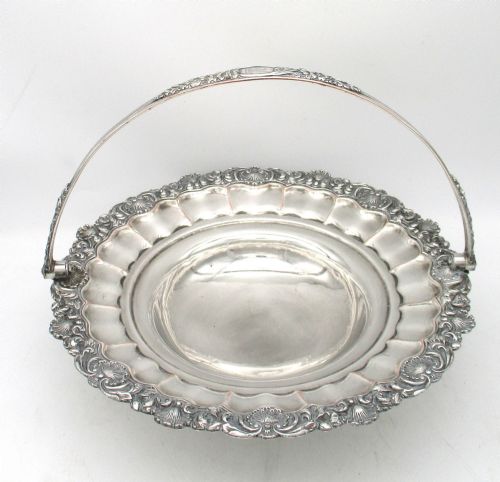
The objects span formal silver gilt and sterling silver centrepieces alongside durable silver plate, Old Sheffield plate and pewter iterations, often accompanied by coloured glass liners in cranberry, ruby, cobalt or clear crystal. Buyers will encounter both deep handled baskets intended for heavier fruit and shallow footed dishes designed for confectionery or preserves.
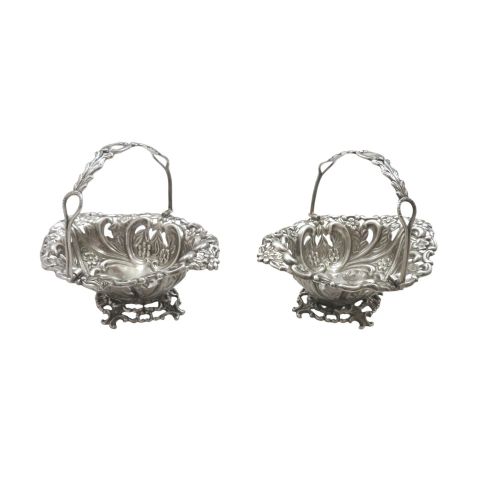
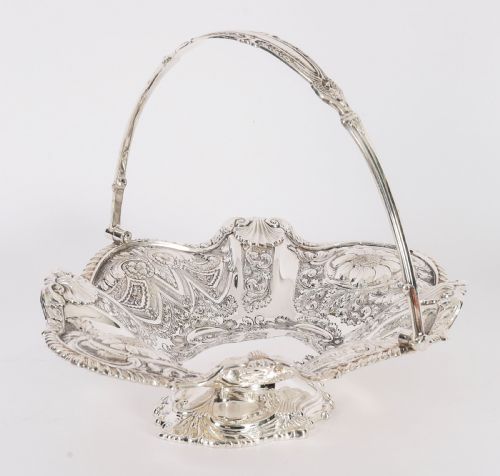
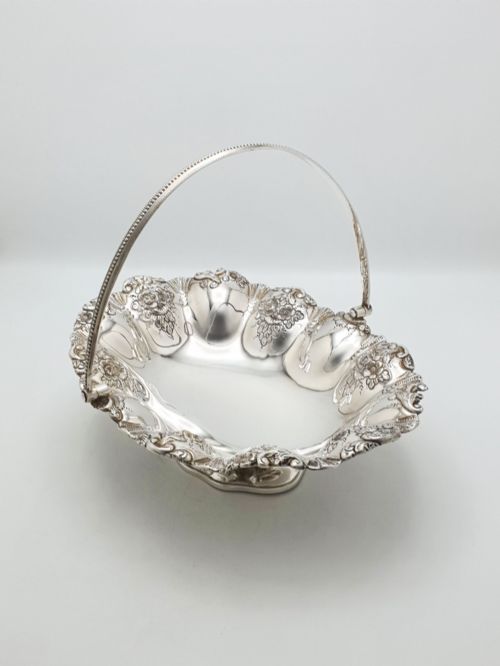
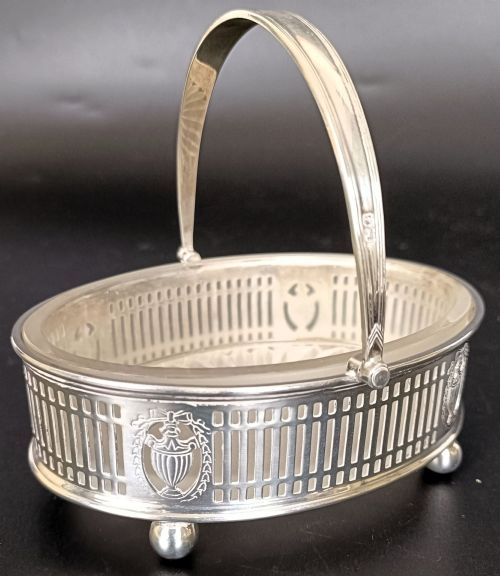
Forms shift from restrained 18th-century Georgian lines through elaborate Victorian floral repoussé and piercing to sweeping Art Nouveau curves and geometric Edwardian lattices. Each piece reflects the dining customs of its period, moving from tea table sugar containers to sideboard display bowls.
Materials and construction
Makers shaped sterling silver and silver plate through casting, piercing, hammering and embossing, frequently employing the piercing saw to create delicate lattice, scroll and geometric patterns around the bowl walls. Handles were cast separately with hinge joints soldered to the rim, allowing smooth rotation.
Many items pair metalwork with blown glass liners, including cranberry glass and rock crystal, which sit securely within the pierced metal frames. Old Sheffield plate items utilise a thin sheet of silver fused to a copper base, visible along cut edges or worn high points.
A Doulton Lambeth stoneware dish managed to wear a silver mount and swing handle without losing its earthy charm.
Assessing quality
Quality rests upon the crispness of the chasing, the weight of the metal, and the structural integrity of the swing hinge mechanism. Superior examples feature deep, hand-punched repoussé work and balanced proportions that maintain stability when the handle rests flat.
The presence of an intact, original glass liner or maker-specific hallmarks elevates a piece above standard production wares. Finer handles operate smoothly on their pins without lateral wobble, demonstrating precision engineering in the hinge knuckles.
George W. Scott And Sons Ltd·Henry Chawner·Elkington·William Bond·W M F·James Deakin And Sons·George Fox·William Comyns
The Swing Handle Dish Glossary
- Swing handle
- A hinged bail handle attached to opposite sides of a bowl or basket rim that pivots down flat.
- Repoussé
- A metalworking technique where the design is hammered into relief from the reverse side.
- Sweetmeat dish
- A small, decorative vessel historically used for serving dry confections, nuts or sweetmeats.
- Old Sheffield plate
- An early form of composite metal made by fusing a thin layer of silver to a copper ingot.
- Silver gilt
- Sterling silver that has been coated with a thin layer of gold on its interior or exterior surfaces.
Swing Handle Dish: Frequently Asked Questions
What is a swing handle dish used for?
These versatile vessels held lump sugar, small fruits, bonbons, sweetmeats or preserves depending on their depth and period of manufacture. They sat on dining tables or sideboards as both functional servers and decorative accents.
The movable handle allowed servants or guests to reach contents easily from any angle while keeping the profile low when stored on a crowded table.
How do I identify the period of a swing handle dish?
Stylistic clues such as floral repoussé work, geometric Edwardian piercing or restrained Georgian symmetry point toward specific decades. Hallmarks stamped into the metal provide the most precise dating evidence.
Looking at the weight, construction of the hinge, and presence of Old Sheffield plate or sterling silver further anchors the piece in its era.
Are glass liners original to these dishes?
Many pierced silver and plated baskets were manufactured specifically to hold blown glass liners in colours like cranberry, ruby or clear crystal. A well-fitted liner sits flush against the interior base without excessive movement.
Replacement liners appear frequently in older tablewares, so checking the fit against the interior dimensions helps determine originality.
How should I clean a silver swing handle dish?
Gentle washing in warm soapy water removes everyday dust and oils from both metal surfaces and glass liners. Specialised silver polishes should be used sparingly to preserve fine chasing and hallmarks.
Care must be taken around hinge joints to avoid trapping polish residue within the moving parts.