
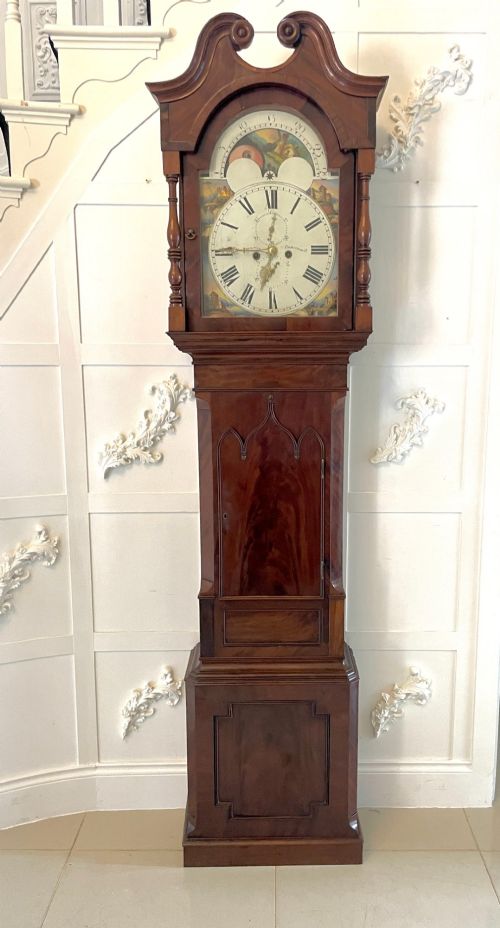
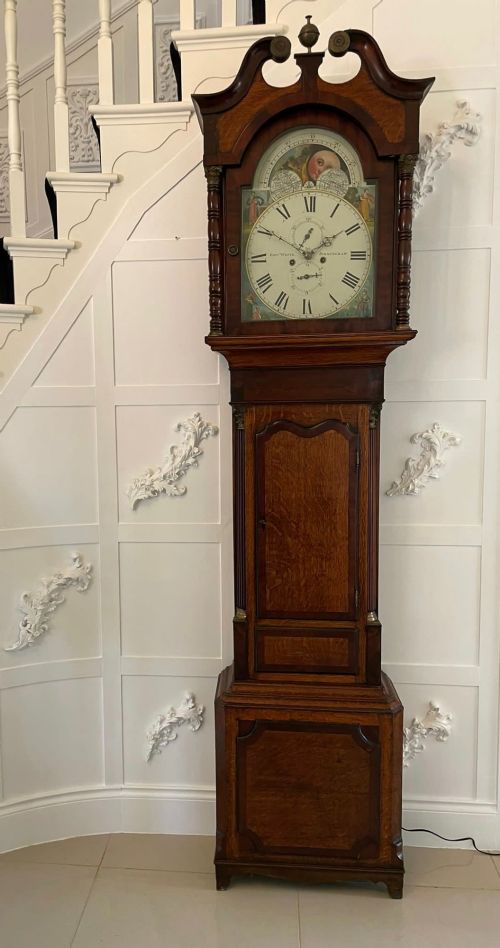
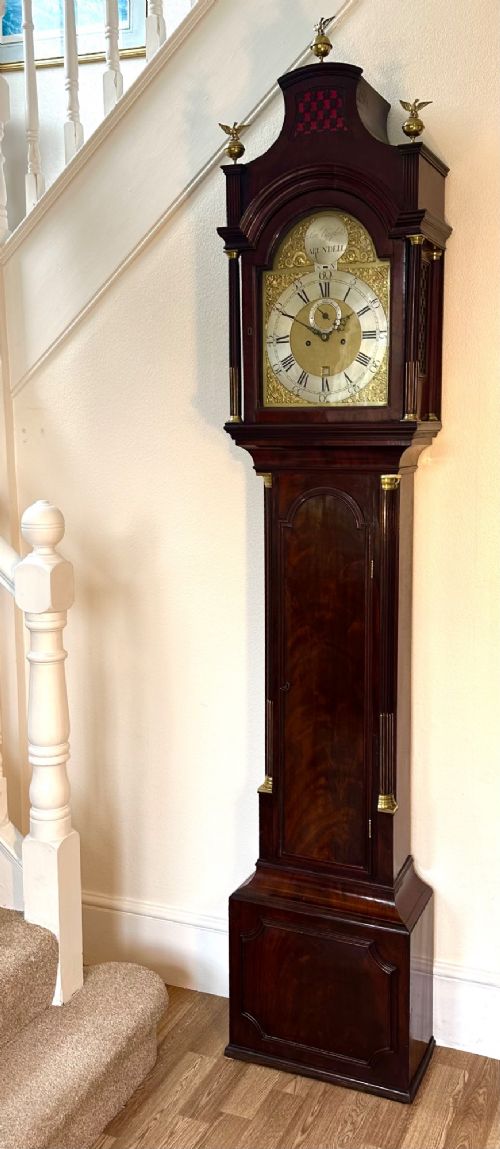
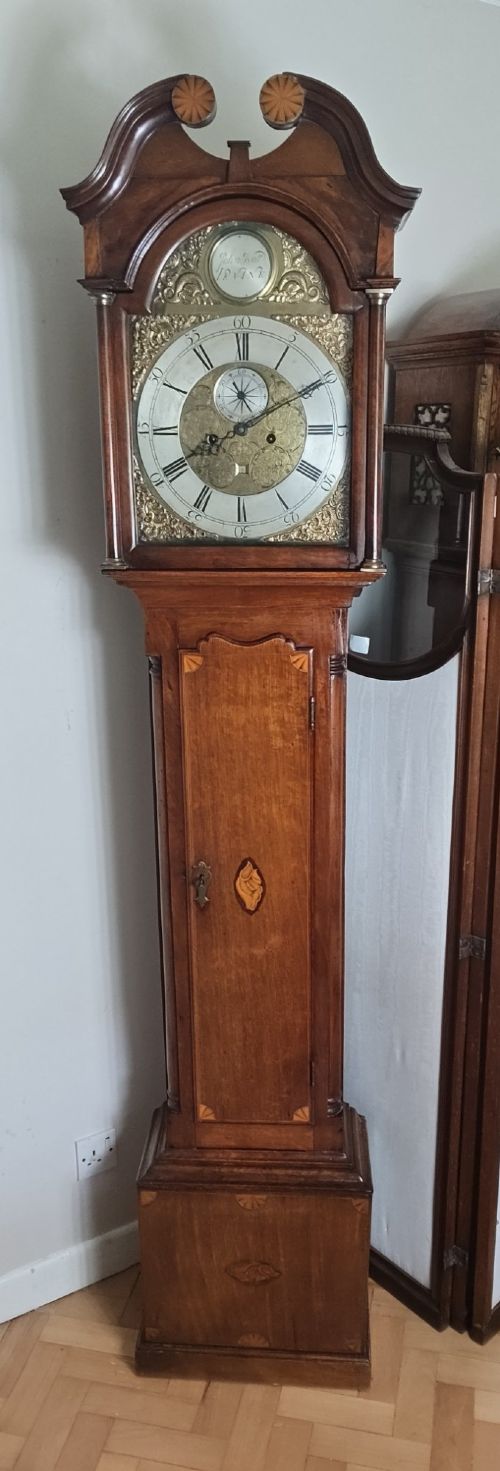
Swan Neck Longcase
Swan neck longcase clocks are tall floor-standing timepieces featuring distinct arched hoods, offering traditional horological presence and timeless appeal.
Swan Neck Longcase
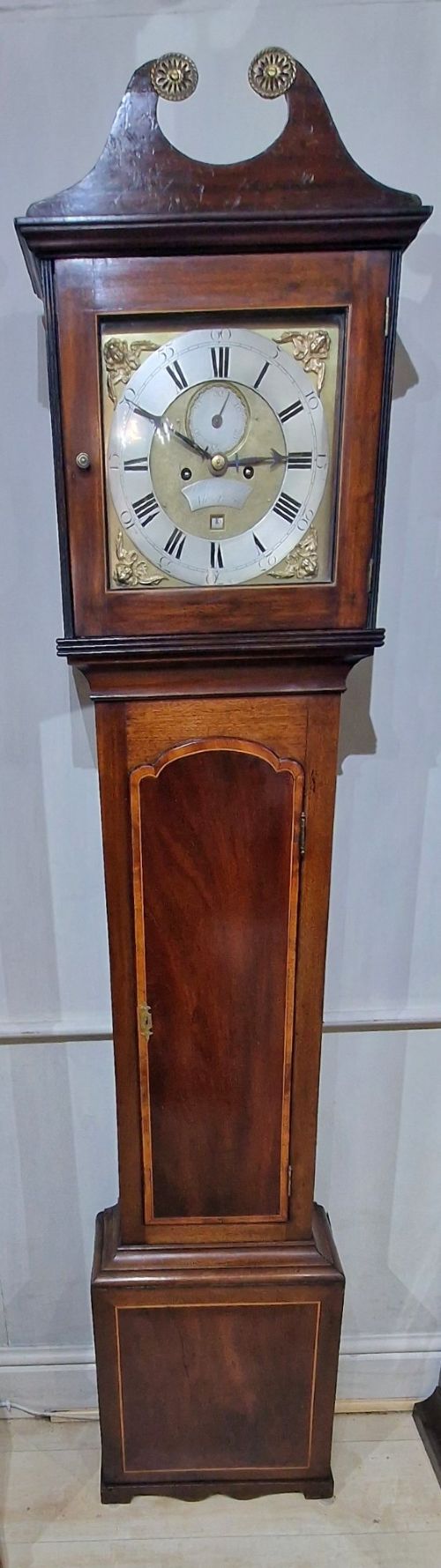
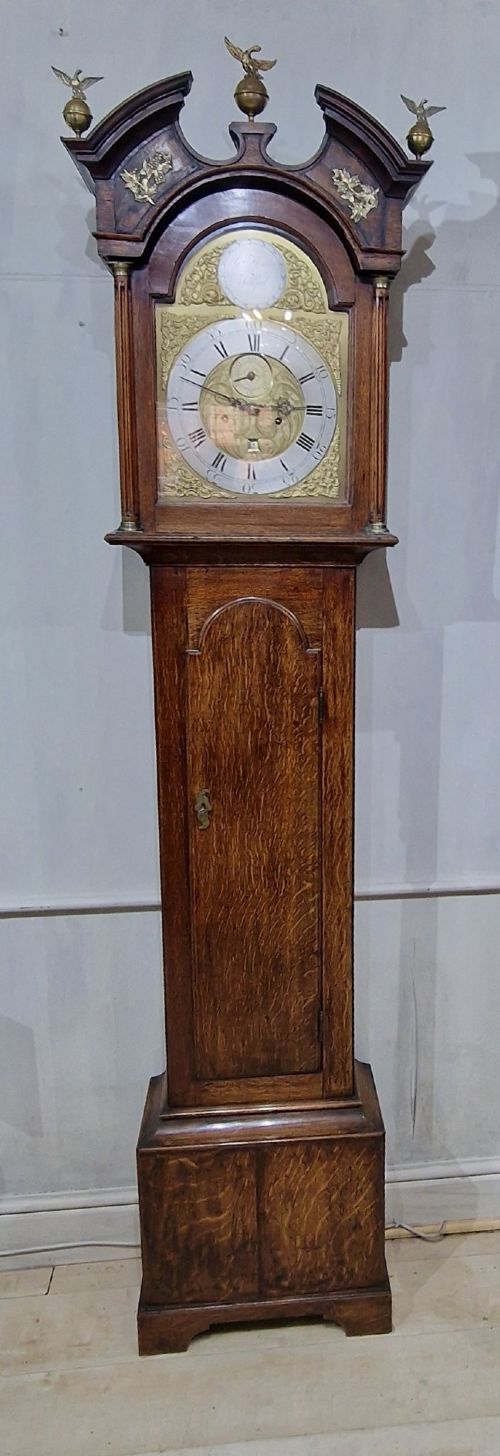
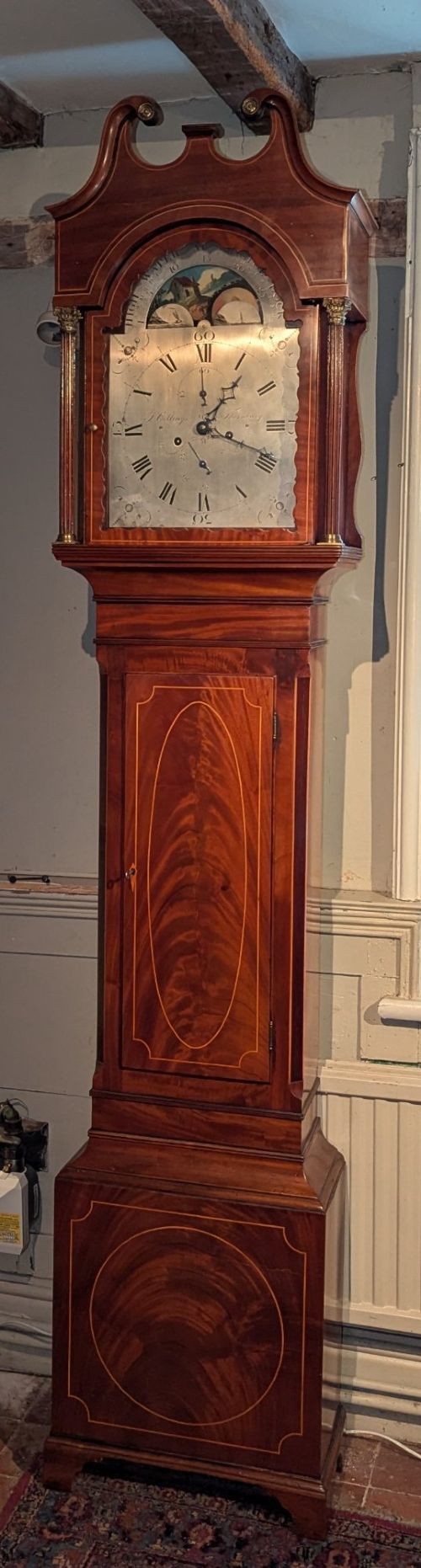
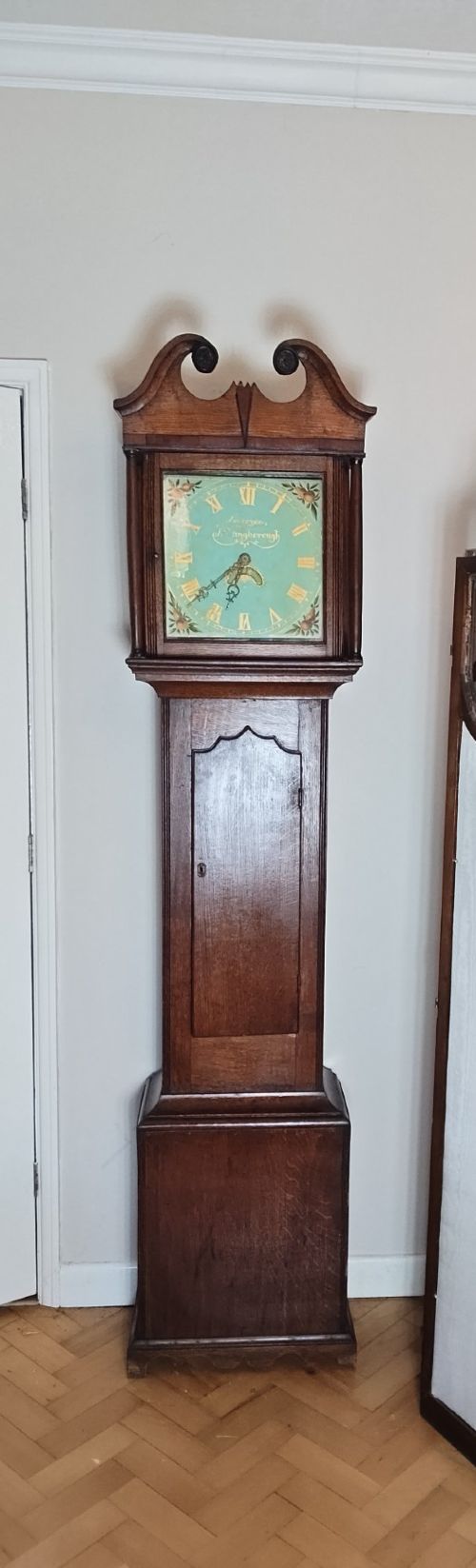
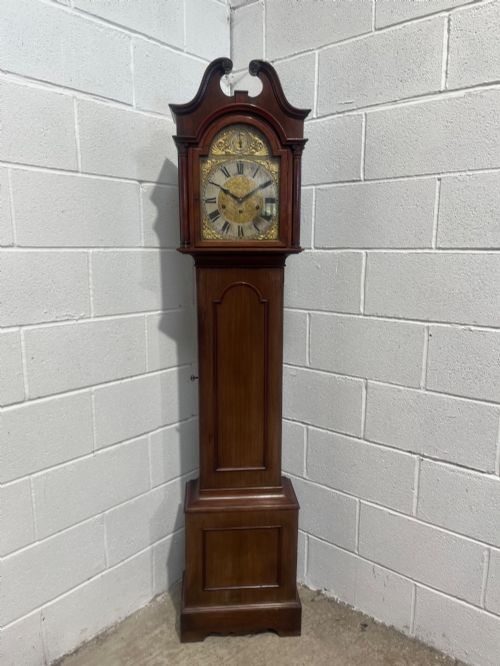
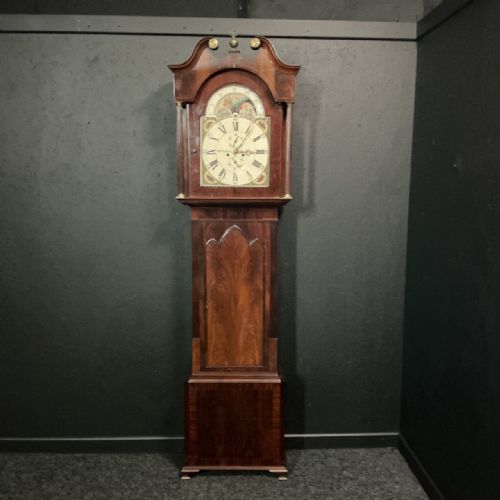
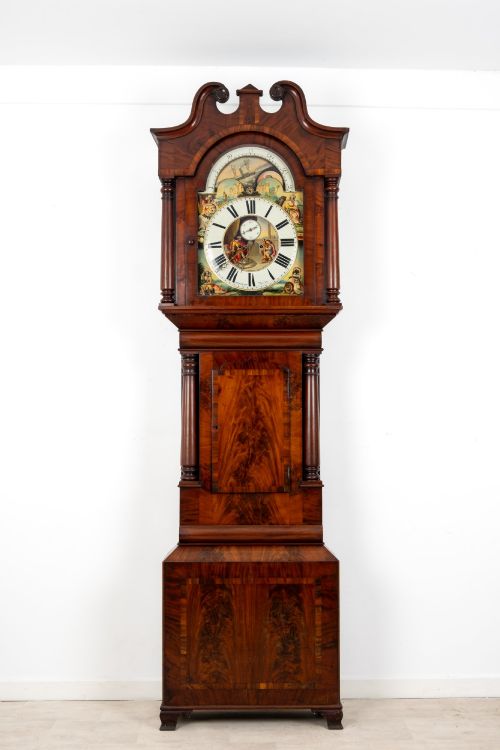
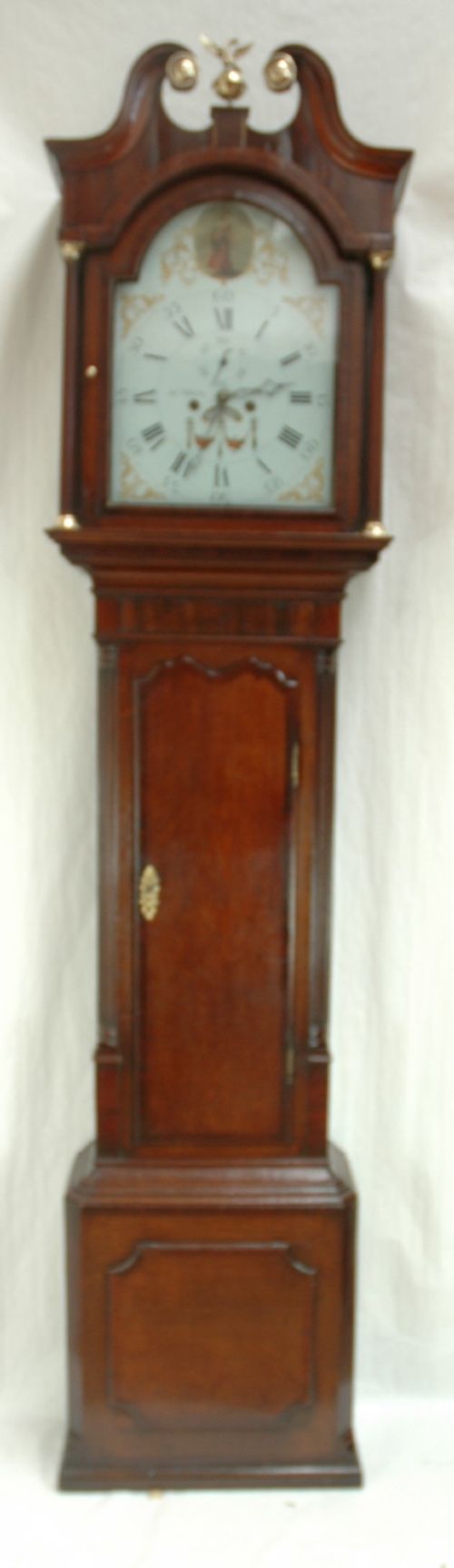
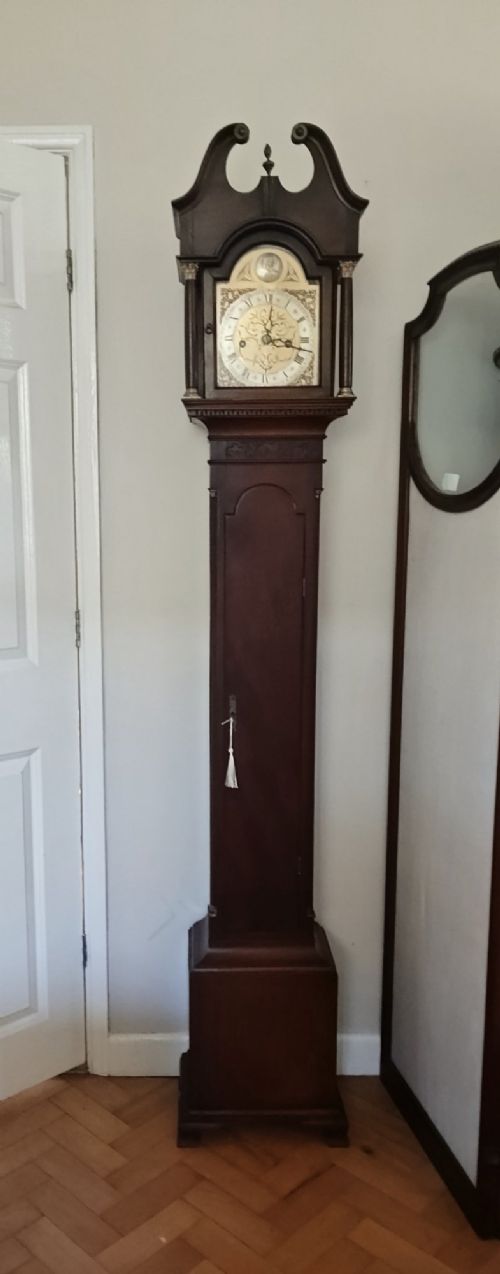
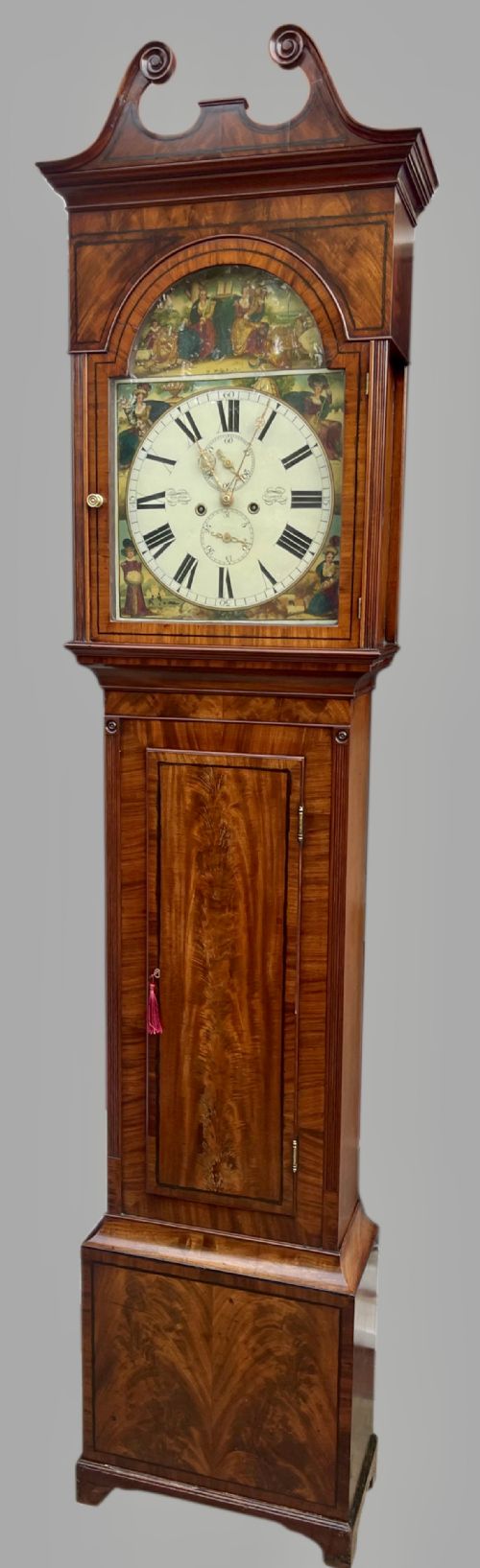
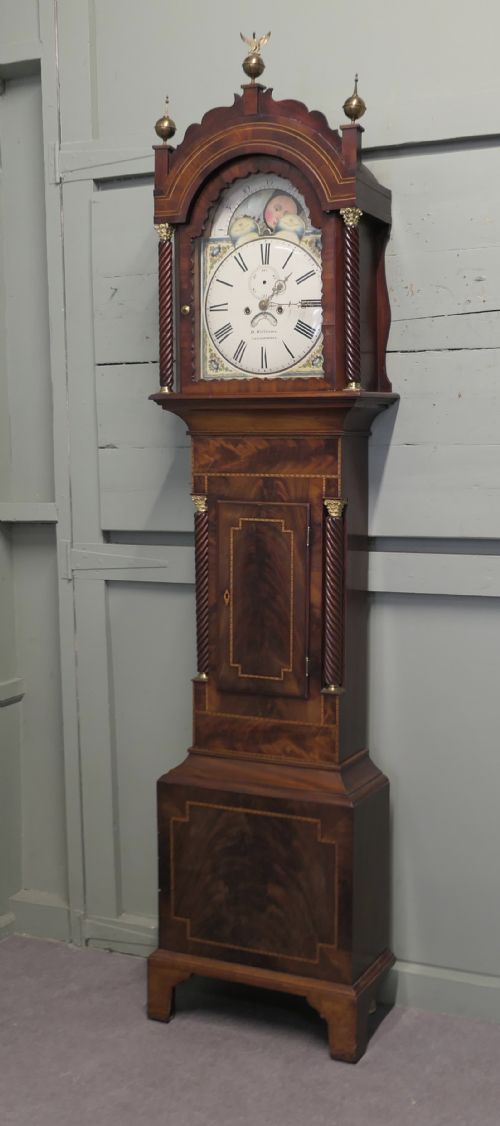
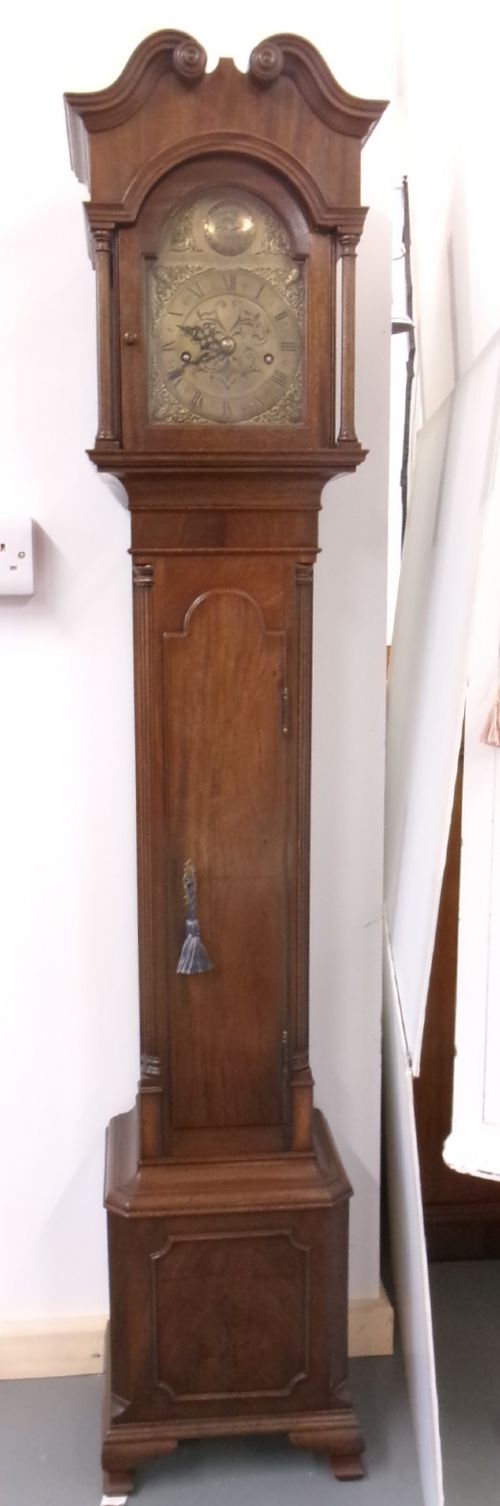
A swan neck longcase is a tall floor clock distinguished by its characteristic broken-arch hood terminating in inward-curving scrolls. These architectural hoods often house painted iron or brass dials, sometimes incorporating moon phase mechanisms or subsidiary seconds hands.
The pieces on this page span the Georgian, Regency, Victorian and Edwardian periods. Examples appear in mahogany and oak, ranging from full-sized grandfather clocks to smaller grandmother and longcase variations.
How They Were Made
Cabinets were constructed principally from mahogany and oak, occasionally featuring walnut or crossbanded veneers and inlaid paterae. Metal components included brass for dial details and finials, alongside painted iron for clock faces.
Movements relied on iron and steel gear trains, housing either thirty-hour or eight-day weights, and occasionally incorporating bell or gong striking mechanisms.
Regional movements recorded on this page hail from English, Scottish and Welsh towns.
What Varies in Quality
The refinement of the cabinetwork dictates much of the standing, visible in the depth of timber figure, the crispness of crossbanding, and the harmonious proportions of the hood scrolls. Regional cabinet-makers and provincial horologists produced diverse casework, from robust country oak to polished metropolitan mahogany.
Dial execution distinguishes examples, noting the precision of hand-painted numerals, delicate moon phase integration, and the complexity of the brass or iron movement within.
Robb Montrose·James Hendrie Falkirk·Parkinson Bros Batley·D Williams of Crickhowell·Edward Shepley of Manchester·Matt Wylie Paisley·Thomas Webbe of New Quay·Joseph Gibson Ecclefechan·Richard Sharkey Birmingham·David Craig Ford Path head
The Swan Neck Longcase Glossary
- Swan neck
- An architectural pediment moulding on a clock hood that curves upward and inward, resembling the neck of a swan. This defining feature often frames a central brass finial.
- Moon phase
- A dial mechanism tracking the lunar cycle through a rotating disk behind an arched aperture. It displays the phases of the moon across a painted lunar month.
- Longcase clock
- A tall pendulum clock housed in a wooden case designed to protect the weights and pendulum. Commonly known as a grandfather clock.
- Paterae
- Small circular decorative reliefs carved or inlaid into furniture woodwork. They frequently accent the frieze or swan neck terminals of the hood.
Swan Neck Longcase: Frequently Asked Questions
What is a swan neck longcase?
A swan neck longcase is a tall pendulum clock featuring a hood with an arched pediment curving inward like a swan's neck.
These timepieces enclose brass or painted iron dials within timber floor cases dating primarily from the eighteenth and nineteenth centuries.
How do I wind an eight day clock?
Eight day movements require winding every week using a crank key inserted into winding holes on the dial face.
Careful rotation lifts the internal weights inside the trunk back to the top of their descent.
Where were these clocks made?
Makers across England, Scotland and Wales produced these longcase clocks during the Georgian and Victorian eras.
Regional horologists often signed the painted or brass dials, recording their workshops and towns.
What is a grandmother clock?
A grandmother clock is a smaller, more slender version of the traditional longcase or grandfather clock.
These compact timepieces were produced in smaller proportions to suit more modest domestic spaces.