


Studded Leather Settee
A studded leather settee brings grounded character to a room, offering deep buttoning and traditional timber framing that ages with distinction.
Studded Leather Settee
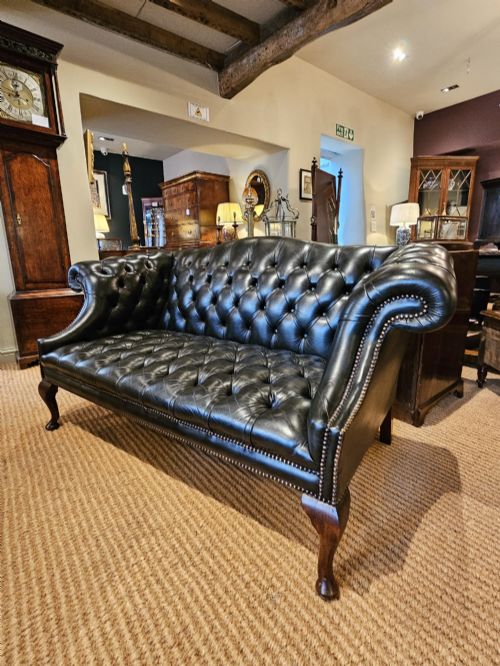
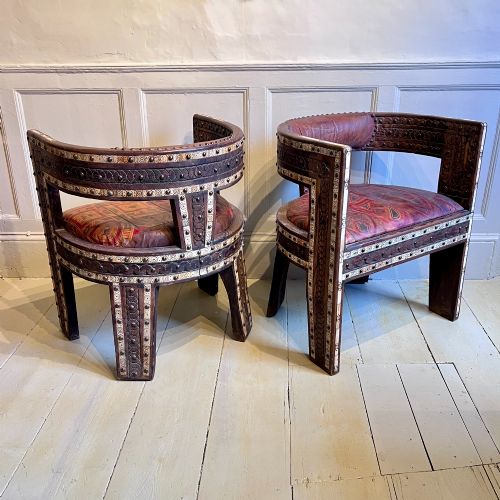
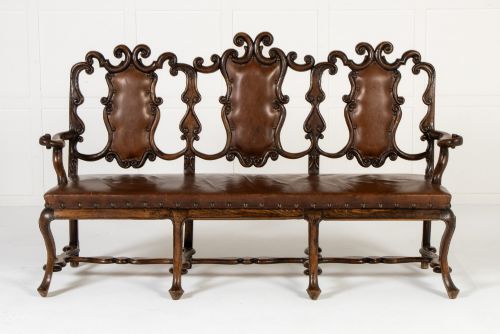
A studded leather settee brings together robust timber framing and upholstered hides, appearing most frequently in Victorian and early twentieth-century formats. These seating pieces range from traditional English chesterfields with deep buttoning to North African and Italian varieties displaying regional carving and distinct silhouettes.
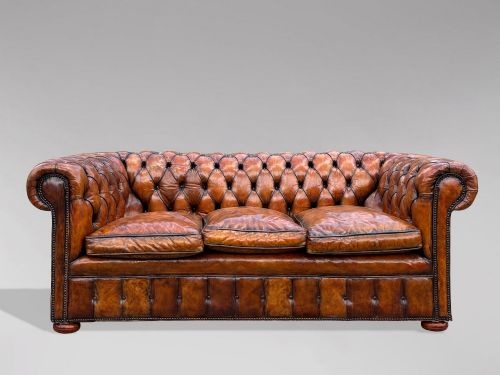
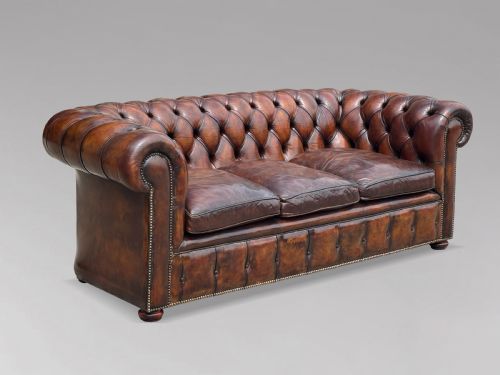
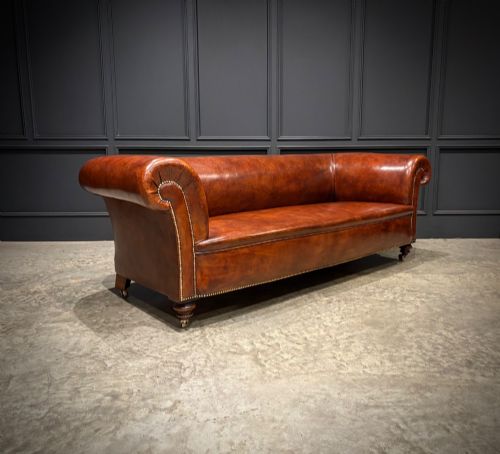
Buyers encounter compact bottle green models alongside expansive brown leather three-seater chesterfields, highback George II styles, and drop arm variants. The form serves as a substantial seating focal point, whether configured as an individual settee or accompanied by matching armchairs.
The materials visible across these pieces rely on solid wood frameworks, including walnut, mahogany, and hardwood, wrapped in hides that display varied tones from deep whisky brown to red and amethyst. Brass studs typically outline the upholstery edges, securing the leather while defining the structural contours of the sofa.
Materials and construction methods
Makers built these settees around sturdy hardwood, walnut, and mahogany frames designed to support heavy daily use over generations. Internal stuffing relied on traditional fillings such as horsehair, paired with coil springing to ensure durable resilience.
Hides were applied directly to the wooden skeleton, secured along the seams and borders with individual brass studs driven by hand. Surface finishes ranged from plain natural leather to hand-dyed treatments that developed distinct patinas over decades.
Periods represented span from the Regency era through Victorian times and into the 1930s.
Distinctions in quality and finish
The distinction between standard output and finer examples rests in the selection of timber and the precision of the upholstery work. Superior settees utilise dense hardwoods like walnut or mahogany for internal frames that remain rigid and true.
Upholstery detail dictates the character of the piece, with evenly spaced brass studs and careful tufting or deep buttoning marking higher standards of craft. The depth of colour in hand-dyed leather and the integrity of traditional internal stuffings further separate ordinary examples from exceptional ones.
Howard & Sons
The Studded Leather Settee Glossary
- Chesterfield
- A traditional sofa style characterised by deep buttoned upholstery and rolled arms of equal height to the back.
- Tufted
- An upholstery technique where leather is pulled tight and secured with buttons or studs to create a diamond pattern across the backrest.
- Knoll drop arm
- A sofa design featuring adjustable sides that can be lowered independently via mechanical hinges or straps.
- Moustache back
- A decorative upper backrail carved or shaped with a sweeping double curve resembling nineteenth-century facial hair.
- Horsehair
- A traditional stuffing material gathered from the manes and tails of horses, valued for its springiness and longevity in antique upholstery.
Studded Leather Settee: Frequently Asked Questions
How do I date a leather chesterfield?
Dating relies on examining the timber frame construction, the type of internal stuffing used, and the wear patterns on the hide. Earlier pieces often display hand-turned feet and traditional webbed bases.
Later twentieth-century examples incorporate different coil springing methods and machine-finished brass studs. Comparing the frame wood, such as walnut or mahogany, helps narrow down the manufacturing era.
Are these settees comfortable for daily use?
Most examples offer substantial support through traditional coil springing and firm horsehair padding. The deep seats are designed for lounging while maintaining an upright posture.
Some antique models feature firmer padding than modern sofas, which suits formal seating arrangements. Leather surfaces adapt to body temperature quickly during regular use.
How should I care for antique leather?
Maintain the hide by keeping the settee away from direct heat sources and strong sunlight, which can dry out the material. Regular dusting prevents particle buildup in the deep button crevices.
Apply suitable leather balms periodically to nourish the surface and preserve the hand-dyed colour. Avoid harsh chemical cleaners that strip the original patina.
What is a drop arm sofa?
A drop arm sofa includes hinged sides that can be released to form a daybed or extended lounging surface. This mechanism was popular in nineteenth-century designs for versatile living spaces.
Operating the drop arm requires releasing the side catch gently to lower the upholstered wing. The brass hardware on these mechanisms often indicates the period of manufacture.